





WASHINGTON — In an era marked by deep political polarization and cultural fracturing, the question of what unites the United States feels increasingly urgent. Are these fifty states bound by a shared commitment to the common good, or have they become a fractured mirror reflecting conflicting, self-serving mythologies?
This tension between historical reality and romanticized national myth was the driving force behind a late-summer road trip undertaken by cultural commentator and Heathen writer Karl E. H. Seigfried. Traversing key historical and cultural sites across Pennsylvania, Seigfried examined how contemporary American political rhetoric collides with the actual record of the nation’s founding, and how traditional Heathen and progressive values intersect with these discoveries.

Chronology of a Pilgrimage: From Valley Forge to Cinematic Sagas
Seigfried’s journey began in the historic heartland of the American Revolution and concluded among the hallowed filming locations of modern cinematic horror, tracing a path through the country’s foundational narratives and cultural mythmaking.
- Winter 1777–1778: The Continental Army endures the grueling encampment at Valley Forge, representing a remarkably diverse coalition of cultures, ethnicities, and faiths.
- 1752–1800: The Liberty Bell is cast, cracked, and recast; Benjamin Franklin builds his fortune and accumulates enslaved labor before a late-life conversion to abolitionism; the Religious Society of Friends formally takes a stand against slavery.
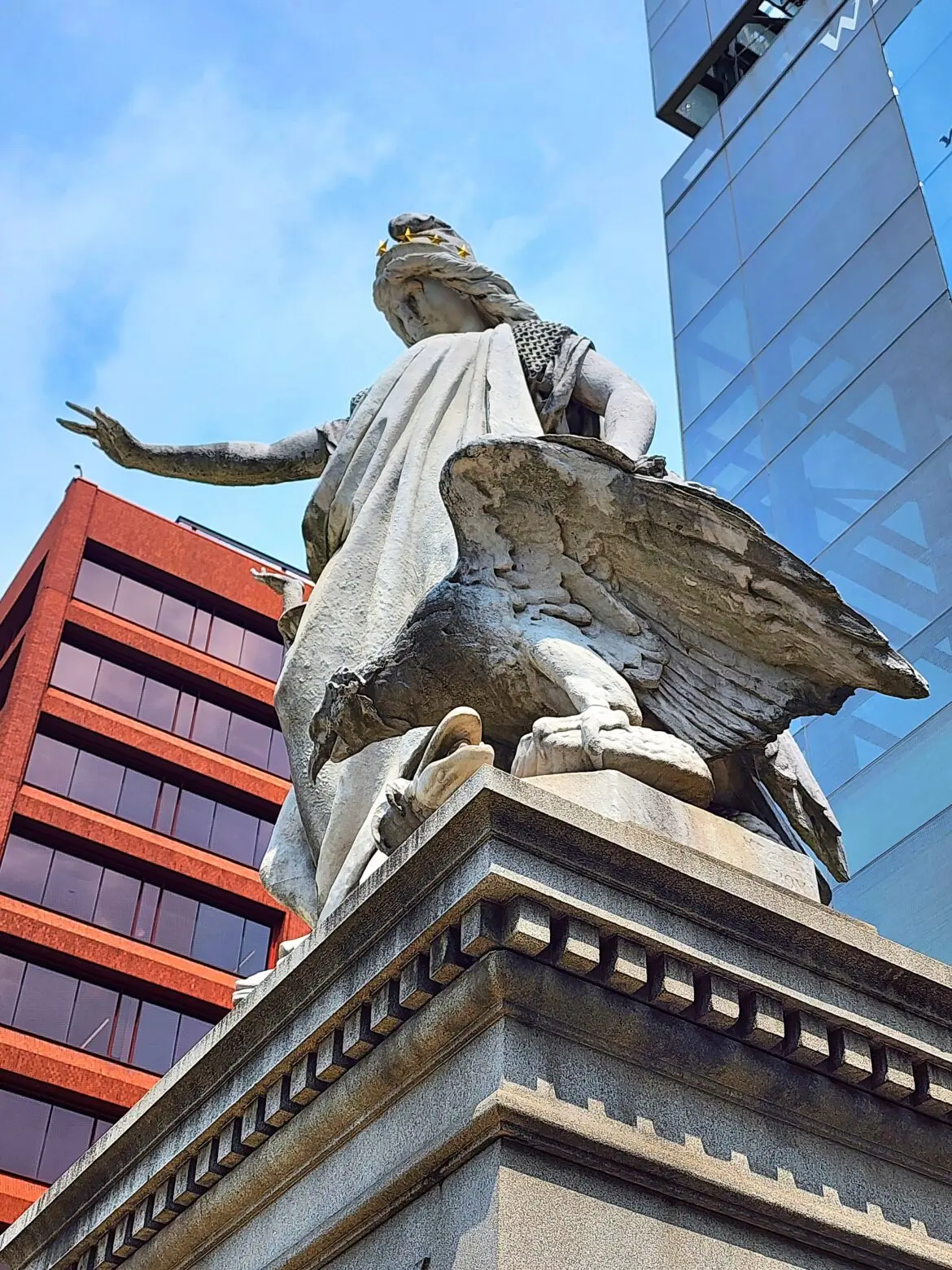
- 1876: The Religious Liberty sculpture by Moses Jacob Ezekiel is dedicated in Philadelphia for the American Centennial.
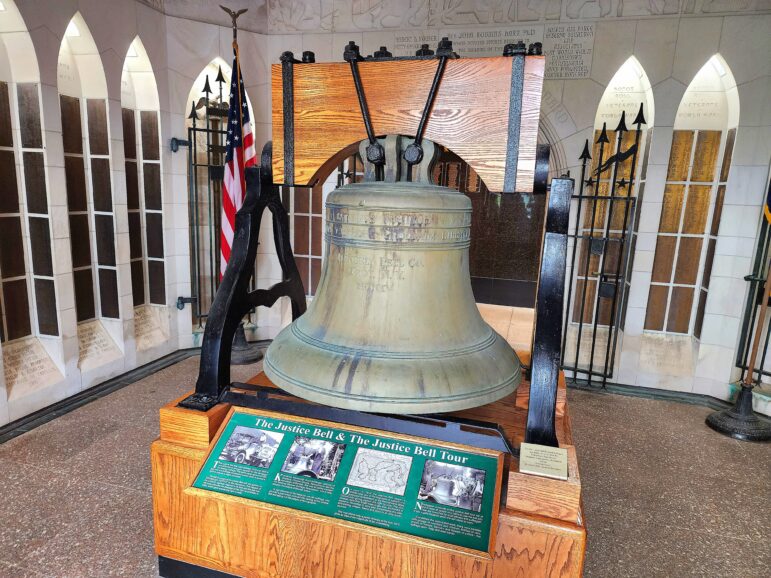
- 1920: The 19th Amendment is ratified, leading to the ringing of the Justice Bell outside Independence Hall.
- 1968–1978: Director George A. Romero releases Night of the Living Dead (1968) and Dawn of the Dead (1978), cementing horror as a uniquely American vernacular of social critique.
- Late Summer 2026: Seigfried embarks on his historical and cultural road trip, documenting the erasure of historical context at national monuments, the marginalization of real sports legends in favor of cinematic icons, and the intersections of modern Heathenry with American civil rights history.
Main Facts and Observations
Valley Forge and the Myth of Monolithic Origins
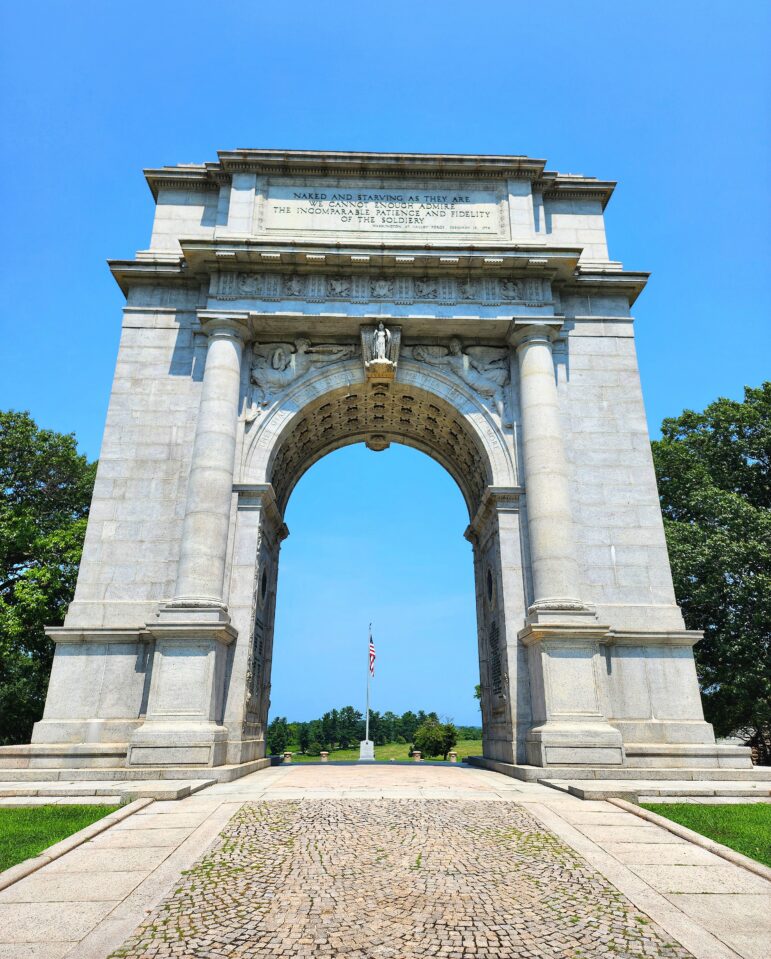
The journey’s first major stop was Valley Forge National Historical Park. The site serves as a frequent backdrop for political invoking of a homogenous, white, Christian founding narrative. Earlier in August, political figures reiterated the long-disproven fable of George Washington kneeling in the snow in prayer—a myth concocted by Parson Weems, the same author behind the apocryphal cherry tree story.

However, archival records and museum exhibits at Valley Forge tell a starkly different story. The encampment of nearly 20,000 soldiers and civilians was a remarkably multicultural melting pot. It included individuals of African, Austrian, Dutch, English, French, German, Irish, Italian, Native American, Polish, Portuguese, Prussian, Scottish, and Swedish descent, practicing Catholicism, Protestantism, Judaism, and Quakerism. Furthermore, foundational figures like George Washington were active Freemasons, operating under Enlightenment principles rather than orthodox Christian dogma, while military discipline was ultimately forged by the Prussian immigrant Baron von Steuben.
Erasure and Resistance at the Liberty Bell Center
In Philadelphia, the tension between historical fact and political sanitization was starkly visible. A volunteer guide at the Liberty Bell Center pointed out the subterranean remains of the President’s House—where George Washington once kept enslaved individuals—while alerting visitors to a QR code linking to original National Park Service signage. According to the guide, federal directives had recently ordered the removal of all written references to slavery from exterior displays.

Despite administrative pressures, frontline National Park Service rangers were observed actively defying these omissions, delivering historically accurate accounts of the bell’s evolution. Originally commissioned in 1752 and later adopted by 19th-century abolitionists, the Suffrage movement, and the Civil Rights movement, the Liberty Bell’s legacy is inextricably tied to the ongoing struggle to reconcile the promise of liberty with the reality of historical oppression.
Benjamin Franklin and the Paradox of the Founders
At the Benjamin Franklin Museum, interactive exhibits challenge visitors to weigh Franklin’s monumental contributions to American democracy against his decades as a beneficiary of the slave trade. While Franklin became an outspoken abolitionist late in life, joining the Pennsylvania Abolition Society and freeing his slaves posthumously, he spent years running advertisements for slave sales and purchasing enslaved individuals to build his personal fortune.
This paradox reflects a broader truth about the Founding Fathers: they were acutely aware of the moral contradictions of slavery yet chose to protect the institution for political and economic expediency, embedding a foundational flaw into the American experiment.
The Quakers and the Public Universal Friend
In contrast to the compromises of the political founders, the Arch Street Meeting House presented an inspiring trajectory of moral evolution within the Religious Society of Friends (Quakers). Having established spaces for the marginalized and formally outlawing slave ownership among their members by 1776, the Quakers maintained a legacy of direct social action, civil rights advocacy, and pacifist engagement.
The meeting house history also highlights figures like the Public Universal Friend (born Jemima Wilkinson in 1752), a genderless prophet who rejected gendered pronouns following a near-death experience in 1776. This historical precedent challenges contemporary political talking points that frame non-binary identities as a modern cultural aberration.
Cinematic Pilgrimages: Rocky, Romero, and Horror as Folklore
Shifting from civic history to cultural mythmaking, Seigfried’s itinerary included three pop-culture pilgrimage sites:
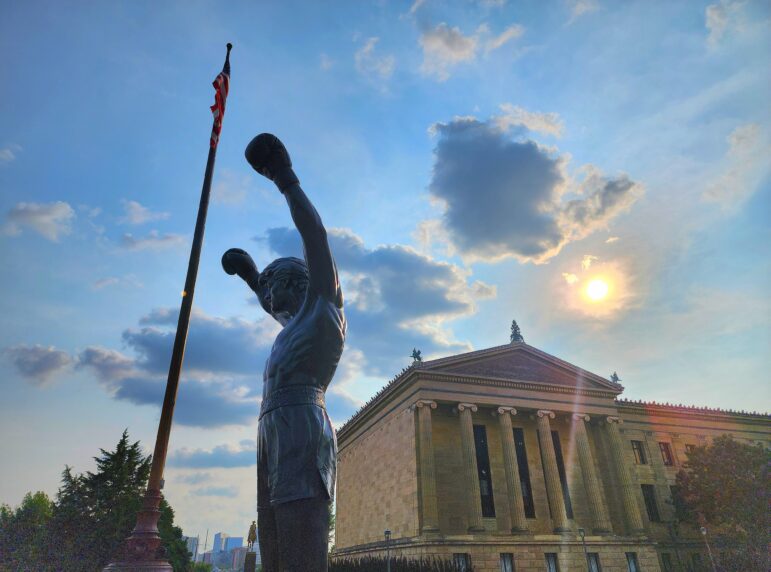
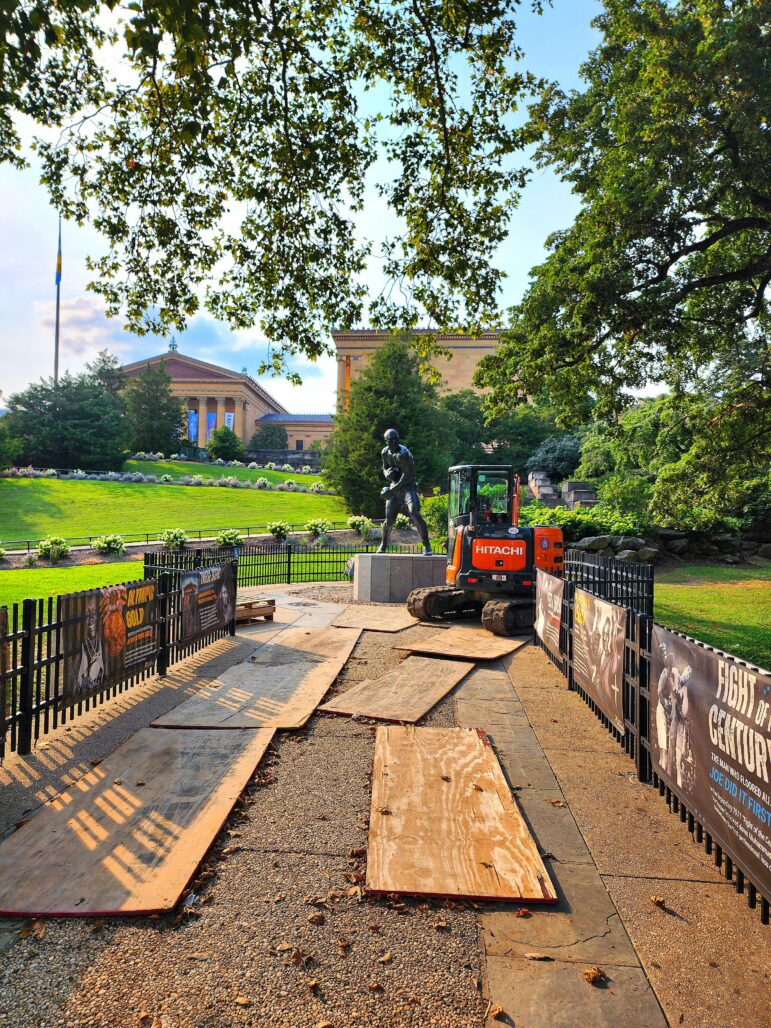
- The Rocky Balboa Statue & Joe Frazier’s Legacy: While thousands of tourists celebrate the fictional boxer at the Philadelphia Museum of Art, the monument to real-life heavyweight champion Smokin’ Joe Frazier—whose actual training routines inspired Rocky’s cinematic journey—remains tucked away in relative obscurity, highlighting society’s preference for comfortable myths over complex realities.
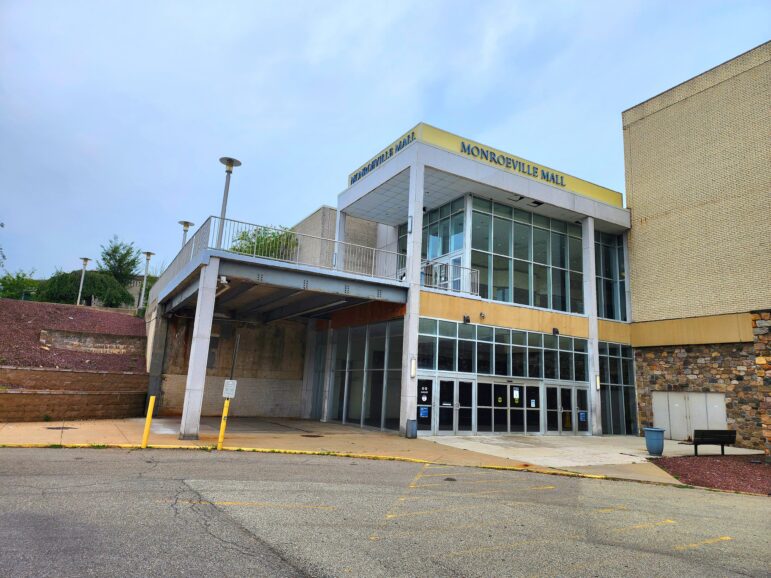
- Monroeville Mall: The filming location of George A. Romero’s 1978 masterpiece Dawn of the Dead, soon slated for demolition by Walmart.
- Evans City Cemetery: The opening-scene graveyard from 1968’s Night of the Living Dead.
Seigfried argues that horror cinema functions as America’s true sagas. Directors like Romero utilized low-budget horror not merely for shock value, but as a biting sociological critique of consumerism, racism, and militarism.
Supporting Data and Context
- Demographics at Valley Forge (1777–1778): Approximately 20,000 personnel comprised a multi-ethnic community representing at least 15 distinct national and cultural backgrounds, alongside adherents of multiple major world religions and traditions.
- African-American Patriotism: More than 700 soldiers of African descent or mixed African and Native American heritage fought at Valley Forge.
- The Quaker Abolition Timeline: The Religious Society of Friends prohibited members from slaveholding in 1776, transitioned to mandatory manumission by the 1gra1780s, and subsequently spearheaded early abolitionist literature and the Underground Railroad.
- Cultural Infrastructure: The delay in honoring Joe Frazier—whose bronze statue was not erected in Philadelphia until 2015, decades after the fictional Rocky statue—serves as a quantitative measure of municipal investment in myth over historical fact.
Official Responses and Administrative Pressures
The report highlights a growing friction between career civil servants, museum interpreters, and federal political appointees. Recent administrative directives to scrub references to slavery from federal historical markers—such as those noted outside the Liberty Bell Center and actions restricting military promotions for diverse candidates under figures like Secretary of War Pete Hegseth—have placed public historians in a challenging ethical position.
Rather than capitulating to sanitized narratives, many park rangers and cultural educators have chosen to utilize digital workarounds, QR codes, and direct oral storytelling to preserve the unvarnished historical record, embodying a modern ethos of speaking truth to power.
Implications for Modern Communities and Heathen Values
For contemporary practitioners of Heathenry and minority religious traditions, these explorations carry profound theological and practical implications.
Seigfried draws a direct line between the decentralized, open-floor traditions of Quaker meetings—which mirror the traditional assemblies (blóts and þings) of ancient Norse and Germanic polytheism—and the call for active civic engagement. Drawing inspiration from the legacy of George Romero and historical abolitionists, the commentary urges modern spiritual communities to avoid retreating into insular textual study or theological dogmatism.
Instead, the article posits that a healthy, world-affirming religion must actively apply its values outside ritual spaces. Just as historical figures and cultural creators used their platforms to confront societal ills, modern individuals are challenged to recognize that true heritage is found not in sanitized, nostalgic myths, but in the courageous pursuit of justice, historical honesty, and direct action in the face of modern challenges.