Introduction: The Myth Made Reality in a Sci-Fi Epic
When director Zack Snyder—renowned for his visually arresting style in films such as 300, Man of Steel, and Watchmen—set out to construct an entirely original sci-fi fantasy universe for Netflix’s Rebel Moon, he did not simply rely on futuristic tropes of gleaming spaceships and plasma rifles. Instead, Snyder anchored his sprawling interstellar opera in ancient mythologies, breathing new life into timeless archetypes.
At the center of this world-building is a creature that has captivated audiences since the release of Rebel Moon – Part I: A Child of Fire: the bennu.
To answer the most burning question posed by fans of the franchise: Yes, the bennu is effectively Zack Snyder’s sci-fi take on the legendary griffin. However, as audiences quickly discover upon diving deeper into the lore of the Rebel Moon universe, this majestic lion-eagle hybrid possesses a distinct evolutionary and cultural identity that separates it from standard mythological folklore.
From its meticulous design process by the visual effects masters at Framestore to its narrative significance in the arc of the noble captive Tarak, the bennu has swiftly established itself as one of the most memorable cinematic creatures of modern space opera.
Main Facts: Anatomy, Origins, and the Legend of the Bennu
What is a Bennu?
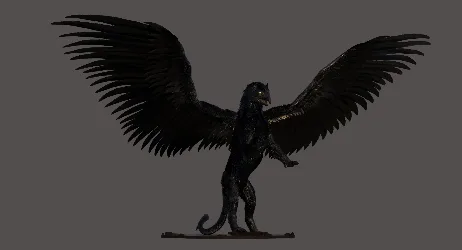
In the strict context of Zack Snyder’s universe, a bennu is a massive, powerful creature that merges the physical characteristics of Earth’s apex predators: the raw muscular majesty of a lion and the razor-sharp vigilance and aerodynamic mastery of an eagle.
While traditional folklore features the griffin—a creature guarding gold and sacred treasures in ancient Greek, Persian, and Egyptian myth—the bennu of Rebel Moon serves a far more utilitarian and deeply cultural role. They are majestic flying mounts native to the lush, expansive environments of Samandrai, the home planet of the high-born warrior Tarak (portrayed by Staz Nair).
Key Characteristics of the Bennu:
- Hybrid Physiology: Boasting a powerful feline lower body equipped with muscular legs and claws, combined with the piercing eyes, hooked beak, and expansive feathered wings of an eagle, the bennu represents the pinnacle of aerial and terrestrial predator design.
- Temperament: Highly intelligent, fiercely independent, and notoriously difficult to domesticate. They cannot simply be broken through brute force; they demand a psychological and emotional connection with their riders.
- Cultural Significance on Samandrai: On their home world, bennus function much like horses do in historical Earth societies—serving as primary modes of high-speed transportation across vast plains and dense forests.
Chronology: The Journey of the Bennu from Concept to Screen
Phase 1: Conceptualization and Mythology Blending (Pre-Production)
Long before cameras began rolling, Zack Snyder collaborated with conceptual artists and creature designers to establish a fauna roster that felt both alien and strangely familiar. The directive was clear: pull inspiration from various global interpretations of griffins, sphinxes, and mythological avian-feline beasts, but root them in a believable biological framework. The design team wanted viewers to look at the bennu and instantly understand its weight, power, and agility without losing the mystical wonder of a fantasy creature.
Phase 2: Bringing Framestore into the Fold (Visual Effects Development)
To translate the conceptual art into a living, breathing creature, production enlisted the world-class visual effects studio Framestore. Known for their groundbreaking work on complex digital creatures across blockbuster franchises, Framestore faced the dual challenge of making the bennu’s anatomy functional and emotionally expressive.
Animators studied real-world references—analyzing the bone structure, muscle twitch, and locomotion of big cats like lions, tigers, and leopards, alongside the aerodynamic flight dynamics of eagles, hawks, and condors. The result was a seamless digital hybrid that could thunder across rocky terrain one moment and take to the skies with breathtaking grace the next.
Phase 3: The Introduction in Rebel Moon – Part I: A Child of Fire (The On-Screen Debut)
The cinematic payoff of this extensive design process arrives in A Child of Fire through one of the film’s most striking sequences: the introduction of Beatrice, a stunning black bennu held captive on the barren, dusty world of Neu-Wodi.
Separated from the green expanse of Samandrai, Beatrice is labeled an "unrideable" beast by her captors, caged and hostile to human contact. Enter Tarak, a noble warrior stripped of his royal status and reduced to a lowly captive. Offered a high-stakes gamble to win his freedom, Tarak steps into the pen to face the raging avian-feline titan.
What follows is not a standard monster-taming action scene, but a moment of profound psychological and emotional resonance. Tarak approaches the distressed creature, recognizing a kindred spirit trapped far from home. His famous monologue to the beast sets the thematic tone of their union:

“I’m not going to hurt you. You’re far from home and so am I. You and I, we are alike. We’ve been hurt. Betrayed. Our trust has been broken. We both know fear. Yet, the biggest fear we both face is the fear of ourselves.”
Through patience, empathy, and shared vulnerability, Tarak calms Beatrice. He mounts her, and together they execute a breathtaking escape, soaring into the sky and cementing a bond built exclusively on mutual respect and earned loyalty.
Supporting Data: The Craft Behind Framestore’s Digital Creation
Creating a believable mythical creature requires an immense amount of technical precision. Behind the scenes, Framestore’s digital artists utilized advanced rigging and simulation software to handle the creature’s complex anatomy:
- Feather Dynamics: Unlike pure mammalian creatures, rendering a creature with both fur (on the lion portions) and thousands of individual feathers (on the wings and upper torso) requires intricate physics engines. Every single feather had to react dynamically to air resistance during high-speed flight sequences, wind currents, and interactions with water or dust.
- Muscle Simulation: To convey the sheer weight of the beast—estimated to weigh well over a thousand pounds—artists mapped secondary muscle jiggle and skin tension beneath the fur and feather layers. When Beatrice lands after a flight, the viewer can visually register the heavy impact through the compression of her paws and the shifting of her shoulder blades.
- Facial Rigging: Because the bennu plays an active, emotional role opposite Staz Nair’s Tarak, its face required a high-fidelity rigging system. Subtle shifts in the positioning of the beak, the narrowing of the golden eagle eyes, and the flattening of the ears communicate fear, aggression, curiosity, and ultimate submission.
Official Responses and Creative Insights
Zack Snyder and his production team have frequently spoken about the importance of world-building through tangible creatures rather than relying solely on abstract CGI spectacles.
In interviews discussing the creature design of Rebel Moon, Snyder emphasized that mythological creatures in his universes must feel like real animals that evolved naturally within their respective ecosystems, complete with behavioral quirks, dietary needs, and geographical preferences.
"When you introduce a creature like the bennu, you aren’t just putting a cool monster on screen for the sake of action," production insiders noted during the film’s press rollout. "You are telling a story about displacement, spirit, and heritage. Tarak and Beatrice are two sides of the same coin—both noble entities stolen from their natural environments and forced into chains. Their taming is less about dominance and more about healing."
Framestore’s visual effects supervisors similarly highlighted the collaborative nature of crafting Beatrice. The team worked closely with Snyder to ensure that the lighting on set matched the digital passes, allowing the physical interaction between actor Staz Nair and the blue-screen puppet stand-in to translate seamlessly into the final composite shot.
Implications: The Future of the Bennu in the Rebel Moon Universe
The introduction of the bennu opens up vast storytelling possibilities for future installments and expansions of the Rebel Moon franchise.
1. Expansion of Planetary Lore
With the establishment of Samandrai as the native world of the bennus, fans are eager to see the franchise return to Tarak’s home planet. Should the narrative take viewers to the lush plains and towering forests of Samandrai, the visual payoff could be staggering. Imagine herds of wild bennus soaring across alien skies, migrating across untamed continents, or utilized in massive aerial cavalry charges against the oppressive forces of the Imperium.
2. Deepening Character Dynamics
The bond forged between Tarak and Beatrice establishes a precedent in the Rebel Moon universe: that certain creatures possess an innate emotional intelligence that transcends species boundaries. This opens the door for other characters to form unique symbiotic relationships with the alien fauna scattered throughout the moons and planets of the galaxy.
3. Merging Myth with Hard Sci-Fi
By successfully integrating a creature as classically mythological as a griffin into a hard-edged, gritty space opera, Snyder has proven that sci-fi and fantasy do not need to be mutually exclusive. The bennu serves as a bridge between ancient human folklore and interstellar exploration, proving that the myths of our past may very well be the biological realities waiting for us out among the stars.
Conclusion
The bennu is far more than just a nod to the mythological griffin; it is a masterclass in modern creature design, narrative symbolism, and world-building. Through the visionary direction of Zack Snyder, the technical wizardry of Framestore, and the emotional resonance of Tarak and Beatrice’s union, this lion-eagle hybrid has soared its way into the pantheon of unforgettable cinematic creatures. As the Rebel Moon saga continues to unfold, audiences will undoubtedly keep their eyes fixed on the skies, eagerly awaiting the next time these majestic beasts take flight.