





Main Facts
The global fascination with crystals, minerals, and holistic healing has reached unprecedented heights in recent years. From Instagram feeds decorated with amethyst clusters to celebrities endorsing the grounding properties of black tourmaline, the wellness industry has successfully mainstreamed crystal collecting. However, this booming market—estimated to be worth billions of dollars worldwide—operates largely in the shadows when it comes to supply chain transparency.
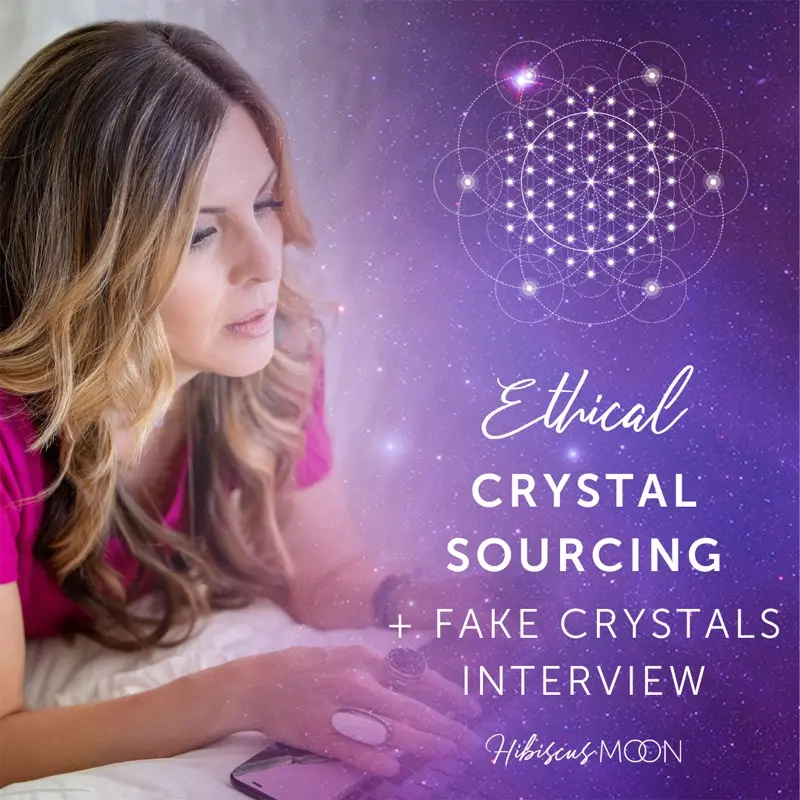
In a recent, highly anticipated live broadcast, prominent crystal expert and educator Hibiscus Moon sat down with Barbie, widely known in the community as "Cold Brew Barbie," to tackle one of the most pressing and uncomfortable conversations in the modern metaphysical community: the ethics of crystal sourcing.
While crystals are purchased for their perceived healing and uplifting energies, the reality of how they are extracted from the Earth often tells a starkly different story. The conversation shed light on an inconvenient truth: the multi-million-dollar crystal market is frequently built upon exploitative labor practices, environmental degradation, unsafe working conditions, and unregulated mining operations in developing nations.
Rather than shying away from the controversy, Hibiscus Moon and Cold Brew Barbie used their platforms to educate consumers, urging the crystal community to look beyond the aesthetic appeal of polished stones and question the journey those minerals took before landing on a retail shelf.
Chronology
To understand how the conversation around ethical crystal sourcing reached this critical juncture, it is helpful to examine the evolution of the market:
- The Early 2000s (The Niche Era): Crystal collecting was largely confined to specialized metaphysical shops, rockhound clubs, and esoteric communities. Supply chains were shorter, and consumer awareness regarding labor or environmental impacts was minimal.
- The Mid-2010s (The Wellness Boom): Driven by social media platforms like Instagram and Pinterest, crystals transitioned into lifestyle accessories and home decor staples. Mass-market retailers began stocking minerals, exponentially increasing global demand.
- The Late 2010s to 2020 (The Rise of Scrutiny): Investigative reports and independent journalists began highlighting dangerous working conditions in major mineral-exporting countries such as Madagascar, the Democratic Republic of Congo, and Brazil.
- August 2022 (The Hibiscus Moon & Cold Brew Barbie Interview): Recognizing a glaring lack of open discourse within the spiritual community, Hibiscus Moon hosted a live streaming event with Cold Brew Barbie. The session served as a turning point, bringing mainstream attention from crystal enthusiasts directly to the nuances of responsible procurement.
- Present Day (The Shift Toward Transparency): Consumers increasingly demand accountability, prompting a growing segment of boutique sellers to seek out direct-trade relationships with miners and smaller-scale operations that prioritize fair wages and environmental stewardship.
Supporting Data and Industry Realities
The global mineral and crystal market operates without the standardized oversight seen in other luxury goods industries, such as the Kimberley Process for diamonds. This lack of regulation creates significant vulnerabilities across the supply chain:
- Labor Conditions: A vast majority of decorative crystals are mined in low-income nations where occupational safety standards are virtually nonexistent. Miners, sometimes including child laborers, often work in hand-dug tunnels susceptible to catastrophic collapses, using primitive tools without protective gear like masks or steel-toed boots.
- Environmental Degradation: Unregulated open-pit mining can lead to severe deforestation, soil erosion, and the chemical contamination of local water sources. The excavation of delicate ecosystems disrupts local biodiversity and leaves scarred landscapes long after the desirable minerals have been extracted.
- The Middleman Markup: Much like the fast-fashion industry, raw crystals pass through a lengthy chain of intermediaries—from independent local diggers and regional brokers to international wholesalers and final retailers. At each step, prices inflate, while the original miners at the bottom of the ladder receive only a fraction of the profit, often barely enough to sustain their families.
- Lack of Certification: Unlike organic food or fair-trade coffee, there is no universally recognized certification body for "ethical crystals." This leaves a heavy burden of proof on the consumer and allows unscrupulous vendors to use "greenwashing" tactics, slapping vague ethical labels on stones with untraceable origins.
Official Responses and Perspectives from the Field
As awareness grows, various stakeholders within the gemstone, mineral, and metaphysical communities are grappling with how to address these systemic issues.
The Retailer Dilemma
Many small-business owners who pride themselves on selling high-vibration spiritual tools face a daunting paradox. Tracing a crystal back to the exact mine of origin is exceptionally difficult. Speaking during their live broadcast, Hibiscus Moon and Cold Brew Barbie emphasized that while absolute perfection in sourcing is nearly impossible given the fragmented nature of the market, awareness and intent are powerful catalysts for change.
Independent crystal shop owners are increasingly adopting a "know your supplier" approach. Instead of buying cheap, bulk-lot minerals from anonymous global distributors, these retailers are forging direct relationships with master carvers, family-owned quarries, and trusted importers who visit the mining sites in person to verify working conditions.
The Consumer Voice
The reaction from the metaphysical community—as evidenced by the engagement on Hibiscus Moon’s live interview—reveals a profound shift in consumer consciousness. Historically, buyers focused almost exclusively on a crystal’s aesthetic beauty, energetic resonance, or metaphysical properties (such as wealth attraction or emotional healing).
Today, a growing segment of buyers is asking a new fundamental question: What is the energetic footprint of this stone? If a crystal is extracted through forced labor, environmental destruction, and human exploitation, spiritual practitioners argue that its inherent vibration is compromised before it ever enters a home or healing space.
Implications for the Future of Crystal Collecting
The dialogue initiated by industry leaders like Hibiscus Moon and Cold Brew Barbie carries profound implications for the future of the wellness and metaphysical sectors.
1. The Death of Ignorance as an Excuse
For years, the crystal community could comfortably plead ignorance regarding supply chain mechanics. Transparent conversations and digital educational resources are dismantling this plausible deniability. Consumers now recognize that purchasing cheap, mass-produced crystals carries hidden human and environmental costs.
2. Rising Demand for Traceability
Just as the food industry underwent a revolution toward farm-to-table transparency, the crystal market is facing pressure to adopt "mine-to-market" accountability. Vendors who can provide clear documentation or personal narratives regarding where and how their inventory was sourced are gaining a distinct competitive advantage among ethically minded buyers.
3. Redefining "High Vibration"
Ultimately, the ethical sourcing movement is redefining what it means for a spiritual tool to possess positive energy. True holistic wellness cannot be compartmentalized; it must encompass the well-being of the miners and the preservation of the Earth from which the minerals are pulled.
As the conversation continues to expand across YouTube, blogs, and community forums, the crystal industry stands at a crossroads. Through continued education, critical inquiry, and consumer advocacy championed by figures like Hibiscus Moon and Cold Brew Barbie, the path forward points toward a more compassionate, transparent, and respectful relationship with Earth’s geological treasures.