Introduction: The Perfect Storm of Modern Vulnerability
At the very core of human existence lies a biochemical instruction manual spanning six billion base pairs of DNA. This intricate sequence dictates the structural and functional operating system of the human body, orchestrating everything from cellular replication to immunological defense. Today, scientists, medical independent researchers, and geopolitical analysts are increasingly sounding alarms over a convergence of threats directed at this fundamental biological blueprint.
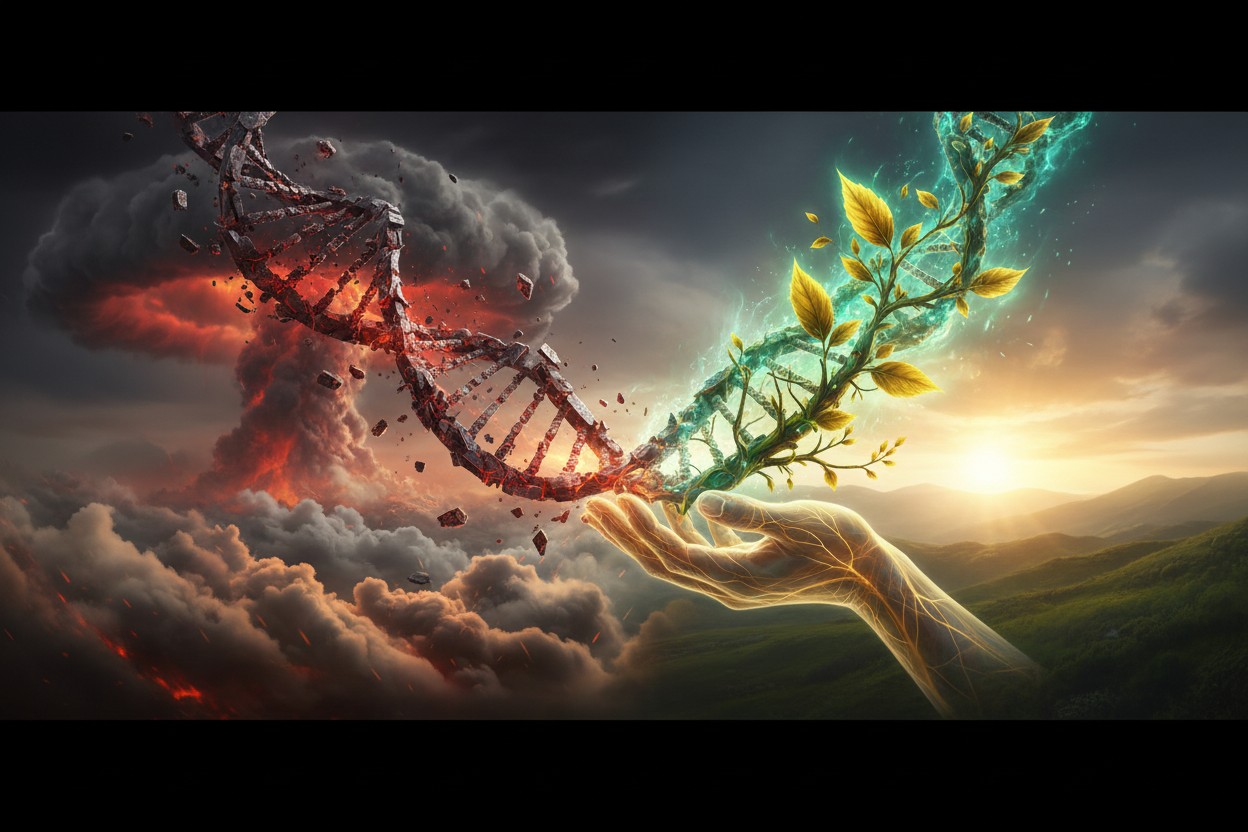
What experts describe as a "binary weapon against humanity" involves the simultaneous degradation of internal cellular repair mechanisms and the escalation of external environmental hazards, notably ionizing radiation. While modern institutions often treat these subjects in isolation, a growing body of independent literature suggests that the intersection of persistent biological agents—such as spike proteins derived from viral exposure or genetic interventions—and the rising specter of nuclear conflict presents an unprecedented challenge to the genetic integrity of the human population.
This article examines the structural anatomy of this perceived crisis, analyzing the biological mechanisms of DNA repair suppression, the geopolitical backdrop of nuclear escalation, the synergistic impact of these forces, and the emerging nutritional and biochemical strategies being explored to fortify human cellular resilience.
Main Facts
To understand the scope of the alleged genetic threat, it is necessary to examine the two primary vectors driving the discussion: internal cellular disruption and external environmental destruction.
- Vector One (Cellular Disruption): According to various independent analyses of peer-reviewed literature, specific viral proteins—most notably the spike protein associated with SARS-CoV-2 and mRNA vaccine platforms—have been observed to localize within the cell nucleus. Research cited by molecular biologists suggests that these proteins can inhibit critical DNA double-strand break repair pathways, specifically Non-Homologous End Joining (NHEJ) and Homologous Recombination (HR), by up to 85% to 90%.
- Vector Two (Environmental Hazards): The risk of ionizing radiation exposure has intensified amid escalating geopolitical tensions among nuclear-armed states. Experts note that even low doses of ionizing radiation (such as 1 Gray) can induce dozens of double-strand breaks per individual cell.
- The Synergy: When cellular repair mechanisms are compromised by biological factors, the body’s natural ability to address radiation-induced genetic damage is severely impaired. Without functional repair pathways, unrepaired mutations can accumulate across trillions of cells, theoretically increasing the long-term risk of genomic instability, immune dysfunction, and oncogenesis.
- The Counter-Strategy: Proponents of nutritional biochemistry argue that DNA repair pathways are not fixed and can be modulated through targeted dietary interventions. Compounds such as sulforaphane (derived from cruciferous vegetables like broccoli sprouts), NAD+ precursors, specific mineral cofactors, and nucleotide pool supports are currently being researched for their potential to upregulate cellular defense and repair mechanisms.
Chronology of Events and Escalation
The convergence of biological and radiological concerns did not happen overnight; it is the product of a multi-year trajectory spanning public health interventions and geopolitical realignments.
- Late 2019 – 2020: The emergence of SARS-CoV-2 leads to a global pandemic. Rapid development and deployment of novel mRNA and vector-based vaccines introduce widespread exposure to the viral spike protein across billions of human hosts.
- 2021 – 2023: As mass vaccination campaigns continue, independent researchers begin publishing preliminary studies examining the intracellular behavior of the spike protein. Early investigations focus on its potential interactions with cellular nuclei and its impact on adaptive and innate immune responses. Concurrently, geopolitical tensions rise in Eastern Europe and the Middle East, renewing discussions regarding strategic nuclear deterrence.
- 2024 – 2025: Academic literature expands on the mechanisms of DNA damage response (DDR) inhibition caused by viral components. In the geopolitical arena, international treaties governing arms control face severe strain. Diplomatic channels narrow as major nuclear powers modernize arsenals and revise doctrine regarding tactical nuclear deployments.
- 2026 and Beyond: Public discourse increasingly links systemic chronic illnesses, persistent fatigue syndromes, and elevated oncological anomalies with long-term exposure to spike proteins. Simultaneously, government officials and defense analysts openly debate the threshold for nuclear engagement, prompting independent health educators to pivot toward proactive cellular resilience and nutritional defense programs.
Supporting Data and Mechanistic Analysis
The core of the argument rests on the molecular biology of DNA repair and the physics of radiation exposure.
The Mechanics of Double-Strand Breaks
The human genome is constantly exposed to endogenous and exogenous stressors, ranging from metabolic reactive oxygen species (ROS) to ultraviolet light and ionizing radiation. To combat this, cells possess sophisticated DNA Damage Response (DDR) networks. The most lethal form of DNA damage is the double-strand break (DSB), where both strands of the DNA double helix are severed.
Cells primarily utilize two pathways to mend DSBs:
- Non-Homologous End Joining (NHEJ): Active throughout the cell cycle, NHEJ directly ligates the broken DNA ends together. While efficient, it is occasionally prone to introducing minor mutations at the junction site.
- Homologous Recombination (HR): Highly accurate, HR uses an undamaged sister chromatid as a template to precisely repair the break. This pathway is predominantly active during the S and G2 phases of cell division.
The Spike Protein Interference Hypothesis
Independent investigations into nuclear localization signals (NLS) suggest that spike proteins can penetrate the nuclear membrane. Once inside, they have been hypothesized to interfere with the recruitment of key repair proteins, such as BRCA1 and 53BP1, which are essential for both NHEJ and HR.
If repair efficiency drops by the reported 85–90%, a cell exposed to environmental mutagens loses its primary line of defense. For instance, a standard exposure to ionizing radiation yielding 40 double-strand breaks per cell would normally be mitigated by functional DDR machinery. With an 85% suppression rate, the vast majority of these lesions remain uncorrected, leading to misrepair, chromosomal translocations, or cellular apoptosis.
Radiation Exposure Metrics
In a hypothetical scenario involving tactical nuclear events or widespread radiological fallout, baseline background radiation increases significantly. Environmental scientists calculate doses in Grays (Gy) or Sieverts (Sv). A localized exposure of 1 Gy delivers substantial energy to biological tissues, translating to thousands of localized ionization events per organism. When combined with a systemically suppressed DNA repair capacity, the biological margin of safety narrows drastically.
Official Responses and Institutional Perspectives
The intersection of spike protein persistence and nuclear risk occupies a contentious space between mainstream regulatory bodies and independent researchers.
The Mainstream Consensus
Mainstream public health organizations, including the World Health Organization (WHO) and the Centers for Disease Control and Prevention (CDC), maintain that authorized mRNA vaccines are safe and effective. Regulatory agencies state that the mRNA encoding the spike protein is transiently expressed, degraded rapidly by cellular enzymes, and does not integrate into the host genome. Consequently, institutional bodies reject the hypothesis that vaccine-derived spike proteins induce widespread, long-term genomic instability or suppress DNA repair pathways on a population scale.
Regarding nuclear threats, defense departments and international diplomatic bodies acknowledge heightened geopolitical friction but emphasize established deterrence doctrines designed to prevent escalation. Official policy frameworks continue to prioritize diplomatic resolution, strategic stability, and arms control negotiations, dismissing fringe apocalyptic scenarios while maintaining standard civil defense preparedness.
The Independent Counter-Perspective
Conversely, a segment of the scientific and medical community challenges the narrative of rapid clearance. Citing pharmacokinetics data and autopsy findings showing persistent spike protein accumulation in tissues months after injection, these researchers argue that the biological footprint of the intervention is longer-lasting than initially reported.
Furthermore, independent educators emphasize that mainstream medical curricula historically overlook the direct modulation of genetic repair pathways through nutritional and metabolic support, leaving populations unnecessarily vulnerable to both biological and environmental stressors.
Implications for Human Resilience and Future Outlook
The convergence of genetic suppression and external radiological threats forces a reassessment of modern public health and personal preparedness. If genomic stability is indeed under simultaneous internal and external pressure, passive reliance on conventional medical paradigms may prove insufficient.
Paradigm Shift in Preventive Health
The emerging discourse emphasizes "nutritional modification of DNA repair." Rather than viewing genetic integrity as a static trait determined solely by heredity, researchers in nutritional epigenetics argue that cellular machinery can be supported through specific cofactors:
- Sulforaphane: Found abundantly in broccoli sprouts, this compound is known to activate the Nrf2 pathway, upregulating antioxidant enzymes and supporting cellular detoxification.
- NAD+ Precursors: Nicotinamide adenine dinucleotide (NAD+) is a vital coenzyme required by PARPs (poly ADP-ribose polymerases), which act as molecular first responders to DNA damage.
- Micronutrient Support: Ensuring adequate levels of zinc, magnesium, and folate provides the necessary catalytic cofactors for enzymatic DNA synthesis and repair.
Societal and Strategic Ramifications
As geopolitical lines harden and biological unknowns persist, the imperative shifts toward decentralization of health knowledge. Empowering individuals with cost-effective, accessible strategies to enhance cellular resilience—such as home-sprouting nutrient-dense greens and optimizing metabolic health—forms the bedrock of modern survival philosophy.
Ultimately, whether viewed through the lens of acute geopolitical crisis or chronic molecular disruption, the dialogue surrounding genetic preservation highlights a universal truth: biological resilience requires active maintenance, environmental awareness, and a willingness to look beyond conventional institutional frameworks for solutions.