Main Facts
For lapidary artists, metaphysical practitioners, geologists, and casual crystal enthusiasts alike, attending a major international gem and mineral show is the ultimate bucket-list experience. Among the countless exhibitions held worldwide, two massive North American events stand undisputed at the apex of the industry: the Tucson Gem, Mineral & Fossil Showcase in Arizona and the Denver Gem and Mineral Show in Colorado.
While both events draw tens of thousands of visitors, international wholesalers, and world-class curators, they offer vastly different experiences in terms of scale, climate, atmosphere, and logistical requirements. To help navigate these mammoth marketplaces, Team HM member and Crystal Coach Lisa D’Arrigo recently released an in-depth video breaking down a direct comparison between the two giants.
At their core, both exhibitions are celebrations of Earth’s most breathtaking geological creations—from towering Fire and Ice Quartz clusters to massive Smokey Quartz Earth Keepers and intricately carved Lepidolite sculptures. However, understanding the operational rhythms, buying strategies, and physical demands of each show is vital for anyone planning to transition from casual admirer to active attendee.
Chronology of the Modern Gem Show Circuit
To fully appreciate the magnitude of the Tucson and Denver shows, it is helpful to look at how these seasonal epicenters evolved into global phenomena.
The Rise of Tucson
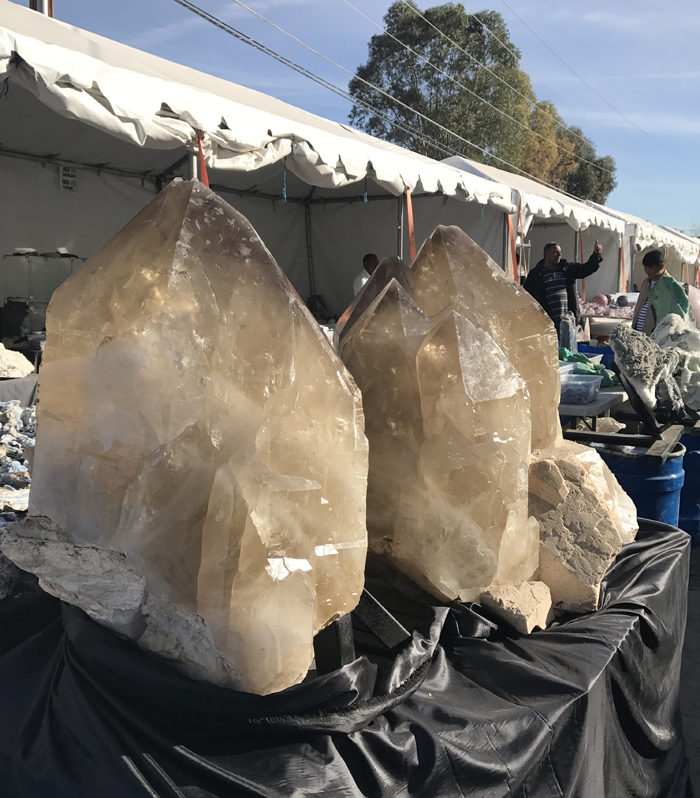
The Tucson Gem, Mineral & Fossil Showcase is not just a single event; it is a city-wide takeover that occurs annually over several weeks in late January and February. What began in the mid-20th century as a modest gathering of local rockhounds has snowballed into the largest gem and mineral exhibition in the world. Today, the event spans dozens of independent venues—ranging from high-end hotel suites and massive convention centers to massive outdoor white-tent pavilions scattered across Tucson, Arizona.
The Evolution of Denver
Conversely, the Denver Gem and Mineral Show takes place against the crisp backdrop of early autumn, typically in September. While the Denver show may not sprawl across an entire municipality quite like Tucson does, it has grown exponentially over the decades. Anchored by major venues like the Colorado Convention Center and complemented by various satellite hotel shows across the metropolitan area, the Denver circuit offers a slightly more contained—yet still overwhelmingly massive—marketplace for North American and international buyers.
Supporting Data: Comparing the Two Giants
When planning a pilgrimage to either the Tucson or Denver shows, attendees must weigh several logistical and environmental factors.
| Feature | Tucson Gem, Mineral & Fossil Showcase | Denver Gem and Mineral Show |
|---|---|---|
| Timing | Late January / February | September |
| Climate / Weather | Desert warmth, mild days, cool nights | Crisp autumn air, potential for rapid weather shifts |
| Footprint | City-wide (dozens of venues, cars/shuttles needed) | Concentrated hub (convention center + satellite hotels) |
| Inventory Focus | Extreme global diversity, raw minerals, high-end specimens, massive decorative art | High concentration of North American minerals, vast bead selections, lapidary tools |
| Vibe | Festive, high-energy, international bazaar | Bustling, community-focused, trade-heavy |
The Crystal Spectrum: What You Will Find
Clear and Smokey Quartz
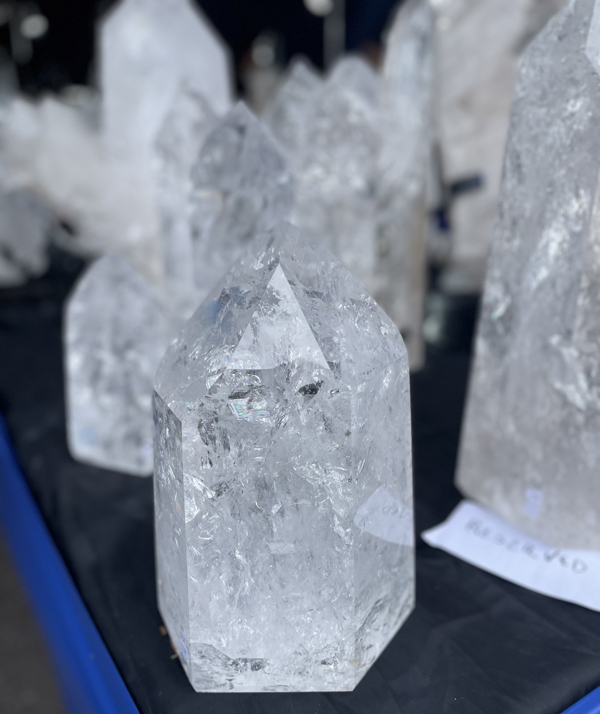
Quartz remains the undisputed rock star of the mineral kingdom. From hyper-clear optical points to towering Fire and Ice Quartz obelisks harvested in distant quarries, quartz dominates the showroom floors. Visitors frequently encounter massive Smokey Quartz Earth Keepers—specimens so large and energetically potent that practitioners often ponder the scale of their surrounding energy toruses.
Rare Formations and Carvings
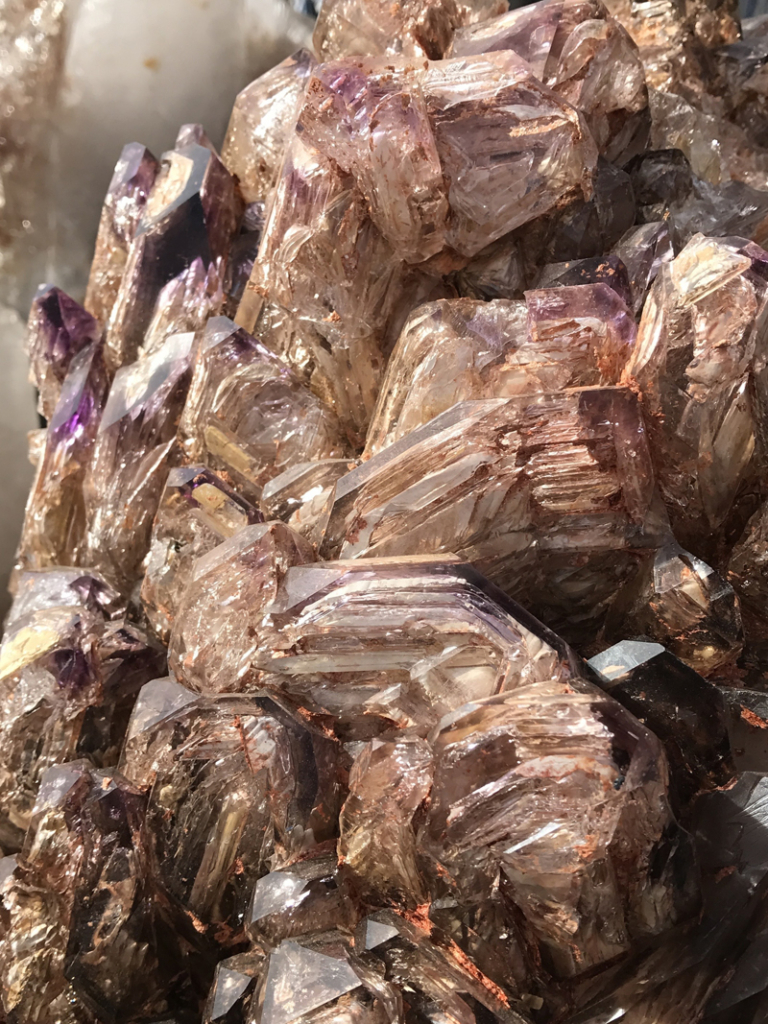
Beyond standard clusters, both shows serve as a global stage for master carvers. Attendees can marvel at exquisite works of art, such as intricate Krishna statues carved from Lepidolite, skeletal elestial amethyst pieces with complex inner worlds, and colossal Lemurian crystal points that seem to hold ancient programming within their striated faces.
Beads, Jewelry, and Decor
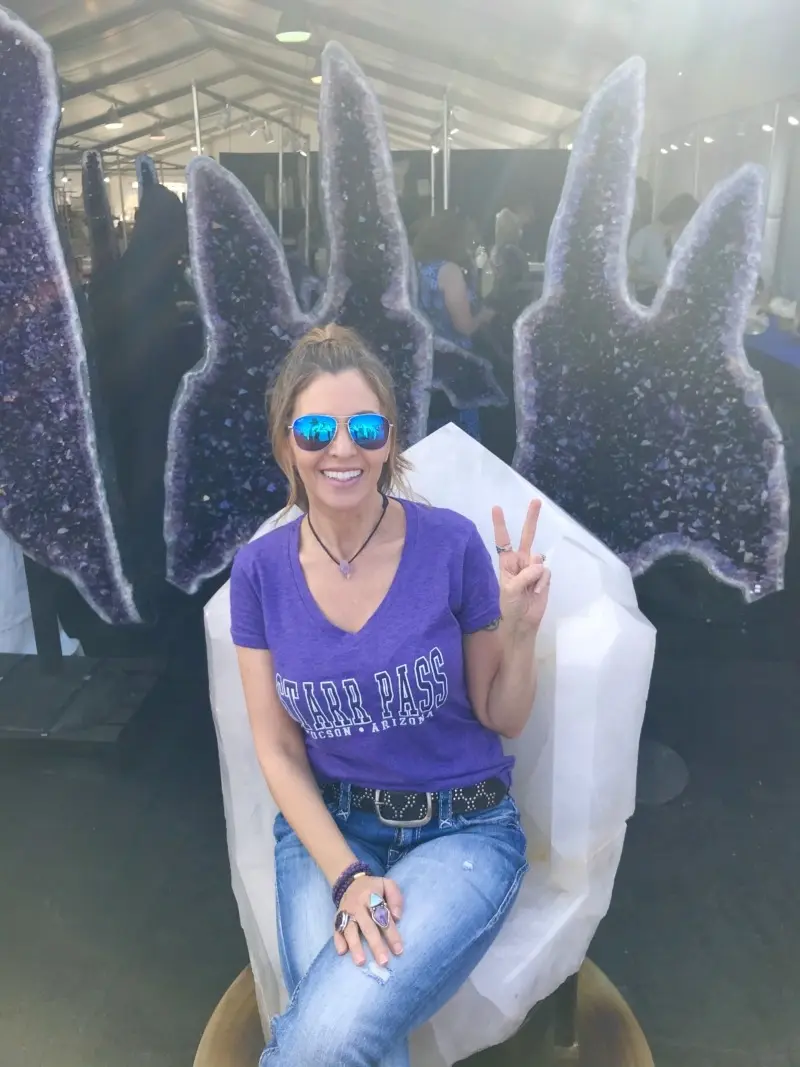
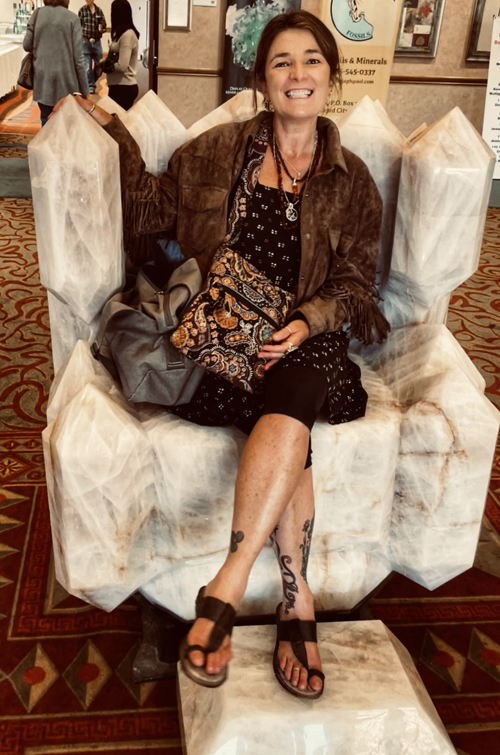
For designers and crafters, the bead pavilions are legendary. Rows upon rows of gemstone beads offer endless creative possibilities. Meanwhile, interior designers and collectors hunt for statement pieces, such as the famous Milky Quartz "thrones" found on the showroom floors—proving that crystal appreciation extends far beyond pocket stones.

Official Insights and Expert Guidance
To demystify the process of attending these exhibitions, Crystal Coach Lisa D’Arrigo’s comprehensive video guide breaks down the essential criteria every first-time visitor should evaluate.
Key Considerations Before You Go
- Define Your Purpose: Are you attending as a wholesale buyer looking for tax-ID-verified bulk purchases, a retail shopper hunting for personal pieces, or an energetic seeker looking to soak up crystal vibrations? Your objective will dictate which venues you should visit.
- Master the Logistics: Because Tucson is decentralized, renting a car or utilizing specialized shuttle systems is mandatory. Denver, while easier to navigate centrally, still requires careful mapping of satellite shows.
- Pace Yourself: The sheer sensory overload of walking miles of concrete floors surrounded by high-vibration minerals can lead to rapid physical exhaustion. Hydration, comfortable footwear, and structured pacing are absolute necessities.
Implications for the Crystal Community and Local Economies
The economic and cultural impact of the Tucson and Denver gem shows extends far beyond individual purchases.
Economic Boost and Global Trade
These events act as vital economic lifelines for miners, independent artisans, and global cooperatives, particularly in developing nations where crystal mining supports entire communities. By bringing international suppliers directly to North American buyers, the shows cut out layers of middlemen, fostering direct relationships between earth-keepers and end-users.
The Shift Toward Experiential Mineralogy
In recent years, the implication for the metaphysical and wellness communities has been profound. Shows like Tucson and Denver are no longer viewed strictly as commercial markets; they are treated as spiritual and educational symposiums. Practitioners use these environments to study mineral properties, observe rare geological formations firsthand, and deepen their understanding of Earth energies.
Whether you choose the sun-drenched desert bustle of Tucson in February or the crisp mountain air of Denver in September, stepping into these massive emporiums is a transformative experience. As Lisa D’Arrigo and fellow crystal enthusiasts consistently prove, even if you return home with only a handful of small stones—or simply memories of sitting on a giant milky quartz throne—the energetic resonance of the journey lingers long after the packing crates are stored away.