For mineralogists, lapidary artists, holistic practitioners, and passionate crystal collectors worldwide, few events hold the legendary status of the massive North American gem and mineral exhibitions. To attend one of these colossal gatherings is to step into a sensory-rich wonderland where the earth’s most ancient and magnificent creations are bought, sold, and celebrated.
Recently, Team HM’s resident Crystal Coach, Lisa D’Arrigo, teamed up with crystal expert Hibiscus Moon to break down the nuances of the two heavyweight champions of the mineral world: the Tucson Gem, Mineral & Fossil Showcase and the Denver Gem and Mineral Show. Through an exclusive video breakdown and years of firsthand exploration, the team offers an inside look at what it truly takes to conquer these bucket-list events.
Main Facts: The Titans of the Mineral World
When discussing the premier destinations for crystal lovers, the conversation invariably centers around Tucson, Arizona, and Denver, Colorado. While both cities play host to world-class events that attract tens of thousands of attendees, trade professionals, and retail buyers, their operational scale, geographical footprint, and seasonal atmospheres differ markedly.
- The Tucson Gem, Mineral & Fossil Showcase: Universally recognized as the largest gem and mineral event on Earth. It is not merely a single convention, but a city-wide phenomenon occupying dozens of independent venues—ranging from luxury resort hotels and giant convention centers to massive outdoor white tents spanning across the Arizona desert. It typically runs for nearly two weeks in late January and February.
- The Denver Gem and Mineral Show: A monumental gathering in its own right, the Denver showcase takes advantage of the Colorado Convention Center and various satellite shows across the Mile High City. Known for its robust offerings of Colorado-mined minerals, exceptional fossils, and stunning bead selections, the autumn event serves as a crucial mid-year pilgrimage for northern and western collectors.
Both exhibitions offer an unmatched density of quartz variations, rare elestials, towering crystal clusters, and intricate gemstone carvings. However, navigating either requires strategic planning, physical stamina, and a clear understanding of whether one is attending as a wholesale buyer, a retail enthusiast, or a casual admirer soaking up the vibrational energy.
Chronology: The Evolution of the Modern Gem Show Pilgrimage
The tradition of gathering to trade and admire earth’s geological treasures has evolved significantly over the past century.
The Mid-20th Century Roots
What began as small, localized clubs of hobbyists and lapidary enthusiasts meeting in school gymnasiums and community centers gradually expanded as global trade routes opened and appreciation for metaphysical properties and geological specimens surged. The Tucson show, in particular, humble in its origins during the mid-1950s at a local elementary school, grew exponentially year after year as international dealers realized the strategic value of converging in the American Southwest during the winter months.
The Modern Expansion (2000s–Present)
Over the last two decades, social media, the wellness boom, and a renewed interest in earth-based aesthetics transformed gem shows from niche trade events into mainstream bucket-list destinations.
- January/February: The calendar year kicks off with the colossal Tucson takeover, where international wholesalers from Madagascar, Brazil, India, and China set up temporary storefronts in hotel rooms, transforming traditional lodging into labyrinthine treasure troves.
- September/October: As summer turns to autumn, the Denver showcases draw crowds eager to acquire fresh stock before the holiday season, offering a slightly more consolidated yet breathtakingly expansive array of inventory.
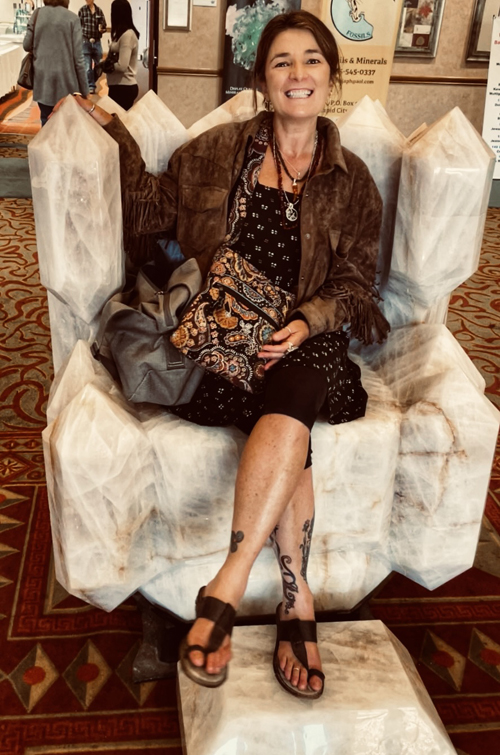
Team HM’s documentation of these events—ranging from exploring fire-and-quartz towers in Denver to posing on milky quartz thrones in Tucson—highlights how the culture of these shows has shifted toward experiential connection, where attendees do not just buy minerals; they engage with them on a deeply personal and energetic level.
Supporting Data: Understanding the Scale and Scope
To fully grasp the magnitude of these exhibitions, one must examine the sheer volume of commerce, geography, and variety involved.
Tucson By the Numbers
- Venues: Over 40 distinct show sites scattered across Tucson, creating a sprawling network connected by dedicated shuttle services.
- Economic Impact: Generates tens of millions of dollars for the local economy, filling hotels, restaurants, and rental cars for weeks.
- Global Reach: Vendors represent morep than 20 countries, bringing direct-from-mine specimens that bypass traditional retail markups.
Denver By the Numbers
- Consolidation: While featuring multiple locations (including the main Denver Coliseum-area shows and the Colorado Convention Center), the layout is generally more centralized and weather-dependent than the desert expanse of Tucson.
- Specialization: Highly regarded for Rocky Mountain fluorites, Amazonite from the nearby El Paso County, and an immense concentration of bead, jewelry-making, and lapidary supply booths.
The Mineralogy Highlight Reel
Across both shows, specific geological formations dominate the collector market:

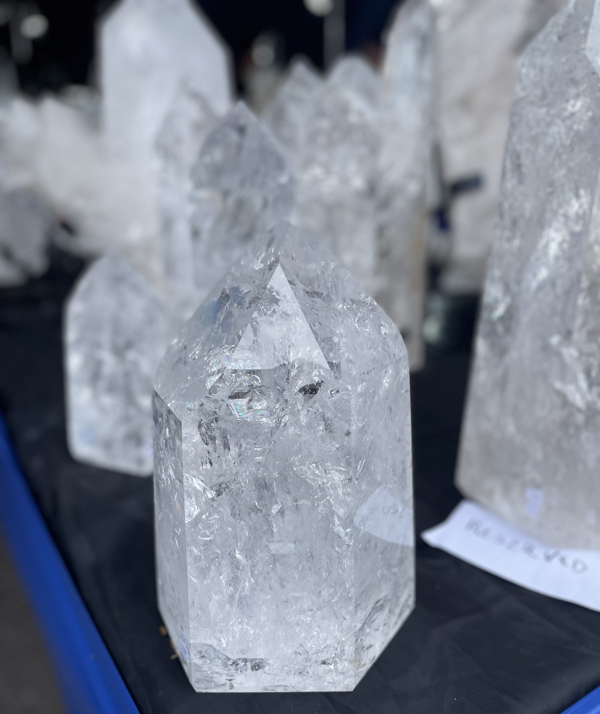
- Clear Quartz & Quartz Towers: Ubiquitous and revered. Whether polished into sleek, geometric towers or left in natural cathedral formations, quartz remains the bedrock of any mineral collection due to its piezoelectric properties and perceived energetic amplification.
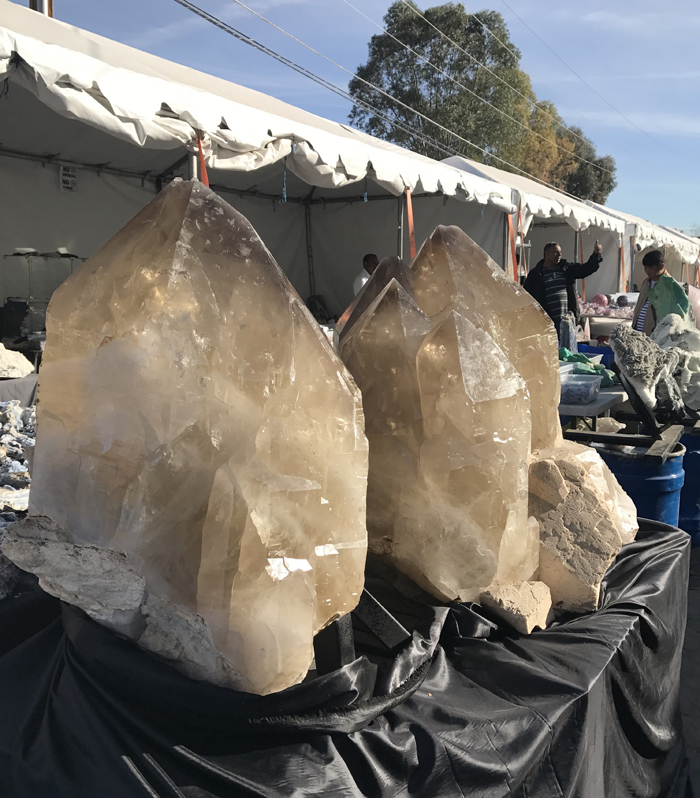
- Smokey Quartz Earth Keepers: Massive, deeply hued quartz specimens carrying natural terminations that historical traditions suggest hold ancient wisdom.
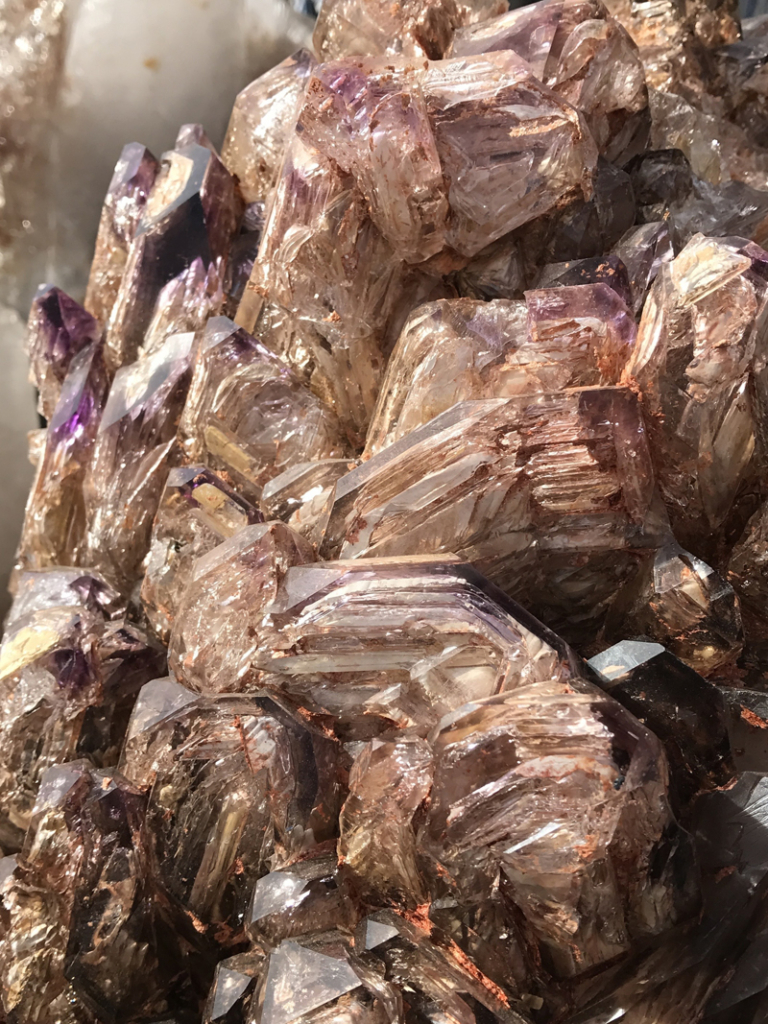
- Elestial Quartz & Skeletal Amethyst: Complex, layered crystal formations featuring multiple termination points and internal "windows" or phantom layers that captivate advanced collectors.
- Carved Masterpieces: Artisans from cultures around the globe utilize soft-to-medium hardness stones like lepidolite to carve intricate spiritual iconography, such as statues of Hindu deities (e.g., Krishna), demonstrating the intersection of art, geology, and spirituality.
Official Responses and Expert Insights from Team HM
Preparing for a journey to Tucson or Denver is no small feat. Crystal Coach Lisa D’Arrigo and Hibiscus Moon have formulated comprehensive video guides and written checklists to help attendees maximize their time and investment.
Expert Advice on Show Preparation
In her official Gem Show Comparison video, Lisa D’Arrigo outlines essential strategies for first-time visitors:
- Know Your Credentials: Many shows require wholesale tax IDs and business licenses for entry during the first few days, while others open their doors to the general public on the weekends. Checking buyer criteria in advance prevents wasted trips.
- Physical Conditioning: "Wear your most comfortable walking shoes," Team HM advises. Attendees routinely log 10 to 15 miles of walking per day across asphalt parking lots, gravel tent floors, and endless convention center aisles.
- Hydration and Sun Protection: In Tucson’s desert climate, hydration is critical. Conversely, Denver’s high altitude demands awareness of physical exertion levels.
- The Golden Rule of Purchasing: "Don’t buy the first piece you see unless your intuition screams yes." Because the inventory variety is virtually limitless, pacing oneself is crucial to managing both budget and luggage weight limits on the flight home.
Implications: The Cultural, Economic, and Energetic Impact
The popularity of the Tucson and Denver gem shows extends far beyond simple retail therapy. These events carry profound implications for local economies, ethical sourcing practices, and the global metaphysical community.
Economic and Ethical Sourcing
As consumer awareness grows, buyers increasingly inquire about the origins of their stones. Gem shows serve as a vital nexus where boutique shop owners, jewelry designers, and holistic practitioners can interact directly with miners and family-run quarry operations. This direct line of trade fosters greater transparency regarding fair labor practices and environmental stewardship in regions heavily dependent on mining, such as Minas Gerais in Brazil or the Erongo region in Namibia.

The Energetic Paradigm
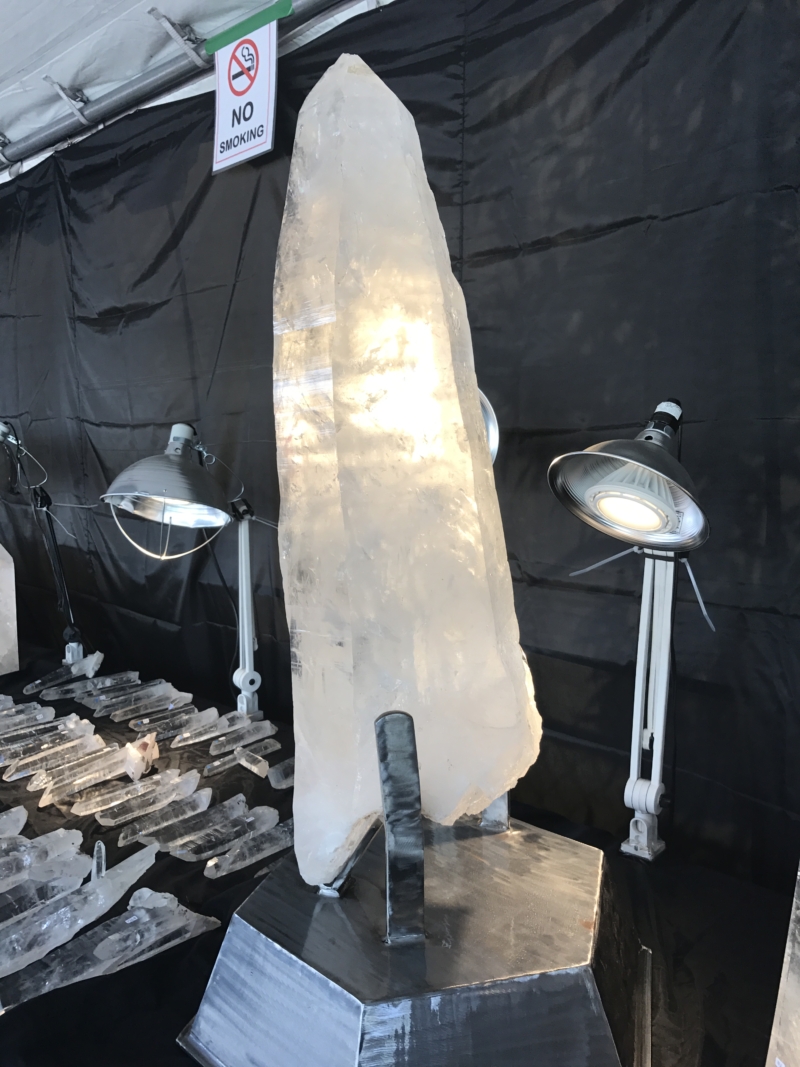
For the metaphysical community, stepping onto a show floor is described as an immersion into a collective vibrational field. Practitioners often speak of the "energy toruses" generated by massive crystal clusters—such as the giant Lemurian quartz points or towering Smokey Quartz Earth Keepers documented by Team HM. Whether viewed through the lens of geological wonder or energetic resonance, the experience offers a tactile connection to the Earth’s deep history that digital storefronts simply cannot replicate.
Conclusion: Which Show is Right for You?
Whether you choose the sun-drenched, sprawling desert adventure of Tucson in the winter or the crisp, mineral-rich mountain air of Denver in the fall, attending a major gem show is a transformative rite of passage for any crystal enthusiast. As Hibiscus Moon and Lisa D’Arrigo demonstrate, even if you return home with only a handful of gemstone beads or simply memories of sitting on a milky quartz throne, the inspiration gathered from these earthly masterpieces lasts a lifetime.
Have you ever made the pilgrimage to the Tucson or Denver Gem Shows? Are they currently on your bucket list, or do you plan to conquer both? Share your experiences, crystal finds, and questions in the comments below!
Crystal Blessings,
Hibiscus Moon