







Main Facts: The Titans of the Mineral World
For mineralogists, lapidary artists, holistic practitioners, and casual crystal enthusiasts alike, attending one of the world’s premier gem and mineral exhibitions is more than a vacation—it is a pilgrimage. At the pinnacle of the global crystal circuit stand two monumental events: the Tucson Gem, Mineral & Fossil Showcase in Arizona and the Colossal Denver Gem and Mineral Show Showcase in Colorado.
While both expos serve as global epicenters for Earth’s most breathtaking geological treasures, they offer distinct experiences driven by their unique geographical footprints, vendor demographics, and seasonal atmospheres. Understanding the nuances of these trade-only and public extravaganzas is essential for anyone looking to transition a trip to these shows from a bucket-list dream into an organized, highly rewarding reality.
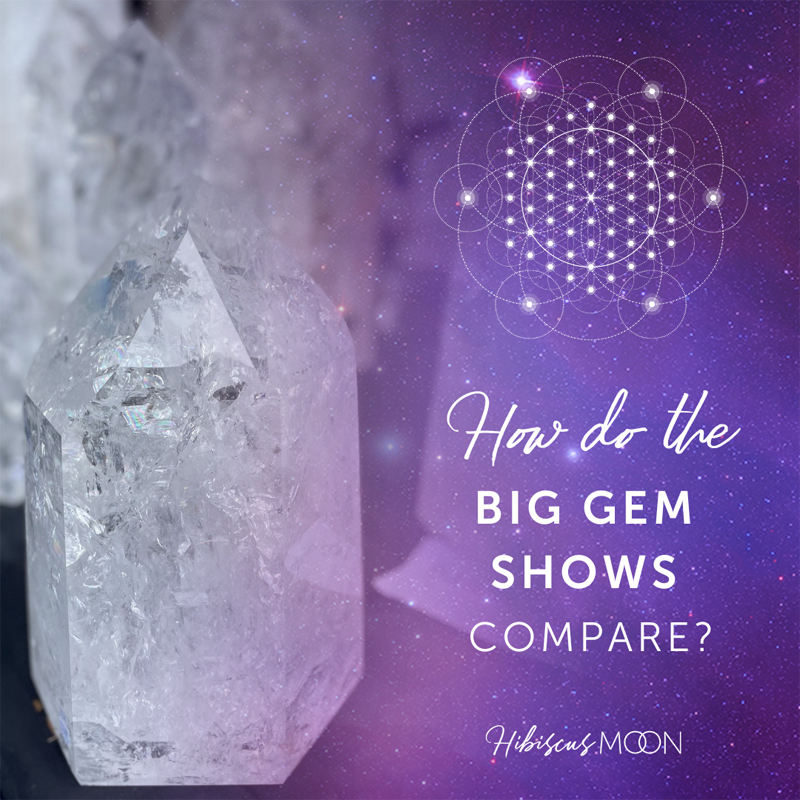
To shed light on these differences, crystal expert Lisa D’Arrigo of Team Hibiscus Moon recently broke down the distinct attributes of both venues in a comprehensive video guide. From towering Fire and Ice quartz formations to massive Smokey Quartz Earth Keepers and intricate Lepidolite carvings, the sheer magnitude of these exhibitions highlights an undeniable truth: when it comes to the global crystal community, it is all about the specimens.
Chronology: A Year-Round Cycle of Geological Discovery
The rhythm of the international mineral trade is dictated by a seasonal migration of miners, wholesalers, artisans, and buyers. While regional rock and mineral clubs host smaller events throughout the year, the calendar is anchored by the grand exhibitions in the American West.
Late Summer: The Denver Kickoff
The autumn season traditionally begins in the Rocky Mountain region with the Denver Gem and Mineral Show. Held as the crisp air of September descends upon Colorado, this event serves as an essential gathering point for North American buyers, jewelry designers, and wholesale merchants. It marks the first major post-summer opportunity for dealers to unveil newly mined specimens sourced during the international mining seasons.
Winter: The Tucson Epicenter
Following the autumn shows, anticipation builds toward the undisputed heavyweight champion of the mineral world: the Tucson Gem, Mineral & Fossil Showcase. Spanning several weeks between January and February, this event takes over the entire city of Tucson, Arizona. Dozens of independent hotel properties, convention centers, and massive outdoor tents convert into a sprawling marketplace.
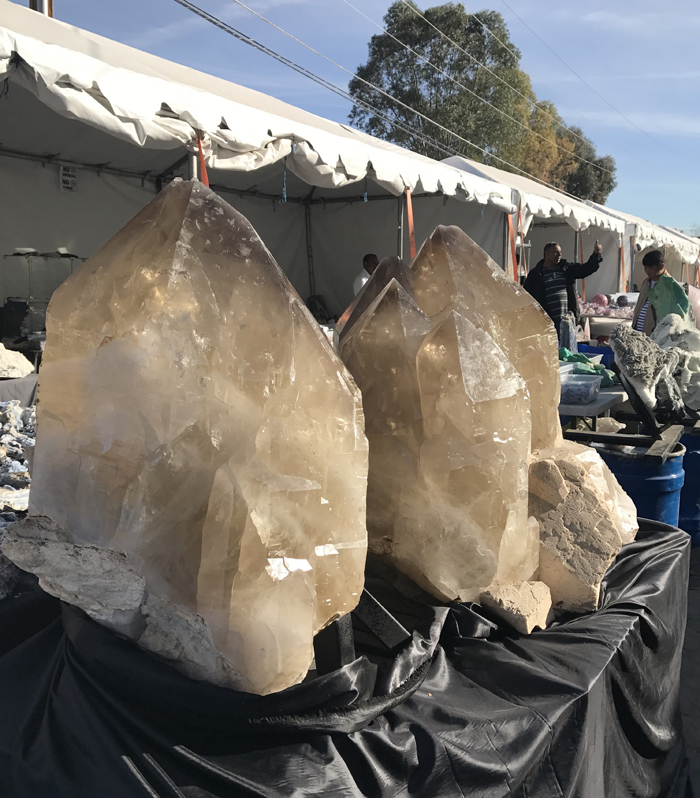
For industry insiders, Tucson represents the culmination of the sourcing year. International vendors from Madagascar, Brazil, India, China, and Morocco bring their rarest, freshly extracted inventory straight to the desert floor. Navigating this multi-week marathon requires meticulous planning, as no single visitor can hope to see every tent and showroom in a single weekend.
Supporting Data: Scale, Variety, and the Crystal Economy
The sheer economic and physical scale of the Tucson and Denver shows places them in a league of their own within the global trade and tourism sectors.
- Geographic Footprint: The Tucson Showcase is not a single event, but a collection of roughly 40 to 50 independent shows scattered across the city, ranging from high-end indoor convention halls (such as the Tucson Convention Center) to sprawling outdoor tent markets along Interstate 10.
- Vendor Diversity: Both shows host thousands of vendors, ranging from wholesale rough-stone distributors and fossil preparators to high-end metaphysical curators and artisanal jewelry fabricators.
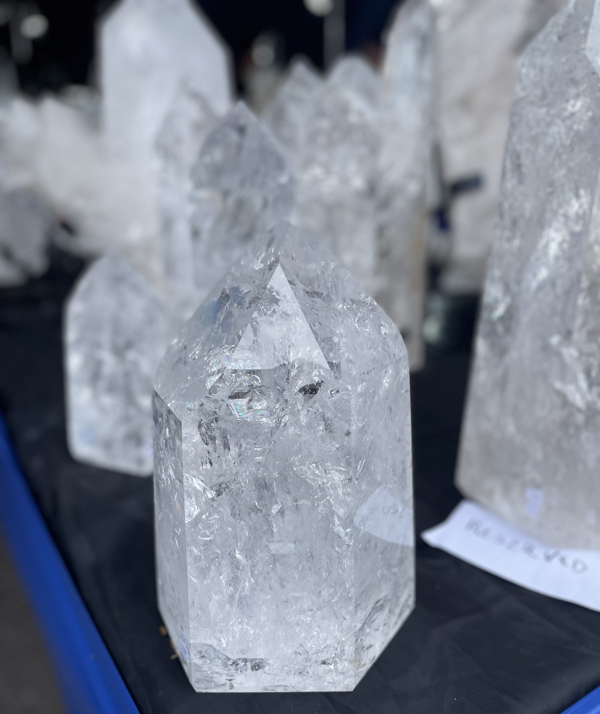
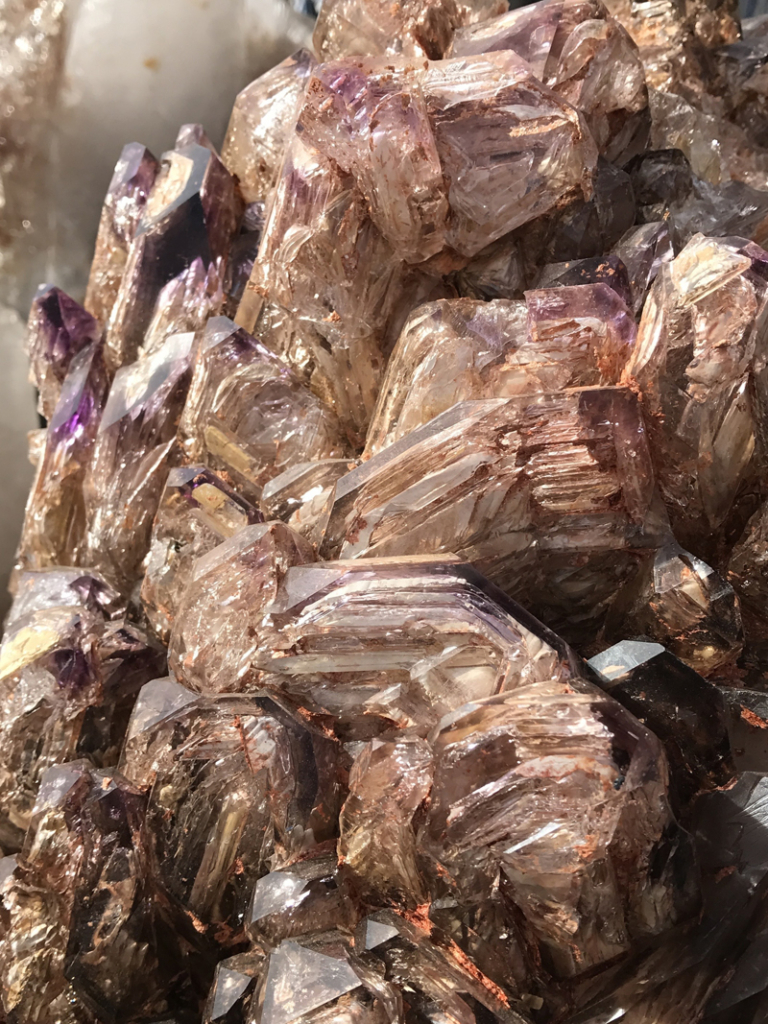
- Specimen Variety: Attendees have access to virtually every known mineral species on Earth, including museum-grade Clear Quartz, massive Smokey Quartz Earth Keepers, rare elestials, colossal Lemurian quartz points, and expertly sculpted decor pieces like the renowned Lepidolite Krishna carvings found at the Denver exhibitions.
- Educational Impact: Beyond commerce, these exhibitions function as informal universities. They offer lectures by renowned geologists, workshops on wire-wrapping and lapidary arts, and invaluable networking opportunities for holistic practitioners interested in the vibrational frequencies and energetic properties of mineral formations.
Official Perspectives: Expert Insights from Team Hibiscus Moon
Preparing for a journey to either Tucson or Denver requires insider knowledge to avoid sensory overload and logistical pitfalls. Crystal Coach Lisa D’Arrigo’s comparative analysis emphasizes that proper preparation is the dividing line between a successful sourcing trip and an overwhelming experience.
Key Considerations Before You Go
According to Team HM, attendees must address several critical factors before booking travel:

- Wholesale vs. Retail Status: Many venues at Tucson and Denver require proof of a business license or tax ID for wholesale access, though numerous shows welcome the general retail public. Checking credential requirements ahead of time prevents disappointment at the door.
- Logistics and Footwear: The physical stamina required is immense. Attendees regularly log 10 to 15 miles of walking per day across concrete floors, gravel lots, and dusty tent encampments. Sturdy footwear and hydration are non-negotiable.
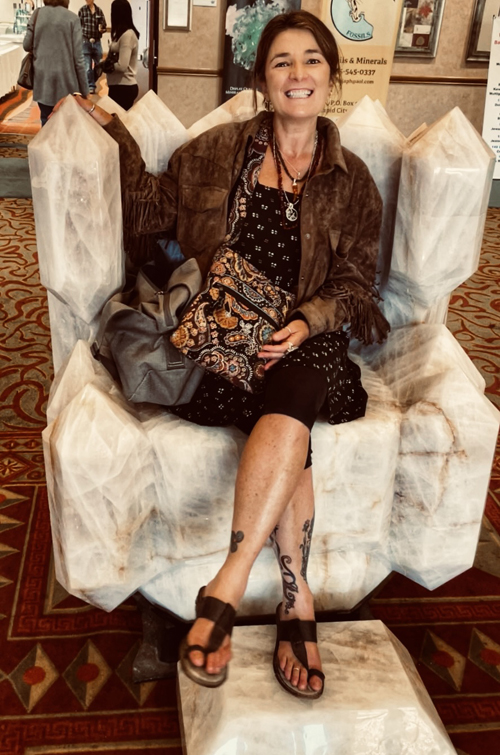
- Budgeting and Shipping: With thousands of mesmerizing specimens—ranging from delicate gemstone beads to multi-hundred-pound crystal thrones—temptation is everywhere. Savvy buyers establish a firm budget and often utilize on-site shipping services to safely transport heavy or fragile purchases back home.
Implications: The Cultural and Energetic Impact of the Gem Shows
Beyond their economic significance as multi-million-dollar trade hubs, the Tucson and Denver shows hold profound cultural and energetic value for the global metaphysical and geological communities.
A Convergence of Science and Metaphysics
These exhibitions bridge two worlds that are often viewed as mutually exclusive: rigorous earth science and holistic metaphysics. Geologists and paleontologists mingle freely with crystal healers, reiki masters, and spiritual practitioners. Museums acquire world-class type specimens for scientific study, while individual collectors unearth personal ritual tools intended to anchor specific energetic frequencies—often referred to in the crystal community as interacting with a crystal’s distinct "energy torus."
Sustainability and Ethical Sourcing
As the crystal market experiences unprecedented global growth, increased scrutiny falls upon the supply chain. Conversations surrounding ethical mining practices, fair wages for international miners, and the environmental footprint of large-scale extraction operations have taken center stage at these gatherings. Many modern vendors increasingly pride themselves on transparent sourcing, tracing their inventory directly from independent family-owned mines in regions like Brazil and the Himalayan mountains.
Conclusion: Which Show Belongs on Your Bucket List?
Whether you choose the sprawling, sun-drenched desert labyrinth of the Tucson Showcase or the crisp, vibrant atmosphere of the Denver exhibitions, participating in one of these premier events is a transformative experience for any crystal lover.

As Lisa D’Arrigo highlights in her expert breakdown, even if you do not purchase a single specimen, simply standing in the presence of millions of years of Earth’s history—surrounded by towering quartz formations, intricate crystal skulls, and masterfully polished lapidary art—is an unforgettable adventure.
Have you ever attended the Tucson or Denver gem shows? Is a journey to these legendary exhibitions currently sitting at the top of your bucket list, or do you plan to conquer both? Share your experiences, travel tips, and favorite crystal finds in the comments below!