









By Manny Tejeda y Moreno
Published: July 29, 2026
Main Facts: The Hyper-Masculinization of Modern Religion
A profound and unsettling shift is taking place within conservative religious spaces, characterized by the hyper-masculinization of faith, the revival of "Muscular Christianity," and the aggressive elevation of the warrior archetype above all other human virtues. This cultural current, increasingly mainstreamed within segments of the American far-right, seeks to replace pluralistic democracy with rigid hierarchies, traditionalist gender subordination, and, in its most extreme manifestations, the balkanization of the United States into ethno-nationalist enclaves.
At the center of this movement are figures like Pastor Dale James Partridge, an American Reformed Christian theologian, author, and lead teaching pastor at King’s Way Reformed Church in Prescott, Arizona. Partridge and like-minded ideologues have leveraged digital media, podcasts, and seminaries to merge religious identity with militant politics. On a recent July episode of his American Glory podcast, Partridge openly advocated for the dismantling of the U.S. Constitution, the mass deportation of non-conforming populations, the establishment of a white Christian ethnostate, and rule by a constitutional monarch.
While fringe in its most radical iterations, this rhetoric reflects a broader ideological contagion: the dangerous reduction of complex human societies, diverse spiritual traditions, and civic responsibilities into a singular, militaristic worldview that treats every disagreement as a battlefield and every compromise as treason.
Chronology: From Victorian Roots to 21st-Century Radicalization
To understand how modern religious nationalism arrived at its current militant posture, it is necessary to examine the historical trajectory of Muscular Christianity and its recent political acceleration.
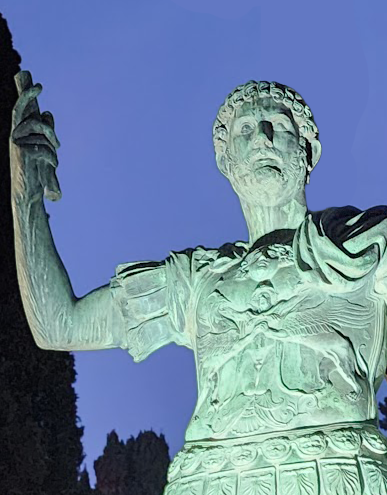
- Mid-19th Century (Victorian England): Muscular Christianity emerged as a philosophical and cultural movement responding to what critics viewed as the over-intellectualization and "effeminacy" of the modern church. Writers such as Charles Kingsley and Thomas Hughes championed physical strength, athletic duty, and robust manliness as essential prerequisites for defending the British Empire and doing God’s work on Earth.
- Late 2010s – Early 2020s: As modern cultural debates surrounding gender, feminism, and secularism intensified, the "trad-wife" and hyper-masculine Christian movements gained renewed traction online. Preachers and digital influencers began aggressively pushing rigid, patriarchal family structures, arguing that modern society’s ills stem from the subversion of traditional male authority.
- The 2024 U.S. Presidential Election: The fusion of religious fundamentalism and far-right politics became starkly visible. Figures like Dale James Partridge drew fierce public backlash after declaring online that, in a Christian marriage, a wife should vote strictly according to her husband’s political direction. Simultaneously, AI-generated imagery flooded social media, depicting a muscular Donald Trump standing triumphantly alongside an equally hyper-masculine, warrior-like Jesus Christ.
- July 7, 2026: On an episode of his American Glory podcast, Partridge crossed from cultural traditionalism into outright sedition. He outlined a detailed blueprint for the dissolution of the American republic, calling for balkanization, the repeal of foundational constitutional amendments, and the creation of an ethnically homogeneous, Christian monarchy.
Supporting Data and Ideological Objectives
The radical objectives articulated by modern Christian nationalists are not merely rhetorical flourishes; they target the foundational legal framework of the United States. During his July 7 broadcast, Partridge explicitly stated his desire to rewrite the nation’s governing documents to eliminate protections established by critical post-Civil War and 20th-century amendments:
- The 14th Amendment: Guarantees birthright citizenship and equal protection under the law. (Notably, challenges to birthright citizenship have increasingly found sympathetic ears within certain judicial and political circles, though they face stiff constitutional resistance).
- The 15th Amendment: Prohibits the federal and state governments from denying a citizen the right to vote based on that citizen’s "race, color, or previous condition of servitude."
- The 16th Amendment: Authorizes the United States Congress to levy an income tax.
- The 19th Amendment: Guarantees all American women the constitutional right to vote.
Partridge argued that a sprawling, pluralistic republic can no longer hold together a populace that does not share a unified ancestry, religious faith, and cultural vision. Framing mass deportation and balkanization as "moderate" alternatives to outright civil war, he asserted that any future monarch must share the ethnicity of the populace, demonstrate credible evidence of Christian regeneration, and be subject to a "right of resistance" clause should they abandon the faith.
Official Responses and Public Reactions
The public and theological fallout from the rise of militant Muscular Christianity has exposed deep fractures within American religious communities.
Mainline Christian denominations, interfaith coalitions, and secular watchdogs have sharply condemned the rhetoric emanating from figures like Partridge, characterizing it as un-American, authoritarian, and antithetical to the core tenets of Christian compassion and charity. Critics emphasize that packaging white nationalism and autocracy in religious language is a transparent attempt to baptize bigotry with biblical authority.
Conversely, within radical Christian nationalist subcultures, podcasts, house-church networks, and alternative digital platforms, these extreme ideas are met with growing enthusiasm. Proponents argue that the modern liberal democratic experiment has failed, viewing cultural pluralism not as a strength, but as an existential threat to Christian survival. This echo chamber routinely dismisses institutional pushback as persecution, further solidifying an "us versus them" mentality among its adherents.

Implications: The Cult of the Warrior vs. The Duty of the Citizen
The danger of Muscular Christianity and its contemporary political offshoots lies in a fundamental philosophical error: mistaking a single virtue—courage, strength, or combativeness—for the entirety of human virtue.
A society that prizes warriors above all else inevitably begins to treat every societal disagreement as a battle, every compromise as a surrender, and every act of care or empathy as a weakness. Human history demonstrates that civilizations are rarely sustained by permanent conflict; rather, they are built and preserved by institutions, civic responsibility, and community care.
A Pagan and Natural Counterpoint
Alternative spiritual traditions offer a vital conceptual contrast to this monolithic worldview. Modern Paganism, for instance, draws from mythologies and pantheons that celebrate a diverse array of archetypes. Deities are rarely reduced to a single, hyper-fixated mode of being.
- Odin (Norse tradition) seeks wisdom and sacrifice as often as he claims victory in battle.
- The Morrígan (Irish tradition) embodies sovereignty, fate, and prophecy alongside the grim realities of war.
Nature itself operates on cycles, reflecting a balance of diverse forces. There are seasons for the hunt, but there are equally seasons for planting, harvest, mourning, and rest. A culture that honors only the warrior forgets that the vast majority of human life is lived away from the battlefield—around the hearth, in the workshop, inside the classroom, at the bedside of the sick, and in the quiet stewardship of the land.
The True Safeguard of Civilization
Masculinity itself is not the problem; the danger arises when one specific, hyper-militarized expression of masculinity is declared the sole religious and moral standard against which all human worth is measured.

When examined through this lens, the true conceptual opposite of the warrior is not weakness, cowardice, or effeminacy. The opposite of the warrior is the citizen.
Citizens are the architects of enduring societies. They build schools, raise children, preserve ecosystems, compose art, settle disputes through law, comfort the dying, and plant trees whose shade they will never sit beneath. While warriors are undeniably indispensable during moments of acute crisis, it is the quiet, varied, and steadfast labor of citizens that sustains a civilization through the ages.