









By Manny Tejeda y Moreno
Published August 7, 2026
From the rhythmic thrum of ancient seasonal festivals to the carefully timed public rituals of modern communities, shared human gatherings have long been a cornerstone of civilization. While participants have historically described these events through a spiritual or cultural lens, contemporary science is beginning to map the profound psychological machinery running beneath the surface.
A pivotal study published in Frontiers in Psychology offers compelling empirical evidence that participating in communal rituals does far more than simply entertain. The research demonstrates that shared ritual experiences can actively foster awe, fortify community identity, and paradoxically expand an individual’s sense of empathy and connection to humanity at large. This new data builds on a growing body of psychological literature suggesting that ritual is an indispensable tool for emotional regulation, social cohesion, and mental well-being.
Main Facts: Unlocking the Science of Shared Experience
For decades, behavioral scientists have studied the individual utility of ritual—such as the pregame routines of athletes or the repetitive comforting behaviors used by individuals to manage anxiety. However, looking at rituals through an isolated lens misses half the picture. The recent study published in Frontiers in Psychology shifts focus toward the macro-level: what happens to the human psyche when thousands of people synchronize their emotions during massive communal celebrations.
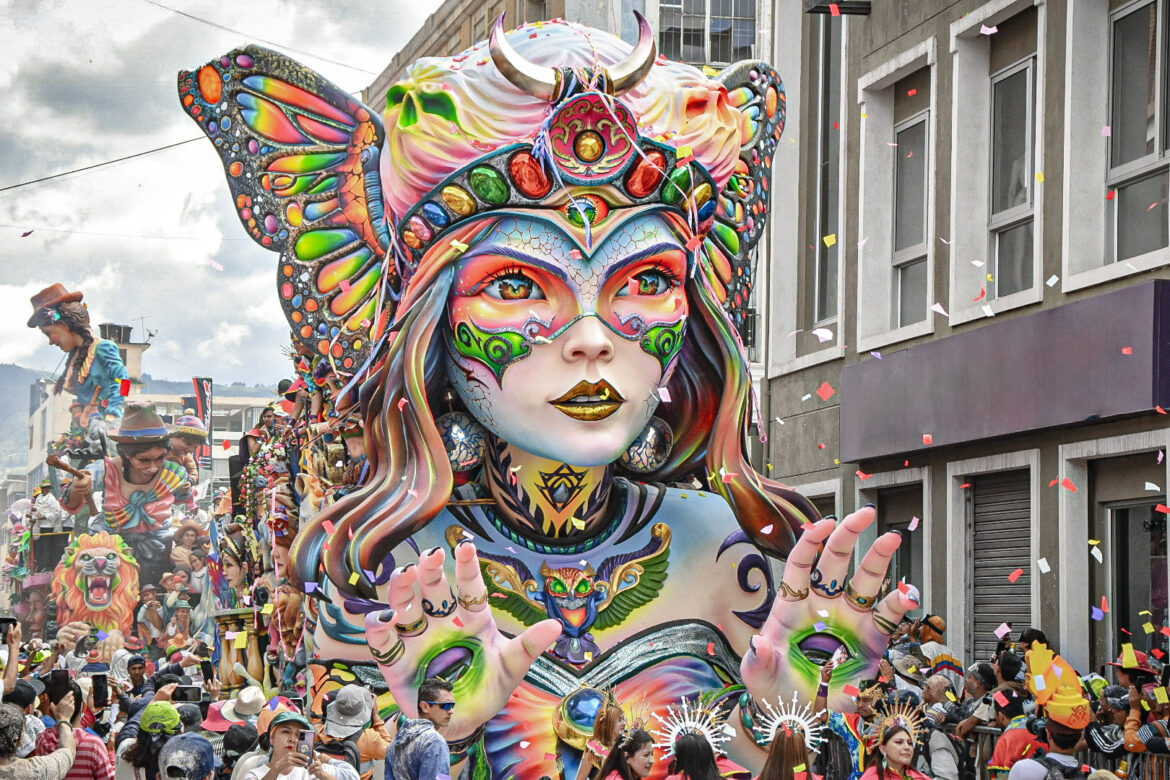
To explore this, researchers turned to the Carnaval de Negros y Blancos (Blacks and Whites’ Carnival) held annually in Pasto, Colombia. This centuries-old celebration—recognized by UNESCO as an Intangible Cultural Heritage of Humanity—blends Indigenous, African, and European roots. It transforms the city into a sprawling landscape of vibrant parades, elaborate floats, traditional music, and uninhibited dancing.
Rather than merely measuring festival-goers’ enjoyment, the study evaluated the psychological mechanisms at play when crowds engage in synchronized cultural expressions. The core findings revealed that participants who experienced strong emotional synchronization reported:
- A heightened sense of collective effervescence (a shared emotional high).
- Significantly stronger identification with their local communities and nation.
- An expanded, globalized sense of connection to humanity as a whole, dismantling the traditional "us versus them" paradigm often associated with large-scale group identity.
- Frequent encounters with awe—the transformative emotion triggered by experiencing something vast and deeply meaningful.
Chronology: From Durkheim’s Theories to Modern Empirical Science
To understand the weight of these recent findings, it is necessary to trace the historical evolution of how sociologists and psychologists have conceptualized ritual.
Late 19th to Early 20th Century: The Birth of Collective Effervescence
More than a century ago, French sociologist Émile Durkheim laid the groundwork for the scientific study of group behavior. In his foundational sociological inquiries, Durkheim observed that religious and civic rituals served a deeper purpose than doctrinal storytelling. He coined the term "collective effervescence" to describe a potent emotional state in which individuals feel lifted outside of themselves, merging into a unified social body. Durkheim argued that this shared emotional energy was the primary social glue that created, maintained, and continually regenerated human communities.
The Mid-to-Late 20th Century: Ritual as Cultural Transmission
As anthropology and sociology matured, researchers documented how rituals functioned across diverse cultures. Rituals were understood as the primary vehicles for marking life transitions (rites of passage), processing collective grief, remembering historical trauma, and transmitting cultural values across generations. However, these theories remained largely qualitative, relying on observation rather than measurable psychological metrics.
The 2020s: The Empirical Turn in Psychology
In recent years, the intersection of psychology, neuroscience, and anthropology has allowed researchers to quantify what earlier scholars could only describe. Previous studies covered by The Wild Hunt highlighted that sacred experiences and ritual structures can significantly reduce anxiety and provide cognitive anchors during times of societal uncertainty.
The culmination of this trajectory arrived late last year with the publication of the Frontiers in Psychology study on the Carnaval de Negros y Blancos. By applying modern psychometric evaluations to Durkheim’s century-old theories, researchers successfully bridged the gap between abstract sociological concepts and hard psychological data.
Supporting Data and Methodology
The Colombian carnival study moves past anecdotal accounts by systematically quantifying the psychological shifts experienced by festival participants. Researchers utilized targeted surveys and emotional-response metrics to evaluate how crowd participation influenced cognitive frameworks regarding self-identity, local pride, and global empathy.
The Mechanics of Awe
Among the psychological variables analyzed, awe emerged as a primary mediator. In psychological terms, awe is categorized as a "self-transcendent" emotion. It occurs when an individual encounters vast stimuli that challenge their current understanding of the world, forcing a cognitive accommodation.
The data revealed that participants who experienced the highest levels of collective effervescence were also the most likely to experience profound states of awe. Crucially, these moments of awe were directly correlated with:
- Strengthened Pro-Social Behavior: Participants exhibited a heightened willingness to support and help others.
- Expanded Civic Identity: Feelings of local and national belonging surged during the celebrations.
- Universal Empathy: Counter to fears that intense group bonding creates insular, xenophobic tribalism, the data showed that participants simultaneously felt a broader connection to humanity at large.
Synchronization Over Mere Attendance
A critical data point emphasized by the study’s authors is that physical presence alone does not produce these psychological benefits. Merely standing in a crowd or watching a parade yields negligible changes in self-transcendent emotions. The transformative psychological dividends—such as reduced anxiety, broadened empathy, and awe—were strictly exclusive to active participants: those singing together, dancing in rhythm, chanting, and sharing in the emotional arc of the ceremony. Synchronization is the catalyst; passive spectatorship is not.
Official Responses and Academic Perspectives
The academic and cultural implications of these findings have resonated across multiple disciplines, validating what practitioners of traditional, pagan, and indigenous paths have asserted for generations.
Voices from the Pagan and Interfaith Community
For modern practitioners of Earth-centered traditions, the study’s conclusions feel less like a groundbreaking discovery and more like an empirical confirmation of lived experience. Seasonal rituals, celebrations tied to the Wheel of the Year, and public Pagan Pride gatherings have long been framed not just as acts of worship or reverence, but as vital mechanisms for community-building.
Reflecting on the nature of these practices, Circle Sanctuary’s Rev. Selena Fox has articulated this dynamic clearly:

"Through rituals, Pagans deepen their relationship with the Divine in one or more sacred forms. Through rituals, Pagan culture flourishes and evolves."
Fox’s observation mirrors the psychological reality uncovered in the Colombian study: ritual creates a dedicated metaphysical and emotional space that connects participants to forces infinitely larger than themselves, driving cultural evolution and psychological resilience concurrently.
Cautions from the Scientific Community
Despite the robust correlations found in the research, the study’s authors maintain scientific objectivity. They explicitly note that correlation does not equal causation.
Researchers point out a vital alternative hypothesis: it is entirely possible that individuals who already possess a high baseline capacity for social connection and empathy are simply more inclined to experience collective effervescence during large-scale festivals. Furthermore, isolating variables in a bustling, multi-day cultural carnival presents immense methodological challenges. Nonetheless, the empirical alignment with Durkheim’s century-old framework gives the scientific community high confidence in the overall direction of the findings.
Implications: Beyond the Festival Field
The realization that ritual acts as an emotional and psychological technology carries profound implications for modern society—a world increasingly plagued by epidemics of loneliness, political polarization, and secular alienation.
1. Re-Evaluating Secular Spaces
As traditional religious attendance declines across many Western nations, sociologists have noted a concurrent rise in loneliness and a loss of shared cultural anchors. The psychological data suggests that humanity’s evolutionary drive toward ritual has not disappeared; rather, it has fragmented. Reintroducing intentional communal rituals—whether in secular community gatherings, artistic spaces, athletic teams, or civic celebrations—could provide critical buffers against anxiety and social isolation.
2. Dismantling the "Us vs. Them" Fallacy
One of the most encouraging implications of the Frontiers in Psychology study is its challenge to the assumption that group bonding invariably breeds out-group hostility. While tribalism often exploits shared identity to divide populations, authentic collective effervescence paired with awe appears to have the opposite effect. By expanding an individual’s sense of connection outward toward humanity as a whole, properly facilitated communal rituals can serve as antidotes to nationalism and xenophobia.
3. Validating Alternative and Indigenous Practices
For minority spiritualities, indigenous communities, and pagan covens, this research provides valuable academic backing. It demonstrates that ancient technologies of gathering—drumming, chanting, moving in circles, and marking the solstices and equinoxes—are sophisticated psychological tools that foster mental health, social resilience, and global empathy.
Conclusion
Whether performed within the intimate circle of a coven, the solemn sanctuary of an organized religion, the sprawling festival fields of a seasonal equinox, or the vibrant city streets of the Carnaval de Negros y Blancos, ritual remains a foundational pillar of the human experience. As science continues to catch up with intuition, it becomes increasingly clear: the transformative power of ritual lies not merely in the symbols we invoke, but in the profound, synchronized magic of sharing them together.