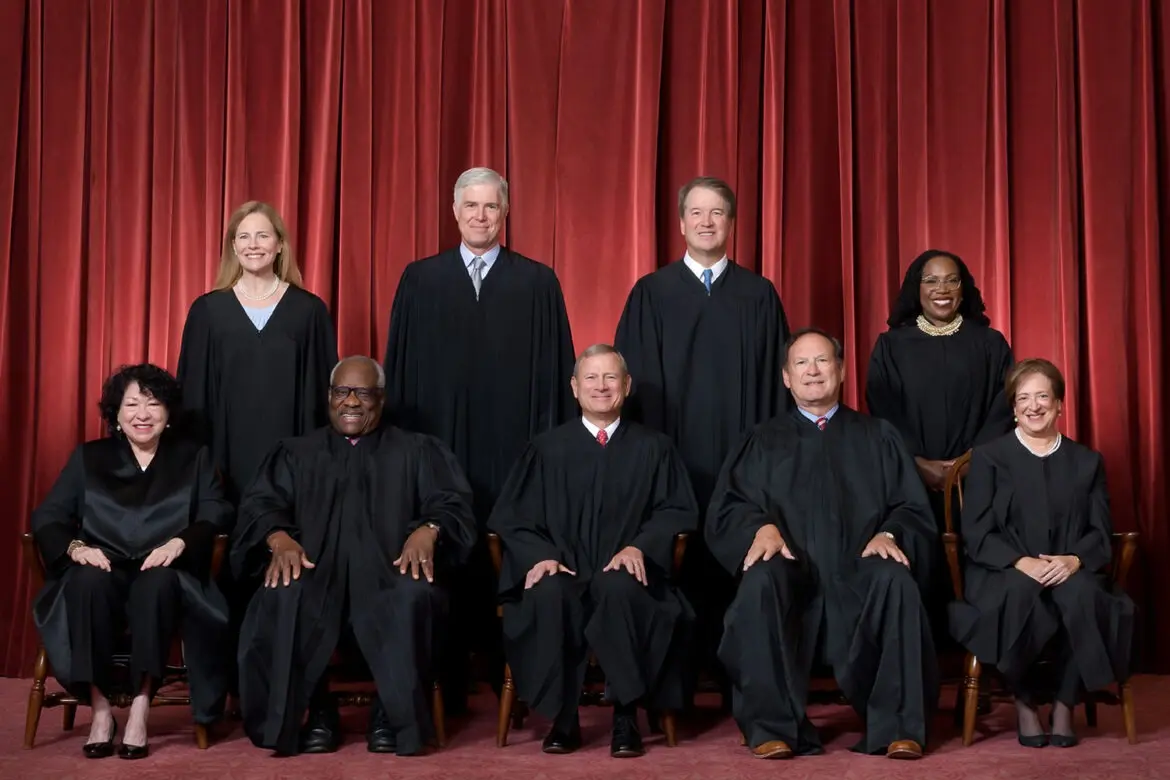
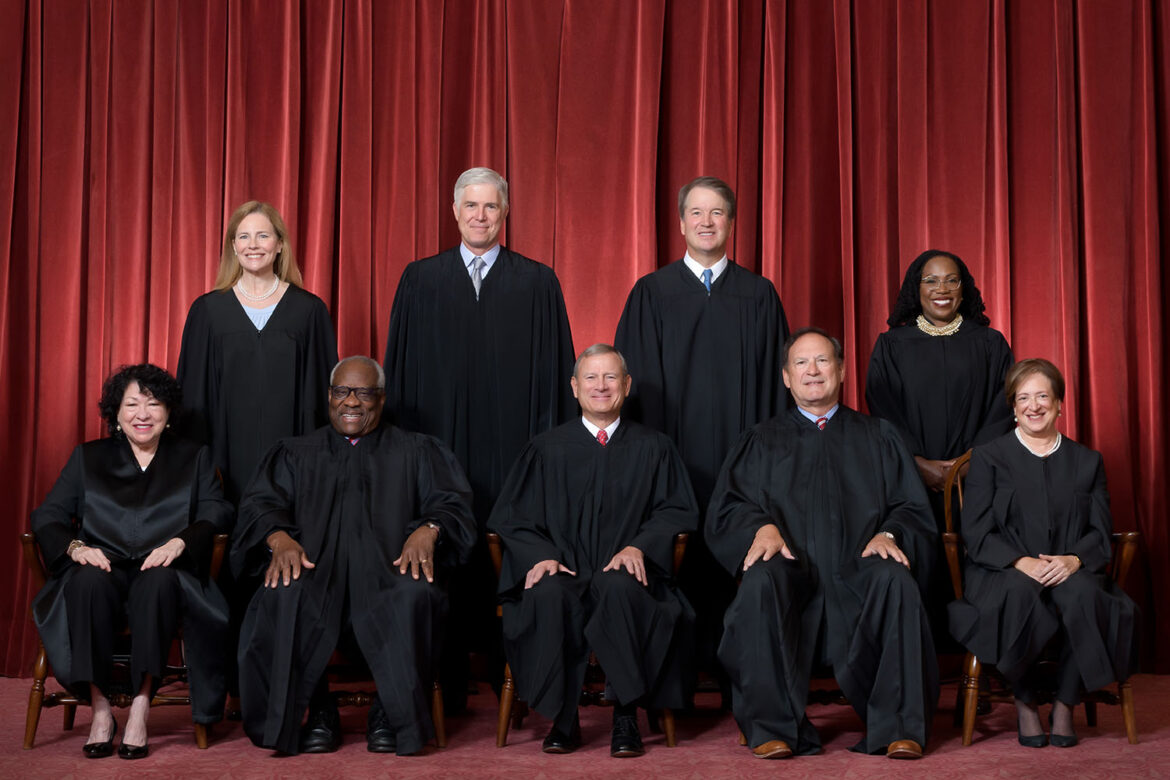
WASHINGTON — The United States Supreme Court convened its 2026–2027 term on Monday with an aggressive docket that places the intersection of environmental accountability, property development, public funding, and religious liberty under intense scrutiny. While the initial disputes feature prominent corporate and mainstream religious litigants—including fossil-fuel conglomerates, Catholic dioceses, and local municipal governments—legal scholars emphasize that the high court’s eventual rulings will establish sweeping legal precedents.
For minority traditions, indigenous groups, and Earth-centered spiritual communities across the United States, the stakes could hardly be higher. From defining what constitutes a "substantial burden" on sacred architecture to dictating how local governments and corporations address the financial impacts of climate change, the outcomes of these cases will fundamentally shape the legal landscape for religious practice and environmental advocacy for decades.
Main Facts
The Supreme Court’s current term features three interrelated cases that test the boundaries of federal statutes, state sovereignty, and constitutional protections:
- Climate Change and Corporate Accountability (Suncor Energy v. Board of County Commissioners of Boulder County): Local Colorado governments are suing major energy companies under state tort law to recover the local economic costs of climate change. The core legal question is whether individual states can hold fossil-fuel corporations liable for global emissions, or if federal law preempts such claims.
- Religious Land Use (Missionaries of Saint John the Baptist v. Frederic): A Catholic nonprofit is challenging a local Kentucky zoning decision that blocked the construction of a Marian shrine. The case asks the Supreme Court to clarify the threshold for a "substantial burden" on religious exercise under the federal Religious Land Use and Institutionalized Persons Act (RLUIPA).
- Religious Freedom and Public Funding (St. Mary Catholic Parish v. Roy): Colorado’s Universal Preschool Program is facing a constitutional challenge from Catholic schools that object to anti-discrimination requirements protecting LGBTQ children and families. The Court must decide whether a state can condition general public funding on a religious institution’s compliance with state nondiscrimination mandates.
Chronology of Key Legal Battles
The path to the Supreme Court for these three pivotal disputes spans several years of lower court litigation, legislative enactments, and regulatory friction.
The Climate Liability Timeline
- 2018–2020: Boulder County, San Miguel County, and the City of Boulder file lawsuits in Colorado state courts against Suncor Energy and ExxonMobil. The complaints allege that the companies knowingly promoted fossil fuels while misleading the public regarding their role in driving climate change.
- 2020–2023: Energy companies successfully remove the litigation to federal courts, arguing that climate change is an interstate and international issue governed exclusively by federal law. However, a series of federal appellate rulings across the country reject this argument, sending the cases back to state courts.
- Late 2024–2025: The Colorado Supreme Court rules that Boulder County’s lawsuit may proceed under state tort law, refusing to dismiss the claims.
- February 2026: The U.S. Supreme Court grants certiorari to review the Colorado Supreme Court’s decision, setting the stage for oral arguments on October 5, 2026.
- October 5, 2026: The Supreme Court opens its new term with oral arguments in Suncor Energy, with Justice Samuel Alito recused from the proceedings.
The Religious Land Use Timeline
- 2000: Congress enacts the Religious Land Use and Institutionalized Persons Act (RLUIPA) in a rare display of bipartisan consensus, aiming to protect religious assemblies and institutions from discriminatory or unduly burdensome local zoning laws.
- Early 2020s: The Missionaries of Saint John the Baptist propose constructing an outdoor shrine to the Virgin Mary—complete with a grotto, plaza, walking path, and retaining wall—on residential property adjacent to Our Lady of Lourdes Catholic Church in Park Hills, Kentucky. Local zoning authorities initially greenlight the project.
- Mid-2020s: Neighbors Joel and Elizabeth Frederic challenge the development, citing concerns over traffic congestion and community character. Kentucky appellate courts rule that the local zoning board lacked the authority to approve the project under existing municipal rules.
- Spring–Summer 2026: The Kentucky Supreme Court rules against the religious nonprofit, concluding that denying the specific shrine location does not impose a "substantial burden" on religious exercise under RLUIPA, noting the organization could build a smaller shrine elsewhere on the parcel.
- October 1, 2026: The U.S. Supreme Court grants review, explicitly limiting its consideration to the definition of a substantial burden under RLUIPA.
The Public Funding and Discrimination Timeline
- 2017–2022: In cases such as Trinity Lutheran Church v. Comer, Espinoza v. Montana Department of Revenue, and Carson v. Makin, the Supreme Court steadily expands the "private choice" doctrine, ruling that governments cannot exclude religious institutions from generally available public benefit programs solely because of their religious identity.
- 2023–2025: Colorado establishes its Universal Preschool Program, opening state-funded early childhood education to both public and private providers. The program mandates that participating entities adhere to state anti-discrimination rules protecting LGBTQ families and children.
- 2025–2026: Two Catholic parishes and their preschools file suit in federal court (St. Mary Catholic Parish v. Roy), arguing that conditioning state funds on the abandonment of traditional Catholic teachings on marriage, gender, and sexuality violates their Free Exercise rights. Lower courts grapple with how to balance equal access mandates against religious autonomy.
- Late 2026: The case advances to the Supreme Court’s current docket, with oral arguments scheduled for November 2026.
Supporting Data and Legal Frameworks
Understanding the broader architecture of these lawsuits requires examining the statutory foundations and empirical trends driving them.
The Proliferation of Climate Litigation
According to data compiled by organizations like the Sabin Center for Climate Change Law at Columbia Law School and reports from Reuters, climate change litigation has expanded exponentially over the past decade.
- Nearly 60 active lawsuits across the United States mirror the legal strategy deployed in Boulder County.
- These suits seek billions of dollars in abatement and adaptation costs from multinational energy firms to cope with rising sea levels, prolonged droughts, catastrophic wildfires, and extreme weather events.
- The legal battleground centers on whether local and state economies can rely on common-law tort claims (such as public nuisance, failure to warn, and consumer protection fraud) or if the Clean Air Act completely preempts state-level intervention.
RLUIPA Enforcement Metrics
Enacted under Congress’s Commerce and Spending powers, RLUIPA serves as the primary federal shield for religious institutions facing restrictive zoning and historic preservation laws.
- The statute provides that no government shall impose or implement a land-use regulation in a manner that imposes a "substantial burden" on the religious exercise of a person, assembly, or institution unless the government demonstrates that the regulation furthers a compelling governmental interest and is the least restrictive means of furthering that interest.
- Federal courts have long struggled to establish a uniform standard for what qualifies as a "substantial burden," leading to a patchwork of circuit court interpretations. The Kentucky dispute places this statutory ambiguity squarely before the justices.
Official Responses and Arguments from Litigants
The arguments presented by the opposing parties highlight the profound constitutional tensions defining the 2026–2027 term.
In Suncor Energy v. Boulder County:
- The Municipalities (Plaintiffs): Represented by local government attorneys and environmental advocacy groups, the Colorado counties argue that fossil-fuel companies engaged in a decades-long campaign of disinformation. They assert that state tort law has historically provided remedies for deceptive marketing and public nuisances, and that corporations must bear the financial consequences of local damages caused by their products.
- The Energy Companies (Defendants): Suncor, ExxonMobil, and their legal counsel maintain that climate change is a global phenomenon driven by cumulative worldwide emissions. Allowing individual states and counties to regulate or penalize energy production through tort law would create an unconstitutional, chaotic regulatory environment where local courts dictate national and international energy policy.
In Missionaries of Saint John the Baptist v. Frederic:
- The Religious Organization: Lawyers for the Missionaries contend that municipal zoning boards frequently weaponize administrative red tape to block religious expansion. They argue that under RLUIPA, any substantial interference with a religious group’s chosen method of worship or devotional expression—such as an outdoor Marian shrine—triggers strict scrutiny, regardless of whether alternative locations might theoretically exist on the property.
- The Homeowners and Local Officials: The opposing property owners argue that zoning laws are neutral, generally applicable regulations designed to maintain residential traffic safety, neighborhood aesthetics, and property values. They assert that stretching RLUIPA to override local zoning decisions for any preferred architectural feature would strip municipalities of basic planning authority.
In St. Mary Catholic Parish v. Roy:
- The Catholic Parishes: Legal representatives for the preschools argue that the state is engaging in unconstitutional "unconstitutional conditions," forcing religious institutions to surrender their core theological tenets regarding human sexuality and gender as the price of admission to a secular public benefit program. They rely on recent jurisprudence establishing that religious entities cannot be penalized for maintaining their identity.
- The State of Colorado: State attorneys argue that the Universal Preschool Program is a secular educational initiative designed to serve all children equally. To prevent taxpayer-funded discrimination against families and children, the state insists that any participating provider—public or private—must abide by neutral, generally applicable civil rights and nondiscrimination safeguards.
Implications for Pagan, Minority, and Earth-Centered Communities
Although none of the primary litigants in these three cases are Pagan, indigenous, or explicitly Earth-centered spiritual organizations, the resulting legal principles will have a direct and profound impact on minority religious traditions across the United States.
1. Environmental Stewardship and Climate Accountability
For Pagan and Earth-centered communities, whose spiritual frameworks frequently emphasize a sacred duty to protect the natural world, the climate liability case carries deep symbolic and practical resonance.

- While Suncor Energy does not center on religious freedom, its outcome will dictate whether local governments and communities retain legal tools to hold corporate polluters financially accountable for environmental degradation.
- A ruling that preempts state climate lawsuits could severely limit the ability of local populations—including rural and indigenous groups disproportionately impacted by ecological collapse—to seek redress for climate harms through the judicial system.
2. Protecting Sacred Spaces and Groves
The RLUIPA case (Missionaries v. Frederic) holds immediate practical consequences for minority faiths attempting to secure physical spaces for worship, ritual, and community gathering.
- Pagan covens, druid groves, indigenous ceremonial groups, and minority temples frequently face skepticism, misunderstanding, or outright hostility from local zoning boards when trying to establish permanent sanctuaries, retreat centers, or outdoor ritual grounds.
- A robust interpretation of RLUIPA by the Supreme Court could strengthen the hand of minority religious groups fighting restrictive zoning laws. Conversely, a narrow definition of "substantial burden" could make it significantly easier for municipal governments to restrict unconventional or outdoor religious practices under the guise of neutral zoning enforcement.
3. The Double-Edged Sword of Public Funding and Religious Exemptions
The debate over public funding and anti-discrimination rules (St. Mary Catholic Parish) presents complex, multifaceted implications for minority faiths.
- On one hand, expanding the rights of religious institutions to participate in public benefit programs without compromising their beliefs could make it easier for Pagan and minority charities, educational co-ops, and community service organizations to access government grants and programs.
- On the other hand, a broad expansion of religious exemptions from anti-discrimination laws could empower mainstream religious institutions to deny services or employment based on doctrinal beliefs—potentially creating an environment where minority faiths and practitioners receive diminished legal protections against institutional bias.
As the Supreme Court navigates this high-stakes docket, the legal boundaries of American pluralism are being redrawn. For minority faiths watching from the sidelines, the courtrooms in Washington will ultimately decide how much breathing room the law provides for those who worship off the beaten path and care for the earth beneath their feet.