








September 20, 2026 — In an age where digital feeds are flooded with unverified biological optimization protocols, extreme biohacking, and a relentless rotation of the latest "miracle" supplements, the modern wellness consumer faces a daunting paradox. Never before has humanity had access to such advanced tools for longevity, yet rarely have people felt so overwhelmed, anxious, and exhausted by the sheer volume of health advice dictating their daily lives.
When meeting new figures within the wellness sphere, a common icebreaker often sounds like a tech-startup pitch: What peptides are you currently taking?
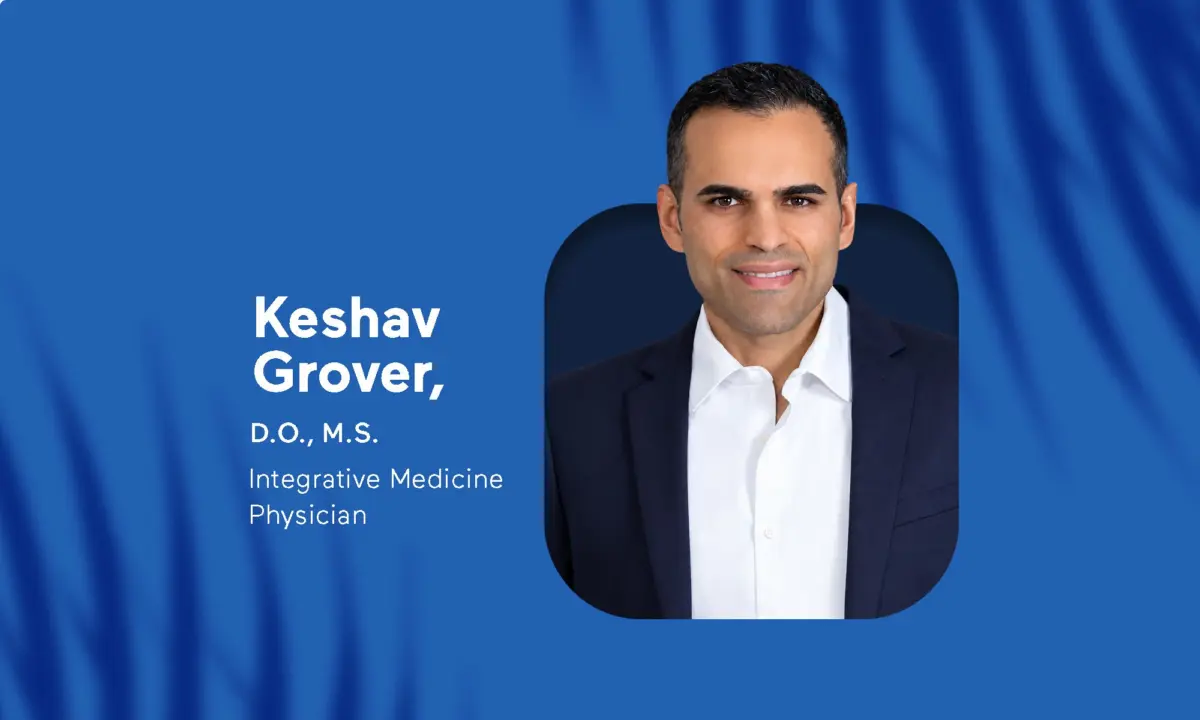
For many, the standard reply involves a complex rotating inventory of amino acid chains, adaptogens, and cellular regulators. But when integrative medicine physician Dr. Keshav Grover, D.O., M.S., is asked that question, his answer is remarkably grounded: "None."
It is not an admission born of skepticism or an outright dismissal of advanced therapeutic science. Rather, it reflects a foundational clinical principle: intervention without a clearly identified problem is simply noise. In his newly published book, Wellness Bridge, Dr. Grover champions a return to clinical common sense—urging modern health-seekers to step off the endless treadmill of "health-maxxing" and refocus on targeted, sustainable foundations.
Main Facts: Cutting Through the Biohacking Hype
The contemporary wellness ecosystem is heavily influenced by high-profile figures like tech entrepreneur Bryan Johnson, whose exhaustive, multi-million-dollar personal health regimen dominates headlines. While Dr. Grover expresses genuine respect for the discipline and financial investment required for such radical protocols, he issues a vital caveat: Johnson’s exhaustive regimen is a highly specific, personalized case study—not a viable template for the average person.
The prevailing tension in modern health culture is fueled by the cultural narrative that "more is always better." Consumers are encouraged to stack countless supplements, undergo expensive and unvetted full-body scans, and chase every viral trend circulating social media. Dr. Grover’s clinical philosophy pulls sharply in the opposite direction. Instead of accumulating interventions, he advocates for identifying the smallest, most precise, and least invasive catalyst that enables the human body to do what it is inherently designed to do.
This philosophy applies directly to the current obsession with peptides—short chains of amino acids that have captured the public imagination. While some peptides, such as insulin, collagen, and GLP-1 receptor agonists (like semaglutide and tirzepatide), have deep roots in evidence-based medicine, the internet-driven "stacks" are another story entirely.
- The "Wolverine Stack": Frequently discussed online for tissue repair and inflammation reduction, this combination typically features BPC-157 and TB-500.
- The "Glo Stack": Often utilized for aesthetic and skin-rejuvenating purposes, combining the copper peptide GHK-Cu alongside compounds like KPV.
Despite their popularity, Dr. Grover emphasizes that peptides are not casual lifestyle accessories. Every biological intervention must be rigorously matched to a patient’s clinical presentation and actual diagnostic needs. For instance, individuals with a history of precancerous lesions must exercise extreme caution regarding peptides that upregulate Vascular Endothelial Growth Factor (VEGF). Because VEGF stimulates the formation of new blood vessels, deploying it carelessly could inadvertently nourish dormant cancerous cells or vascularize nascent tumors. Furthermore, sourcing is paramount; Dr. Grover relies strictly on certified compounding pharmacies and distributors capable of providing ironclad certificates of analysis verifying purity and domestic U.S. manufacturing.
Chronology: The Evolution of Modern Preventative Medicine
To understand how the wellness industry arrived at its current hyper-commercialized state, it helps to examine the chronological progression of healthcare consumerism over the past two decades.

- Early 2000s (The Nutritional Era): The modern wellness boom began with basic supplementation—multivitamins, omega-3 fatty acids, and green powders. The focus was largely on dietary gaps and basic macronutrient awareness.
- 2010s (The Quantified Self Movement): The advent of consumer wearables (such as Fitbit and early smartwatches) introduced continuous data tracking. Sleep metrics, step counts, and heart rate variability (HRV) transformed passive health monitoring into an active, data-driven hobby.
- Early 2020s (The Biotech Boom): Driven in part by pandemic-era health anxieties, the market expanded rapidly into direct-to-consumer blood panels, continuous glucose monitors (CGMs), microbiome sequencing, and advanced longevity clinics.
- Mid-2020s (The "Health-Maxxing" Saturation): Today, the industry sits at a crossroads of information overload. Social media algorithms reward extreme protocols, leading to widespread consumer burnout, orthorexia, and financial fatigue as individuals attempt to mimic elite, multi-disciplinary longevity labs in their own bathrooms.
Dr. Grover’s clinical evolution mirrors this timeline. Like many dedicated physicians, he admits to once playing the role of the household "wellness police"—scrutinizing every food label at the grocery store and rigorously correcting his parents’ purchasing habits. However, years of clinical practice and observing vibrant older adults successfully age into their 70s, 80s, and 90s without hyper-rigid restrictions prompted a profound shift in perspective. True health longevity, he realized, cannot be divorced from joy, flexibility, and human connection.
Supporting Data: Where to Actually Start (The Low-Cost Baseline)
When patients ask Dr. Grover where they should begin their earnest health journeys, they are frequently surprised by his answers. He does not point them toward expensive boutique longevity panels or mail-in genetic kits.
Instead, he starts with the most foundational, accessible metrics in medicine.
1. The Free Baseline: Vitals
Before ordering a single drop of blood work, Dr. Grover evaluates vital signs—specifically blood pressure. Cardiovascular disease remains the leading cause of mortality in the United States, yet millions of individuals neglect routine blood pressure checks. "You can even walk into your local pharmacy and get that checked for free," he notes.
2. Comprehensive Blood Biomarkers
Once baseline vitals are established, Dr. Grover’s clinic deploys a broad, targeted diagnostic panel. This includes:
- Comprehensive metabolic panels (CMP)
- Complete blood counts (CBC)
- Thyroid panels
- Sex and adrenal hormone assays
- Advanced lipid profiles and cardiac inflammatory markers
- Comprehensive micronutrient testing
For patients on active interventions, such as hormone replacement therapy (HRT), these panels are repeated every 90 days. For standard wellness tracking, they are evaluated every three to six months. To monitor glycemic health, Dr. Grover relies on hemoglobin A1c—which provides a reliable 90-day average of blood glucose—coupled with fasting insulin levels. Only when these foundational metrics indicate an unexplained anomaly does he escalate to advanced diagnostics, such as specialized stool tests, SIBO breath tests, DUTCH hormone panels, or mold toxicity screenings.
3. Skepticism Toward Full-Body Scans
While full-body preventative imaging has gained traction as a luxury health trend, Dr. Grover maintains a balanced, cautious perspective. "There are a lot of findings that are truly benign that come up and that cause anxiety for patients," he explains. Incidentalomas—benign growths or anatomical variations of zero clinical significance—frequently trigger cascading diagnostic procedures, invasive biopsies, and profound psychological stress for findings that had a negligible statistical likelihood of impacting health span. He advocates directing that financial and emotional capital toward proven lifestyle foundations.
4. The Self-Administered Gut Health Checklist
True to his philosophy of accessibility, Dr. Grover emphasizes that effective diagnostics often begin with active self-reflection rather than a $500 kit. He points to a simple series of gut health questions that individuals can evaluate in the privacy of their own homes:
- Do you experience chronic post-meal bloating, distention, or discomfort?
- Is your bowel regularity consistent, or do you swing unpredictably between constipation and diarrhea?
- Do you suffer from unexplained brain fog, fatigue, or low mood following specific meals?
- Are you experiencing persistent skin issues, such as adult acne, eczema, or unexplained rashes, that resist topical treatments?
Answering these fundamental questions provides early diagnostic clues that often align with what an expensive stool microbiome analysis would ultimately reveal. While clinical testing remains valuable for precision treatment, structured self-assessment offers an immediate, cost-free starting point.

Official Responses and Changing Cultural Paradigms
As the medical community grapples with the fallout of extreme online wellness trends, integrative physicians are increasingly speaking out against rigidity and medical dogmatism.
Dr. Grover’s reassessment of cultural taboos—such as the role of social drinking—highlights this nuanced evolution. During the height of the digital wellness wave, online consensus trended aggressively toward absolute abstinence, framing any alcohol consumption as an unmitigated biological catastrophe. However, while reviewing epidemiological data for his book, Dr. Grover re-evaluated the context of human connection.
"If you don’t drink, I’m not saying you need to start," Dr. Grover clarifies. Yet, he recognizes the profound health benefits embedded in the social context of gathering around a dinner table to share a glass of wine and a meal with loved ones. Chronic isolation, driven by hyper-vigilant health anxiety, can pose a greater risk to long-term morbidity than moderate, socially integrated lifestyle choices.
Public health advocates and behavioral psychologists increasingly support this perspective, warning that "orthorexia"—an unhealthy obsession with eating healthy food or executing rigid wellness protocols—can actively damage mental health, fracture social bonds, and elevate systemic cortisol levels, ultimately counteracting the physiological benefits of the protocol itself.
Implications: The 5% Rule for Sustainable Health
The ultimate takeaway from Dr. Grover’s clinical philosophy is refreshingly liberating. In a multi-billion-dollar industry engineered to make consumers feel perpetually inadequate unless they purchase the newest supplement stack or diagnostic gadget, the path forward is found in radical simplification.
"If I can get somebody to feel 5% or 10% better, and then that can snowball into 20% or 30%," Dr. Grover notes, meaningful, lasting transformation has been achieved. Sustainable health is not built through overnight lifestyle overhauls or aggressive biological manipulation; it is built through steady, manageable, and highly individualized habits.
Before ordering an expensive diagnostic panel, committing to a complex peptide stack, or overhauling your entire pantry based on viral social media algorithms, step back. Check your blood pressure. Evaluate your daily stress, sleep quality, and gut function. Embrace the wisdom of targeted intervention over blanket accumulation. In the end, true wellness is not about mastering every trend—it is about discovering what your body genuinely needs to thrive.