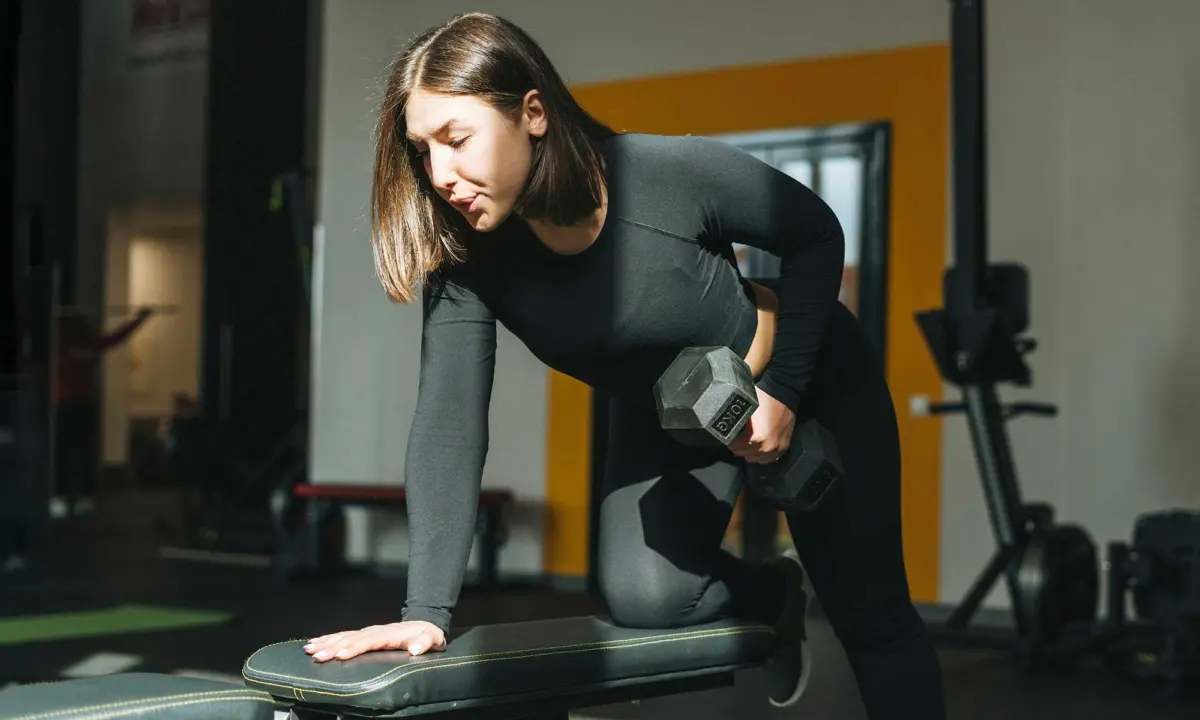
October 2, 2026 — Walking through the double doors of a commercial gym for the very first time can feel remarkably like stepping onto an entirely different planet. You are immediately greeted by gleaming racks of heavy metal plates, endless rows of intimidating digital and mechanical contraptions you have never seen before, and seasoned regulars moving with the quiet, effortless confidence of people who clearly possess an innate map of the universe.
Meanwhile, you are left standing near the entrance, acutely aware of your own heartbeat, wondering where it is socially acceptable to stash your water bottle, trying to decipher the precise function of half the machinery in your line of sight, and harboring the persistent, nagging fear that everyone in the room is silently critiquing your every move.
However, industry professionals and sports scientists offer a universally comforting reality check: everyone starts there. No seasoned weightlifter or fitness enthusiast walked into a facility on day one already knowing how to execute a technically sound barbell squat or instinctively calculate the optimal weight for an incline chest press. Gym confidence is not an innate personality trait that lucky individuals are born with; rather, it is a learned skill constructed brick by brick, workout by workout.
The encouraging news for fitness newcomers is that you do not need an overly complicated, hyper-optimized training program, a biochemistry degree, or years of prior athletic experience to begin making transformative progress. By anchoring your journey in a few foundational principles, you can make your critical first months in the gym dramatically less intimidating, infinitely safer, and vastly more effective.
The Anatomy of a Beginner’s Routine: The Importance of Structure
One of the most common psychological and strategic pitfalls for fitness beginners is walking onto the gym floor completely devoid of a plan.
It is easy to fall into the trap of aimlessly bouncing between random machines, mindlessly copying whatever exercise the person next to you happens to be performing, or spending half of your precious session standing around scrolling through your phone to figure out what to do next. While this chaotic approach might feel busy and exhausting in the moment, it rarely translates to sustainable, real-world physical progress.
Research and Long-Term Adherence
Contemporary sports science and behavioral research consistently indicate that individuals who follow structured, pre-planned exercise routines are substantially more likely to stick with long-term physical training. A structured program removes decision fatigue—a cognitive phenomenon where making repeated choices drains your mental energy—and replaces uncertainty with a definitive sense of direction. Instead of wasting mental bandwidth wondering what exercise comes next, you simply focus your energy on executing the movement.
Furthermore, physical structure allows the human body to systematically adapt. True muscular hypertrophy (growth) and neural strength gains are driven by a principle known as progressive overload—the systematic, gradual process of asking your body to do slightly more work than it did during your previous session. This could manifest as adding a minuscule amount of weight to a bar, completing one or two additional repetitions, or executing the movement with cleaner, more controlled technique. If your workouts are entirely random, tracking and achieving progressive overload becomes virtually impossible.
For beginners, structure does not need to be intimidating or complex. A basic, minimalist routine built around fundamental movement patterns, executed consistently two to four times per week, provides more than enough stimulus to trigger substantial physical transformations.
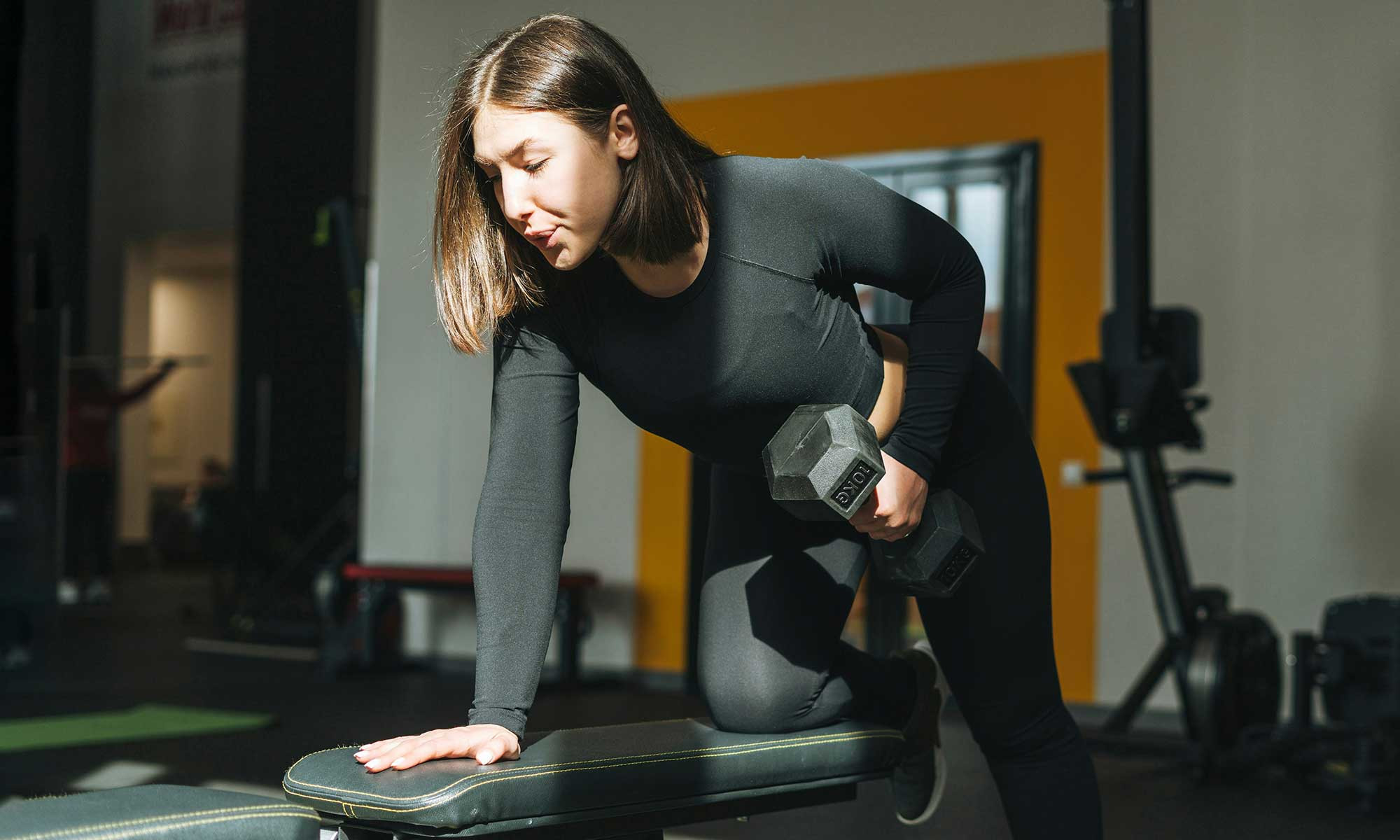
Don’t Skip the Warm-Up: Preparing the Engine
When you are pressed for time or eager to dive straight into your main lifting sets, it is deeply tempting to bypass the warm-up entirely and plunge headfirst into your workout. Yet, sports medicine professionals emphasize that investing those initial five to ten minutes in a deliberate warm-up routine can fundamentally alter your performance and injury risk profile.
A scientifically sound warm-up serves three critical biological functions:
- Elevates Core Body Temperature: Warming up increases internal body and muscle temperature, which optimizes enzymatic activity and enhances muscular contraction velocity.
- Increases Joint Lubrication: It stimulates the production of synovial fluid within your joints, reducing friction and allowing for a smoother, pain-free range of motion.
- Primes the Neuromuscular System: It establishes the critical mind-muscle connection, waking up the nervous system so your brain can efficiently recruit the appropriate muscle fibers.
Fortunately, warming up does not require an elaborate 45-minute production. A simple, three-part sequence works exceptionally well for the vast majority of gym-goers:
- General Cardiorespiratory Movement: 3 to 5 minutes of light cardio on a treadmill, stationary bike, or elliptical to elevate the heart rate.
- Dynamic Mobility Drills: Bodyweight movements such as arm circles, leg swings, torso twists, and walking lunges to take joints through their active ranges of motion.
- Movement-Specific Warm-Up Sets: Performing one or two very light sets of your first major exercise before loading up your working weight.
By the time your actual working sets begin, your body has received the biological memo that it is time to perform.
Master the Four Basic Movement Patterns
If you spend even ten minutes observing a commercial gym floor, you will likely spot advanced athletes stringing together hyper-complex, multi-joint movements—such as transitioning fluidly from a heavy barbell deadlift into a clean, squat, and overhead press. While these feats of athleticism are undeniably impressive, beginners should fiercely resist the temptation to emulate them immediately.
Instead, fitness experts recommend viewing physical training through the lens of fundamental movement patterns. Nearly every functional exercise performed in a gym setting falls cleanly into one of four primary categories:
- Squat Patterns: Knee-dominant lower-body movements involving deep flexion of the hips and knees (e.g., goblet squats, leg presses).
- Hinge Patterns: Hip-dominant lower-body movements where the primary motion occurs at the hip joint with minimal knee bend (e.g., Romanian deadlifts, glute bridges).
- Push Patterns: Upper-body movements where you push a load away from your torso, targeting the chest, shoulders, and triceps (e.g., chest presses, overhead presses, push-ups).
- Pull Patterns: Upper-body movements where you pull a load toward your torso, targeting the upper back, lats, and biceps (e.g., lat pulldowns, seated cable rows).
When you train these four core patterns consistently, you are doing far more than isolating individual muscles; you are building integrated, coordinated strength throughout your entire kinetic chain. This is precisely why evidence-based beginner programs focus on a tight rotation of compound movements rather than an endless catalog of isolated, single-joint exercises. Master these foundational patterns first, and every other physical endeavor becomes exponentially easier.
Demystifying the Gym Floor: The Power of Machines
If the open-floor free-weight area—complete with its clanging barbells and roaming fitness enthusiasts—feels intimidating, utilizing resistance machines is one of the smartest strategies for a beginner.
Resistance machines provide a guided, fixed range of motion. They are exceptionally straightforward to adjust and operate, allowing newcomers to focus intensely on feeling the target muscles contract without simultaneously fighting for balance and stabilization. For novices, this removes significant friction: your baseline grip strength or core stability will not prematurely limit the exercise the way it sometimes can with free weights. Instead of juggling a dozen moving parts at once, you can learn what a productive muscular contraction is supposed to feel like.

Three beginner-friendly machines appear in almost every fitness facility worldwide:
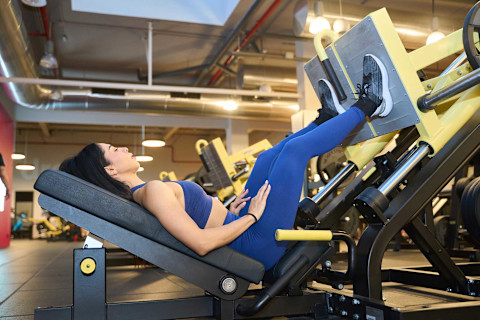
1. The Leg Press
The leg press targets many of the exact same lower-body musculature as a traditional squat—including your quadriceps, glutes, and hamstrings—while offering total spinal and postural support.
- Execution: Sit comfortably back against the padded seat, positioning your feet flat and shoulder-width apart on the elevated sled platform. Release the safety catches, lower the weight in a controlled manner until your knees form a comfortable 90-degree angle, and press the platform away through your heels. Avoid locking your knees completely at the top of the movement to maintain continuous muscular tension.
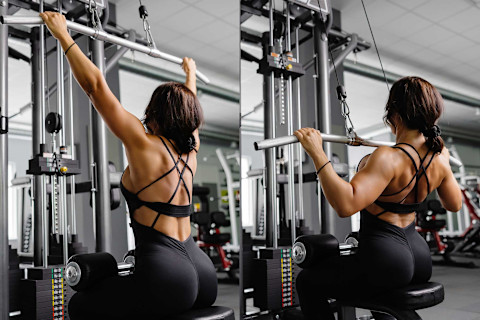
2. The Lat Pulldown
This cornerstone machine trains your latissimus dorsi (lats) and upper back, laying the crucial neuromuscular groundwork for future bodyweight pull-ups.
- Execution: Adjust the knee pad so your legs are firmly secured, grab the overhead bar with an overhand grip slightly wider than shoulder-width, and pull the bar downward toward your upper chest. Focus mentally on driving your elbows down and backward into your back pockets rather than merely yanking the bar with your hands.
3. The Chest Press
The chest press machine safely replicates the biomechanics of a traditional push-up or flat bench press while offering precise, adjustable resistance.
- Execution: Sit flush against the back pad, adjusting the seat height so the handles align directly with your mid-chest rather than rising up toward your shoulders. Press the handles outward until your arms fully extend, then return to the starting position under strict control. The eccentric (lowering) phase is just as vital for muscle growth as the push.
When and How to Transition to Free Weights
While machines are immensely valuable tools, free weights (dumbbells, barbells, and kettlebells) eventually offer unique physiological advantages as your comfort, coordination, and strength grow.
Dumbbells and barbells require your body to actively stabilize the weight in free space, actively engaging deeper stabilizing musculature, enhancing joint proprioception, and boosting overall neurological coordination. However, this does not mean machines are "inferior." They simply serve a different purpose, providing safety nets and isolated resistance profiles that remain useful even for elite powerlifters and bodybuilders.
A reliable rule of thumb for gym progression: Once you feel completely comfortable and proficient with a movement pattern on a machine, you can safely begin experimenting with its free-weight counterpart. Think of it not as "graduating" to a superior level, but rather as expanding your athletic toolkit.
- Machine Chest Press $rightarrow$ Dumbbell Bench Press
- Assisted Pull-Up Machine $rightarrow$ Lat Pulldown $rightarrow$ Free-Weight Rows
There is no arbitrary rule mandating that you must abandon machines entirely once you touch a barbell. Many advanced lifters utilize both simultaneously—relying on machines for targeted hypertrophy and joint-friendly isolation work, and free weights for functional coordination and variety.
Repetitions, Sets, and Rest Intervals
Fitness culture online often obfuscates the basics, making standard rep schemes sound like advanced calculus. In reality, a straightforward approach works exceptionally well and is far easier to maintain when you are establishing a new routine.
A clean, beginner-friendly programming framework looks like this:
- Exercises per Workout: 4 to 6 foundational movements.
- Sets per Exercise: 3 working sets.
- Repetitions per Set: 8 to 12 repetitions.
- Rest Intervals: 90 seconds to 2 minutes between working sets.
This specific repetition range is heavily backed by sports science as an optimal sweet spot for simultaneously building muscular strength and hypertrophy while providing ample opportunity to practice flawless movement technique.
The weight selected should feel genuinely challenging by the time you reach the final two or three repetitions of a set, but not so heavy that your physical form degrades. If you complete a set of 12 and feel you could easily perform another 15 repetitions, the resistance is likely too light. Conversely, if your posture breaks down halfway through, lighten the load. Flawless execution with a moderate weight will always triumph over sloppy mechanics with a heavy load.
Practical Gym Logistics: What to Bring and How to Act
A smooth, stress-free gym experience often comes down to simple logistics. Most practical preparations have very little to do with how much weight you can lift and everything to do with feeling organized and respectful of the shared space.
Essential Gym Bag Checklist
- A Structured Plan: Whether printed on a piece of paper or saved in a notes app on your phone, having an itinerary eliminates guesswork.
- Hydration: A sturdy, reusable water bottle to maintain peak physiological performance.
- A Small Sweat Towel: Essential for wiping down equipment surfaces after use.
- Comfortable Footwear: Flat, stable-soled athletic shoes (avoid overly cushioned running shoes for heavy leg days).
- Headphones: A reliable pair of earbuds to curate your personal mental zone.
Unwritten Gym Etiquette
Every physical fitness facility operates on a localized culture defined by common-sense courtesy:
- Re-rack Your Weights: When you finish using dumbbells, barbells, or weight plates, always return them to their designated racks. Leaving plates loaded on a bar for someone else to dismantle is considered a serious faux pas.
- Wipe Down Equipment: Use the gym-provided disinfectant spray and paper towels to wipe away sweat from benches and pads immediately after use.
- Avoid "Curls in the Squat Rack": Do not monopolize the gym’s rarest, most specialized equipment (like squat racks or deadlift platforms) for minor isolation exercises when the gym is packed.
- Ask Before Working In: If a piece of equipment is busy, it is completely acceptable to walk up and politely ask, "How many sets do you have left?" or "Do you mind if I work in between your sets?" Most fitness enthusiasts are exceptionally welcoming and will happily accommodate you.
Common Beginner Pitfalls to Avoid
While initiating a fitness journey driven by high motivation is commendable, starting too aggressively is the single most common catalyst for burnout, injuries, and abandonment of goals.
1. Trying to Copy Advanced Lifters
It is human nature to look around the weight room and try to mirror the routines of the most physically imposing individuals in the vicinity. However, the person deadlifting 500 pounds or executing complex, multi-directional plyometrics has likely spent a decade systematically building up to that capacity. Your immediate objective is simpler, safer, and fundamentally different: build a baseline of neurological control, structural integrity, and connective tissue strength. Take your time.
2. Doing Too Much Too Soon
A brutal, gut-wrenching workout can feel deeply satisfying in the short term, but debilitating muscle soreness that leaves you bedridden for four or five days indicates you crossed the threshold from productive training into self-sabotage. For novices, two to four deliberate workouts per week are more than sufficient. Leaving the gym with a lingering sense that you could have done just a bit more is frequently a clear sign of intelligent pacing.
3. Ignoring the Power of Recovery
A critical truth of exercise science is that muscular growth and strength adaptations do not actually occur while you are actively working out. Exercise acts as the stressful stimulus; physical adaptation and growth occur entirely afterward, during periods of rest, deep sleep, and nutritional recovery.
Quality sleep, adequate protein intake, and scheduled rest days are not optional distractions from your fitness routine—they are the foundational pillars of the training process itself. When these recovery components are locked into place, your physical workouts yield exponential dividends.
Implications and the Long-Term Outlook
Stepping onto the gym floor for the first time is an exercise in vulnerability. Yet, the broader implications of committing to this physical journey extend far beyond mere physical appearance or muscular strength. Regular resistance training has been robustly linked by public health organizations to enhanced metabolic health, superior bone mineral density, reduced risk of chronic lifestyle diseases, and profound improvements in mental health and cognitive resilience.
Your inaugural months in the fitness space are not a performance review; they are an orientation period. They are about discovering spatial familiarity, learning how to move your physical vessel with purpose, and realizing step-by-step that you are vastly more capable than you previously imagined.
Every single seasoned lifter, professional coach, and elite athlete started their journey with awkward first workouts, mismatched clothing, and intimidatingly light weights. Over time, those modest, quiet training sessions stack on top of one another, crystallizing into genuine physical strength, unshakeable self-confidence, and a lifelong routine that feels genuinely empowering.
So, the next time you walk through those heavy gym doors, remind yourself of the core truth: You do not need to know everything on day one.
You just need to take the first step.