Main Facts
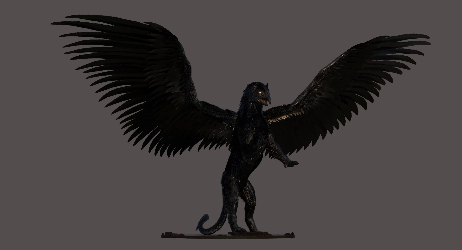
Zack Snyder’s sprawling sci-fi fantasy epic Rebel Moon introduced audiences to a richly textured universe populated by distinct planets, synthetic beings, and otherworldly fauna. Among the most striking additions to the film’s menagerie is the bennu—a majestic, lion-eagle hybrid that serves as the universe’s unique interpretation of the classic mythological griffin.
Developed by the world-renowned visual effects studio Framestore for Rebel Moon – Part One: A Child of Fire, the bennu bridges ancient global mythologies with hard-edged science fiction. Within the lore of the film, these creatures are native to the verdant planet of Samandrai, functioning not merely as wild beasts, but as vital beasts of burden and high-speed mounts comparable to horses.
The most prominent bennu in the narrative is Beatrice, a striking black-feathered specimen featured in a pivotal sequence involving the high-born warrior turned captive, Tarak Decimus (played by Staz Nair). Tarak is tasked with breaking the famously "unrideable" creature on the distant world of Neu-Wodi to secure his freedom. Through a blend of practical-looking choreography, emotional resonance, and cutting-edge CGI, the bennu has quickly become a fan-favorite element of the Rebel Moon universe, expanding the world-building potential of Snyder’s expanding cinematic empire.
Chronology: From Concept to Screen
The journey of the bennu from a writer’s room concept to a fully realized, photorealistic creature on streaming screens followed a rigorous production timeline typical of major-studio blockbusters, yet infused with Zack Snyder’s distinct aesthetic vision.
- Pre-Production and World-Building (2021): During the conceptualization phase of Rebel Moon, Snyder and his creative team sought to infuse traditional sci-fi tropes with organic, mythological elements. The concept of a native Samandraian mount was established early to flesh out Tarak’s backstory as a displaced royal from Samandrai.
- Visual Development and Design (Late 2021): The Framestore design team began drafting iterations of the creature, drawing heavily from historical folklore regarding griffins while incorporating specific anatomical traits of both African lions and birds of prey. Digital sculptors worked to ensure the creature looked distinct from traditional fantasy tropes by emphasizing heavy musculature, avian wing structures, and a grounded, tactile feather texture.
- Principal Photography (2022): On-set filming required actors like Staz Nair to interact with physical stand-ins, mechanical rigs, and blue-screen environments. The emotional resonance of the taming scene—colloquially dubbed "The Breaking of Beatrice"—relied heavily on physical performance to sell the rapport between human and beast before digital effects were applied.
- Post-Production and VFX Integration (2023): Framestore spearheaded the complex animation pipeline, tackling the rigorous physics of feathered flight, quadrupedal movement, and realistic muscle flexing under dynamic lighting conditions.
- Release and Public Reception (December 2023): Rebel Moon – Part One: A Child of Fire premiered globally on Netflix, bringing Beatrice and the lore of the bennu to millions of viewers and sparking widespread interest in the creature’s design breakdown.
Supporting Data and Anatomical Design
Creating a convincing mythical creature for a high-budget sci-fi feature requires an intricate balance of biological plausibility and fantastical scale. The Framestore team approached the bennu with the mindset of wildlife documentarians, ensuring that every movement—from the twitch of a feather to the landing impact of massive paws—adhered to real-world physics.
Anatomy and Physiology
- The Hybrid Build: The bennu combines the forward quarters and agile hunting build of a massive feline with the soaring wingspan, razor-sharp talons, and expressive head of an eagle.
- The Plumage: Beatrice features a dense coat of obsidian-black feathers that absorb and reflect light dynamically, mimicking the varied sheen found in ravens and large raptors. This plumage must react believably to atmospheric pressures, wind resistance during flight, and the dusty, arid environments of Neu-Wodi.
- Scale and Weight: Standing taller than a standard warhorse, the bennu possesses a heavy, muscular chest cavity necessary to power both its terrestrial gallop and its aerial propulsion.
Narrative Context and Habitat
- Native Origin: Samandrai (Tarak’s home world), characterized by sprawling plains, dense forests, and open skies well-suited for herds of wild bennu.
- Behavioral Traits: Highly territorial, intelligent, and fiercely independent. They cannot be broken through brute force or fear; instead, they demand a psychological and emotional parity from their riders.
- Cultural Significance: On Samandrai, the ability to bond with a bennu signifies high status, deep empathy, and an alignment with the natural world, serving as a direct contrast to the industrialized, oppressive machinery of the Motherworld.
Official Responses and Creative Insights
The creation of the bennu was a collaborative triumph between director Zack Snyder and the artists at Framestore. In behind-the-scenes featurettes and VFX breakdowns, the creative team has opened up about the challenges and inspirations behind bringing Beatrice to life.
Zack Snyder has frequently spoken about his desire to craft a universe that feels tactile and lived-in, rather than overly sterile or digitally glossed-over. By integrating mythological archetypes like the griffin into a sci-fi framework, Snyder aimed to evoke a sense of ancient wonder within an interstellar civilization.
Framestore’s design supervisors noted that the primary challenge of the bennu was avoiding the uncanny valley often associated with mythological hybrids. By studying the biomechanics of big cats running at top speeds and pairing those observations with ornithological studies of large birds catching thermals, the animators grounded the creature in reality.

Furthermore, the emotional core of the taming sequence was heavily driven by the dialogue shared between Tarak and the creature. In A Child of Fire, Tarak delivers a poignant monologue that establishes the thematic weight of the scene:
"I’m not going to hurt you. You’re far from home and so am I. You and I, we are alike. We’ve been hurt. Betrayed. Our trust has been broken. We both know fear. Yet, the biggest fear we both face is the fear of ourselves."
This quote underscores the narrative parallel between the displaced prince and the penned-in beast. Both have been stripped of their freedom by the oppressive reach of the Imperium, and both must conquer their internal trauma to forge a new alliance.
Implications for the Rebel Moon Franchise
The introduction of the bennu does more than provide a visually stunning action set-piece; it carries significant world-building implications for the future of the Rebel Moon intellectual property.
Expanding the Lore of Samandrai
As the narrative expands, the prospect of exploring Tarak’s home planet of Samandrai becomes increasingly likely. If future installments or extended cuts take audiences to Samandrai, the visual landscape will undoubtedly feature vast herds of wild bennus soaring across primeval skies and navigating dense forests. This introduces ecological diversity to a cinematic universe that often pivots heavily on militaristic industrial complexes and barren outposts.
Merging Fantasy and Sci-Fi Tropes
Snyder’s willingness to blend high fantasy creatures with interstellar travel sets Rebel Moon apart from more traditional, scientifically grounded science fiction franchises like Star Trek or The Expanse. By embracing mythological beasts as native wildlife rather than genetically engineered bioweapons, the franchise opens the door for other folklore-inspired entities to emerge in subsequent chapters.
Merchandise and Fan Engagement
Creatures with distinct visual identities and strong emotional ties to main characters routinely drive franchise engagement. Beatrice the bennu has already established herself as a standout icon of the first film, paving the way for expanded merchandising—ranging from collectible figures and art books to potential appearances in video games, comic book tie-ins, and themed experiences.
Ultimately, the bennu stands as a testament to the power of collaborative visual effects and mythological reimagining. By taking an ancient archetype and giving it modern cinematic weight, Zack Snyder and Framestore have permanently etched a legendary new beast into the annals of modern science fiction.