Main Facts
In the expansive science-fantasy universe crafted by director Zack Snyder—renowned for his visually distinct work on films such as 300, Man of Steel, and Watchmen—mythology is systematically fused with futuristic interplanetary empires. Among the most striking additions to Snyder’s cinematic lexicon in Netflix’s Rebel Moon series is the bennu, an original lion-eagle hybrid creature that serves a vital role in both the world-building and narrative development of the franchise.
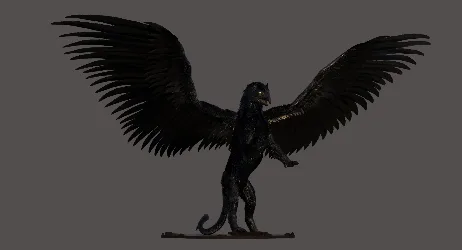
While visually reminiscent of traditional mythological griffins found in ancient Earth folklore, the bennu is a distinct entity exclusive to the Rebel Moon cosmos. Conceptualized by Snyder and brought to life through the digital artistry of the world-class visual effects studio Framestore, these majestic creatures bridge the gap between untamed wilderness and utilitarian livestock.
The most notable bennu in the franchise is Beatrice, a magnificent black-feathered specimen introduced in Rebel Moon – Part One: A Child of Fire. Beatrice is featured in a pivotal sequence where the character Tarak Decimus (played by Staz Nair)—a high-born warrior reduced to captivity—must break and tame the allegedly "unrideable" beast on the distant agricultural moon of Neu-Wodi to secure his freedom. Far from being mere background set dressing, the bennu represents themes of shared trauma, displacement, and earned loyalty. As the universe of Rebel Moon continues to expand across streaming platforms and supplementary media, the design, lore, and technological execution of the bennu stand as a testament to modern creature feature design.
Chronology of the Bennu: From Concept to Screen
The journey of the bennu from a theoretical script concept to a fully realized, photorealistic cinematic creature involved years of cross-continental collaboration between Zack Snyder’s production team and visual effects powerhouses.
Phase 1: Conceptualization and Mythological Roots
During the pre-production phases of Rebel Moon, Zack Snyder and his creative collaborators sought to populate their universe with fauna that felt simultaneously ancient and futuristic. Rather than relying entirely on standard alien designs, the team looked to Earth’s mythological past. The griffin—a legendary creature with the body, tail, and back legs of a lion, and the head and wings of an eagle—served as the primary structural template. However, to fit the specific ecosystem of the Rebel Moon galaxy, the design was refined into the bennu.
Phase 2: Framestore’s Digital Craftsmanship
The realization of the bennu was spearheaded by the visual effects artists at Framestore. Tasked with blending the ferocious musculature of a predatory feline with the complex aerodynamic anatomy of a massive raptor, the team drew inspiration from historical depictions of griffins in art and literature, as well as real-world animal biology. Animators studied the biomechanics of big cats running and leaping, juxtaposed against the wing-flap dynamics and feather articulation of large birds of prey. This ensured that when the creature interacted with physical environments and human actors, its movements maintained biological plausibility and weight.
Phase 3: Introduction in A Child of Fire (2023)
The cinematic debut of the species occurs in Rebel Moon – Part One: A Child of Fire. The sequence—often referred to by fans as "The Breaking of Beatrice"—serves as a character-defining arc for Tarak. Confined in a pen on Neu-Wodi far from his homeworld of Samandrai, Tarak faces the lethal beast. Through a quiet display of empathy rather than brute force, Tarak establishes a psychic and emotional bridge with the creature. By speaking to their shared history of displacement and betrayal, Tarak earns the bennu’s loyalty, successfully mounting her and charting a course toward liberation.
Supporting Data and Anatomical Design
To understand why the bennu feels so tangible on screen, one must examine the meticulous layers of digital engineering and artistic choices required to build the creature from the feathers up.
Anatomical Breakdown
- The Feline Foundation: The lower body, hind legs, and torso of the bennu possess the dense, coiled musculature of an African lion. This grants the creature explosive terrestrial acceleration, allowing it to navigate rugged mountain passes and rocky terrain with lethal agility.
- The Avian Upper Half: The head, neck, and expansive wings are modeled after apex avian predators. The razor-sharp beak and piercing eyes are capable of calculating trajectory at high speeds, while the wingspan provides formidable lift, enabling the heavy creature to launch into vertical ascents from a dead stop.
- Plumage and Coloration: While various sub-species or color variations exist within the lore, Beatrice’s pitch-black plumage serves a dual purpose: it emphasizes her fierce, untamed nature while offering striking visual contrast against dusty, sun-bleached planetary backdrops.
Ecological and Cultural Role on Samandrai
Within the internal chronology and geography of the Rebel Moon universe, bennus originate from the lush plains and forests of Samandrai, which happens to be Tarak’s native planet. On Samandrai, these creatures are not kept merely as exotic curiosities; they are integrated into the culture as high-speed transportation, functioning much like horses do in Western historical contexts. The prospect of future installments exploring Samandrai opens up narrative possibilities for witnessing massive herds of wild bennus soaring across alien skies, providing a cinematic spectacle deeply rooted in natural history documentary aesthetics.

Official Responses and Behind-the-Scenes Insights
The creative forces behind Rebel Moon have frequently spoken about the emotional weight and technical hurdles involved in bringing creatures like Beatrice to life.
Director Zack Snyder has often emphasized that the science-fiction genre works best when fantastical elements are anchored by emotional truths. The central dynamic between Tarak and Beatrice was designed to bypass conventional monster-taming tropes. Instead of subduing the beast through whips or dominance, the scene relies on a shared vulnerability.
This dynamic is crystallized in Tarak’s poignant monologue to the captive creature:
"I’m not going to hurt you. You’re far from home and so am I. You and I, we are alike. We’ve been hurt. Betrayed. Our trust has been broken. We both know fear. Yet, the biggest fear we both face is the fear of ourselves."
Visual effects supervisors from Framestore noted that animating feathers in a dynamic, wind-swept environment remains one of the most computationally demanding tasks in modern filmmaking. Every single feather on Beatrice’s body had to be rigged to respond independently to air resistance, gravity, and muscle contraction under the intense physical strain of flight and combat. The resulting footage, showcased in official Framestore vfx breakdowns, highlights the painstaking frame-by-frame artistry required to match live-action plates with fully digital creatures.
Implications for the Future of the Rebel Moon Franchise
The introduction of the bennu carries significant narrative and world-building implications as the Rebel Moon universe continues to expand across director’s cuts, sequels, and potentially expanded media universes.
1. Expanding the Lore of Samandrai
Thus far, glimpses of Samandrai and the cultural practices surrounding bennus have been relatively localized. Future expansions of the franchise—whether through direct narrative sequels or comic book and novel tie-ins—are poised to delve deeper into the domestication, biology, and ecological status of these creatures. The existence of wild bennu herds hints at an untapped goldmine for world-building, offering audiences a chance to see how indigenous populations coexist with apex predators across different star systems.
2. Elevating Creature Design in Sci-Fi Cinema
In an era where digital effects are frequently criticized for looking rushed or artificial, the meticulous attention paid to Beatrice sets a high benchmark for hybrid creature design. By blending practical acting—with Staz Nair interacting with physical blue-screen stand-ins and puppet rigs—with cutting-edge digital rendering, the production team proved that emotional resonance and technological fidelity can walk hand-in-hand.
3. Themes of Empathy and Rebellion
At its core, Rebel Moon is a story about liberation from oppressive empires. The taming of Beatrice is not merely a cool action set piece; it is a thematic microcosm of the entire franchise. Just as the rebels must band together despite their varied, wounded pasts, Tarak and Beatrice must heal one another’s broken trust to achieve freedom. In doing so, the bennu transcends its status as a mere CGI spectacle, cementing itself as an iconic symbol of resilience and mutual understanding within modern space opera cinema.