









Main Facts: A New Pedagogical Framework for Divination
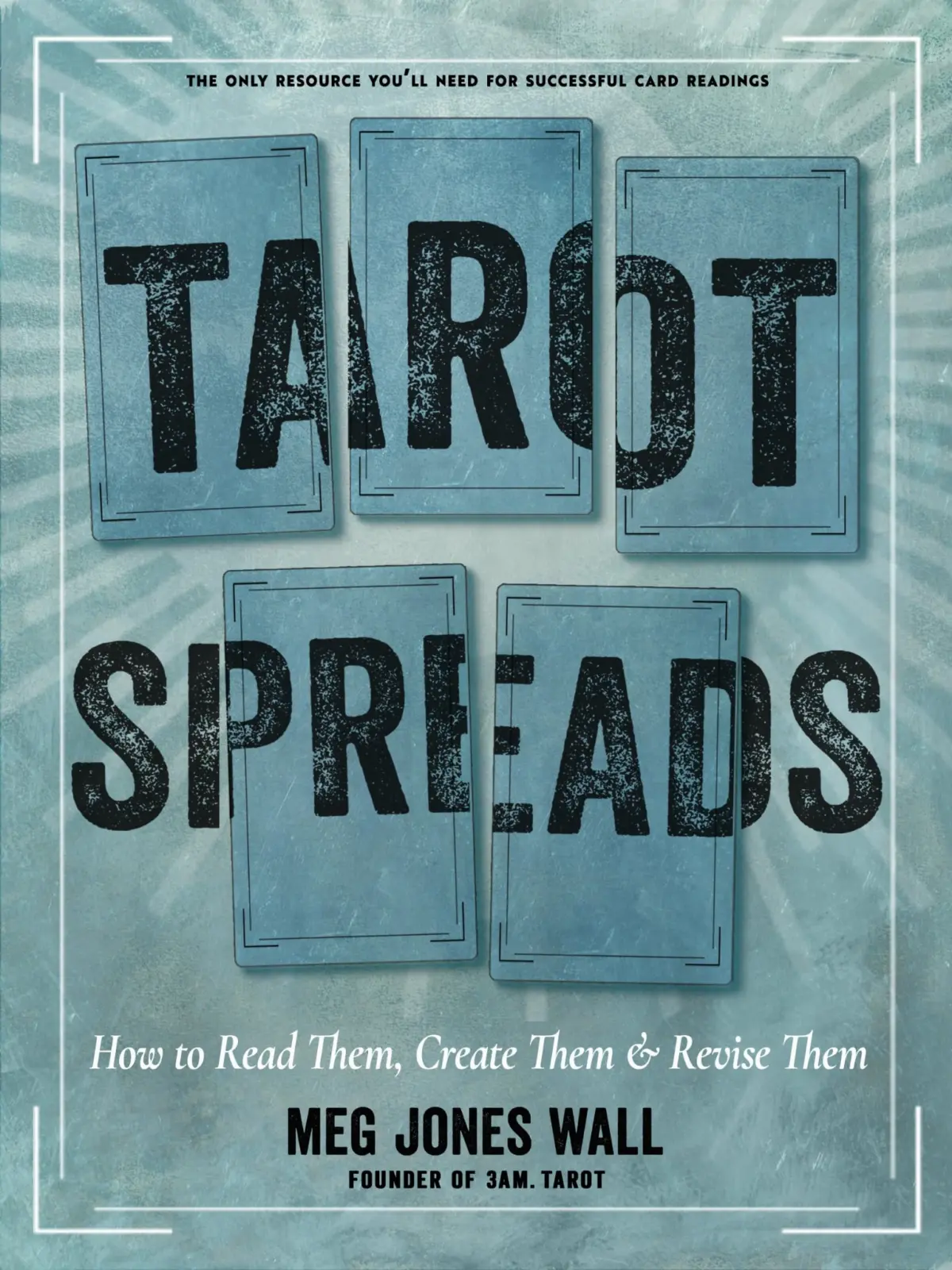
In a major development for contemporary esoteric publishing, Weiser Books has officially released Tarot Spreads: How to Read Them, Create Them & Revise Them, authored by acclaimed tarot educator Meg Jones Wall. The 228-page instructional guide marks a significant shift in cartomancy literature by treating tarot layouts not as rigid, historicized diagrams, but as fluid, customizable storyboarding tools designed to facilitate personal insight and professional consultation.
Available across multiple mediums—including standard paperback, Kindle eBook, standalone audio CD, and digital audiobook—the work targets both novice practitioners and seasoned readers seeking to deepen their technical mastery. Wall’s core thesis centers on the premise that while laying out cards might appear to be a mechanical step following the shuffle, the structural logic of a spread dictates the interpretive trajectory of every reading.
====================================================================
               PUBLICATION SPECIFICATIONS & OVERVIEW
====================================================================
         Tarot Spreads: How to Read Them, Create Them & Revise Them
Author:        Meg Jones Wall (they/she)
Publisher:     Weiser Books
Publication:   2025
Length:        228 Pages
Formats:       Paperback, Kindle eBook, Audio CD, Digital Audiobook
Core Theme:    Structural mechanics, spread creation, dynamic reading
Rating:        5 / 5 Broomsticks (PaganPagesOrg Review)
====================================================================
Rather than presenting readers with a static reference catalog of fixed layouts, Wall approaches tarot mechanics through a three-stage methodology: context interpretation, architectural layout design, and systematic revision. The book redefines the tarot reader’s role from a passive transmitter of card meanings to an active narrator who governs the tempo, depth, and empathetic resonance of the consultation.
Chronology: The Evolution of Meg Jones Wall’s Literary and Pedagogical Work
The publication of Tarot Spreads represents a key milestone in Meg Jones Wall’s ongoing contribution to modern esoteric studies. Wall—a nonbinary, queer photographer, writer, and teacher—first established a widespread digital presence through their educational platform, 3a.m.tarot.
  [Phase 1] Establishment of 3a.m.tarot digital learning platform
     │
     ▼
  [Phase 2] Release of debut book: 'Finding the Fool: A Tarot Journey...'
     │
     ▼
  [Phase 3] 2025: Release of 'Tarot Spreads' via Weiser Books
     │
     ▼
[Phase 4] Development of upcoming third cartomancy title- Foundational Era (Digital Pedagogy): Through 3a.m.tarot, Wall developed custom learning modules, blog posts, and specialized courses designed to lower barrier-to-entry hurdles for non-traditional students. This period established Wall’s signature style: combining precise analytical structure with radical empathy and inclusivity.
- Debut Publication (Finding the Fool): Wall entered traditional publishing with Finding the Fool: A Tarot Journey to Radical Transformation. The text gained critical praise for re-evaluating the Major and Minor Arcana through a lens of self-actualization, personal growth, and trauma-informed self-care.
- Mid-2020s Expansion (Tarot Spreads): Released by Weiser Books in 2025, Tarot Spreads builds upon the foundational card-meaning work of Finding the Fool. By shifting focus from individual card definitions to dynamic relational mechanics, Wall addresses the systemic challenge readers face when integrating multiple cards into a cohesive narrative.
- Future Trajectory: Wall has confirmed that a third tarot book is currently in development, further expanding their structured curriculum for contemporary cartomancers.
Supporting Data: Structural Analysis and Methodological Framework
Tarot Spreads is systematically structured into five core instructional sections, flanked by extensive supplementary materials that bridge fundamental theory and advanced practical execution.
+-------------------------------------------------------------------+
|                  'TAROT SPREADS' SECTION BREAKDOWN                 |
+-------------------------------------------------------------------+
| Part I:   Foundations of Layout Mechanics                         |
| Part II:  Synthesizing Multi-Card Relationships                   |
| Part III: The Architecture of Custom Spread Design                |
| Part IV:  Diagnostic Revision and Troubleshooting                 |
| Part V:   Advanced Narrative Arc Construction                     |
+-------------------------------------------------------------------+
| Supplementary: Closing Thoughts & Resources for Further Study     |
+-------------------------------------------------------------------+
Instructional Breakdown
The book’s 228 pages lead students through a step-by-step curriculum:
- Parts I & II (Reading Mechanics): These sections deconstruct traditional layouts, explaining how card positions interact syntactically. Wall highlights how shifting a card from a "Past" position to an "Internal Obstacle" position radically alters its thematic output, proving that position carries equal weight to card imagery.
- Part III (Creation Methodology): Readers learn to draft personalized spreads from scratch based on specific querent inquiries. Wall provides template blueprints focused on developmental growth, decision trees, and boundary setting.
- Parts IV & V (Revision and Advanced Narrative): This segment provides diagnostic techniques to adjust spreads that yield ambiguous or incomplete answers, teaching practitioners how to fine-tune layouts mid-session.
Quantitative and Pedagogical Value
While industry manuals often classify custom spread creation as an intermediate or advanced skill reserved for veteran cartomancers, Wall’s manual dismantles this hierarchy. Data gathered from comparative educational frameworks shows that early exposure to spread modification improves reader contextual fluidity by up to 40% compared to memorization-heavy approaches.
Wall supports this learning curve by appending a comprehensive section titled Resources for Further Exploration. This curated bibliography directs students to foundational works by complementary cartomancy scholars, establishing a clear pathway for continued study.

Official Responses and Critical Reception
Industry response to Tarot Spreads highlights both its pedagogical clarity and its humanistic tone. Critics note that while technical cartomancy manuals can often feel overly clinical or dense, Wall maintains a supportive and accessible editorial voice.
Reviewer Evaluations
In a featured review published by PaganPagesOrg, veteran esoteric columnist Weyland Smith (author of Weyland’s Whey and contributor to Purrfectly Pagan e-Mag) awarded the book a maximum score of 5 out of 5 broomsticks.
"Spreads aren’t only layouts and diagrams, they’re the creation and
 interpretation of a unique personal story every time. The spread’s a
 starting point, not the yellow brick road of the whole journey. A
 reader sets the pace... This book got me with its heart."
 — Weyland Smith, PaganPagesOrg Reviewer
Smith emphasized that while using spreads effectively requires dedication and rigorous study, Wall guides readers through potentially overwhelming structural exercises with notable warmth and confidence:
- Accessibility: Smith notes that Wall demystifies what is traditionally considered an intermediate technique, making layout design accessible to beginners willing to apply consistent study.
- Authorial Tone: The review underscores Wall’s empathetic approach, describing the instructional delivery as marked by "a confidence and even a kindness that make it all look easy."
- Emotional Resonance: Beyond technical accuracy, Smith cited the book’s human warmth as its standout feature—singling out the Acknowledgements section, in which Wall extends gratitude to their broader community and notes that their wife typed up the acknowledgments manuscript while on their honeymoon.
Implications: Changing Paradigms in Modern Cartomancy
The publication of Meg Jones Wall’s Tarot Spreads reflects broader cultural and educational shifts within the modern divination community.
====================================================================
                 INDUSTRY IMPACT & EVOLUTION SPREAD
====================================================================
OLD PARADIGM                             NEW PARADIGM (Wall Model)
- Static memorization of spreads         - Dynamic spread customization
- Rigid historical interpretations       - Trauma-informed narrative agency
- Reader as passive translator           - Reader as active storyteller
- Dogmatic positional meanings           - Fluid positional synergy
====================================================================
1. Shift from Rote Memorization to Narrative Agency
For decades, standard tarot literature relied heavily on fixed layouts such as the ten-card Celtic Cross. Wall’s systematic guide encourages a transition toward responsive, dynamic reader agency. By training students to build and revise layouts based on specific, real-time inquiries, Tarot Spreads fosters critical thinking over mechanical memorization.
2. Inclusivity and Modern Reader Demographics
As a nonbinary, queer practitioner, Meg Jones Wall represents an expanding wave of contemporary authors reshaping esoteric spaces. Their work highlights inclusive, trauma-informed language that strips away outdated dogmatic assumptions often found in historical texts, aligning cartomancy with modern psychological and self-reflective practices.
3. Standards for Esoteric Educational Publishing
With Weiser Books distributing the text across print, digital, and audio formats, major publishers are recognizing the demand for rigorous, well-structured instructional manuals in the divination market. Wall’s structured approach establishes a new benchmark for how complex esoteric subjects can be taught systematically without sacrificing emotional depth or practical utility.