








News Desk
September 17, 2026
Main Facts: The Turning of the Cosmic Wheel
As the Northern Hemisphere prepares to transition from the warmth of summer into the crisp reflection of autumn, communities across the globe are turning their attention toward the September equinox. Formally occurring on Tuesday, September 22, 2026, at 8:05 p.m. EDT (00:05 UTC on September 23), this astronomical threshold marks the exact moment the Earth’s axis tilts neither toward nor away from the Sun.

At this precise instant, the Sun sits directly above the Earth’s equator, producing a brief period of global equilibrium where day and night are roughly equal in length. For the Northern Hemisphere, this event heralds the beginning of astronomical autumn, characterized by shortening days, cooling temperatures, and the gradual turning of foliage. Conversely, for the Southern Hemisphere, the September equinox acts as the harbinger of astronomical spring, sparking longer days, blooming flora, and rising temperatures.
Beyond its meteorological definitions, the equinox holds profound cultural, spiritual, and ecological significance. From ancient agricultural festivals and Buddhist observances to modern Pagan celebrations and massive ecological migrations, the threshold of the equinox reminds humanity of the interconnected rhythms of the natural world.

Chronology: A Season of Thresholds and Global Traditions
The journey into autumn is marked by a rich tapestry of historical, religious, and cultural milestones spanning from the start of the meteorological season to deep into the harvest months.
- September 1, 2026: Meteorological autumn officially begins across the Northern Hemisphere, covering the months of September, October, and November—though local variations, such as South Florida’s tongue-in-cheek designations of "Heatember, Hotober, and BelieveItsFall," highlight regional climate realities.
- September 13, 2026: The EarthSpirit Community in western Massachusetts kicks off its local seasonal celebrations early with an Autumnal Equinox Ritual and Sacred Land Walk at Glenwood, featuring a ritual walk followed by a harvest celebration.
- September 22, 2026 (8:05 p.m. EDT): The exact timing of the September equinox. The Sun enters Libra, the astrological sign of the scales, symbolizing balance, divine justice, and cosmic order.
- Late September to October: Millions of migratory birds and other wildlife species reach peak transit across North America. Utilizing nocturnal flight behaviors, avian populations surge southward under the cover of darkness.
- October 9–12, 2026: The EarthSpirit Community hosts its annual intensive spiritual retreat, Twilight Covening, in the Berkshires of western Massachusetts.
- October 12, 2026 (8:00 p.m. EDT): The monthly EBSAT community meeting convenes via Zoom, bringing members together for organizational and community updates.
- October 25, 2026: EarthSpirit returns to Glenwood for an Ancestor Ritual and Sacred Land Walk, honoring those who have passed before the veil thins further at Samhain.
- October 30, 2026 (7:30–9:00 p.m. EDT): The community gathers at the Williamsburg Grange in Williamsburg, Massachusetts, for the annual EarthSpirit Samhain Ritual.
- December 1, 2026 (11:59 p.m. EST): The final deadline for international submissions to Spellbound, the first volume of a fantasy anthology series presented by Coreopsis Journal and inspired by Ukrainian artist Inna Vjuzhanina.
- December 19, 2026: The EarthSpirit community closes out its 2026 seasonal ritual calendar with its annual Yule celebration in Williamsburg.
Supporting Data: Cultural Celebrations and Ecological Scale
The cultural resonance of the equinox spans ancient traditions to contemporary ecological realities, anchored by hard data on both human heritage and the natural world.
Global Cultural Observances
- Japan (Higan): Occurring around both the spring and autumn equinoxes, this Buddhist observance directs focus toward the "other shore." Families honor their ancestors by visiting and tending graves, making offerings, and reflecting on the setting sun in the west, which Pure Land Buddhism links to the realm of Amida Buddha.
- Poland (Dożynki): A traditional harvest festival celebrating the conclusion of agricultural labor. Communities craft intricate harvest wreaths from grain, flowers, fruit, and ribbons, carrying them in ceremonial processions followed by music, feasting, and community revelry.
- Latvia (Miķeļdiena): Marking Michael’s Day and the end of major farm work, this celebration intertwines Christian tradition with ancient Latvian agricultural beliefs. Central to the folklore is Jumis, a fertility symbol often represented by double stalks of grain. Traditional dainas (folk songs) and modern autumn fairs keep these rural customs alive.
- Modern Paganism: In contemporary Western esoteric traditions, the equinox is viewed as the second of three vital harvest festivals, nestled between Lughnasadh and Samhain. Names for the season vary widely depending on the tradition: Harvest Home or Mabon in Wicca, Alban Elfed in Druidry, Winter Finding in Heathenry, or simply Mid-Harvest.
The Scale of Autumn Migration
Ecologically, the equinox coincides with one of the most staggering biological movements on Earth: the autumnal migration of North American wildlife.
- Avian Numbers: According to BirdCast—a project led by the Cornell Lab of Ornithology utilizing weather-radar networks—migration numbers in autumn routinely surpass spring populations because they include young birds hatched during the breeding season.
- Record Flight Nights: On September 12, an estimated 321 million birds were forecast to migrate across the continental United States. In King County, Washington, nearly 1.4 million birds crossed overhead in a single night earlier in the month.
- Behavioral Patterns: More than 80% of migratory bird species in the United States travel under the cover of darkness, flying hundreds of meters above the ground. Favorable winds, temperature, and cloud cover dictate their departure times.
- Mega-Migrations: Birds are joined by monarch butterflies trekking toward Mexico, caribou traversing thousands of miles of northern terrain, and humpback whales abandoning Alaskan waters for warmer breeding grounds near Hawaii and Mexico.
Official Responses and Conservation Appeals
With hundreds of millions of birds taking flight across North American skies during September and October, conservationists and ornithologists have issued urgent warnings regarding the threats posed by artificial light pollution.

Migrating birds rely heavily on natural celestial cues for navigation. However, the glowing infrastructure of urban environments frequently disorients them, drawing exhausted flocks toward illuminated skyscrapers and residential buildings. This disorientation drastically increases the risk of fatal window collisions and energy depletion.
In response, conservation organizations and initiatives like BirdCast are actively promoting "Lights Out" campaigns. Building managers, commercial enterprises, and private homeowners are officially urged to extinguish nonessential architectural and interior lighting from dusk until dawn throughout the migration season—particularly on nights when heavy migration movements are explicitly forecast.

"As the equinox approaches and the nights lengthen, look up—or perhaps simply turn out the lights," conservation advocates advise. "Above us, one of the largest movements of life on Earth is already underway."
In the literary and artistic sphere, community responses have focused on resilience and creative expression. The international call for submissions for Spellbound—the inaugural volume of a three-book fantasy anthology inspired by Ukrainian artist Inna Vjuzhanina’s painting series The Coven—has drawn global interest. Vjuzhanina, working from Zaporizhzhia, Ukraine, has collaborated with Coreopsis Journal and an independent Canadian publisher to offer a platform celebrating creative agency, transformation, and artistic resilience amid wartime realities. Editors have implemented priority-reading pathways for Ukrainian and diaspora writers to ensure displaced voices remain centered in the project.

Implications: Balance, Conservation, and Community Resilience
The convergence of the September equinox, mass ecological migrations, and active community programming carries profound implications for contemporary society.
Culturally and spiritually, the equinox serves as an intentional pause point—a moment of equilibrium before the natural world plunges into longer nights and colder weather. Whether individuals observe the day through traditional Pagan rituals, ancestral remembrance like Japan’s Higan, or community gatherings such as the EarthSpirit events in western Massachusetts, the season encourages introspection, gratitude for the harvest, and preparation for the dormant months ahead.
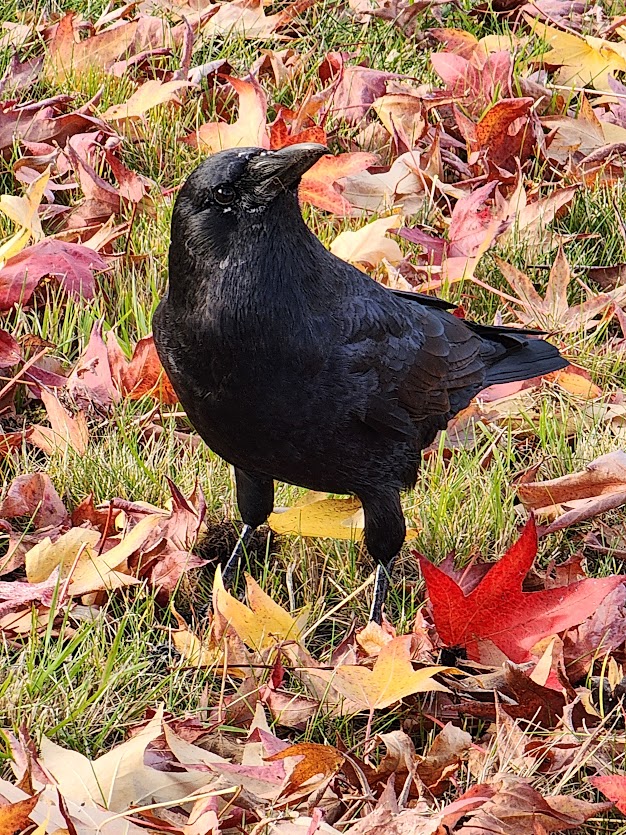
Ecologically, the timing of the equinox highlights the vulnerability of our shared biosphere. The staggering scale of nocturnal bird migration underscores humanity’s profound impact on natural systems. Urban light pollution is not merely an energy waste issue; it represents a direct existential hazard to billions of migrating animals. The widespread adoption of "Lights Out" initiatives demonstrates how simple human behavioral adjustments—flipping a switch—can directly safeguard biodiversity and support planetary resilience.
Finally, community announcements like the Spellbound anthology project and local organizational meetings illustrate the enduring power of art and community to bridge geographical divides. By fostering spaces for creative autonomy and mutual support, communities from New England to Ukraine utilize the symbolic power of the changing seasons to anchor human connection, storytelling, and survival through the darker half of the year.