







JERUSALEM — Deep within the dusty strata of the ancient Near East, archaeology often unearths fragments of a forgotten world. Yet, every so often, a discovery emerges that does not merely add to our historical catalog—it bridges the chasm between archaeology, comparative mythology, and sacred literature.
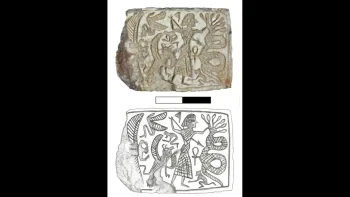
Such is the case with a remarkable 2,800-year-old artifact recently brought to light in Israel. Measuring no larger than a modern postage stamp, this tiny, meticulously carved stone seal depicts a scene of cosmic drama: a valiant hero locked in mortal combat with a fearsome, multi-headed serpent.
Far from being a mere decorative trinket or a whimsical doodle of antiquity, epigraphers and biblical scholars suggest this artifact represents a vital missing link. It offers tangible, physical proof of a cultural narrative that traversed borders, languages, and millennia—echoing from the ancient Ugaritic texts of the Levant through the Hebrew Bible and eventually finding its way into the heroic cycles of classical Greek mythology.
Main Facts: The Discovery of the Multi-Headed Serpent Seal
The artifact in question is an Iron Age stamp seal, expertly carved from semi-precious stone, dating back approximately 2,800 years to a period when the kingdoms of Israel and Judah stood at a volatile cultural and geopolitical crossroads.
At the center of the seal’s intricate iconography is a dramatic confrontation. An anthropomorphic figure—interpreted by specialists as a divine warrior or mythological hero—stands poised to strike a serpentine monster. But this is no ordinary snake. The creature rears up with an unnerving posture, crowned by seven distinct, writhing heads.
According to leading archaeologists and historians who have analyzed the piece, the artistic style and iconography point heavily toward northern Mesopotamia or Levantine workshops influenced by Assyrian and Phoenician motifs. However, the true significance lies not just in where it was made, but what it portrays.
The motif of a hero slaying a multi-headed water dragon or chaotic serpent is a master trope of ancient Near Eastern mythology. For decades, scholars have traced textual similarities between Canaanite creation epics and passages in the Hebrew Bible. This seal provides rare visual corroboration, suggesting that the inhabitants of the Levant vividly imagined and shared these cosmic struggles centuries before the classical era of Greece.
Chronology: From the Primordial Waters to the Iron Age
To understand the weight of this 2,800-year-old discovery, one must trace the timeline of the multi-headed serpent myth across the ancient world—a narrative trajectory that spans well over a millennium before and after the creation of the seal.
1. The Bronze Age Precursors (c. 2000–1200 BCE)
Long before the Iron Age seal was pressed into wet clay to authenticate documents or goods, the myth of the chaos dragon was already ancient. In the royal archives of Ugarit (modern-day Syria), clay tablets written in cuneiform detail the exploits of the storm god Baal. In these texts, Baal battles Lothan (often translated as Lotan), described as a "fleeing serpent" and a "tortuous serpent" with "close to seven heads."
Simultaneously, in Mesopotamian mythology, the god Marduk clashes with Tiamat, the primordial embodiment of chaotic saltwater, who commands an army of monstrous serpents and dragons. These foundational myths established a cosmic template: the forces of order (represented by a storm or warrior deity) must defeat the forces of chaos (represented by a multi-headed aquatic beast) to bring stability to the universe.
2. The Iron Age Materialization (c. 8th Century BCE)
It is within this rich, pre-existing mythological ecosystem that our newly highlighted seal was crafted. Dated to roughly the 8th century BCE—a time of immense geopolitical shifting, Assyrian imperial expansion, and intense cultural exchange across the Levant—the seal crystallizes abstract oral and literary traditions into durable stone.
During this era, the motif was not confined to Canaanite or Mesopotamian texts; it was actively circulating through visual culture. Merchants, diplomats, and scribes carried administrative seals bearing these powerful apotropaic symbols across trade routes linking Egypt, the Levant, Mesopotamia, and Anatolia.
3. Biblical Echoes and Classical Transformations (c. 6th Century BCE – 2nd Century CE)
As the centuries progressed, the imagery of the multi-headed serpent evolved. In the Hebrew Bible, various poetic passages reference this primordial combat. Isaiah 27:1 famously foretells: "In that day the Lord with his sore and great and strong sword shall punish leviathan the piercing serpent, even leviathan that crooked serpent; and he shall slay the dragon that is in the sea." While the biblical text often subverts the pagan theology by making Yahweh the sole master of creation rather than a struggling warrior, the evocative imagery of the multi-headed sea monster remained potent.
By the time classical Greek civilization reached its zenith, the archetype had transformed once more. The story of Heracles (Hercules) slaying the Lernaean Hydra—a venomous, multi-headed water serpent that grew two new heads for every one severed—bears an unmistakable structural resemblance to the earlier Near Eastern traditions. While direct linear descent is a subject of ongoing academic debate, classicists agree that Greek mythology freely borrowed and adapted motifs from older Phoenician, Hittite, and Mesopotamian sources.
Supporting Data: Comparative Mythology and Archaeological Context
The interpretation of the 2,800-year-old seal does not rest on speculation alone; it is supported by a robust body of comparative archaeological and textual data compiled over the past century.
| Mythological Tradition | Serpent/Monster Name | Number of Heads | Primary Hero/Deity | Approximate Era |
|---|---|---|---|---|
| Ugaritic / Canaanite | Lotan (Lethan) | "Close to seven" | Baal / Anat | Bronze Age (c. 1400 BCE) |
| Mesopotamian | Tiamat / Mushussu | Varies (Dragon/Serpent) | Marduk | Bronze/Iron Age |
| Hebrew Bible | Leviathan / Rahab | Multifold / Poetic | Yahweh | Iron Age / Persian Period |
| Greek Mythology | Lernaean Hydra | Multiple (regenerating) | Heracles | Archaic / Classical Greece |
| Levantine Iron Age Seal | Unnamed Iconographic Serpent | Seven | Unnamed Divine Hero | c. 8th Century BCE |
Iconographic Analysis
Archaeologists specializing in glyptic art (the study of carved gems and seals) note that the depiction of seven heads was a deliberate symbolic choice rather than a mere artistic flourish. In ancient Near Eastern numerology, the number seven signified completeness, totality, or divine perfection. A serpent with seven heads was not merely dangerous—it was existentially catastrophic, representing unmitigated, total chaos that threatened the entire created order.
Furthermore, the posture of the hero on the seal—often shown with one arm raised brandishing a mace, scimitar, or lightning bolt, and the other hand grasping the monster—directly mirrors the iconography of the "Slaying God" found on stelae throughout Canaan and Phoenicia.
Official Responses and Scholarly Perspectives
The academic community has received the publication of the seal with a mixture of excitement and profound analytical rigor. Because such artifacts frequently surface through the antiquities market rather than controlled, stratigraphical excavations, specialists must subject them to intense scrutiny to verify their authenticity.
Dr. Alon Zeevi, a Near Eastern archaeologist specializing in Iron Age glyptic art, emphasizes the artifact’s cultural value:
"What we have here is a window into the mental landscape of the Iron Age Southern Levant. People didn’t just tell stories around the hearth about divine battles against water serpents; they wore them, stamped them into clay, and used them to seal official documents. It reflects a worldview where cosmic order was constantly under threat, requiring divine intervention to maintain balance."
Meanwhile, biblical historian Dr. Rachel Greenblatt points out how the seal contextualizes scriptural imagery for modern audiences:
"For the modern reader, references to Leviathan or ancient sea dragons in the Bible can feel alien or purely metaphorical. This seal reminds us that these texts were written in a vibrant, shared cultural ecosystem. The Israelites, Canaanites, Phoenicians, and Aramaeans were all drawing from a common vocabulary of mythological imagery. This tiny stone proves that the monster at the end of the mythological universe was very real to them in a visual and spiritual sense."
Epigraphers have also analyzed the mounting hole and the craftsmanship of the stone, confirming through microscopic wear-analysis that the seal was genuinely utilized in antiquity, likely by a high-ranking official or priest who wished to invoke the protective, authoritative power of the heroic vanquisher.
Implications: Rewriting the Narrative of Ancient Cultural Diffusion
The implications of this 2,800-year-old discovery extend far beyond a single museum display case or academic journal article. They touch upon fundamental questions of how human cultures share, adapt, and preserve stories across generations.
1. Re-evaluating Cultural Diffusion in the Ancient Near East
For decades, scholarly debates swung between two extremes: the pan-Babylonian school, which argued that nearly all Near Eastern and biblical myths were directly derived from Mesopotamian originals, and isolationist schools that emphasized distinct, insular cultural developments.
The discovery of Levantine seals depicting universal motifs like the seven-headed serpent supports a more nuanced model: interconnected regional exchange. The Iron Age Levant was a melting pot of empires. Egyptian, Assyrian, Babylonian, and local traditions constantly bled into one another. The seal demonstrates that mythological concepts were highly portable, crossing linguistic and political borders with ease.
2. Bridging the Gap Between Text and Image
Texts can be ambiguous. Scribes used poetic license, and metaphors shifted over time. Material culture, however, provides a hard anchor. By giving physical form to the adversary faced by heroes in ancient literature, the seal allows researchers to visualize how ancient audiences pictured the monsters of their nightmares. When an ancient Israelite or Phoenician looked at this stamp, they did not see a cartoon; they saw the ultimate manifestation of chaos subdued by divine strength.
3. A Precursor to Classical Tropes
As the western world continues to trace the roots of its literary heritage—from the epic poems of Homer and Hesiod to the heroic cycles of later folklore—discoveries like this serve as vital reminders that Greece did not invent its mythology in a vacuum. Long before Heracles swung his sword at the Hydra in the swamps of Lerna, artisans in the Levant were carving images of heroes subduing multi-headed beasts.
Conclusion: The Enduring Power of the Myth
As research into this 2,800-year-old artifact continues, it stands as a testament to humanity’s ancient and enduring fascination with the struggle between order and chaos. Whether viewed through the lens of archaeology, biblical studies, or comparative mythology, the tiny seal speaks volumes across the chasms of time.
The next time pop culture references a multi-headed monster—whether it is a cinematic hydra, a fantasy novel beast, or a legendary dragon—it is worth pausing to remember that these modern tropes trace an unbroken lineage back to the artisans of the ancient Near East. Carved into stone by anonymous hands nearly three millennia ago, the battle between the hero and the seven-headed serpent remains etched not just in the historical record, but deep within the collective imagination of humankind.