








By the Behavioral Insights Desk
Published: October 2023
Executive Summary & Main Facts
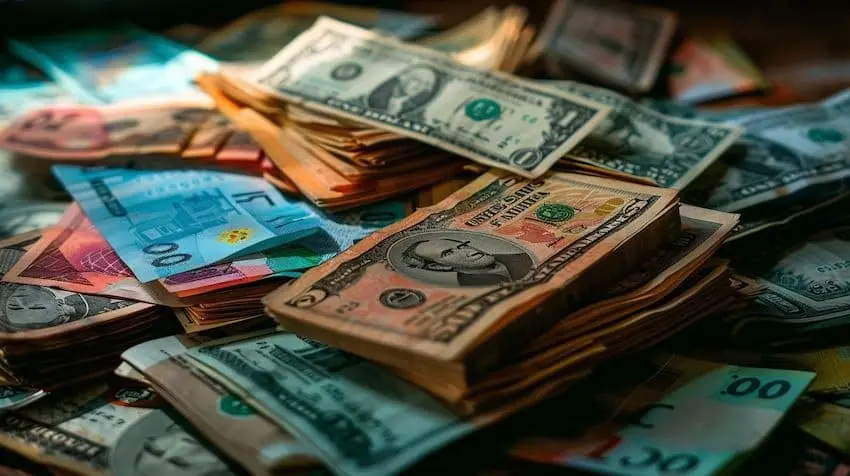
For centuries, nocturnal visions of currency have captivated the human imagination. Whether one is envisioning neatly stacked paper bills, heavy sacks of gold coins, or endlessly scrolling digital bank statements, dreams involving money are among the most common yet psychologically complex phenomena experienced during REM sleep.
Popular culture often reduces these dreams to simplistic omens: either a prophetic sign of impending wealth or a warning of financial ruin. However, contemporary psychological and archetypal analysis reveals a much deeper narrative. Far from serving as literal stock market tips, dreams of counting money function as mirrors reflecting our internal states of abundance, anxieties regarding resource scarcity, power dynamics, and the intrinsic relationship between net worth and self-worth.
- Primary Phenomenon: Dreams involving counting, handling, or losing physical and digital currency.
- Core Psychological Driver: Manifestations of internal security, self-esteem, autonomy, and underlying stress regarding sufficiency.
- Key Archetypes Involved: The Merchant, The Ruler (King/Queen), and The Magician.
- Expert Consensus: Psychologists emphasize that money in dreams serves as a metaphor for personal energy, value, and emotional health rather than literal material acquisition.
Chronology of Dream Interpretation: From Mysticism to Modern Psychology
The way humanity interprets dreams about wealth has evolved dramatically over millennia. Understanding this historical progression helps frame why modern dreamers react the way they do when waking up from a financial reverie.
Antiquity and the Era of Omens
In ancient civilizations—including those of Egypt, Mesopotamia, and Greece—dreams were rarely viewed as internal psychological processing. Instead, they were considered literal messages from the divine or ancestral realms. Finding or counting money in a dream during this era was universally categorized as an external omen. A dream of abundance might prompt a merchant to invest in a new trade route, while a dream of poverty was often interpreted as an impending curse or disfavor from the gods.
The Freudian Revolution and Repressed Desires
As the 19th century bled into the 20th, Sigmund Freud revolutionized the field by suggesting that dreams are the "royal road to the unconscious." Freud and his contemporaries began categorizing dreams not as external prophecies, but as internal wish-fulfillments. In psychoanalytic terms, money in dreams frequently became linked to deeper, often repressed, drives, bodily anxieties, and developmental fixations.
The Jungian Shift Toward Archetypal Symbolism
Carl Jung expanded this framework further, moving away from purely physical drives and incorporating collective archetypes. For Jungians, counting money stopped being merely about physical survival and started representing psychic energy, or "libido." Wealth in a dream became a measure of psychological richness, spiritual capital, and how individuals value their contributions to the collective human experience.
Contemporary Cognitive and Neuroscientific Understanding
Today, sleep researchers view dreams as a byproduct of memory consolidation and emotional regulation. When we dream about counting money, our brains are processing the cognitive load of waking-life stressors, evaluating our survival mechanisms, and attempting to synthesize our waking ambitions with our emotional realities.
Supporting Data and Psychological Insights
To fully grasp why money permeates our dreamscapes, one must examine the intersection of behavioral economics and psychology. Modern research demonstrates that society’s obsession with fiscal health bleeds directly into our nocturnal thoughts.
The Valuation Paradox
We live in a socio-economic ecosystem that aggressively ties financial metrics to human value. When this societal pressure is internalized, the brain processes it during sleep cycles. According to studies on human motivation, the human brain often uses currency as a universal proxy for safety, competency, and social standing.
"People don’t often think of the possible downsides of wrapping their identity and self-worth around financial pursuits because our society values wealth as a model of how one should be in the world."
— Dr. Lora Park, Associate Professor of Psychology, University at Buffalo
Dr. Park’s research highlights the psychological tightrope individuals walk when merging their personal identity with financial outcomes. When these metrics fluctuate or cause anxiety in the waking world, the subconscious mind stages a replay in the theater of dreams, often manifesting as frantic counting or the loss of funds.
The Mechanics of Ego Threat and Self-Esteem
Empirical research conducted by psychology scholars further illuminates the transactional nature of self-esteem.
"Empirical evidence has shown that the meaning of money, situational need for money, self-esteem boost, and ego threat influence the exchange between money and self-esteem."
— Liqing Zhang, Psychology Researcher
When an individual experiences an ego threat or financial insecurity during the day, the brain attempts to recalibrate during sleep. Counting money in a dream can thus act as an ego-soothing mechanism—a psychological attempt to artificially restore a sense of control, stability, and personal power when waking life feels unpredictable.
Archetypal Energies and Symbols in Money Dreams
To analyze a dream effectively, depth psychology looks toward universal archetypes. Money dreams frequently activate three distinct archetypal patterns:
1. The Merchant Archetype
The Merchant governs trade, fairness, barter, and evaluation. When you dream of meticulously counting coins or balancing ledgers, the Merchant archetype is asking you to evaluate the energetic exchanges in your waking life.
- The Core Question: Are you receiving as much as you give in your relationships, career, and creative endeavors?
- The Implication: These dreams often surface when you feel shortchanged or when your waking life requires a recalibration of personal boundaries and fair compensation.
2. The Ruler (King/Queen) Archetype
The Ruler archetype is inextricably linked to sovereignty, domain, control, and authority. Handling massive sums of wealth in a dream signals an inner assertion of power.
- The Core Question: Where in your life are you striving to take control or establish dominion over chaos?
- The Implication: This dream highlights your desire for stability and influence. It is a visual representation of you setting benchmarks for what you consider a successful, secure existence.
3. The Magician Archetype
Moving from dominion to manifestation, the Magician represents transformation. Money, in its purest symbolic form, is frozen energy waiting to be transformed into opportunity, art, or security.
- The Core Question: What latent talents or creative resources are you failing to capitalize on?
- The Implication: Dreams of multiplying wealth point to an internal realization that you possess the ingenuity to enact profound changes in your life.
Deconstructing Specific Dream Scenarios
Different scenarios within a financial dream carry distinct psychological signatures. Here is a breakdown of the most common variations:
Counting Large Sums of Cash
- The Experience: You find yourself sitting atop piles of paper bills or counting endless stacks of high-denomination currency.
- The Psychological Meaning: This rarely predicts a sudden windfall. Instead, it signifies a growing sense of personal confidence, emotional freedom, and spiritual richness. You are beginning to recognize your own intrinsic value.
Encountering Fake or Counterfeit Money
- The Experience: You realize that the money you have been meticulously counting is counterfeit, slick, or worthless paper.
- The Psychological Meaning: A profound warning sign from the subconscious. Counterfeit money points to feelings of being deceived—either by others in your professional or personal circle, or by your own choices. It asks you to examine where you are pursuing unfulfilling paths or false values.
The Endless Counting of Small Coins
- The Experience: You are sorting through massive piles of small change, realizing it will take forever to reach a significant total.
- The Implication: Coins symbolize incremental growth, minor victories, and foundational steps. This dream suggests that you are navigating a long-term project or healing journey where progress feels painfully slow, yet every small effort is accumulating toward a larger goal.
Broader Implications for Personal Growth
Interpreting dreams about counting money should not be treated as a parlor trick or a superstitious exercise; rather, it is a valuable diagnostic tool for mental health and self-awareness.
Bridging Material Desires and Spiritual Fulfillment
The ultimate takeaway from these nocturnal financial audits is the urgent need to decouple net worth from self-worth. Society frequently conditions individuals to believe that safety is exclusively a function of bank balances. However, spiritual and psychological integration requires recognizing that true abundance encompasses emotional resilience, supportive relationships, creative output, and peace of mind.
Practical Steps to Harness Dream Insights
To utilize these nocturnal revelations for waking-life improvement, experts recommend a structured approach:
- Maintain a Dedicated Dream Journal: Record details immediately upon waking. Note not just the money itself, but the emotions felt during the dream (e.g., panic, joy, greed, relief).
- Audit Your Energy Exchanges: Ask yourself if your waking-life investments (time, labor, emotional energy) are yielding fair returns.
- Separate Survival from Identity: Acknowledge financial anxiety without letting it dictate your personal worth.
- Practice Mindfulness and Meditation: Utilize meditative practices to calm the mental clutter associated with scarcity mindsets.
- Identify Underlying Control Issues: Evaluate where in your life you are grasping too tightly for control, and practice relinquishing unproductive anxieties.
By reframing money dreams not as financial portents, but as profound communications from the subconscious mind, individuals can transform ordinary sleep cycles into powerful engines for personal growth, emotional maturity, and holistic well-being.