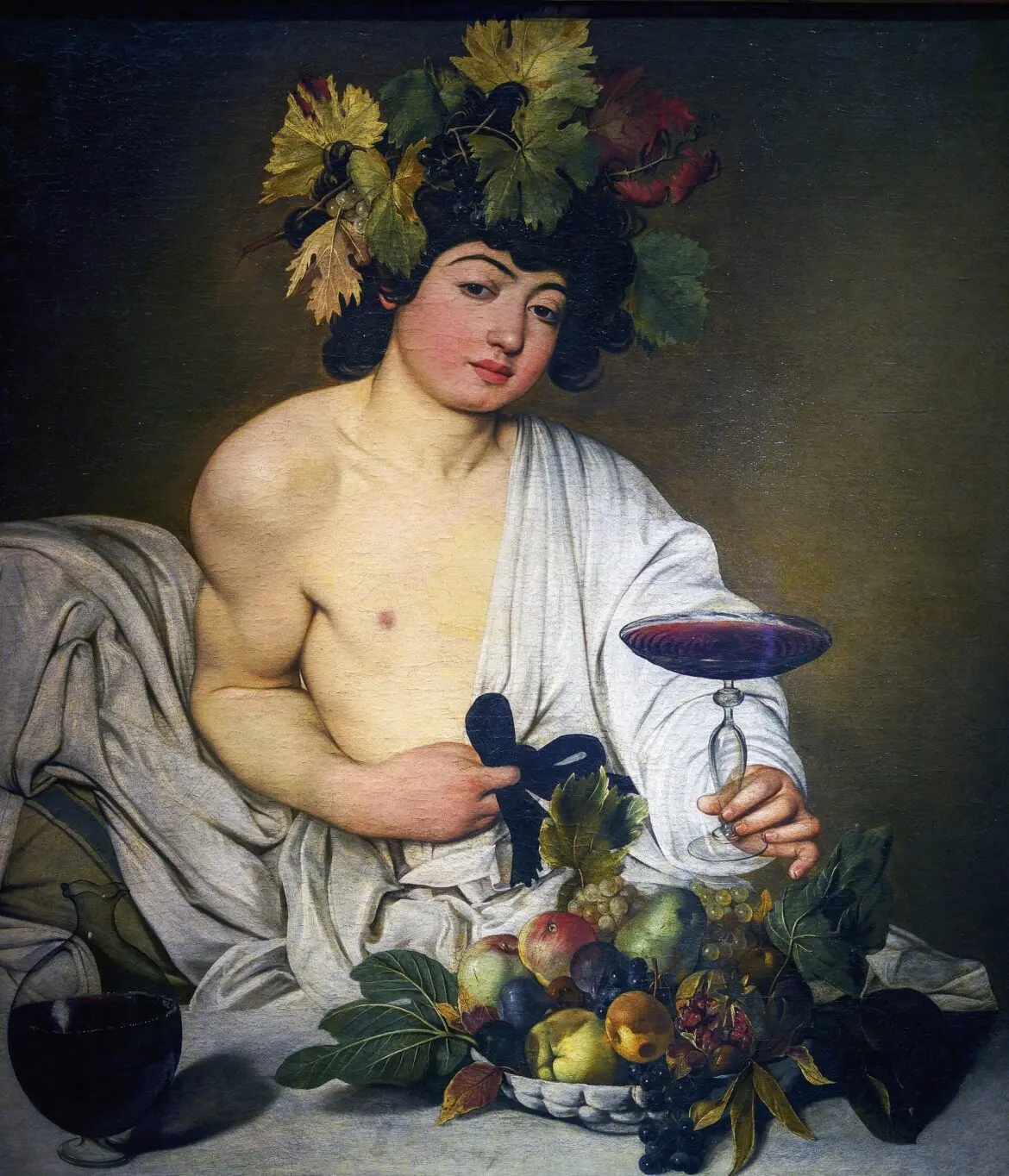
FLORENCE, Italy — In mid-September, one of the crown jewels of the Italian Renaissance and Baroque collections came perilously close to environmental disaster. Torrential downpours over Florence breached the historic architecture of the world-renowned Uffizi Gallery, sending streams of rainwater pouring through a compromised skylight. The water cascaded directly onto the protective encasement housing Bacchus, the celebrated c. 1595–1596 oil-on-canvas masterpiece by Italian Baroque master Michelangelo Merisi da Caravaggio.
While museum officials quickly confirmed that the painting sustained no permanent damage, the harrowing incident has renewed urgent discussions regarding the vulnerability of aging cultural institutions in the face of increasingly volatile weather patterns driven by climate change.
Main Facts
The acute crisis occurred on September 17, when a sudden, violent rainstorm struck Florence, overwhelming municipal drainage and infiltrating the roof structures of several historic sites, including the Uffizi and the nearby Palazzo Pitti. At the Uffizi Gallery, water began to breach a skylight situated directly above the display space of Caravaggio’s Bacchus.
According to eyewitness accounts and reports from regional European media outlets, the water did not merely drip; it pooled and splashed violently from the gallery floor, threatening the integrity of the artwork. Due to the rapid response of gallery security and conservation staff, the painting—which measures approximately 95 cm by 85 cm—was swiftly evacuated from the room for emergency assessment.
Fortunately, a specialized climate-controlled, protective glass case bore the brunt of the downpour. Museum directors confirmed the following day that the canvas remained completely dry, and Bacchus was successfully returned to its public display position within 24 hours. No other artworks in the immediate vicinity were reported damaged.
Chronology of Events
Understanding the rapid escalation of the event highlights the narrow margin between safety and disaster in contemporary museum conservation:
- Mid-September: Meteorological instability brings severe, unseasonal rainstorms to the Tuscany region of Italy, testing the infrastructural integrity of Florence’s historic buildings.
- September 17 (Afternoon): A torrential cloudburst strikes Florence. Water compromises a skylight directly above the gallery housing Caravaggio’s Bacchus at the Uffizi.
- September 17 (During Storm): Visitors watch in horror as water streaks down the protective glass encasement of the painting. Italian daily Corriere della Sera reports that the canvas inside briefly appeared "hazy and streaked with long lines of water" from the perspective of panicked onlookers, though this distortion was an optical illusion caused by the flooded exterior glass.
- September 17 (Late Afternoon): Uffizi conservators enact emergency protocols, temporarily removing Bacchus from the gallery to a secure, climate-monitored restoration laboratory for comprehensive diagnostic imaging.
- September 18: Following thorough inspections verifying zero moisture penetration or micro-climate disruption within the frame, museum management clears Bacchus for exhibition, safely returning the painting to its gallery wall.
Supporting Data and Artistic Provenance
To fully grasp the gravity of the September 17 incident, one must understand the irreplaceable cultural and art-historical value of Caravaggio’s Bacchus. Painted during the artist’s early Roman period while under the influential patronage of Cardinal Francesco Maria del Monte, the artwork is a cornerstone of Italian Baroque development.
The Subject: Beyond the God of Wine
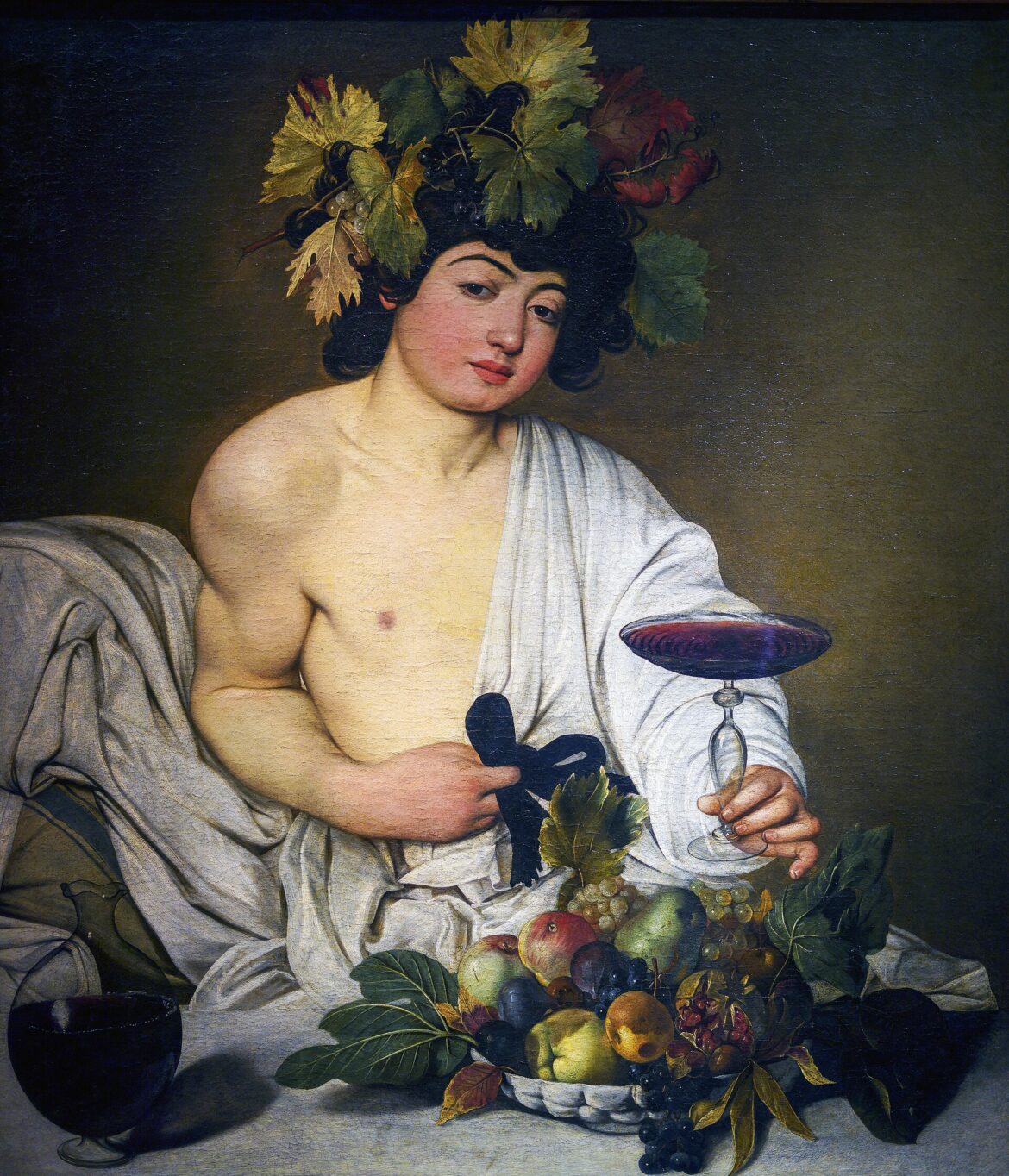
Bacchus depicts the Greco-Roman deity of wine, agriculture, and theatrical ecstasy not as an idealized, distant mythological figure, but as a flushed, earthy youth. Adorned with a wreath of autumn grapevines and ivy, the figure reclines before a bowl of decaying fruit—a signature Caravaggian memento mori featuring an overripe, worm-eaten apple. In his right hand, the youth loosely extends a shallow glass chalice of red wine toward the viewer, while his left hand plays seductively with the drawstring of a slipping white tunic that bares his shoulder and chest.
Art historians note that Caravaggio produced another variation of the theme earlier in his career, Young Sick Bacchus (c. 1593), which presents a jaundiced, melancholic, and sickly reflection of the deity.
A Checkered History of Rediscovery
The painting’s journey to the Uffizi walls is as dramatic as its creator’s life. Following Cardinal del Monte’s tenure, the piece entered the vast collections of the illustrious Medici family. However, through shifting tastes and political upheavals, Bacchus was eventually lost to institutional memory, relegated to the dusty depths of the Uffizi’s storage archives.

It was not until 1913 that esteemed art historians Roberto Longhi and Matteo Marangoni rediscovered the canvas in storage, immediately recognizing it as a lost masterwork by Caravaggio. Since its reattribution, it has been guarded as one of the crown jewels of the Florentine state museums.
Official Responses and Institutional Reactions
In the wake of the incident, Uffizi management moved quickly to reassure the public while addressing the root causes of the structural failure.
In official statements released to international press agencies like Euronews and Artnet News, gallery directors emphasized that the museum’s multi-layered conservation safeguards functioned precisely as designed. The hermetically sealed, climate-controlled glass casing—standard equipment for high-value Renaissance and Baroque paintings—acted as an effective physical barrier against the falling deluge.
However, behind closed doors, museum curators and infrastructural engineers are facing mounting pressure. The incident has reignited a broader European debate concerning the readiness of historical buildings to withstand the intense, unpredictable weather events linked to climate change.
Italy’s Ministry of Culture has faced recurring criticism from preservationists regarding the maintenance budgets allocated to historical structures. While the Uffizi complex undergoes continuous, phased restorations, critics point out that centuries-old masonry and modern weather extremes form a volatile combination. Insiders suggest that comprehensive roof and skylight overhauls across Florence’s state museums may be accelerated following the near-miss.

Implications: Climate Change, Heritage, and Modern Paganism
The threat to Bacchus carries profound implications that stretch far beyond the walls of the art historical community, touching upon modern cultural revivals and environmental anxieties.
The Vulnerability of Global Heritage
The Florence incident is far isolated. Across Europe, museums housed in historic palaces—such as the Louvre in Paris, the Prado in Madrid, and various Italian palazzos—routinely struggle to balance historical preservation with modern climate control and weatherproofing. As global temperatures rise, atmospheric moisture increases, leading to more frequent, high-volume flash floods and torrential downpours. Heritage conservationists warn that protective glass cases and rapid-response teams are reactive measures; without proactive structural modernizations, masterpieces like Caravaggio’s Bacchus will face escalating existential threats.
Cultural Resonance for Modern Pagans
The subject matter of the painting also links the event to contemporary spiritual movements. Bacchus, synonymous with the Greek Dionysus, has experienced a major resurgence in popularity within the modern Pagan and polytheistic revivals. To these communities, Dionysus represents far more than a historical art trope; he remains a living, vibrant archetype of ecstasy, liberation, madness, emotional depth, and connection to the natural world.
For modern devotees who regularly engage with classical deities through ritual, poetry, and seasonal festivals, the near-destruction of a masterpiece honoring their patron god felt symbolically heavy. Social media channels within modern Pagan spaces buzzed with commentary following the news, with many expressing relief that the physical embodiment of the god’s joyous, earthly spirit in art was spared from water damage.
Conclusion
Ultimately, the Uffizi leak served as a stark wake-up call wrapped in a fortunate outcome. Caravaggio’s Bacchus remains on display in Florence, inviting viewers to share in his sensual, earthly chalice. Yet, the incident leaves curators, politicians, and culture enthusiasts alike with a sobering question: Will institutional precautions be enough the next time the skies open over Italy?