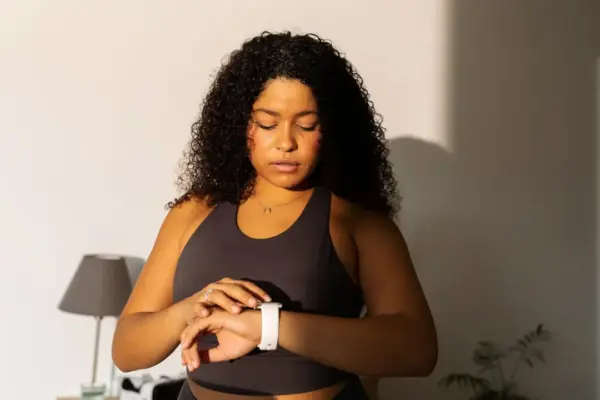
The Great Nightly Audit: How Consumer Sleep Trackers Stack Up Against Clinical Diagnostics

September 17, 2026 By Sela Breen For millions of people around the globe, checking a smartphone or smartwatch first thing in the morning has become as routine as brewing coffee. Before even getting out of bed, users swipe through sleek mobile applications to review their nightly sleep scores, parsing out percentages of deep sleep, rapid…


Read Full News

Your Address Could Be Telling a Story About Your Brain: Neighborhood Disadvantage Linked to Accelerated Brain Aging

September 17, 2026 — Consider everything packaged into a single mailing address: the decibel level of nighttime traffic, the proximity of green spaces for an afternoon walk, the availability of fresh produce markets, and the baseline hum of day-to-day chronic stress. While urban planners and public health officials have long understood that these environmental factors…

Read Full News

Genetics, Diet, and Brain Health: New Study Links the "Western" Eating Pattern to Faster Attention Decline in At-Risk Older Adults

September 17, 2026 — While a single burger and fries will not single-handedly determine the trajectory of your brain’s aging process, researchers are increasingly probing the complex interplay between long-term dietary habits, genetic predispositions, and cognitive longevity. A compelling new study published in the journal Nutrients sheds light on this dynamic, suggesting that a common…

Read Full News

The Clock Inside Our Heads: New Research Reveals Brain Aging Begins in Early Adulthood—and the Gut May Hold a Clue

By Molly Knudsen, M.S., RDN Published: September 16, 2026 When society thinks about cognitive aging, the imagery is almost always fixed on later chapters of life. We picture individuals in their 70s, 80s, and beyond navigating the nuances of memory loss, slowed reaction times, or age-related cognitive decline. It is a traditional view of aging—one…

Read Full News

The Body-Ear Connection: Why Physical Fitness May Be the Missing Link in Hearing Longevity

As the decades pass, subtle shifts in sensory perception are often accepted as an inevitable part of the aging process. It might start innocently enough: nudging the television volume up by a couple of notches, frequently asking loved ones to repeat themselves in crowded restaurants, or feeling mentally exhausted after trying to follow a conversation…

Read Full News

Unseen Particles, Undetected Damage: Groundbreaking Research Links Common Food Packaging Plastic to Liver Dysfunction

September 16, 2026 — By Ava Durgin In an era defined by industrial convenience, humanity has engineered a planetary environment where synthetic polymers are as ubiquitous as dust. Microplastics—tiny, weathered fragments of petroleum-based materials—have been documented in deep ocean trenches, Arctic ice caps, falling rain, and human respiratory systems. More alarmingly, recent biomedical advancements have…

Read Full News

The American Exhaustion Crisis: 71% Experience Fatigue as Young Women Bear the Heaviest Burden

By Sela Breen Published September 16, 2026 If you find yourself staring blankly at your computer screen mid-afternoon, dragging your feet through basic household chores, or wondering how everyone else seems to effortlessly glide through the week while you are running on empty, you are far from alone. A landmark report released by the Centers…

Read Full News

Beyond the Stretch: Why Mobility—Not Flexibility—Is the Missing Link in Your Fitness and Longevity

By Ava Durgin Published: September 15, 2026 Main Facts For generations, the standard prescription for feeling stiff, restricted, or sore has been simple: stretch. Whether it is touching your toes before a morning run, holding a quad stretch post-workout, or attending a weekly restorative yoga class, the prevailing fitness narrative tells us that physical tightness…

Read Full News

Hitting Your Step Goal But Still Exhausted? New Science Reveals Why "How" You Move Matters More Than How Much

September 15, 2026 By Zhané Slambee Main Facts: The Shift From Incidental Movement to Intentional Exercise For millions of health-conscious individuals, the daily ritual is deeply ingrained: strap on a fitness tracker, monitor the progress bar throughout the day, and celebrate the triumphant vibration that signals the completion of 10,000 steps. Yet, despite successfully hitting…

Read Full News

Finding Connection in Solitude: New Research Reveals How Intentional Solo Time in Nature Eases Loneliness

At first glance, the premise feels inherently counterintuitive: spending time completely alone to alleviate feelings of loneliness. For generations, modern wellness culture has prescribed socialization, community groups, and packed calendars as the primary antidotes to isolation. However, a compelling body of emerging research suggests that the key to feeling less lonely may not lie in…

Read Full News