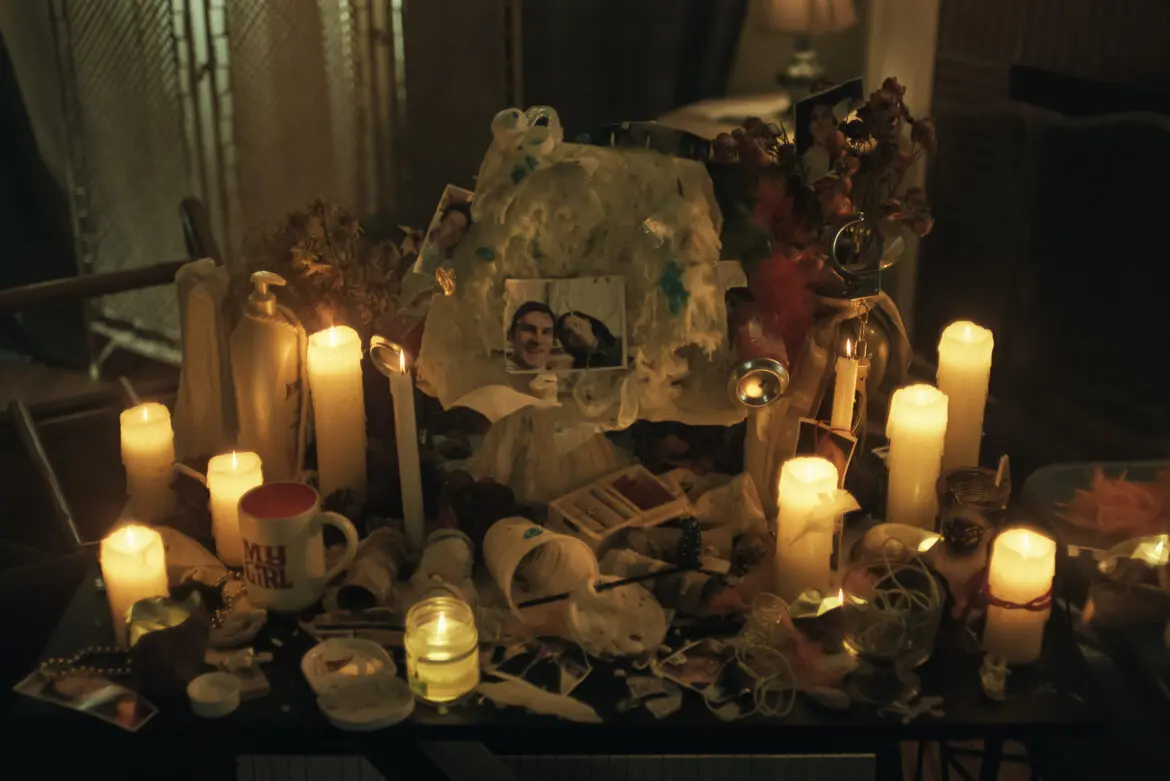
Editor’s note: This article contains references to sexual assault and domestic violence, as well as critical spoilers for the ending of Curry Baker’s 2025 film, Obsession.
By Beatrix Kondo
For all of summer 2025, film audiences have flooded internet forums, social media, and cinema lobbies describing Curry Baker’s psychological horror-thriller Obsession as a cautionary tale about the dark and dangerous arts of witchcraft. Christian review boards have embraced the film as a modern-day validation of biblical warnings, while mainstream critics have praised its moral gravity regarding spellwork, treating the narrative as an exploration of the inherent dangers of occultism.
Yet, to categorize Obsession as a story about sorcery is to fundamentally misread its mechanics. There is no coven, no elder, no sacred tradition, no years of dedicated study, and not a single ritualistic incantation to be found.
What the protagonist, Bear, does in Obsession is not witchcraft. It is simply shopping.
Main Facts: The $6.99 Mechanism of Ruin
The inciting incident of Obsession does not occur over an ancient grimoire or a moonlit altar. Early in the film, Bear stands inside a metaphysical novelty shop, holding a small box no larger than a tube of toothpaste.
The packaging features the visual grammar of a cheap gag-shop novelty: white cardstock, fire-engine red ink, a cartoon boy and girl beaming from a burst of stars, and a wand caught mid-snap with the word CRACK! printed beside it. Emblazoned across the front is the boastful text, AMAZE YOUR FRIENDS!, while fine print sets the ultimate boundary: You only get ONE WISH.
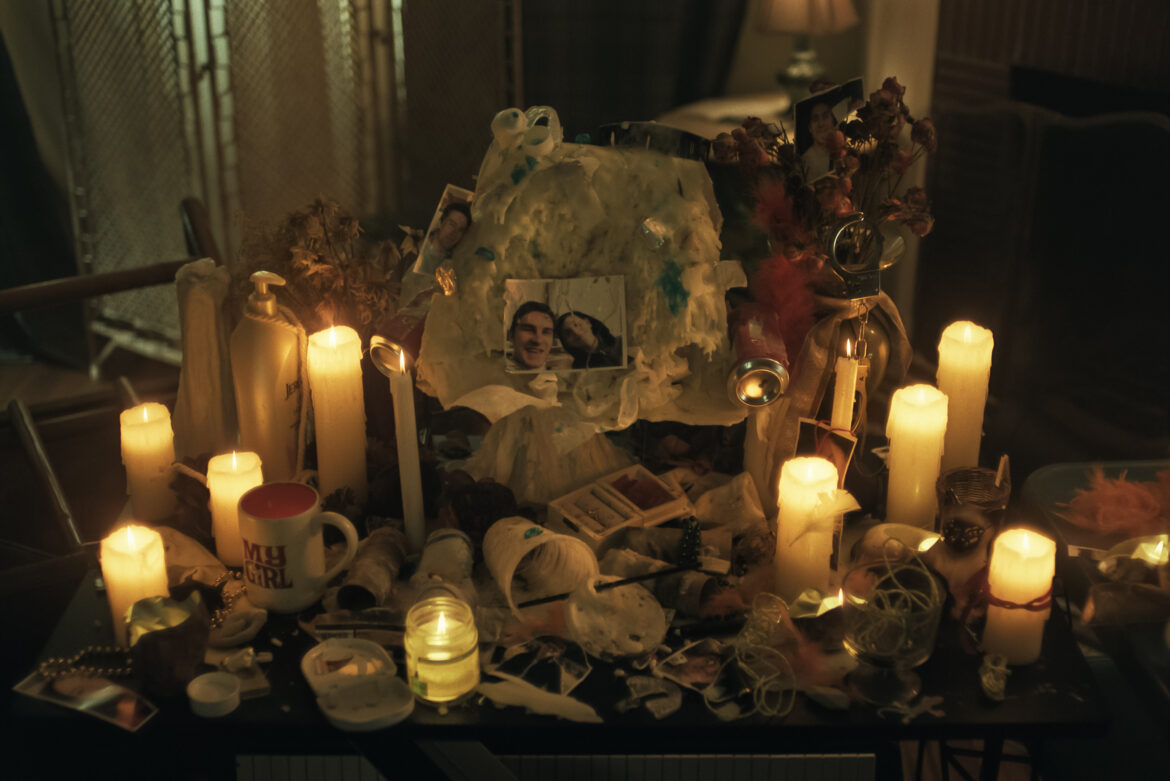
Turn the box over, and the illusion of harmless fun evaporates into the sterile language of corporate liability. The warnings read:
- Single use only.
- One wish per person in a lifetime.
- Wishes are irreversible; consider long-term effects.
- No time manipulation, no resurrection, no immortality.
- The manufacturer is not responsible for misinterpretations.
- A customer service number is provided.
Bathed in the film’s rich, amber lighting, the "One Wish Willow" looks like an artifact recovered from an eccentric attic, despite being factory-fresh. The price tag is $6.99. Bear buys it with the casual transactional indifference one applies to a pack of gum at a convenience store register.
Ninety minutes, one dead young woman, and a rising body count later, the credits roll on a movie that viewers persist in viewing as a warning against the occult. But as Obsession brutally demonstrates, the true horror does not stem from supernatural arts, but from the frictionless ease with which human agency can be bought, consumed, and discarded.
Chronology: A Thirty-Year Cinematic Lineage of Compulsion
To understand Obsession, one must place it within a rich cinematic tradition. For over three decades, films frequently dismissed as teen horror or supernatural thrillers have consistently interrogated what happens when magical shortcuts are used to trespass upon another person’s autonomy.
The Groundwork: The Craft (1996)
Long before modern audiences parsed the ethics of cinematic magic, 1996’s The Craft established the paradigm. Sarah’s binding spell on Chris does precisely what a compulsion is designed to do: it manufactures intense infatuation devoid of emotional foundation, failing to correct a single one of his cruelties.
Chris does not receive a genuine new desire; instead, his preexisting predatory appetites are artificially amplified and aimed like a weapon. The film understood a fundamental moral truth: a spell aimed at overriding another person’s free will inevitably boomerangs back through the caster’s door.
The Lessons of Buffy the Vampire Slayer
Joss Whedon’s television landmark Buffy the Vampire Slayer repeatedly returned to this ethical well with surgical precision across multiple seasons:

- "Bewitched, Bothered and Bewildered" (Season 2): Driven by wounded pride, Xander commissions a love spell, only to watch an entire town’s desperate appetites turn violently against him. Giles issues a stark warning that mirrors the core themes of Obsession: "Do you have any idea how serious this is? People under a love spell, Xander, are deadly. They lose all capacity for reason."
- "Something Blue" (Season 4): Willow’s grief leaks into her ordinary speech, turning every idle sentence into a binding command—an elegant metaphor for working magic while emotionally compromised.
- "Tabula Rasa" (Season 6): Willow uses Lethe’s bramble to erase a painful argument from Tara’s memory. The magic works with terrifying perfection; Tara wakes up affectionate and untroubled. Yet, the relationship ultimately shatters because Tara realizes her consent was bypassed. The violation occurred in private, delivered with tenderness, but it was a violation all the same.
In Obsession, Baker shifts away from traditional spellbooks and leans heavily into the mechanics of the classic wish-fable—the monkey’s paw, the malevolent djinn, and the desire granted with such cold precision that the exactness becomes the punishment.
Supporting Data and Ethical Analysis: Who Pays the Price?
In traditional narratives, characters pay dearly for attempting to subvert free will. Sarah pays for her transgressions in The Craft; Willow pays across multiple seasons, losing her friendships and the partner who ultimately walks out the door.
In Obsession, however, the moral ledger is profoundly skewed.
Nikki as the Primary Bearer of Trauma
Nikki (played by Inde Navarrette) bears the entirety of the film’s physical and psychological toll: the bodily transformation, the violent unraveling, and every frame of body horror. Meanwhile, Bear (Michael Johnston) moves through the narrative wrapped in a cinematic register of sensitive anguish. Production choices even introduced added scenes to emphasize Bear’s internal torment, rationalizing why he refuses to undo the wish once he realizes its horrific cost.
The film is dangerously generous to Bear. A more rigorous reading reveals a much darker reality: Bear never has to actively plan Nikki’s dismantling. His horror relies entirely on watching her be hollowed out while continuously accepting what he purchased. Every hour he chooses not to end the spell is an hour he chooses a fabricated simulation of devotion over Nikki’s actual existence.
The Structural Reality of Sexual Violation
Because Nikki’s desire was artificially installed through an external mechanism, it was never hers. The mechanics of the wish operate by overwriting the woman who might have otherwise consented or refused.
Consequently, the sexual intimacy obtained through this mechanism constitutes sexual assault. It is a violation the first time and every subsequent time. The fact that the instrument of coercion is a $6.99 novelty item rather than a chemical substance slipped into a glass changes nothing about the act’s fundamental structure.

Furthermore, the mechanics of the One Wish Willow dictate that each person gets only one lifetime wish. Nikki’s single wish is spent without her knowledge or consent—expended not by the real Nikki, but by the physical construct wearing her body. Her autonomy is stolen twice: first through the forced imposition of Bear’s desires, and second by having her sole existential choice spent by a shell of her former self.
Implications: The Retailization of Coercion
The most insidious element of Obsession is how its fictional universe mirrors our real-world consumer marketplace.
In the film, when Bear learns about the single-wish restriction, he asks the shopkeeper to make the wish on his behalf. The shopkeeper refuses, noting that he already used his own lifetime wish long ago. Yet, unlike Bear, the shopkeeper is entirely intact, running his business unhaunted and unpunished.
The difference lies entirely in the nature of their desires. The shopkeeper’s wish could be fulfilled without subverting another human being. Bear’s wish required the total erasure of Nikki’s autonomy.
From Screen to Storefront
Outside the cinema, the dark humor of the film has bled directly into commercial merchandising. Official replicas of the One Wish Willow are sold on promotional sites, complete with tongue-in-cheek terms and conditions. Replicas and 3D-printed versions flood online marketplaces like Etsy, while budget fast-fashion and novelty sites offer cheap iterations to young consumers.
This commercialization highlights a chilling cultural irony: the film presents the wish-granting device as a novelty, but the real-world market treats it as collectible merchandise. The fictional disclaimer has successfully converted into advertising copy.
Conclusion: The Difference Between Craft and Purchase
To view Obsession as an indictment of magic is to miss its sharpest critique. Real-world magical traditions—whether modern paganism, folk magic, or ritual arts—place heavy emphasis on ethics, discipline, and personal responsibility. In living traditions, the interval between desiring something and obtaining it—the waiting, the study, the counsel of elders—is where ethical human boundaries are forged.
Obsession strips away all friction, leaving behind a pure engine of entitlement.
When contrasted with a film like Practical Magic, the distinction becomes stark. Sally Owens constructs a spell designed to fail because she fears vulnerability, yet when her wish manifests, she immediately confesses the truth to the man standing inside its consequences, offering him full freedom to walk away.
Bear, by contrast, holds the secret of Nikki’s subjugation tightly to his chest, watching her disintegrate while maintaining the illusion of romance.
Ultimately, Obsession is not a horror story about the perils of witchcraft. It is a brutal examination of a much older, more mundane terror: the man who believes that another person’s autonomy is simply another commodity available for purchase at the register.