






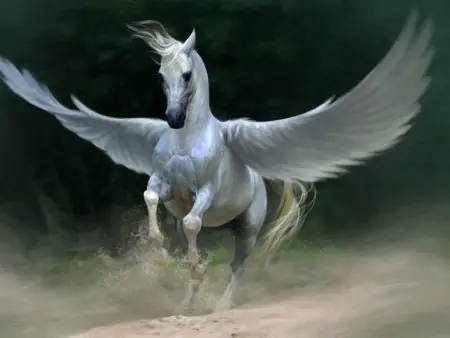
Introduction: The Undying Allure of the Winged Stallion
For millennia, humanity has looked to the skies not only with scientific curiosity but with an insatiable appetite for wonder. Among the pantheon of mythical beasts that populate ancient folklore, few creatures command the universal recognition, elegance, and awe of Pegasus. Classically envisioned as a magnificent, pure white stallion endowed with sweeping, feathered wings, Pegasus is far more than a mere footnote in Greek mythology. He is a cultural touchstone bridging the gap between mortal aspiration and divine power.
From ancient pottery unearthed in the ruins of Corinth to modern Hollywood blockbusters, the winged horse has galloped through the collective human imagination. Yet, beneath the familiar imagery of soaring white wings and heroic battles lies a complex web of mythological origins, symbolic interpretations, and artistic evolutions. This comprehensive report examines the facts and fantasies surrounding Pegasus, tracing his origins from the blood of a Gorgon to his enduring legacy in modern popular culture.
Main Facts: Origins, Anatomy, and Mythology
To understand Pegasus, one must first delve into the rich, often visceral tapestry of Greek mythology. Known in Greek as Págasos and in Latin as Pegasus, this legendary creature occupies a unique space within classical lore as both a divine creation and a wild force of nature.
Divine Lineage and Birth
According to the traditional accounts of classical mythology, Pegasus is the offspring of Poseidon, the formidable Olympian god of the sea and earthquakes. However, his maternal lineage is far more striking: Pegasus was foaled by the Gorgon Medusa.
The circumstances of his birth are among the most dramatic in mythological lore. When the hero Perseus successfully decapitated Medusa—utilizing a polished reflective shield to avoid her petrifying gaze and winged sandals for mobility—Pegasus, along with his brother Chrysaor, sprang forth directly from the monster’s severed neck. Because Medusa perished at the exact moment of his birth, classical mythology presents an interesting historical correction to modern adaptations: contrary to popular cinematic depictions such as the film Clash of the Titans, Perseus and Pegasus did not share a lifelong journey from the hero’s youth, as the winged horse was born only at the very end of Medusa’s life.
The Mystery of Chrysaor
Pegasus was not born alone. Emerging simultaneously from Medusa’s neck was his brother, Chrysaor. Unlike his equine sibling, Chrysaor is traditionally depicted in human form, often envisioned as a warrior. Relatively little narrative space is dedicated to Chrysaor in surviving classical texts, but his name translates directly to "he who bears a golden sword." Mythological references characterize him as a valiant and courageous warrior, though he remains permanently overshadowed by the soaring legacy of his winged brother.
Taming the Untamed: The Golden Bridle
In his natural state, Pegasus was the epitome of untamed freedom—wild, swift, and fiercely independent. He could not be captured or mounted by mortal means alone. The turning point in the creature’s mythological narrative arrived through divine intervention. Athena, the goddess of wisdom, strategic warfare, and crafts, took pity on the mortal hero Bellerophon, who sought to capture the beast.
Athena presented Bellerophon with a magical golden bridle. When approached with this divine artifact, Pegasus allowed himself to be bridled without resistance, submitting to the hero and enabling one of the most famous partnerships in mythological history. Together, Bellerophon and Pegasus achieved legendary feats, most notably defeating the terrifying Chimera—a fire-breathing monster composed of a lion’s head, a goat’s body, and a serpent’s tail.
Chronology: From Ancient Roots to Modern Cinema
The evolution of Pegasus spans nearly three millennia, transitioning from oral traditions and religious iconography in ancient Greece to digital artistry in contemporary media.
Antiquity and the Classical Era (c. 8th Century BCE – 4th Century CE)
- The Archaic and Classical Periods: Pegasus first appeared prominently in Greek art and poetry around the 8th and 7th centuries BCE. He is frequently depicted on Corinthian pottery, serving as the city’s emblem on coinage.
- The Bellerophon Saga: Dramatized by ancient playwrights and epic poets, the tale of Bellerophon’s rise and subsequent fall—fueled by hubris when he attempted to fly Pegasus to Mount Olympus—cemented the creature’s role as a moral cautionary tale regarding mortal limitations.
- The Catullus and Ovid Retellings: Roman poets integrated Pegasus into their literary traditions, ensuring the myth survived the transition from Hellenistic Greece to the Roman Empire.
The Medieval and Renaissance Revival (c. 5th – 17th Century CE)
- Allegorical Reinterpretation: During the Middle Ages, mythological figures were often moralized or Christianized. Pegasus occasionally represented spiritual transcendence, intellectual elevation, or the soul rising above earthly constraints.
- Renaissance Humanism: The rediscovery of classical texts during the Renaissance sparked a renewed artistic interest in Pegasus. Painters and sculptors utilized the winged horse as a direct symbol of poetic inspiration, aligning him closely with the Muses of Mount Helicon.
The Modern Era and Popular Culture (20th – 21st Century CE)
- Literary Fantasy: Authors of fantasy and children’s literature adopted Pegasus, integrating the creature into modern secondary-world mythologies.
- Cinematic Depictions: Hollywood embraced the visual potential of the winged stallion. The 1981 epic Clash of the Titans introduced practical effects and animatronics to bring Pegasus to life (utilizing Friesian horses in the role), while the 2010 remake relied on advanced computer-generated imagery (CGI).
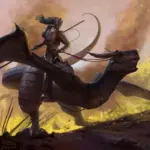
- Modern Artistic Evolution: Contemporary digital artists on platforms like DeviantArt have expanded the visual vocabulary of the creature, moving far beyond the traditional pure white stallion to incorporate diverse color palettes, multi-hued manes, subtle armor, and even supplementary anatomical features such as horns or specialized tails.
Supporting Data & Morphological Evolution
As cultural interpretations shift across generations, the physical attributes and capabilities ascribed to Pegasus have expanded significantly. While classical texts maintained a relatively uniform description, modern fantasy landscapes portray a diverse spectrum of winged equines.
Traditional vs. Modern Depictions
| Feature | Classical Mythology | Modern Fantasy & Media |
|---|---|---|
| Coat Color | Pure, brilliant white | Pure white, black, roan, dappled, metallic, or fantastical hues (blues, purples) |
| Anatomy | Equine body with feathered avian wings | Equine body with feathered wings, bat-like wings, or dragon-like traits; occasional horns (Alicorn hybridizations) |
| Temperament | Wild, divine, untamable except via magical artifacts | Domesticated mounts, fierce guardians, sentient companions |
| Origin | Born from Medusa’s severed neck via Poseidon | Natural species, magical breeding, or divine creation |
Categorizing the Broader "Pegasi" Population
In modern literature and role-playing games, "Pegasus" has transitioned from a singular proper noun to a general classification of species (pegasi). Creators frequently incorporate distinct regional or elemental variations:

- Standard Pegasi: Pure white or dark-coated horses with majestic feathered wings, faithful to classical roots.
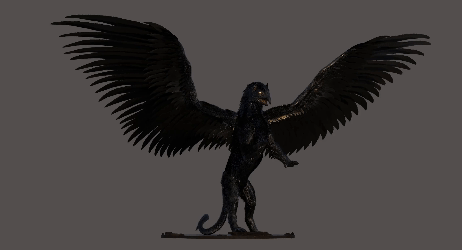
- Nightmares / Shadow Pegasi: Dark-coated variants associated with the night, often possessing obsidian wings and glowing eyes.
- Alicorns / Winged Unicorns: A hybrid evolution blending the horn of a unicorn with the wings of Pegasus, representing the pinnacle of magical equine fantasy.
Symbolism: The Multi-Layered Meanings of Pegasus
Pegasus is much more than a narrative device; he is a profound psychological and cultural symbol. Throughout history, various societies and artistic movements have projected core human ideals onto the winged horse.
1. Inspiration and Creativity
Perhaps the most enduring symbolic association of Pegasus is his connection to artistic and intellectual inspiration. According to Greek myth, when Pegasus struck the ground of Mount Helicon with his hoof, a sacred spring known as Hippocrene burst forth. Drinking from this spring was believed to bestow the gift of poetic inspiration. Consequently, Pegasus became inextricably linked with the Muses, representing the sudden, uplifting surge of creative thought that allows artists, writers, and thinkers to transcend ordinary reality.
2. Heroism and Victory
As the mount of choice for heroic figures confronting impossible odds—most notably Bellerophon in his battle against the Chimera—Pegasus symbolizes triumph over chaos. The creature embodies the synergy between mortal courage and divine assistance, suggesting that humanity’s greatest achievements require both earthly bravery and spiritual elevation.
3. Transcendence and Freedom
With the physical capacity to leave the earth and soar into the boundless expanse of the sky, Pegasus is a universal emblem of freedom. He represents the human desire to break free from physical, societal, and psychological limitations. The flight of Pegasus is a visual metaphor for liberation, curiosity, and the unyielding quest to explore the unknown.
4. Nobility and Purity
The traditional visualization of Pegasus—a pristine white stallion with immaculate, powerful wings—projects an aura of immaculate nobility. In heraldry and art, the white horse signifies honor, dignity, and untainted power, traits that have allowed the imagery of Pegasus to endure across centuries of changing artistic movements.
Pegasus Powers and Abilities in Myth and Legend
Within the framework of ancient folklore and modern fantasy, Pegasus is endowed with extraordinary supernatural attributes that elevate him far above ordinary mortal animals.
- Flight and Aerial Agility: The most defining power of Pegasus is his ability to soar through the skies with effortless grace and blinding speed. In myths, his flight is not hindered by atmospheric limits; he is capable of ascending to the highest reaches of the atmosphere and even touching the celestial realms of Mount Olympus.
- The Spring-Creating Hoof: As demonstrated on Mount Helicon, the impact of Pegasus’s hooves possesses the unique geological power to generate water springs associated with inspiration and prophecy.
- Lightning Bearer for Zeus: In some classical accounts, Pegasus was entrusted with carrying the thunderbolts of Zeus from their forge on Mount Olympus, serving as an aerial arsenal carrier for the king of the gods during the Titanomachy or other celestial conflicts.
- Enhanced Strength and Endurance: Possessing divine ancestry, Pegasus exhibits superhuman physical endurance, capable of sustaining grueling aerial battles against monsters like the Chimera without fatiguing.
- Innate Sentience and Loyalty: Unlike ordinary beasts of burden, Pegasus possesses a high degree of intelligence, recognizing divine artifacts like Athena’s golden bridle and forming deep, intuitive bonds with worthy heroes.
Implications: The Enduring Cultural Legacy
The fascination with Pegasus carries significant implications for how modern society interacts with ancient mythology. In an era dominated by rapid technological advancement and empirical science, the survival of mythical creatures like Pegasus underscores a fundamental human need for wonder and narrative mythology.
The Preservation of Classical Heritage
The adaptability of the Pegasus myth demonstrates the resilience of classical literature. By transitioning from ancient Greek religious artifacts to modern CGI-driven cinema, the legend proves that core human archetypes—heroism, creativity, and the desire to transcend earthly bounds—remain universally relevant across millennia.
Modern Branding and Institutional Identity
Beyond art and literature, the legacy of Pegasus permeates modern commerce and institutional branding. Countless corporations, sports teams, military aviation units, and publishing houses utilize the winged horse as a corporate logo or mascot. By invoking Pegasus, these organizations signal speed, elevation, innovation, and unwavering ambition—proving that the ancient son of Poseidon continues to drive human enterprise in the modern world.
Conclusion
Pegasus stands as a monumental achievement of the human imagination. From his violent and dramatic birth from the neck of Medusa to his soaring ascents alongside heroes like Bellerophon, the winged stallion has captured the hearts and minds of civilizations across ages. Whether viewed as a literal beast of ancient myth, a symbol of artistic inspiration, or a dynamic creature of modern fantasy, Pegasus remains an immortal emblem of what humanity strives to be: free, creative, and capable of reaching the heavens.