






By Global Exploration & Cryptozoology Desk
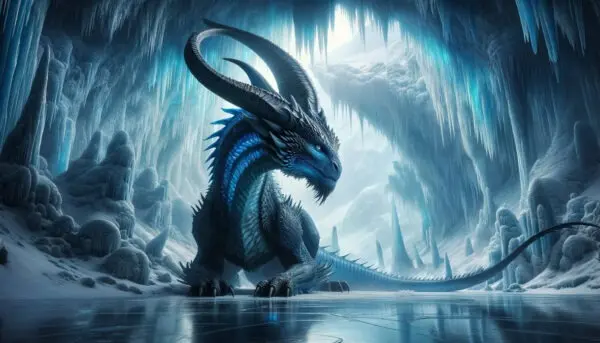
For as long as humanity has gathered around fires to share stories in the gathering dark, mythical creatures have occupied a central space in our cultural consciousness. From the majestic, fire-breathing dragons of European folklore to the elusive aquatic serpents of deep Scottish lochs, these magnificent beasts have sparked our imaginations for centuries. But as science marches forward, unravelling the mysteries of the natural world, a compelling question remains: Are these legendary entities purely the products of ancient superstition and creative storytelling, or could there be a profound grain of truth hidden beneath the layers of folklore?
While empirical science has yet to validate the existence of winged, flame-spitting reptiles or sirens singing sailors to their doom, the intersection of history, biology, and psychology suggests that the origin of these myths is far more fascinating than simple make-believe.
Main Facts: The Anatomy of a Legend
To understand why mythical creatures maintain such a persistent grip on the human imagination, researchers across multiple disciplines—including anthropology, cryptozoology, and evolutionary biology—have sought to decode the foundational elements of these legends.
At its core, cryptozoology examines animals whose existence has not yet been formally recognized by mainstream science. While skeptics often dismiss the field as pseudoscience, history is filled with examples of creatures once thought to be mythical that were later proven to be entirely real.
The Evolution of the Extinct and the Elusive
Long before modern scientific taxonomy, ancient peoples frequently encountered the physical remains of prehistoric creatures without having the geological framework to understand what they were.
- The Mammoth Theory: In ancient Greece and Central Asia, the discovery of well-preserved Mammuthus skulls—complete with a massive central nasal cavity where the trunk attached—is widely believed to have given rise to the myth of the Cyclops, the one-eyed giant of Homeric epic.
- The Kraken of the Deep: For centuries, Nordic sailors whispered terrified accounts of the Kraken, a colossal cephalopod capable of dragging entire galleons down to a watery grave. Today, marine biologists confirm that the Giant Squid (Architeuthis dux) and the even more elusive Colossal Squid (Mesonychoteuthis hamiltoni) do indeed patrol the pitch-black depths of the Southern and Atlantic oceans, growing to lengths that easily inspired sailors’ hyperbole.
Chronology: A History of Mystery and Encounters
The documentation of legendary beasts spans millennia, evolving from sacred religious texts and oral traditions to modern pop-culture phenomena and viral internet hoaxes.
- Ancient Era (c. 3000 BCE – 500 CE): Early civilizations integrated fantastic beasts into their cosmologies. Mesopotamian texts detail the terrifying Chaos Dragon Tiamat, while ancient Chinese dynasties documented harmonious, serpentine dragons that symbolized weather, water, and imperial fortune.
- The Age of Exploration (15th – 17th Centuries): As European mariners ventured into uncharted oceans, ship logs frequently reported encounters with sea serpents, mermaids (likely misidentified manatees or dugongs), and terrifying sea monstrosities. Cartographers routinely filled blank spaces on maps with the Latin warning “Hic sunt dracones”—Here be dragons.
- The Modern Cryptozoology Era (1933 – Present): The modern obsession with cryptids truly accelerated on April 19, 1933, when the Inverness Courier published an account of a "water beast" in Loch Ness, Scotland. This catalyzed a global cottage industry of monster-hunting, soon joined by North America’s Bigfoot (popularized by the 1967 Patterson-Gimlin film) and the Himalayan Yeti.
- The Digital Age: In the 21st century, mythical creatures have transitioned into the digital realm. Viral internet phenomena, such as the "Mothman" sightings in West Virginia or the fictional creepypasta creation of "Slender Man," demonstrate that humanity’s drive to generate and believe in modern myths remains as potent as ever.
Supporting Data: Why We See What Isn’t There
Why do sensible, otherwise rational individuals continue to report sightings of creatures that science cannot verify? The answer lies within the complex machinery of the human brain.
1. Pareidolia and Cognitive Bias
Psychologists point to pareidolia—a psychological phenomenon where the brain perceives a familiar pattern (such as a face, a human silhouette, or an animal shape) where none actually exists. In dense, dimly lit environments like Pacific Northwest forests or murky lakes, a wind-bent pine tree or a floating log can easily be interpreted by an expectant brain as a bipedal ape-man or a swimming reptilian monster.
Furthermore, confirmation bias plays a significant role. When an individual goes looking for Loch Ness or Bigfoot, their cognitive filters are primed. Every ripple on the water or shadow among the trees becomes supporting evidence for their predetermined hypothesis.
2. The Practicality of Hoaxes
Throughout history, financial gain, local tourism, and simple mischief have motivated individuals to fabricate mythical evidence. The most famous example is the 1934 "Surgeon’s Photograph" of the Loch Ness Monster, which decades later was confessed to be a practical joke involving a toy submarine and plumbing putty. While hoaxes can muddy scientific waters, they also highlight humanity’s insatiable appetite for wonder in a predictable world.
Official Responses and Scientific Consensus
Mainstream scientific institutions, including natural history museums, marine research centers, and academic zoological societies, maintain a rigorous stance on mythical creatures: extraordinary claims require extraordinary evidence.
The Cryptid Status Report
- Loch Ness (Nessie): Extensive sonar sweeps and environmental DNA (eDNA) sampling conducted by international research teams in recent years have yielded no genetic traces of a giant reptilian predator residing in the loch. Scientists suggest that large eels or routine wave action account for historical sightings.
- Bigfoot (Sasquatch): Despite thousands of anecdotal reports, plaster casts of footprints, and blurry photographs, no definitive biological specimen—neither bone, hair, nor DNA sample—has ever been authenticated by mainstream mammalogists. Most genetic samples attributed to Bigfoot have ultimately tested back to known North American wildlife, such as black bears and wolves.
- Dragons: From a strict physiological standpoint, an organism capable of storing and expelling volatile, pressurized flammable gases to create fire does not exist within vertebrate biology, rendering the classic fire-breathing dragon a biological impossibility.
However, science remains humble. Dr. Stuart Pimm, a conservation ecologist, frequently notes that thousands of new insect, fish, and microscopic species are discovered every year, particularly in under-explored ecosystems like the deep sea and tropical rainforest canopies. While a breathing fire-drake is off the table, the natural world routinely reveals living organisms whose traits rival the most imaginative fiction.
Implications: The Ecological and Cultural Value of Myth
Even if physical monsters do not roam the wilderness, the cultural and psychological legacy of mythical creatures carries profound implications for our world today.
1. Conservation and "Charismatic Megafauna"
Ironically, mythical and legendary creatures often serve as unwitting champions for real-world environmental conservation. The concept of the "cryptid" or endangered forest-dweller encourages people to value pristine, wild habitats. When communities take pride in local legends—whether it is the Jersey Devil in the Pine Barrens or the Yeti in the Himalayas—they are often motivated to protect the dense forests and fragile ecosystems that shelter endangered real-world species.
2. Fueling the Scientific Imagination
The desire to prove the existence of the impossible has historically driven young minds into STEM fields (Science, Technology, Engineering, and Mathematics). The quest to document the deep ocean, inspired by tales of the Kraken, has led to groundbreaking advancements in deep-sea submersible technology, marine biology, and oceanography.
3. The Human Need for Wonder
In an increasingly quantified, satellite-mapped, and thoroughly urbanized world, the margins of the map are shrinking. Mythical creatures—whether they live in deep lochs, dark forests, or ancient lore—satisfy a deep-seated human need for mystery. They remind us that the universe is vast, complex, and full of possibilities that transcend our current understanding.
Conclusion: The Journey Continues
While a fire-breathing dragon is unlikely to take up residence in your backyard anytime soon, the enduring allure of mythical creatures transforms the act of exploring our planet into an ongoing adventure. Science may debunk the hoaxes and explain away the optical illusions, but it cannot—and perhaps should not—extinguish the human capacity for awe.
After all, the natural world is already stranger and more magnificent than our ancestors could have ever dreamed. As oceanographers continue to chart abyssal hydrothermal vents teeming with bizarre life forms, and geneticists unlock the secrets of prehistoric ecosystems, we are reminded of an inspiring truth: sometimes, reality works hard to outdo the legend.