Main Facts: Reimagining At-Home Fertility Diagnostics
Traditional ovulation predictor kits (OPKs) have long forced individuals to make high-stakes lifestyle and family planning decisions based on frustratingly sparse data. Is the test line genuinely darker than yesterday’s? Does that faint shift actually qualify as a positive result? And perhaps most crucially—a question no single standard strip can ever answer: Did the body actually release an egg this month, or did it simply attempt to do so and fail?
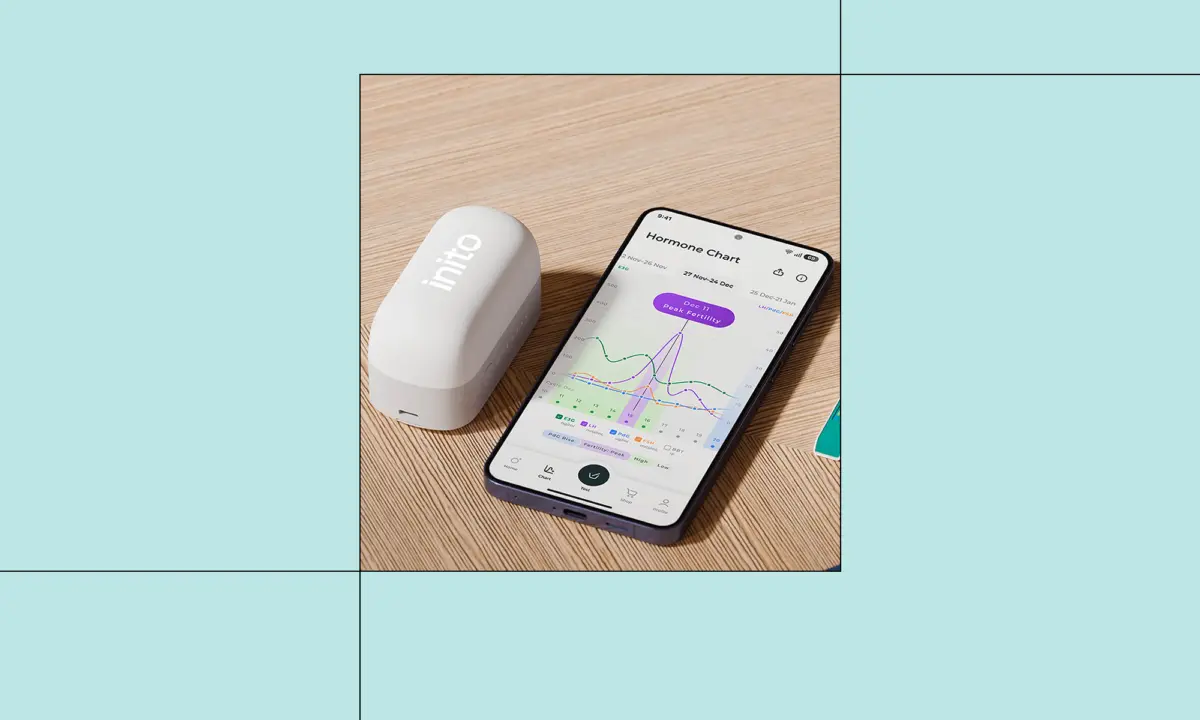
Enter the Inito Fertility Monitor, an all-in-one at-home diagnostic system designed to replace guesswork with lab-grade data. Rather than measuring a single chemical marker, Inito simultaneously tracks four key reproductive hormones from a single urine sample:
Estrogen (E3G): To map the opening of the fertile window.
Luteinizing Hormone (LH): To catch the impending surge signaling ovulation.
Follicle-Stimulating Hormone (FSH): To support follicular recruitment and development.
Pregnanediol Glucuronide (PdG): A urine metabolite of progesterone, utilized to confirm that ovulation has successfully occurred.
Delivering quantitative, lab-grade readings in roughly 10 minutes via a smartphone application, Inito charts individual hormone values against the user’s personal baseline rather than relying on generalized population averages. This allows for precise mapping of a six-day fertile window and definitive confirmation of ovulation.
Chronology: A Firsthand Testing Journey
To understand how Inito performs in real-world conditions, our testing process was structured systematically, from unboxing to multi-cycle tracking, paired with deep-dive consultations alongside leading OB/GYNs and reproductive endocrinologists (REIs).
Phase 1: Setup and Initialization
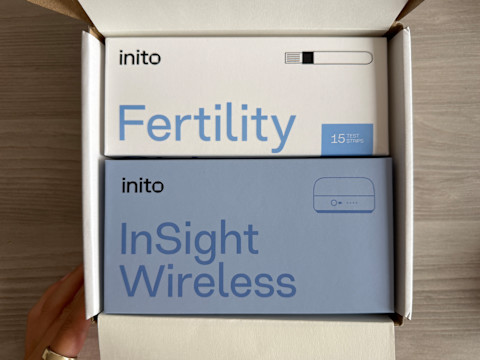
Unboxing the device and syncing it to a home Wi-Fi network via the Inito app took less than five minutes. The app establishes a personalized calendar based on cycle history and instructs users to begin testing on cycle day six (counting the first day of menstruation as day one). This early start is vital: it allows the monitor to capture a baseline of hormone levels during the early follicular phase before major fluctuations begin.
Phase 2: The Daily Testing Routine
Testing follows a straightforward protocol:
Collect first-morning urine in the provided collection cup.
Unwrap a fresh Inito test strip and submerge it up to the marked line for 15 seconds.
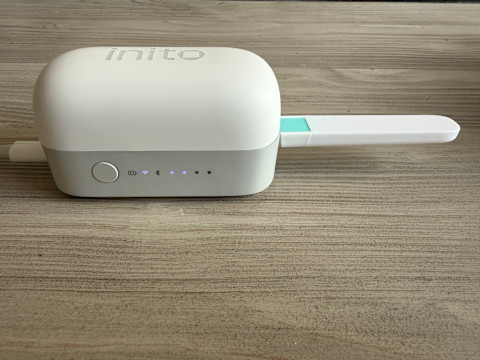
Attach the protective cap and insert the strip directly into the Inito monitor attached to a smartphone.
A 10-minute countdown begins on the app, allowing users to close the interface and continue their morning routine while the device performs its analysis.
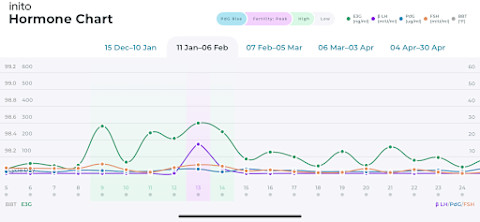
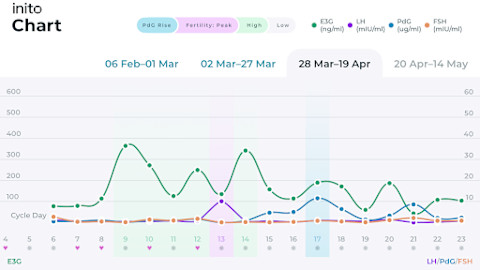
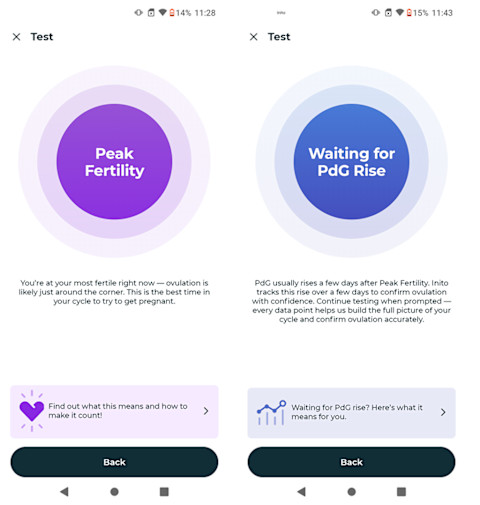
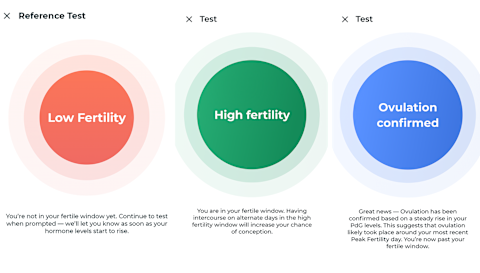
Upon completion, push notifications deliver categorized daily status updates: Low Fertility, High Fertility, Peak Fertility, or Ovulation Confirmed. All four hormone values are simultaneously populated into a dynamic, color-coded trend chart that updates daily.
Phase 3: Observing the Trends
Beginning testing on cycle day six initially yielded a Low Fertility status—an expected outcome, given that the fertile window occurs later in the cycle. Over the subsequent week, watching estrogen climb, capturing the precise moment of the LH surge, and tracking the subsequent rise in PdG transformed abstract hormonal shifts into a transparent, comprehensible visual narrative.
Supporting Data: How Inito Compares to Traditional Methods
To evaluate Inito’s scientific validity, it is helpful to contrast multi-hormone monitoring with legacy tracking tools like OPKs, Basal Body Temperature (BBT), cervical mucus observation, and generic cycle apps.
Category
Inito Fertility Monitor
Standard OPKs
BBT (Temping)
Cervical Mucus
Hormones Measured
4 (E3G, LH, FSH, PdG)
1 (LH only)
None
None
Fertile Window Prediction
Yes (up to 6 fertile days)
Partially (1–2 days around LH surge)
No (retrospective only)
Roughly, highly subjective
Ovulation Confirmation
Yes (via quantitative PdG rise)
No
Indirectly (post-ovulation rise)
No
Output Type
Numeric values + trend charts
Binary yes/no or line darkness
Daily temperature logs
Qualitative self-observation
PCOS / Irregular Cycles
Personalized baseline tracking
Often misleads due to population averages
Difficult to interpret
Difficult to interpret
Clinician Shareability
Seamless digital export
Limited/Manual
Manual logs
Manual logs
The Science Behind Spectral Mapping
Inito achieves its precision through Spectral Mapping technology. While traditional readers simply capture a digital image of a test strip and measure line darkness, Inito’s reader utilizes both visual colorimetric imaging and fluorescence signals. This captures data 100 times richer than standard readers, eliminating cross-reactivity between hormones on the same strip and correcting for environmental interference such as bathroom humidity, varying lighting, or dust.
Peer-reviewed data substantiates these mechanisms. Research published in HR Open demonstrated a 95% correlation between Inito’s urinary hormone patterns and corresponding blood serum trends across the menstrual cycle. Furthermore, studies published in Nature’s Scientific Reports confirm that Inito verifies ovulation with over 92.2% accuracy.
Official Responses: What Medical Specialists Say
Integrative fertility experts and reproductive endocrinologists emphasize that single data points are rarely clinically useful; true diagnostic clarity comes from observing hormone sequencing over time.
"I rarely focus on one hormone or one isolated number. I’m looking for the overall pattern across the cycle," notes Lora Shahine, M.D., a double board-certified OB/GYN and reproductive endocrinologist. "Fertility is rarely determined by a single data point—it’s the overall hormonal sequence that provides the most useful information."
Dr. Shahine points out that traditional single-threshold OPKs can frequently misfire in populations with conditions like Polycystic Ovary Syndrome (PCOS)—recently designated as PMOS—due to chronically elevated baseline LH-to-FSH ratios. By tracking estrogen surges, actual LH peaks, and subsequent progesterone metabolite rises sequentially, multi-hormone monitors bypass this diagnostic trap.
"The patients who come in with hormone data have fundamentally different appointments than those who come in with just a positive OPK and a date," says Sasha Hakman, M.D., a reproductive endocrinological specialist. "They know their cycle. They can tell me when something felt off. That kind of informed patient leads to faster, more precise clinical decisions."
Echoing this sentiment, Susan Nasab, M.D., notes that having a detailed hormonal history is especially critical for patients navigating ovulatory dysfunction, premature ovarian insufficiency, or early perimenopause, allowing physicians to tailor treatments with far greater accuracy.
Implications: Real-World User Experiences
Real-world accounts from patients underscore how viewing multi-hormone trends alters fertility journeys:
Catching Secondary Surges: Users like Bailey Blackburn discovered secondary, late-month LH surges that standard calendar tracking or single-hormone strips entirely missed, directly facilitating conception.
Uncovering Anovulatory Cycles: For Brooke Gresock, tracking cycles revealed an absence of an ovulation spike after four unsuccessful months, prompting her OB/GYN to initiate a targeted, successful medical intervention.
Managing Irregular Cycles: Patients like Beth Donati, managing conditions with cycle lengths spanning 60 to 90 days, utilized Inito’s personalized baseline tracking to accurately predict cycle transitions that standard apps missed entirely.
Conclusion & Verdict
The Inito Fertility Monitor bridges a historic gap in at-home diagnostics, moving users away from binary guesswork and toward quantitative, trend-based self-awareness. While it requires a financial investment exceeding standard drugstore strips and demands daily consistency, its 95% serum correlation, robust clinical backing, and ease of data-sharing make it an invaluable tool.
Whether managing irregular cycles, navigating PCOS, or simply seeking proactive insight into reproductive health before actively trying to conceive, Inito offers an unprecedented level of clarity, empowering individuals to walk into clinical appointments as informed partners in their own care.