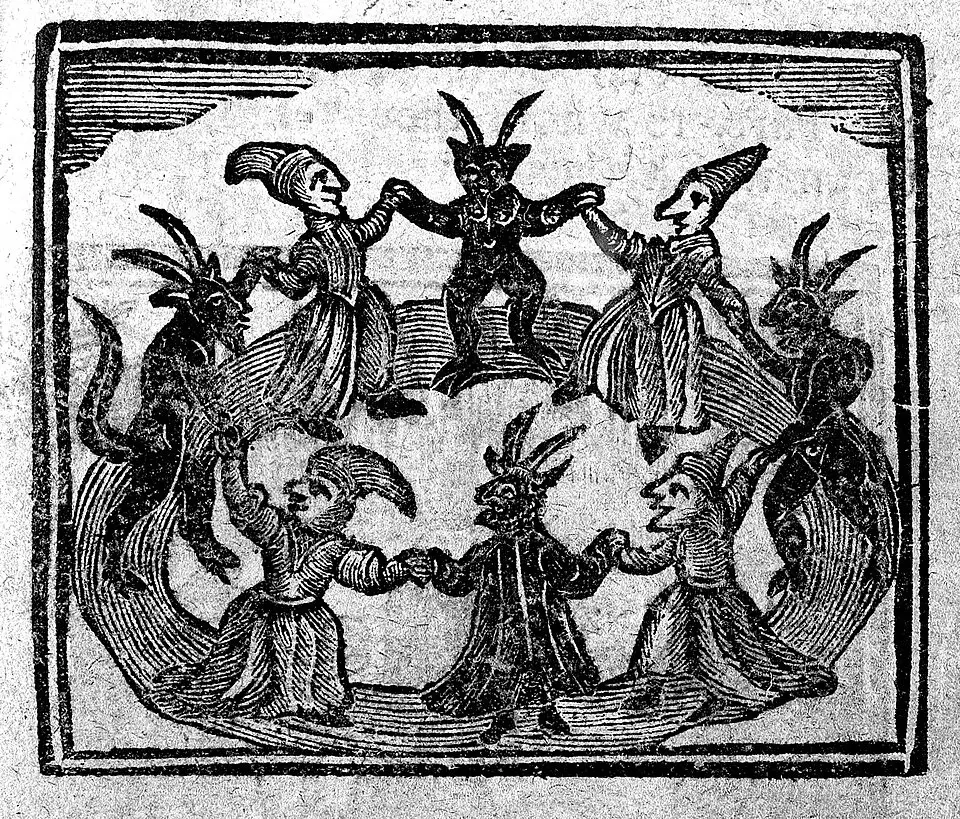
LONDON — In an effort to address what it perceives as a profound cultural shift, the Evangelical Alliance in the United Kingdom (EAUK) has released a targeted 36-page resource titled Spiritual Curiosity: A Christian Guide to Understanding the World of Crystals, Manifesting, Tarot and Sharing Faith in This Moment.
Released on September 3, the booklet is designed to help conservative Christians navigate, understand, and ultimately evangelize a growing demographic of individuals engaging in alternative spiritualities. The publication acknowledges a striking contemporary reality: rather than sliding into absolute secularism, Western culture is experiencing a vibrant resurgence of interest in Witchcraft, tarot, crystals, astrology, and various forms of New Age practices.
While the EAUK’s manual frames this spiritual renaissance as a "spiritual danger," it also positions it as a unique evangelical opportunity. The release has sparked considerable discussion among religious commentators, highlighting a persistent tension between traditional monotheistic institutions and the rapidly expanding, decentralized world of modern Paganism and esoteric practices.
Main Facts
The publication of Spiritual Curiosity brings to light several core dynamics concerning the current religious and cultural landscape in the U.K. and broader Western societies:
- The Scope of the Guide: The 36-page pamphlet attempts to categorize and evaluate a wide array of alternative spiritual practices, including astrology, angel numbers, chakras, crystals, karma, manifesting, mediums, psychics, psychedelics, tarot, and trends popularized on social media under the banner of "WitchTok."
- The Shift from Apathy to Pluralism: According to the EAUK, the fundamental question for many contemporary seekers is no longer whether a higher power exists, but rather which deity, energy, or spiritual framework to align with. People are actively looking beyond traditional, institutional religious structures for existential answers.
- A Dual Response: The guide attempts a nuanced dual approach. On one hand, it strictly warns Christians against participating in or validating alternative spiritualities, viewing them as spiritually perilous and fundamentally incompatible with the teachings of Jesus. On the other hand, it discourages hostility, urging believers to respond to spiritually curious individuals with engagement, relationship-building, and evangelistic outreach rather than fear.
- Taxonomic Oversimplification: The guide groups disparate traditions under the broad umbrella of "New Age" or alternative spirituality. In reality, practices like contemporary Witchcraft, tarot, indigenous-derived traditions, and modern manifestation movements stem from vastly different historical, cultural, and theological roots.
- Hardline Interpretations: Beyond the official EAUK text, more conservative commentators—such as former New Age practitioner Laura Maxwell—have published reviews characterizing these alternative practices as "demonic-empowered," calling for spiritual deliverance ministries to assist converts.
Chronology of Events
To understand how the release of Spiritual Curiosity fits into the broader timeline of cultural shifts and religious commentary, several key milestones must be traced:

- Late 2010s to Mid-2020s: A sustained cultural surge in alternative spirituality takes root, heavily amplified by social media platforms like TikTok (yielding phenomena such as "WitchTok"). Mainstream pop culture figures, from celebrities discussing manifestation to pop stars like Ariana Grande openly identifying with Witchcraft, normalize esoteric and Pagan-adjacent vocabulary in public discourse.
- September 3, 2026: The Evangelical Alliance in the U.K. officially launches Spiritual Curiosity: A Christian Guide to Understanding the World of Crystals, Manifesting, Tarot and Sharing Faith in This Moment. The guide begins circulating rapidly within conservative Christian networks.
- October 2, 2026: Writing for Premier Christianity, former New Age practitioner Laura Maxwell publishes a supportive review of the guide. Maxwell escalates the rhetoric, advocating for intense spiritual warfare framing, including deliverance ministries for those leaving alternative spiritual paths.
- October 7, 2026: Media coverage expands as religious news outlets, including The Wild Hunt, analyze the broader implications of the guide for minority religious communities, highlighting the EAUK’s strategic acknowledgment of the modern Pagan landscape.
Supporting Data and Cultural Context
The release of the EAUK pamphlet does not occur in a vacuum; it is a direct reaction to measurable shifts in how modern populations engage with the sacred. Sociological data over the past decade consistently points to the decline of traditional church attendance across the United Kingdom and Western Europe. However, researchers note that this decline in institutional Christianity has not translated into a parallel rise in hardline atheism. Instead, it has sparked a massive market for decentralized, DIY, and nature-oriented spiritualities.
- Mainstream Visibility: Esoteric practices have transitioned from the cultural fringes into mainstream consumerism. Crystals are sold in high-street wellness boutiques, meditation and mindfulness apps are standard self-care tools, and astrology apps boast millions of active users.
- The "Spiritual but Not Religious" Demographic: Millions of people globally now self-identify as "spiritual but not religious" (SBNR). These individuals often curate a personalized patchwork of beliefs—borrowing elements from Buddhism, Western esotericism, neopaganism, and psychology—to construct personal meaning.
- The Linguistic Shift: As Katherine Brown, co-lead of the Alliance’s "Being Human" initiative, pointed out, spiritual language is now entirely normalized in public life. Pubs host psychic reading nights, and high-profile celebrities unhesitatingly discuss astrological signs, spirit guides, and manifestation techniques in mainstream media interviews.
For legacy religious bodies like the Evangelical Alliance, this fragmented, highly individualized marketplace of belief represents both a formidable challenge and an untapped mission field.
Official Responses and Perspectives
Reactions to Spiritual Curiosity vary drastically depending on the theological and cultural viewpoint of the observer, highlighting deep ideological divides over the nature of modern spirituality.
The Evangelical Perspective
The EAUK maintains that the modern fascination with alternative spirituality stems from a deep, innate human desire for transcendence—one that, in their view, can only be properly satisfied through a relationship with Jesus Christ.
Katherine Brown emphasized that the church must shed its apprehension:

"Rather than being fearful as Christians, we should be confident that we have good news and a better story to offer a searching and spiritually open culture."
However, the moderation found in the official EAUK text is occasionally eclipsed by more aggressive interpretations within the broader evangelical ecosystem. Laura Maxwell’s commentary in Premier Christianity illustrates this hardline stance, warning that practices such as yoga, meditation, energy healing, and tarot open doors to "demonic-empowered" forces. Maxwell argues that modern churches are largely unprepared for the spiritual warfare required to shepherd individuals transitioning away from Witchcraft and the occult.
The Pagan and Esoteric Perspective
From the vantage point of modern Pagans, Witches, and alternative spiritual practitioners, publications like Spiritual Curiosity reflect a familiar historical pattern: institutional monotheism attempting to pathologize, categorize, and ultimately co-opt or dismantle minority belief systems.
While many practitioners of modern witchcraft and tarot view the evangelical warning as alarmist or culturally out of touch, they also note a significant positive takeaway: major religious organizations are finally being forced to admit that alternative spiritualities are not dying out. Rather than viewing modern Paganism as a fleeting, marginal subculture destined to be swallowed by secularization, the EAUK’s resource proves that institutional Christianity views contemporary esoteric movements as a permanent, influential fixture of the modern cultural landscape.
Implications
The publication of Spiritual Curiosity carries several notable implications for the future of religious engagement in the U.K. and beyond:
- A Shift in Evangelical Strategy: Traditional apologetics have historically focused on combating militant atheism, scientific materialism, or competing major world religions (such as Islam or Hinduism). The EAUK guide signals a pivot toward micro-apologetics—equipping everyday believers to converse with friends, coworkers, and family members dabbling in "WitchTok," tarot, or manifestation.
- Increased Visibility for Minority Faiths: By formally cataloging and addressing these practices, major religious institutions inadvertently validate the cultural footprint of modern Pagans and esoteric practitioners. It demonstrates that alternative spiritualities hold enough sway in the public consciousness to warrant official counter-strategies from national religious bodies.
- Potential for Polarization: While the EAUK advocates for relational, respectful dialogue, the parallel amplification of spiritual warfare narratives—such as those promoted by Laura Maxwell—risks stoking fear and hostility. This dichotomy could complicate grassroots interfaith relations, turning everyday cultural exchanges into ideological battlegrounds.
- The Battle for Meaning: Ultimately, the guide underscores a broader societal contest over where humans derive truth, healing, and existential purpose. As traditional institutions continue to lose their monopoly on meaning-making, the cultural space left in their wake is being rapidly claimed by a mosaic of alternative spiritual paths—forcing traditional religions to either adapt their outreach or watch their cultural influence wane further.