By Global Exploration & Science Desk
Published: October 2024
Main Facts
For millennia, humanity has looked out at the world’s uncharted horizons, deep oceans, and dense forests, populating them with magnificent beasts. From the fire-breathing dragons of European folklore to the towering Kraken of Norse maritime terror, mythical creatures occupy a unique space in human culture. They sit at the crossroads of storytelling, psychological projection, and biological reality.
While modern science firmly rejects the existence of magical beasts—such as creatures breathing actual fire or mermaids singing sailors to their doom—researchers across cryptozoology, anthropology, and evolutionary biology increasingly recognize that many legends are rooted in tangible natural phenomena.
Key facets of the mythical creature phenomenon include:
- The Misidentification of Real Fauna: Many legendary creatures are exaggerated interpretations of actual, extant, or extinct animals (e.g., giant squids inspiring the Kraken; woolly mammoths inspiring tales of giants).
- Psychological and Perceptual Bias: Human cognition is wired for pattern recognition. In low-visibility environments, ambiguous stimuli (a floating log, a shadow in the woods) are frequently interpreted as monstrous entities.
- Cultural Transmission: Oral traditions have historically served as cautionary tales, ecological maps, or moral frameworks, often utilizing terrifying beasts to explain natural hazards like rogue waves, sinkholes, or predatory wildlife.
- Unexplored Ecosystems: With nearly 80% of Earth’s oceans remaining unmapped and unobserved, and vast swaths of terrestrial wilderness still difficult to access, the argument that "absence of evidence is not evidence of absence" keeps the scientific door slightly ajar for new species discoveries.
Chronology: A History of Legend and Discovery
To understand why humans continue to search for mythical creatures, one must trace the timeline of how legendary beasts have been documented, questioned, and occasionally proven real over the centuries.
Ancient to Medieval Era: The Age of Monsters
- c. 440 BCE: Greek historian Herodotus writes of the griffin, a creature with the body of a lion and the head and wings of an eagle, guarding gold in the Scythian steppes. Modern paleontologists theorize that these accounts originated from ancient nomads stumbling upon well-preserved Protoceratops dinosaur fossils embedded in desert sandstone.
- 1st Century CE: Pliny the Elder compiles Naturalis Historia, cataloging real animals alongside fantastical beasts like manticores, basilisks, and satyrs, cementing a worldview where the bizarre and the biological blend seamlessly.
- 1555: Swedish archbishop Olaus Magnus publishes Historia de Gentibus Septentrionalibus, featuring vivid illustrations of the Kraken—a colossal sea monster capable of pulling entire warships down to the ocean floor.
The Age of Enlightenment to Modern Cryptozoology
- 17th–18th Century: As scientific rigor takes hold, naturalists begin systematically debunking many medieval myths. However, explorers in newly charted territories continue to bring back tales of strange anomalies.
- 1933: The modern obsession with the Loch Ness Monster is born when a local newspaper reports a sighting of a "whale-like fish" or monster thrashing in the Scottish loch, triggering nearly a century of sonar sweeps, blurry photographs, and tourist booms.
- 1951: Eric Shipton photographs large, bipedal footprints in the snow near Mount Everest, popularizing the myth of the Yeti or Abominable Snowman and launching the modern era of organized cryptozoology.
- 1995: The discovery and genetic verification of unusual marine life, such as the colossal squid (Mesonychoteuthis hamiltoni), offer concrete evidence that deep-sea invertebrates can reach sizes terrifying enough to rival ancient maritime folklore.
Supporting Data and Scientific Perspectives
To bridge the gap between folklore and fact, scientists rely on paleontology, behavioral psychology, and oceanography. The table below illustrates several major mythical creatures alongside their most probable scientific or historical inspirations:
| Mythical Creature | Folklore Attributes | Scientific / Historical Inspiration | Probability of Literal Existence |
|---|---|---|---|
| The Kraken | Island-sized cephalopod capable of dragging ships down. | Giant Squid (Architeuthis) and Colossal Squid (Mesonychoteuthis hamiltoni). | Proven (Though exaggerated in size, the biological reality exists). |
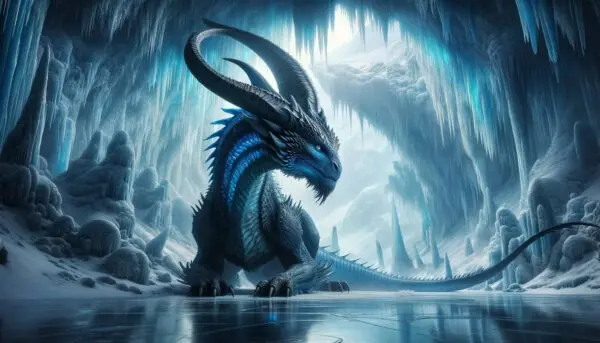
| Dragons | Winged, reptilian beasts breathing fire; hoarding gold. | Misinterpreted dinosaur fossils (e.g., Protoceratops, Megalania), monitor lizards, and venomous snakes. | Plausible in form (large predatory reptiles existed), impossible in function (no biological mechanism for fire-breathing). |
| Cyclops | One-eyed giant humanoids of Greek mythology. | Palaeoloxodon falconeri (dwarf elephant skulls featuring a single, central nasal cavity mistaken for a giant eye socket). | Misinterpretation of prehistoric fossil remains. |
| Bigfoot / Sasquatch | Bipedal, hairy hominid living in North American forests. | Misidentified black bears, hoaxed photography, pareidolia, or culturally persistent folklore of wild men. | Unlikely (Lack of physical, genetic, or fossil evidence). |
| Unicorns | Horse-like creature with a single spiral horn possessing healing properties. | Narwhal tusks traded by Vikings; Indian rhinoceros; genetic anomalies in deer (unicorn deer). | Parts exist (Narwhal tusks), but the mythical beast as a whole is fictional. |
The Psychology of Misidentification
Cognitive scientists point to apophenia—the tendency to perceive meaningful connections between unrelated things—and pareidolia as the primary drivers behind modern cryptozoological sightings. When a hiker navigates a dense, low-visibility forest at dusk, the human brain’s evolutionary survival mechanism prioritizes identifying potential predators. A swaying pine branch or a bear standing on its hind legs to scratch a tree can easily be perceived through fear-tinted glasses as a towering, bipedal hominid.
Official Responses and Expert Analyses
While tabloid media and enthusiast groups often sensationalize cryptid sightings, mainstream scientific institutions maintain a measured, evidence-based approach.
Dr. Margaret Vance, a paleozoologist at the Natural History Museum of London, notes that folklore often serves as an early, unscientific form of paleontology:
"Ancient peoples didn’t have radiometric dating or formal cladistics. When they dug a massive femur out of an eroding cliffside in the Gobi Desert or the mountains of Greece, they used the conceptual framework available to them. A dragon or a giant wasn’t a lie; it was the most logical conclusion they could draw to explain an impossible physical remnant."
Marine biologists echo similar sentiments regarding oceanic legends. Dr. Aris Thorne, a deep-sea researcher specializing in cephalopods, explains how the environment itself breeds mythology:
"The deep ocean is the closest thing we have to an alien world on our own planet. In centuries past, if a dying colossal squid washed up on a beach—mutilated, pale, and bearing scars from battles with sperm whales—sailors didn’t need much imagination to dream up a beast that could swallow their vessel whole. The ocean’s depths naturally invite myth because they defy direct observation."
Wildlife conservation agencies and forestry services also weigh in on phenomena like Bigfoot and the Yeti. The United States Forest Service has repeatedly issued tongue-in-cheek yet firm statements clarifying that while they manage millions of acres of prime habitat, no official biological surveys have ever encountered a breeding population of giant, unknown hominids. Instead, agencies emphasize that the vast majority of footprints or hair samples submitted by enthusiasts invariably belong to known local species, such as black bears, moose, or coyotes.
Implications: Why Mythical Creatures Matter Today
The enduring allure of mythical creatures extends far beyond entertainment, tourism, and campfire tales. They carry profound implications for how humanity interacts with the natural world, how we conduct scientific inquiry, and how we preserve our remaining wild spaces.
1. Driving Ecological Curiosity and Conservation
The quest to find legendary creatures often acts as a gateway to mainstream science for young people. An interest in cryptozoology can easily mature into a lifelong dedication to biology, paleontology, or environmental conservation. Furthermore, the search for hidden species regularly leads to the discovery of entirely new, legitimate flora and fauna. Every year, scientists describe hundreds of new species of insects, deep-sea fish, and amphibians in areas once thought fully explored.
2. Preserving the Unknown
In an era dominated by satellite surveillance, GPS mapping, and constant connectivity, the Earth feels increasingly small and fully understood. Mythical creatures—and the lingering possibility that something unknown might still lurk in a deep lake or an untracked jungle—satisfy an essential human need for mystery and adventure. They remind us of our planet’s vast complexity and the humbling reality that human knowledge remains incomplete.
Conclusion
Ultimately, whether we ever find a living creature bizarre enough to rival ancient folklore is almost secondary. The myths themselves are living artifacts of human creativity, fear, and wonder. As long as there are dark woods to walk through, deep oceans to sail across, and starry nights to gaze up at, humanity will continue to populate the margins of the map with monsters—ensuring that the world remains a place of endless possibility and imagination.