WASHINGTON D.C. — In an era dominated by hyper-connectivity, algorithmic curation, and the relentless pursuit of self-actualization, millions of digital citizens are turning their gaze away from the mundane mirror of daily life and looking toward the ethereal. From ancient folklore to modern pop-culture phenomena, humanity’s enduring fascination with the fantastical has found a new vessel: the internet personality quiz.
Among the countless digital inventories designed to categorize the human psyche, quizzes mapping individuals to mythological archetypes—such as the majestic griffin, the enigmatic trickster, the noble centaur, and the serene mermaid—have experienced a meteoric rise in engagement. Cultural critics, psychologists, and digital anthropologists are taking note, seeking to understand why modern society continues to outsource its self-reflection to the creatures of ancient legend.
Main Facts: The Anatomy of Modern Myth-Making
The intersection of digital interactivity and classical mythology has birthed a thriving sub-industry of personality assessment. Platforms ranging from boutique folklore blogs like The Mythological Realm to mainstream lifestyle conglomerates like BuzzFeed report tens of millions of interactions with fantasy-based diagnostic tools.
At its core, the phenomenon relies on a blend of lighthearted introspection and escapism. Participants answer a series of situational queries—ranging from preferred modes of speculative transportation to foundational values of knowledge—which ultimately assign them a legendary alter ego.
- The Centaur (Mostly A’s): Representing strength, wisdom, and a bridge between humanity and the untamed natural world.
- The Trickster (Mostly B’s): Characterized by cunning wit, playful adaptability, and a propensity for boundary-pushing mischief.
- The Griffin (Mostly C’s): Embodying majesty, boundless curiosity, and a soaring intellect that seeks elevated perspectives.
- The Mermaid (Mostly D’s): Signifying deep intuition, emotional grace, a healing presence, and an unbreakable bond with the mysterious depths of the subconscious.
While these classifications carry no clinical validation, their cultural weight is undeniable, functioning as modern digital astrology for a generation raised on high fantasy and speculative fiction.
Chronology: From Campfire Lore to Algorithmic Identity
To understand the current obsession with mythological identity markers, one must examine the historical trajectory of how humanity interacts with the supernatural.
Pre-Industrial Era: Oral Tradition and Communal Identity
In ancient Greece, Mesopotamia, and Celtic Britain, mythical creatures were not merely entertainment; they were explanations for the inexplicable. Figures like sirens, centaurs, and nymphs served as moral warnings, environmental deities, or foundational ancestors. Communities defined themselves by their proximity to these entities—such as coastal villages attributing their prosperity to sea nymphs or mountain clans claiming lineage from fierce beasts. Identity was collective and cosmological.
The 20th Century: Jungian Archetypes and Fantasy Literature
The mid-20th century marked a psychological shift in how humans interacted with myth. Psychoanalyst Carl Jung popularized the concept of archetypes, arguing that figures like the "Trickster" or the "Wise Old Man" are hardwired into the collective unconscious. Concurrently, the publication of J.R.R. Tolkien’s The Lord of the Rings and C.S. Lewis’s The Chronicles of Narnia modernized fantasy, moving mythical beings from the realm of religious reverence into consumer entertainment.
The 2000s–Present: The Gamification of Self
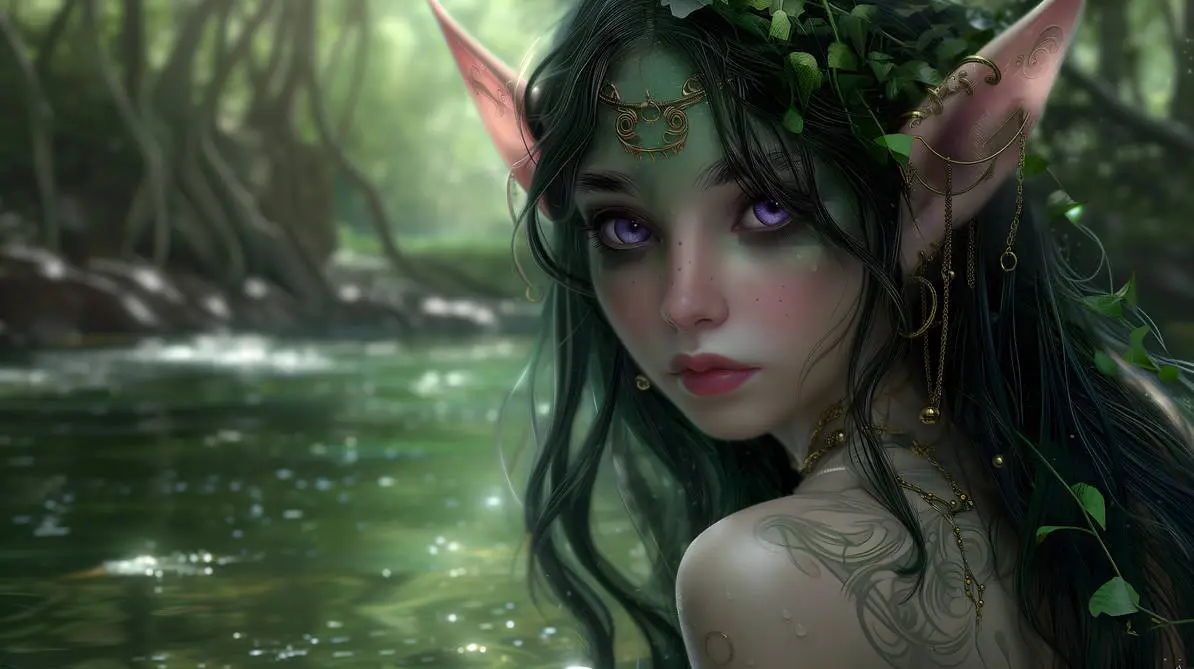
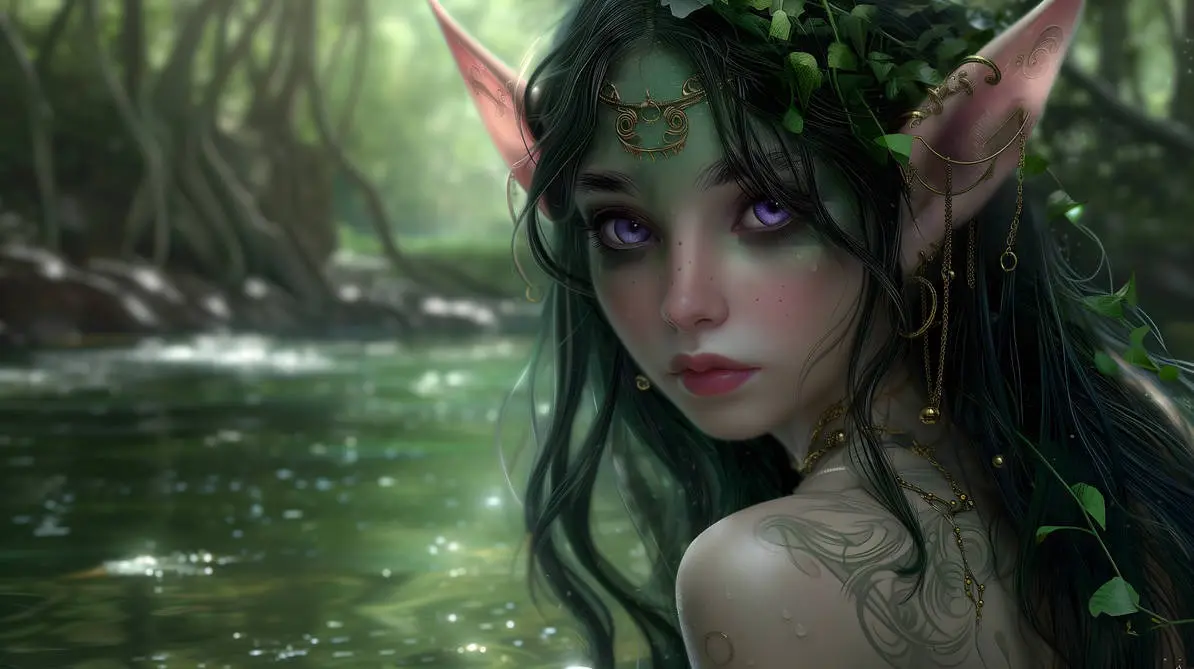
With the advent of the Web 2.0 era, identity construction shifted from private journaling to public performance. Early internet quizzes, hosted on primitive forums and social media networks, began translating psychological frameworks (such as the Myers-Briggs Type Indicator) into fun, shareable folklore. Today, platforms utilize high-definition digital artwork—such as Bogi380’s celebrated depiction of Aeliana the Water Nymph—to give aesthetic weight to these digital diagnoses, turning a simple multiple-choice test into an immersive visual experience.

Supporting Data: The Psychology of Escapism and the Digital Age
Why do millions of adults willingly spend their lunch breaks determining whether they are a mythical beast or a fairy? Data from digital media researchers sheds light on the socio-psychological drivers behind the trend.
- The Need for Unique Self-Expression: In standardized corporate environments and uniform digital spaces, individuals crave distinct identity markers. Labeling oneself a "Griffin" or a "Trickster" allows users to assert a unique narrative identity on platforms like Instagram, TikTok, and Discord.
- The Barnum Effect in Fantastical Contexts: Similar to horoscopes, mythological personality profiles utilize generalized traits that individuals can easily weave into their personal narratives. When a quiz asserts that someone with "mostly D’s" possesses a healing touch and deep intuition, the respondent readily recalls moments of empathy, validating the assessment.
- Escapism as Mental Rest: Post-pandemic workplace burnout and economic uncertainty have supercharged the demand for escapism. Engaging with fantasy allows the human brain to temporarily offload real-world stressors, shifting cognitive load to low-stakes imaginative scenarios (e.g., choosing between exploring a hidden jungle temple or soaring above the clouds).
Official Responses and Expert Perspectives
Mental health professionals, folklorists, and digital media experts offer varied perspectives on the cultural footprint of mythical personality tests.
Dr. Aris Thorne, a cultural anthropologist specializing in modern mythologies, views the trend as a healthy evolution of storytelling. "We no longer gather around a hearth to hear tales of centaurs and sirens; instead, we ingest them through interactive media," Dr. Thorne explains. "These quizzes allow modern humans to symbolically reconnect with archetypes that our ancestors used to make sense of the cosmos. It is a playful reclamation of wonder."
Meanwhile, developmental psychologist Dr. Elena Vance notes the underlying coping mechanisms at play. "When individuals feel powerless in macro-economic or social spheres, micro-identities provide a safe harbour. Deciding whether your spirit animal is a noble lion or a calming dolphin gives a sense of agency—albeit playful agency—over one’s persona."
Media analysts also point out the commercial genius of these quizzes. By tapping into intrinsic human narcissism—the desire to understand and talk about oneself—publishers achieve unprecedented user engagement and shareability, metrics that drive the modern attention economy.
Implications: What Our Choice of Beast Says About Us
As digital self-assessments continue to evolve, the implications stretch beyond mere amusement. They reveal a society actively searching for meaning, community, and enchantment in an increasingly mechanized world.
When a user discovers they match with a Centaur, they aren’t just logging a quiz result; they are symbolically aligning themselves with traits of wisdom and balance. When another finds they are a Trickster, they are granting themselves permission to embrace spontaneity and lighthearted subversion in a rigid world.
Ultimately, as the digital landscape marches toward hyper-realism and artificial intelligence, our desperate clinging to mythical creatures proves that humanity’s imagination remains untamed. As the scholars of folklore remind us, the real magic does not lie within the algorithm or the multiple-choice questions—it lies within the human capacity to wonder, dream, and occasionally imagine ourselves soaring far above the clouds.