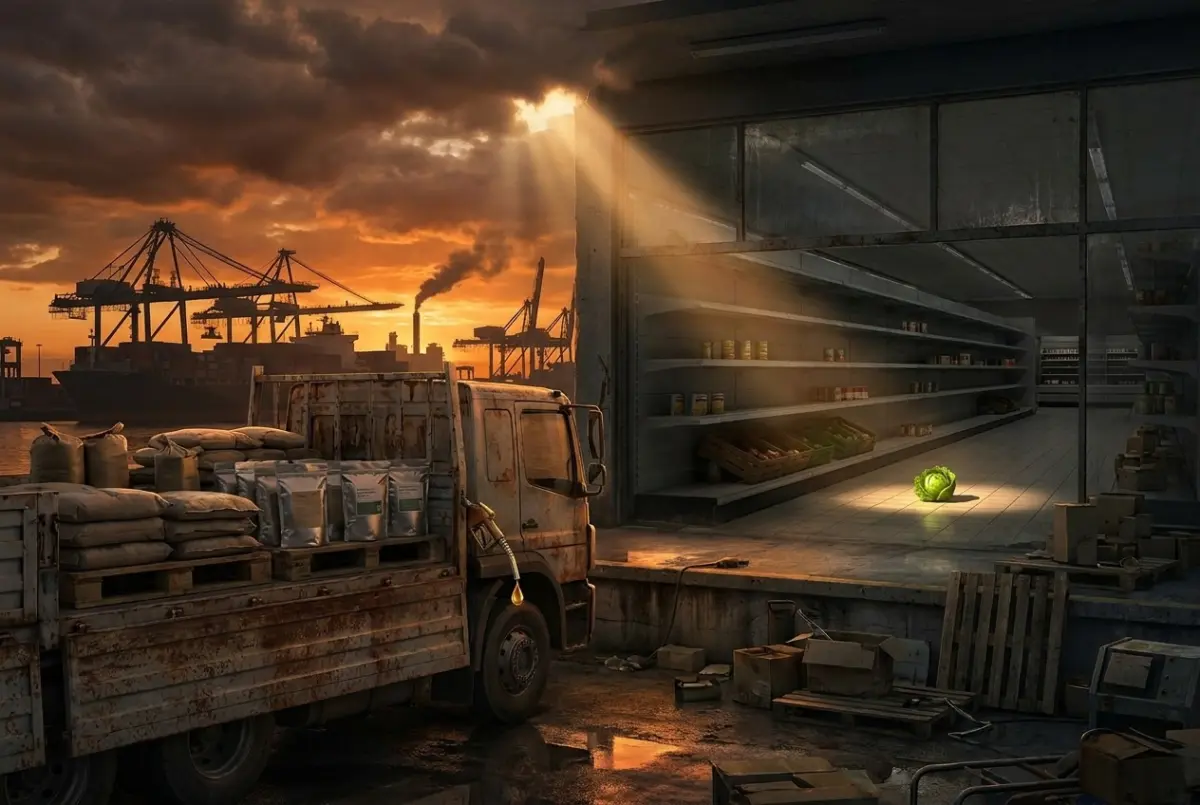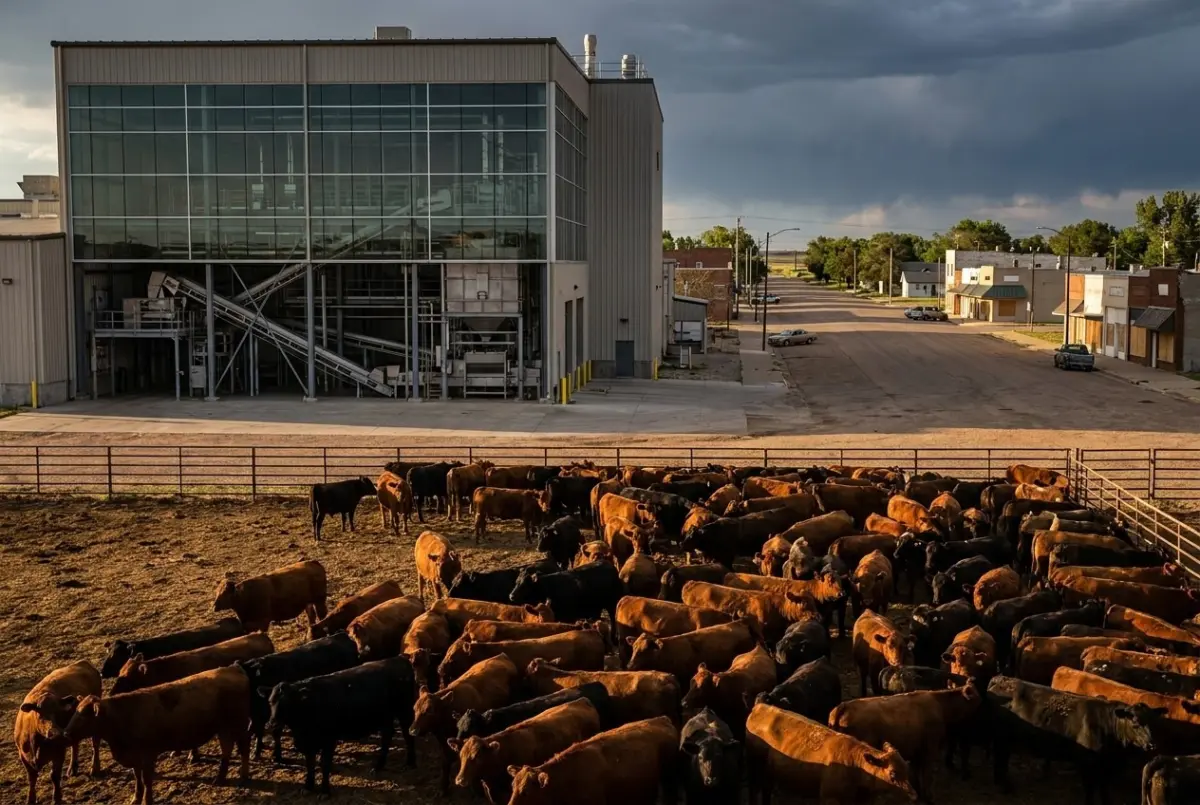
KANSAS — A sudden and intense wave of federal immigration enforcement activity has severely disrupted operations across the heart of America’s beef industry, triggering a sharp decline in U.S. cattle slaughter and stranding hundreds of thousands of animals in feedlots. The sweeping fallout has exposed deep vulnerabilities in the nation’s food supply chain, pitting the agricultural sector against federal enforcement strategies at a time when the domestic cattle herd sits at a 75-year low.
Industry data reveals that U.S. cattle slaughter plummeted by 16% in a single week, dropping to an estimated 90,000 head. By the end of the following week, processing numbers remained stubbornly depressed, hovering 14% below normal seasonal baselines. The primary driver behind the contraction is not a shortage of livestock, but widespread workforce absenteeism. Fear of Immigration and Customs Enforcement (ICE) operations has kept thousands of skilled plant workers—many of them legal, documented residents—away from their posts, bringing high-capacity processing lines to a grinding halt.
Main Facts
The epicenter of the crisis is the Kansas "Golden Triangle," a critical agricultural region encompassing major industrial meatpacking facilities operated by industry giants Cargill, Tyson Foods, and National Beef.
- Production Capacity Impact: Collectively, the plants within the Golden Triangle process roughly 24,000 head of cattle per day, representing more than 20% of the total daily fed-cattle slaughter capacity in the United States.
- Slaughter Deficits: National slaughter figures dropped by 16% to 90,000 head during the initial wave of absenteeism, stabilizing only slightly at a 14% deficit by week’s end.
- Economic Losses: Producers are facing millions of dollars in lost revenue, with ranchers reporting losses ranging from $300 to $500 per head of cattle.
- The Labor Paradox: Major agricultural coalitions emphasize that the enforcement presence has created a massive chilling effect that has disproportionately paralyzed the legal, documented, and highly skilled workforce essential for keeping the protein supply chain operational.
- Macroeconomic Pressure: The labor shock collides with an already historically tight cattle inventory, driven by years of severe nationwide drought that has shrunk the U.S. herd to its smallest footprint in three quarters of a century.
Chronology of the Crisis
The unfolding crisis developed rapidly over the course of a single business week, catching local municipalities, feedlot operators, and corporate processors off guard.
Early Week: The Enforcement Wave and Initial Absenteeism
Reports of heavy federal immigration enforcement presence began circulating through southwest Kansas communities, including Dodge City, Garden City, and Liberal. While federal officials maintained that operations were targeted, the visibility of agents near commercial hubs and residential neighborhoods triggered immediate panic.
Mid-Week: The Processing Shutdown
By Thursday, Sept. 24, the climate of fear manifested directly on the factory floors. Absenteeism skyrocketed as workers elected to stay home rather than risk encountering enforcement actions on their commutes or near processing facilities. Cargill, Tyson, and National Beef plants experienced critical staffing shortages, forcing management to slow down or temporarily idle processing chains. Consequently, national cattle slaughter crashed by 16% to 90,000 head.
Late Week: Stranded Livestock and Market Backlogs
By Friday, Sept. 25, slaughter numbers remained depressed at 14% below standard levels. With processing plants operating well under capacity, the downstream logistics of the beef supply chain buckled. Feedlots quickly ran out of shipping slots, stranding tens of thousands of market-ready cattle. Ranchers and agricultural groups began sounding alarms over escalating feed costs and emerging animal welfare concerns as cattle grew overweight in confinement.
Supporting Data and Market Implications
The intersection of sudden labor shortages and structural supply constraints has sent shockwaves through livestock markets and agricultural economics.
The Feedlot Bottleneck and Animal Welfare
Under normal operational cadence, cattle move from feedlots to processing plants upon reaching optimal market weight. The sudden reduction in slaughter capacity has disrupted this delicate schedule. Animals left in feedlots continue to consume grain daily, driving up operational overhead for producers who are simultaneously seeing their revenues deferred or diminished. Furthermore, keeping heavy cattle in confined spaces during transitional weather patterns elevates health and animal welfare risks, compounding the financial pressure on independent ranchers.
Commodity Volatility and Pricing Pressures
Chicago Mercantile Exchange cattle futures have experienced wild gyrations as traders attempt to price in the sudden, involuntary contraction of processing capacity against a fundamentally undersupplied physical market. According to Texas Agriculture Commissioner Sid Miller, individual ranchers are absorbing losses of $300 to $500 per head as buyers lower bids to compensate for delayed processing schedules and logistics bottlenecks.
Structural Drought and Herd Depletion
The current disruption occurs against a macroeconomic backdrop of severe structural deficits. Prolonged, multi-year droughts—particularly in key production regions like Texas and the broader Southwest—have forced systemic herd liquidations. Some regional herds have been reduced by as much as 80%. With the national cattle herd at its lowest level in 75 years, the loss of domestic processing capacity threatens to create an acute squeeze, pitting federal efforts to lower consumer beef prices through imported alternatives against the reality of crippled domestic infrastructure.
Official Responses and Political Friction
The crisis has generated intense friction between local municipal leaders, congressional representatives, state agricultural commissioners, and federal immigration authorities.
Federal Rebuttal and Scope of Operations
Homeland Security Secretary Markwayne Mullin pushed back against industry characterizations of the operation, stating unequivocally, "ICE is not conducting worksite operations in Kansas." Mullin emphasized that federal agents are strictly targeting high-priority, heinous criminals—including murderers, rapists, drug traffickers, and undocumented individuals with final orders of removal. Despite these assurances, the heavy tactical footprint in surrounding residential corridors achieved the practical effect of emptying streets and keeping agricultural workers away from their jobs.
Local Outcry and Coordination Breakdowns
Municipal leaders across southwest Kansas reported receiving zero advance notice regarding the scope or timing of the federal operations. The lack of operational coordination with local sheriff’s departments and police forces drew sharp rebukes from Kansas’s congressional delegation.
"When ICE operates in Kansas, it needs to coordinate with our local law enforcement," stated U.S. Senator Roger Marshall (R-KS), who—alongside Senator Jerry Moran (R-KS)—has aggressively pressed the Department of Homeland Security for transparency and operational accountability.
In Liberal, Kansas, the local vice mayor described the immediate socioeconomic fallout to Reuters, noting, "Our community is a ghost town," and adding that local commercial districts have seen widespread closures because "people are scared to leave their homes."
Joint Industry Condemnation
In an unprecedented unified front, the Kansas Livestock Association, Texas Cattle Feeders Association, and Oklahoma Cattlemen’s Association issued a joint scathing critique of the federal actions. The organizations asserted that unannounced enforcement sweeps create severe supply-chain chokepoints that ripple outward from feedyards to corporate processors.
"The ICE presence has created a massive chilling effect on the legal, documented, skilled workers that put beef on the table and keep the cattle supply chain moving," the joint statement read.
Future Outlook for Beef Supply and Consumer Prices
As the Kansas processing bottleneck stretches into its second week, agricultural economists and supply-chain analysts are warning of inevitable consumer-facing consequences.
If packing plants cannot rapidly restore normal staffing levels and clear the massive backlog of market-ready cattle, the reduction in wholesale beef production will translate directly into tightened inventories at distribution hubs. Ultimately, fewer finished cattle moving through slaughterhouses means less beef on supermarket shelves, driving up retail prices at the meat counter for everyday consumers.
At the same time, the broader economic debate touches upon complex transaction costs within agricultural supply chains—ranging from procurement logistics and regulatory compliance to animal welfare standards and labor management. Academic research highlights that modern meat production relies on a finely tuned ecosystem where information, negotiation, and monitoring costs dictate efficiency. Sudden, exogenous shocks like workforce absenteeism disrupt this equilibrium entirely.
For producers, processors, and consumers alike, the immediate path forward hinges on a delicate reconciliation: resolving the breakdown in communication between federal enforcement agencies and local authorities, restoring confidence among the skilled workforce that sustains rural Kansas, and preventing a localized enforcement flashpoint from permanently destabilizing the American protein supply chain.