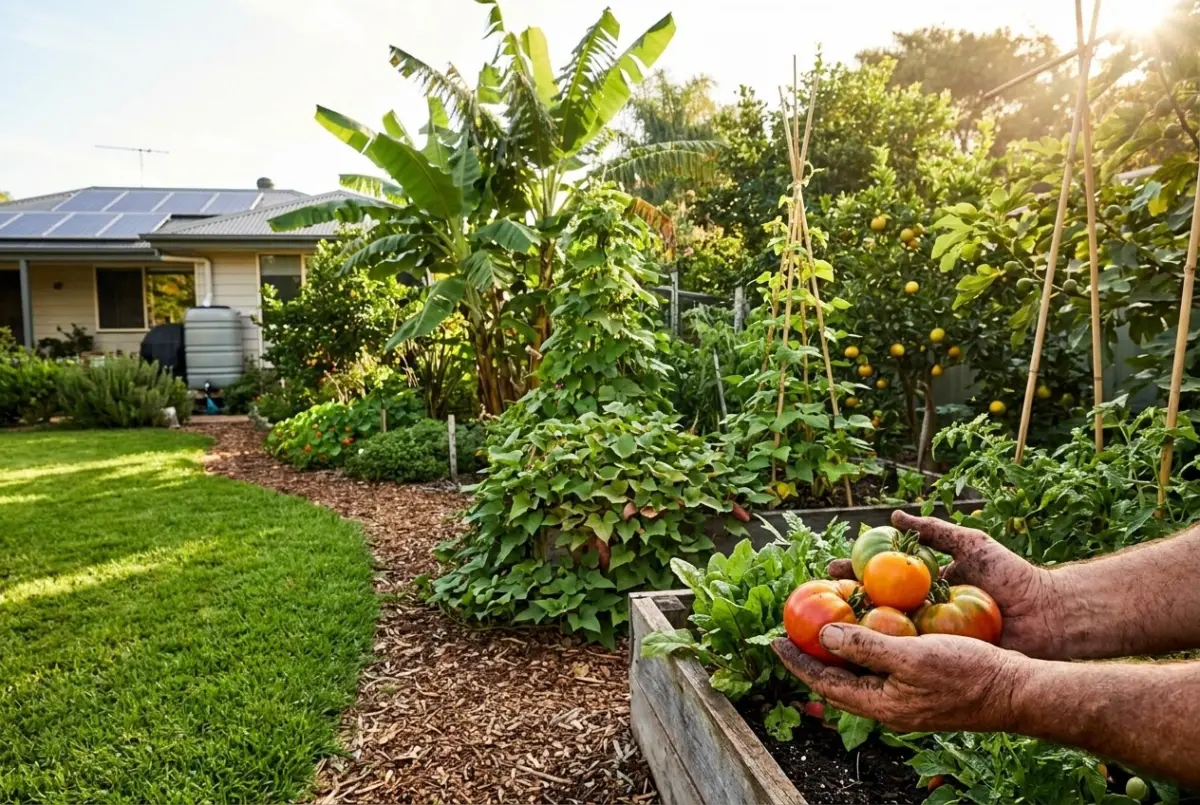
For over two decades, independent reporting has tracked the gradual erosion of personal autonomy, leading to an inescapable reality: true food sovereignty begins with an individual decision, entirely divorced from government permits and political patronage. Waiting for a bureaucrat, a homeowner association (HOA) board, or a municipal zoning commission to grant permission to cultivate sustenance is an active form of systemic subjugation.
Modern dependency relies on three centralized pillars: mass-produced food, fiat currency, and gatekept knowledge. Each represents a systemic chokepoint capable of being sealed off overnight. When basic survival needs flow exclusively through institutional pipes, populations transition from citizenry to subjects. Consequently, decentralization is not a lifestyle trend or a niche hobby; it is a moral and strategic imperative against systems that have repeatedly demonstrated a willingness to weaponize scarcity.
Main Facts: The Anatomy of Centralized Dependency
Global supply chains are inherently fragile. Modern supermarkets operate on "just-in-time" logistics, representing the terminal end of transport networks tethered to vulnerable shipping lanes, energy pipelines, and concentrated agricultural hubs. When a regional shipping bottleneck or geopolitical conflict occurs, grocery store shelves transition from fully stocked to entirely empty within hours.
Disaster relief data consistently reveals that the average household maintains less than a week of emergency supplies, leaving millions acutely vulnerable when municipal aid is delayed or diverted. Beyond logistical fragility lies a public health crisis. The industrialized food system prioritizes shelf life, synthetic additives, and corporate scalability over nutritional density. Ultra-processed foods engineered for hyper-palatability have fueled an epidemic of chronic degenerative disease, obesity, and systemic inflammation.
By contrast, regenerative permaculture establishes closed-loop ecological systems that restore soil vitality, purify local water tables, and yield nutrient-dense medicine. Growing even a fraction of one’s own food—whether through balcony window boxes, raised beds, or suburban food forests—shifts the psychological paradigm from consumer dependence to active production.
Chronology: From Marginal Ground to Biological Infrastructure
The practical viability of decentralized food production has been documented across various scales and historical eras:
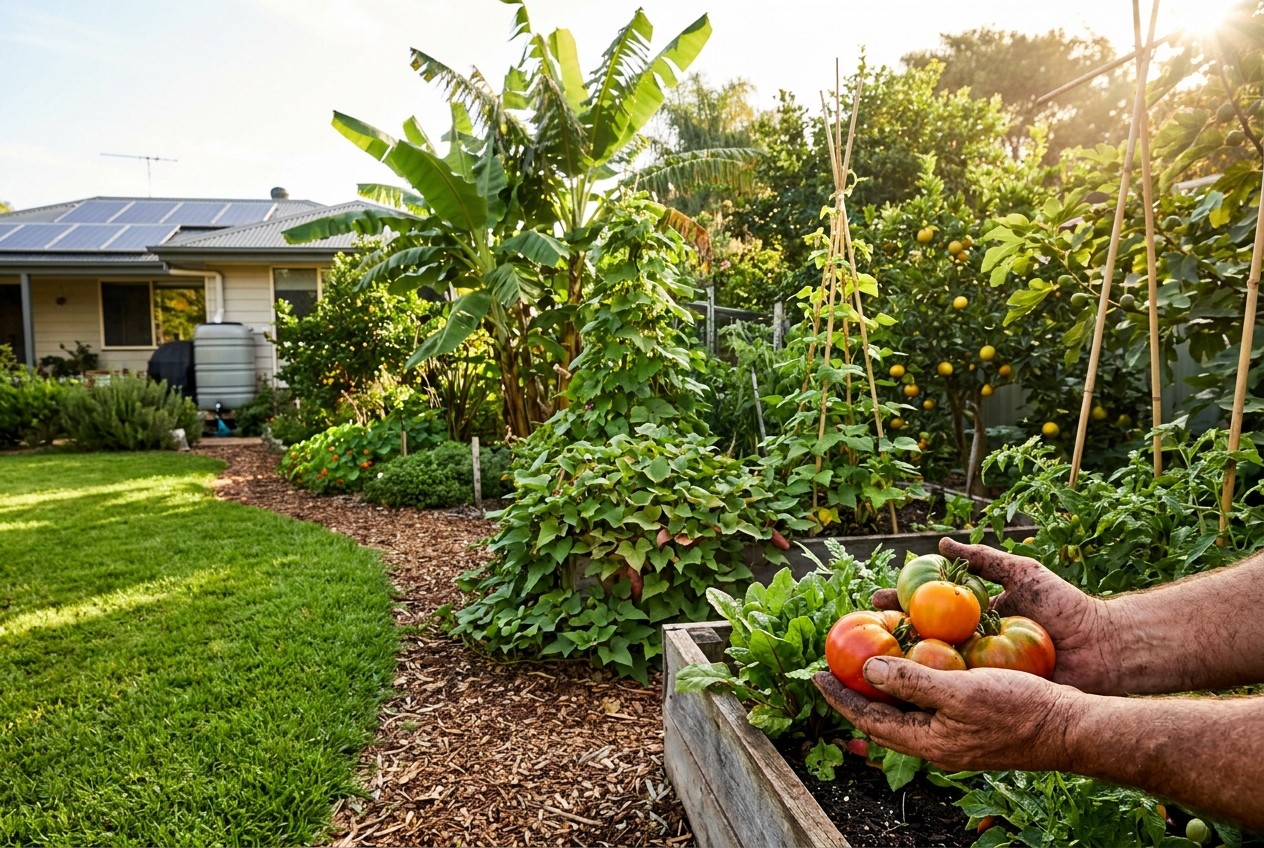
- 19th Century: Parisian market gardeners successfully fed an entire dense urban population using intensively worked, double-dug raised beds enriched with local compost, proving that high yields require minimal geographic footprints.
- Decades Prior: The biointensive agricultural movement popularized micro-farming techniques capable of generating high caloric and nutritional returns on fractional acreage.
- Recent Years: Pioneers like Jim Gale (Food Forest Abundance) and Todd Pitner have systematically transformed marginal landscapes—such as sandy Florida soils—into thriving, resilient food forests capable of withstanding extreme weather events, including hurricanes and severe freezes.
- Contemporary Era: Grassroots innovators are increasingly bypassing municipal red tape, successfully challenging restrictive HOA mandates through legal precedents that protect the right to cultivate edible landscapes. Concurrently, the development of decentralized, open-source knowledge bases (such as local AI models and DRM-free digital libraries) has created an independent infrastructure for self-directed education.
Supporting Data and Structural Resilience
True self-reliance is fundamentally communal rather than isolationist. A household equipped with a functioning food forest, seed bank, and water catchment system transforms from a societal liability into a regional anchor during disruptions.
- Yield Efficiency: Biointensive methods produce significantly higher yields per square foot compared to conventional monoculture farming, making urban and suburban agriculture mathematically viable.
- Financial Hedging: Economic sovereignty must parallel food production. Relying exclusively on fiat currency exposes individuals to inflationary policies and central bank devaluation. Diversification into hard assets—including precious metals and decentralized digital currencies like Bitcoin—acts as an essential financial buffer.
- Information Sovereignty: The rise of open-source, downloadable artificial intelligence models ensures that critical survival skills—ranging from permaculture design and plant disease diagnosis to emergency first aid—remain accessible locally, independent of grid connectivity or corporate censorship.
Official and Institutional Responses
Institutional reactions to the decentralization movement generally fall into two categories: regulatory resistance and corporate consolidation.
Municipal zoning boards and homeowner associations frequently cite aesthetic codes, property value uniformity, and nuisance laws to penalize residents who replace chemically treated lawns with edible perennial gardens. These regulatory bodies often enforce strict conformity, viewing non-traditional landscaping as a threat to suburban uniformity.
Simultaneously, agribusiness and pharmaceutical conglomerates lobby heavily to protect centralized distribution networks. By maintaining strict seed patents, heavy pesticide dependencies, and proprietary food processing standards, these entities safeguard market dominance against the rising tide of local autonomy. Critics note that institutional pushback against home gardening and raw food access is rarely about public welfare and frequently about maintaining regulatory capture over basic human necessities.
Implications: The Multi-Legged Stool of Survival
Achieving genuine resilience requires abandoning the notion of single-point security. Survival experts emphasize the concept of a "many-legged stool"—a balanced portfolio of assets that includes productive land, stored calories, clean water capacity, precious metals, and practical skill sets.
- For Individuals and Families: The immediate implication is tactical. Initiating food production—whether through micro-sprouting on a kitchen counter, container gardening on a patio, or establishing perennial food forests on larger acreage—reduces systemic vulnerability. Furthermore, cultivating autodidactic learning habits in children breaks the cycle of institutional dependency.
- For Communities: Neighborhoods that embrace open-source knowledge sharing, seed saving, and local bartering networks insulate themselves against macro-economic shocks. When local food systems thrive, communities retain capital, improve public health outcomes, and foster genuine social cohesion.
Ultimately, food sovereignty is an outright rejection of fragility. Every seed planted, every decentralized information network maintained, and every square foot of chemically dependent turf reclaimed represents a tangible step toward true personal liberty. The tools, methods, and historical precedents already exist; the only remaining variable is individual initiative.