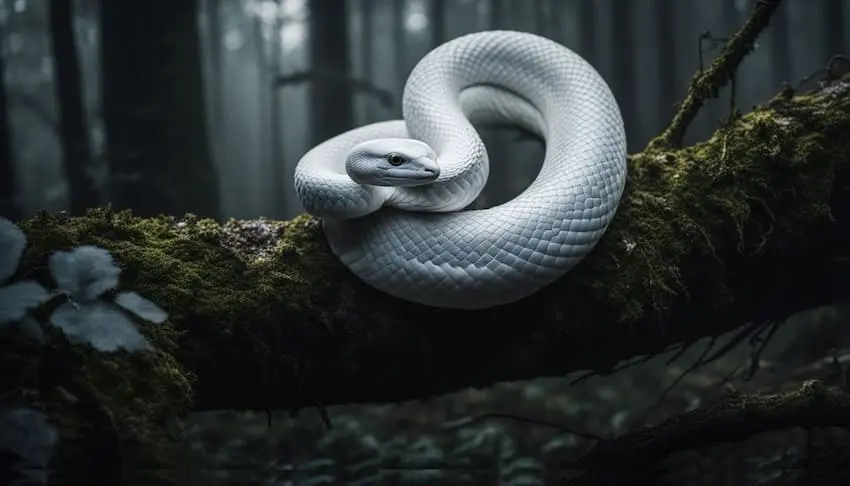
WASHINGTON — In the realm of oneiric exploration few symbols command as much immediate fascination and visceral intrigue as the white snake. Long relegated to the fringes of folklore and esoteric study, dreams featuring this ethereal reptile are increasingly drawing the attention of modern depth psychologists, spiritual counselors, and sleep researchers alike. As individuals navigate an increasingly complex and high-stress waking world, the appearance of a pristine, white serpent in the nocturnal theater is no longer viewed merely as a bizarre neurological firing, but as a profound psychological compass pointing toward self-discovery, spiritual awakening, and repressed emotional truths.
To unpack the phenomenon of the white snake dream is to embark on a journey that bridges ancient mythology with modern psychoanalysis. While black or brightly colored snakes in dreams traditionally trigger immediate alarms of danger or deceit, the luminous hue of the white snake introduces a confounding paradox: a creature of primordial instinct cloaked in the robes of purity, enlightenment, and spiritual ascension.
Main Facts: The Anatomy of a White Snake Dream
At its core, a dream involving a white snake operates on a dualistic framework. According to prominent dream analysts and psychological researchers, the primary signifiers associated with the white serpent break down into distinct categories:
- Purity and Intention: Unlike its darker counterparts, the white snake symbolizes a return to innocence, untouched clarity, and the desire for simplicity and inner peace.
- Spiritual Transformation: Drawing parallels to the biological act of shedding skin, the white snake is a hallmark token of personal reinvention, the casting off of obsolete belief systems, and the alignment with a higher state of consciousness.
- Energy and Vitality: In somatic and chakra-based interpretations, the behavior of the snake mirrors the internal flow of energy—particularly within the root chakra—signifying stability or, conversely, energetic blockages caused by hidden anxieties.
- The Shadow Self: Grounded in Jungian psychology, the serpent acts as an emissary from the unconscious, dragging unacknowledged secrets, fears, and untamed aspects of the psyche into the light of conscious awareness.
- Deceptive Tranquility: The stark contrast between the gentle, wintery color of the creature and its predatory nature serves as an innate warning: things in waking life may not be as serene as they appear on the surface.
Chronology: The Evolution of Serpent Symbolism in Human Consciousness
To fully understand why the white snake commands such reverence and dread in our dreams, one must trace the chronological evolution of the serpent symbol across human history and psychological inquiry.
Antiquity and Mythology
For millennia, snakes have occupied a paradoxical space in human mythology. In ancient indigenous, Eastern, and Mesoamerican traditions, white or albino serpents were frequently venerated as divine messengers, guardians of sacred portals, or manifestations of benevolent ancestral spirits. They were rarely seen as purely malicious; instead, they represented the cyclical nature of life, death, rebirth, and profound wisdom.
The Freudian and Jungian Revolution
In the early 20th century, the interpretation of dreams shifted from prophetic divination to an internal diagnostic tool. Sigmund Freud famously categorized snakes in dreams as phallic symbols representing repressed sexual drives. However, it was Carl Gustav Jung who expanded the paradigm, viewing the snake not merely as a localized neurosis, but as a universal archetype representing the "shadow"—the hidden, instinctual, and often feared parts of the human personality that demand integration for the psyche to achieve wholeness.
The Modern Psychological Era
Today, sleep researchers and psychotherapists utilize dream analysis as an active bridge to the subconscious mind. As the fields of neuro-linguistic programming and somatic healing have evolved, the white snake has been re-contextualized not as a monolithic omen, but as a dynamic mirror reflecting the dreamer’s current emotional resilience, spiritual trajectory, and hidden vulnerabilities.
Supporting Data and Common Manifestations
While every dream is subjective, sleep-tracking data and qualitative studies compiled by dream-research databases indicate that white snake dreams generally manifest in specific scenarios, each carrying distinct psychological implications.
1. The White Snake Attack
When a white snake strikes the dreamer, the experience is inherently jarring. This scenario merges the pristine purity of the color white with the primal fear of aggression. Psychologists interpret this as an "aggressive awakening"—a moment where an undeniable truth or necessary life change is confronting the individual in a manner that feels unsettling or abrupt. The dream forces the conscious mind to confront realities it has actively tried to evade.
2. Encounters with a Giant White Snake
The size of the dream entity scales directly with the magnitude of the psychological event it represents. Dreaming of a massive white snake indicates that the dreamer is standing on the precipice of a monumental life transition. The color white promises rebirth and new beginnings, but the sheer scale of the creature generates anticipatory anxiety regarding the sheer gravity of the impending changes.
3. The White Snake Bite
Perhaps one of the most common and anxiety-inducing variations is the dream bite. Far from being a purely punitive symbol, a snake bite functions in the dream realm as a definitive wake-up call. Because the snake is white, the challenge or crisis it represents—whether it be a toxic relationship, a harmful habit, or a neglected emotional wound—stems ultimately from an opportunity for healing and emotional detoxification.
4. The Black and White Serpent
The appearance of a black and white snake, or a combat between contrasting serpent energies, introduces the classic dynamic of yin and yang. This scenario addresses internal polarization: the battle between fear and courage, self-doubt and absolute confidence. The dream highlights the urgent necessity of integrating opposing forces to achieve internal harmony.
5. The White Cobra
The introduction of a cobra adds a layer of regal danger and ancient wisdom. Cobras command immediate respect due to their hood and venom. In a dreamscape, a white cobra asks the individual to navigate complex, seductive situations in waking life with extreme reverence, caution, and heightened awareness.
Official Responses and Expert Perspectives
Mental health professionals and holistic practitioners emphasize that interpreting a white snake dream requires looking beyond literal fears and examining the emotional resonance left behind upon waking.
"Dreams are the language of the unconscious," notes Dr. Elena Vance, a clinical psychologist specializing in integrative dream work. "When a patient reports a white snake, we are rarely looking at a literal premonition of danger. Instead, we are looking at a profound internal negotiation. The purity of the color forces a confrontation with authenticity. The dreamer is being asked: Where are you lying to yourself? What old skin are you refusing to shed?"
Spiritual counselors echo a similar sentiment, viewing the white snake as a manifestation of intuition and protective guidance. In many traditions, the appearance of such an ethereal creature suggests that the individual is being watched over by a wise ancestral source or spirit guide, empowering them to lean into their spiritual evolution rather than retreating into the comfort of the familiar.
Implications: Navigating the Aftermath of the White Snake
The ultimate value of a white snake dream lies not in the interpretation of the symbol itself, but in how the individual integrates its message into waking life. As society grapples with collective burnout, shifting career paradigms, and a pervasive search for personal authenticity, the psychological implications of these dreams are profound.
Embracing Shadow Work
To ignore the white snake is to deny the psyche an opportunity for growth. Engaging in "shadow work"—a term popularized by Carl Jung—means consciously sitting with the discomfort brought on by the dream. Whether that involves addressing deep-seated anxieties, confronting repressed memories, or accepting a painful truth, the presence of the white snake assures the dreamer that healing is possible only through courageous confrontation.
Cultivating Energetic Balance
On a somatic level, the dreamer is encouraged to evaluate their physical and emotional grounding. Are they centered, or are external stressors throwing off their equilibrium? By utilizing the dream as a diagnostic tool, individuals can proactively adjust their lifestyles, prune away draining relationships, and clear out energetic clutter that no longer serves their highest truth.
Reflection Questions for the Dreamer
For those attempting to decode their own nocturnal encounters with the white snake, experts recommend pondering the following inquiries:
- What was my immediate emotional reaction—terror, awe, or profound peace—upon seeing the snake?
- How did the snake behave toward me, and what does that behavior mirror about my current waking interactions?
- What areas of my life am I currently attempting to keep hidden, and how might bringing them to the light foster personal growth?
Ultimately, the white snake remains one of the most potent symbols the human subconscious can conjure. Far from being a creature of malice, it serves as a luminous sentinel at the crossroads of transformation, urging the dreamer to shed the past, embrace the discomfort of evolution, and step resolutely into a more authentic and enlightened version of self.