







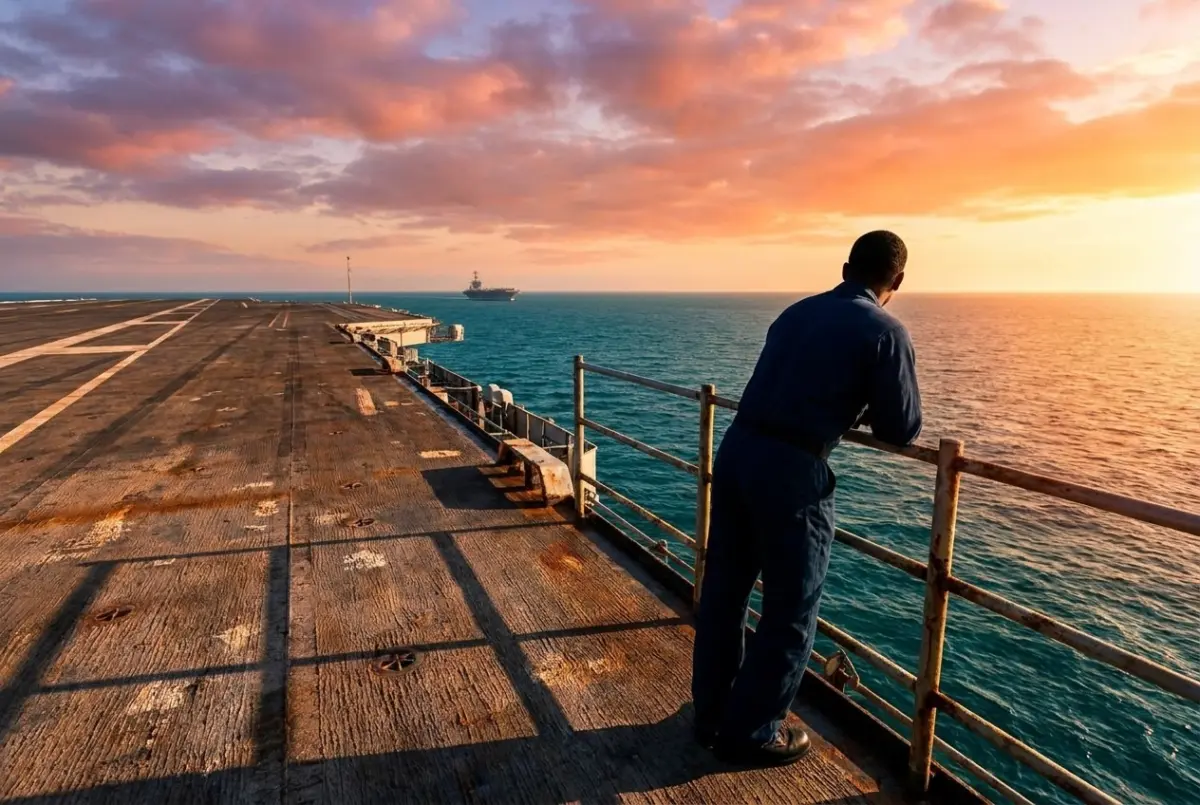
WASHINGTON — In an official correspondence delivered to Capitol Hill, Acting Navy Secretary Hung Cao disclosed that eight sailors assigned to the USS Abraham Lincoln Carrier Strike Group attempted suicide during a grueling, ten-month deployment marked by intense combat operations against Iran.
The letter, submitted to Senator Kirsten Gillibrand (D-N.Y.) on Tuesday, was provided in response to mounting congressional inquiries regarding the psychological well-being and physical safety of service members aboard the nuclear-powered aircraft carrier. While the Navy confirmed the delivery of the document to lawmakers, service spokespeople declined to release its full text. However, excerpts obtained by various media outlets shed light on the immense human toll exacted by what has become a historic, uninterrupted tour of duty in the U.S. Central Command (CENTCOM) area of responsibility.
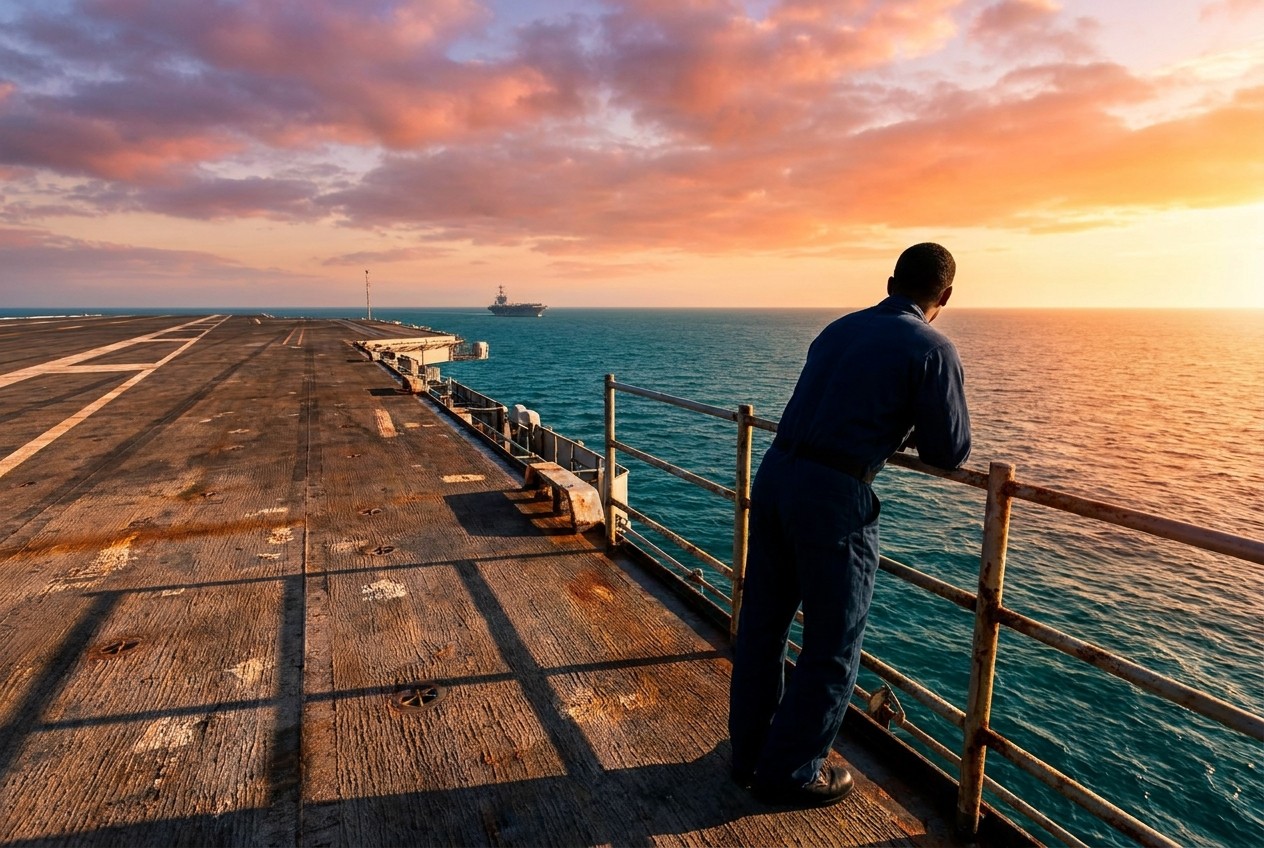
The disclosure lays bare the convergence of high-intensity naval combat, prolonged isolation, and compounding logistical failures that have plagued the Lincoln strike group. With more than 250 days at sea—and over 200 consecutive days without making a single port call—the carrier and its embarked air wing have shattered modern U.S. Navy records for continuous, uninterrupted operations.
Chronology of a Stretched Deployment
The trajectory of the USS Abraham Lincoln’s current deployment has been defined by a cascading series of extensions, shifting geopolitical objectives, and escalating conflict in the Middle East.
- November 21, 2025: The USS Abraham Lincoln and its accompanying strike group depart their homeport of San Diego, California. The mission is originally slated as a standard seven-month Indo-Pacific rotation.
- January 2026: The carrier transitions westward, entering Middle East waters to bolster regional deterrence as tensions between the United States, Israel, and Iran reach a boiling point.
- February 28, 2026: Following weeks of regional posturing, the Lincoln officially transitions into active combat operations against Iran, launching sustained air campaigns as part of joint U.S.-Israeli military initiatives, designated in official briefings as Operation Epic Fury.
- Spring to Summer 2026: Originally scheduled to return home by early summer, the carrier’s tour is repeatedly extended by Pentagon leadership. The ship becomes a central fixture in enforcing a naval blockade and projecting air power against Iranian infrastructure and proxy networks.
- August 19–20, 2026: Amid escalating domestic scrutiny over the welfare of the crew, the USS George Washington Carrier Strike Group officially enters the CENTCOM theater of operations, potentially signaling eventual relief for the exhausted crew of the Lincoln.
- September 2026: Acting Navy Secretary Hung Cao addresses congressional inquiries, officially acknowledging the eight suicide attempts across the strike group over the course of the ten-month deployment.
Supporting Data and Conditions Aboard
The mental health crises unfolding on the Lincoln did not occur in a vacuum; they coincided with a systemic degradation of living conditions aboard the vessel. Throughout the spring and summer of 2026, reports surfaced detailing severe logistical and maintenance bottlenecks.
According to family members and defense reports, sailors and Marines faced critical shortages of food and basic supplies. Compounding these deprivations were persistent infrastructure failures aboard the aging Nimitz-class carrier, including widespread plumbing breakdowns, a lack of hot water, and intermittent access to potable drinking water.
The psychological strain of these compounding hardships manifested in alarming ways. Accounts from the strike group indicate that at least one sailor jumped overboard during the deployment, while another had to be physically restrained from doing so. Relatives of deployed personnel have voiced mounting outrage over social media and through direct appeals to lawmakers, arguing that the combination of combat stress, extreme physical discomfort, and isolation pushed sailors past their breaking points.
Despite these reports, Acting Secretary Cao maintained in his letter that the crew had access to adequate mental health support services throughout the deployment. Navy leadership has similarly insisted that mental health professionals, including embedded operational stress control teams and chaplains, remain actively engaged with the fleet.
Official Responses and Congressional Scrutiny
The acknowledgment of the suicide attempts has intensified friction between Capitol Hill and the Department of the Navy. Lawmakers from both sides of the aisle—though led primarily by Democrats demanding executive accountability—have pressed military leadership for transparency regarding the operational tempo and welfare standards of deployed service members.
Senator Richard Blumenthal (D-Conn.) has publicly called for the Navy to provide a full and transparent accounting of the conditions aboard the carrier, emphasizing that record-setting deployments must not come at the cost of sailors’ lives and well-being.
In an effort to quell the rising tide of concern, senior Navy officials have held direct meetings with the families of deployed sailors and Marines. These briefings, coordinated across various fleet concentration areas, aimed to address anxieties surrounding the prolonged Middle East mission and outline the support mechanisms available to families on the home front.
Yet, overarching strategic imperatives continue to drive military posture in the region. Defense Secretary Pete Hegseth has quietly authorized the extension of multiple U.S. troop deployments in the Middle East through 2027. This decision underscores the administration’s commitment to maintaining a robust, enduring military posture against Iran.
Articulating the administration’s calculus, Vice President JD Vance remarked in August 2026 that while preventing a nuclear Iran remained a core objective, Washington’s primary economic and strategic priority in the region was to "keep oil and gasoline cheap for Americans." To achieve these ends, the Pentagon maintains a formidable force posture in the CENTCOM theater, consisting of 19 warships, advanced air-defense systems, tactical fighter squadrons, and positioned paratroopers.
Strategic Implications and the Path Forward
The situation aboard the USS Abraham Lincoln highlights a critical vulnerability in contemporary U.S. military strategy: the friction between an overstretched global force and the physical and psychological limits of the personnel who sustain it.
As great-power competition persists across multiple theaters, the U.S. Navy finds itself managing a shrinking hull count while attempting to meet ever-expanding commitments in the Middle East, the Indo-Pacific, and European waters. When carriers like the Lincoln are forced to break modern records for continuous sea time, the cumulative wear—not only on marine engineering plants and airframes, but on the human spirit—reaches critical thresholds.
The arrival of the USS George Washington in the CENTCOM area of operations offers a tactical reprieve, potentially allowing the Lincoln to finally chart a course back to San Diego. However, the systemic challenges of fleet rotation, maintenance backlogs, and personnel retention remain unaddressed.
For the families of the Lincoln crew and lawmakers on Capitol Hill, the Acting Navy Secretary’s letter is both an acknowledgment of a hidden crisis and a catalyst for broader reform. As the military campaign in the Middle East extends into the foreseeable future, the Pentagon faces an urgent imperative: balancing strategic readiness in an unstable region with an uncompromising commitment to the health and safety of the sailors who man the front lines.