







NEW YORK — In a move echoing the historic technological alliances of the 20th century, the United Kingdom and the United States have officially established a groundbreaking artificial intelligence defense partnership. Announced on Tuesday by U.K. Prime Minister Andy Burnham at the United Nations General Assembly, the pact represents a major escalation in how both nations plan to defend their most vital assets against rapidly evolving asymmetric and peer-state threats.
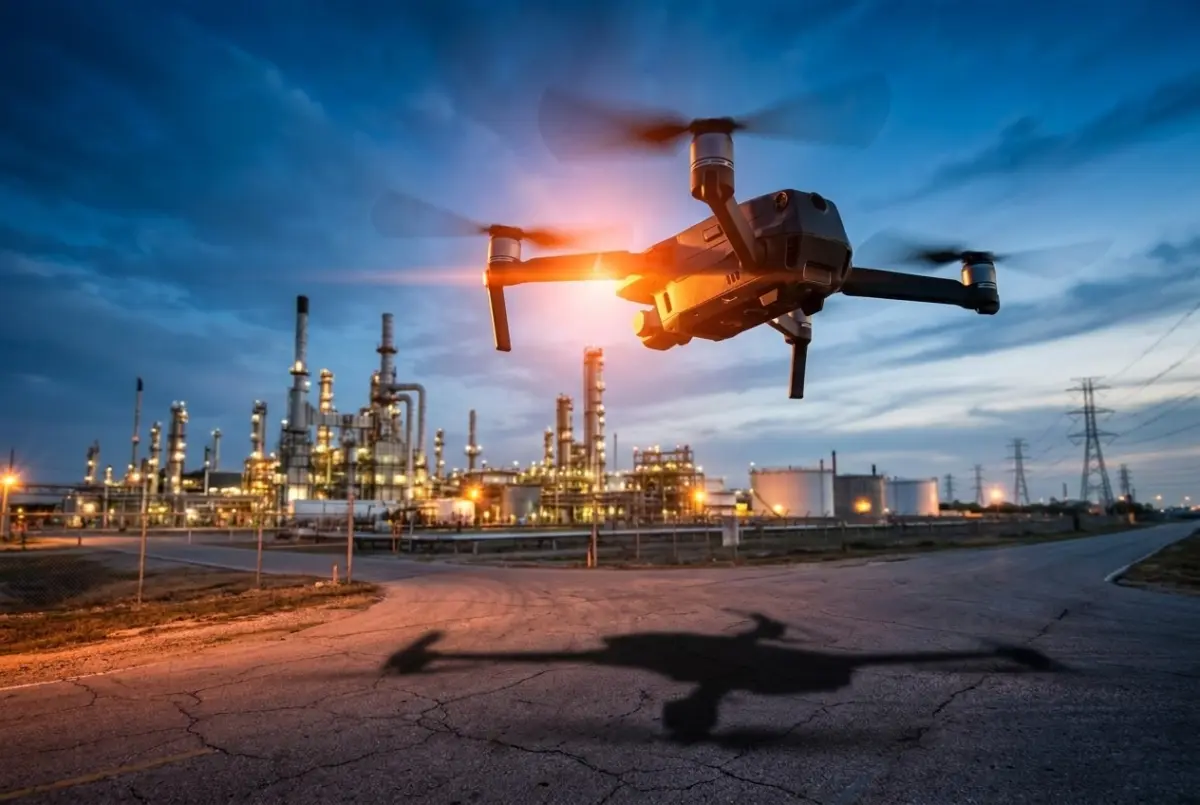
The alliance directly connects Britain’s Defence Rapid AI Delivery Taskforce with the U.S. Department of War’s Chief Digital and Artificial Intelligence Office (CDAO). Designed to accelerate the deployment of interoperable, trusted AI capabilities, the agreement focuses heavily on safeguarding vulnerable infrastructure—ranging from undersea communication cables and international sea lanes to national airspace and interconnected energy grids.
For Prime Minister Burnham, who assumed office with a strong mandate to balance technological innovation with national security, the UN address marked his first major multilateral summit and his initial face-to-face meeting with U.S. President Donald Trump. As the geopolitical landscape shifts to accommodate powerful autonomous systems and state-sponsored cyber warfare, this trans-Atlantic pact is being positioned not merely as a commercial collaboration, but as a fundamental cornerstone of 21st-century national security.
Main Facts
The core of the U.K.-U.S. AI defense agreement centers on joint operational readiness, shared intelligence, and defensive technology integration.
- Institutional Linkages: The partnership bridges the U.K.’s Defence Rapid AI Delivery Taskforce and the U.S. Department of War Chief Digital and Artificial Intelligence Office (CDAO).
- Strategic Objectives: The initiative aims to fast-track the delivery of interoperable, trusted AI capabilities to enhance deterrence, protect critical national infrastructure, and secure supply chains.
- Operational Scope: Protected assets explicitly include undersea communication cables, vital maritime sea lanes, contested airspace, and national energy grids.
- Foundational Framework: The defense agreement builds upon the broader Technology Prosperity Memorandum of Understanding (MoU) signed by both governments in September 2025 at Chequers, the British prime minister’s country residence.
- Global Context: The announcement arrives as peer competitors, notably China and Russia, heavily invest in AI-driven military modernization and autonomous systems, challenging Western technological supremacy.
Chronology of the Alliance
To fully understand the weight of this new defense pact, it is necessary to trace the historical and recent diplomatic milestones that paved the way for its creation.
1. The Wartime Blueprint (1939–1945)
The roots of the current collaboration stretch back to World War II, when British and American scientists worked in unprecedented harmony. Joint efforts led to the rapid development of radar, advanced code-breaking machines at Bletchley Park, and early computing architectures. This "special relationship" in science laid the bedrock for post-war intelligence sharing, including the UKUSA Agreement (Five Eyes), proving that joint technological development could alter the course of global conflicts.
2. The Post-Cold War Tech Divergence (1990s–2020)
Following the collapse of the Soviet Union, transatlantic technology sharing largely pivoted toward commercial markets, globalization, and civilian internet infrastructure. However, as cyber warfare matured into a state-sponsored domain throughout the 2010s, both nations realized that uncoordinated procurement and divergent regulatory frameworks were creating vulnerabilities in defense systems.
3. The Institutionalization of AI Safety (2023–2024)
Recognizing the disruptive potential of generative and autonomous AI, the U.K. hosted the world’s inaugural global AI safety summit in late 2023, subsequently establishing the world’s first AI Security Institute (AISI). Tasked with evaluating frontier models for safety risks and potential misuse, the institute sought to balance innovation with public safety. Concurrently, the United States established its own AI Safety Institute within the National Institute of Standards and Technology (NIST).
4. The Chequers Agreement (September 2025)
The trajectory shifted sharply in September 2025 when U.S. and U.K. leadership signed the comprehensive Technology Prosperity Memorandum of Understanding at Chequers. This framework laid out explicit pathways for joint research in biotechnology, civil nuclear independence, quantum computing, and resilient telecommunications, setting the stage for the formal defense integration announced at the UN.
5. The UN General Assembly Announcement (September 2026)
Prime Minister Burnham used his maiden address at the United Nations General Assembly in New York to formalize the AI defense pact. Occurring alongside his first bilateral meeting with U.S. President Donald Trump, the announcement signaled a synchronized U.K.-U.S. front against emerging technological threats from hostile nation-states.
Supporting Data and Technological Scope
The defense partnership is not an isolated initiative; it is anchored within a web of bilateral agreements targeting critical sectors of technological sovereignty and national resilience. According to the framework outlined in the Technology Prosperity MoU, cooperation spans four vital pillars:
1. Accelerated AI Innovation and Biotechnology
Joint flagship research programs are being established between U.S. and U.K. science agencies. These programs leverage high-performance computing to explore complex biological data, aiming to secure breakthroughs in AI-driven biotechnology, precision medicine, and fusion energy development. By pooling computational resources, both nations aim to outpace competitors in foundational scientific research.
2. Civil Nuclear Energy Independence
In a bid to decouple critical energy grids from hostile leverage, the two countries have streamlined regulatory licensing processes. The joint strategy mandates complete independence from Russian nuclear fuel supplies by the end of 2028, backed by shared AI modeling to optimize reactor safety and fuel enrichment cycles.
3. Quantum Technology Advantage
Recognizing that quantum computing will eventually render current cryptographic standards obsolete, the partnership has established a transatlantic benchmarking taskforce and industry exchange program. The explicit goal is to achieve "true quantum advantage"—securing unhackable communication channels and ultra-precise timing resilience before adversarial states can exploit quantum decryption.
4. Critical Infrastructure Defense
The immediate operational focus remains on defensive hardening. The alliance utilizes machine learning models to monitor anomalies in undersea cable networks, predict grid failures under cyber assault, and maintain secure military telecommunications across contested operational theaters.
| Strategic Pillar | Core Objective | Target Timeline / Status |
|---|---|---|
| AI Defense Integration | Interoperable AI for infrastructure & deterrence | Active (Announced Sept 2026) |
| Civil Nuclear Supply | Complete phase-out of Russian nuclear fuel | By End of 2028 |
| Quantum Technology | Transatlantic benchmarking & quantum advantage | Ongoing (Taskforce active) |
| Global Governance | Unified safety standards via G20 presidency | Manchester Summit, 2027 |
Official Responses and Geopolitical Reactions
The announcement has elicited swift reactions from government officials, defense analysts, and industry leaders across the globe.
U.K. Government Perspective
Prime Minister Andy Burnham framed the partnership as a historical necessity to safeguard democratic societies against modern threats.
"Our nations forged the digital and physical architectures of the modern world through shared sacrifice and innovation," Burnham stated during his UN address. "Today, as adversarial states weaponize artificial intelligence to probe our energy grids, sever our undersea lines, and disrupt our airspace, we must once again pool our capabilities. This is not about escalation; it is about absolute deterrence through trusted, unbreakable technological cooperation."
U.S. Defense Establishment
U.S. defense officials underscored the strategic necessity of seamless data integration. Representatives from the Department of War’s CDAO emphasized that interoperability between American and British systems will reduce bureaucratic friction, allowing military commanders and automated defense networks to share threat telemetry in real-time.
Industry and Regulatory Reactions
While defense hawks have praised the agreement, technology policy watchdogs have raised complex questions regarding implementation. Recent controversies—such as prominent AI developer Anthropic withholding its latest frontier model from the U.K. AI Security Institute for proprietary and safety reasons—have highlighted the tension between state security demands and corporate autonomy.
Critics argue that Britain’s traditionally "light-touch" cooperative regulatory approach may struggle to compel private AI labs to fully integrate with military defense frameworks if commercial incentives point elsewhere. Furthermore, civil liberties organizations have expressed concern over the lack of public oversight regarding how these joint AI defense models will process domestic communications data.
Implications for Global Security and the Future
The launch of the U.K.-U.S. AI defense partnership carries profound implications for international relations, global technology governance, and the future of warfare.
1. The Realignment of Global AI Spheres
With China holding the world’s second-largest AI market and aggressively integrating machine learning into military command structures (often termed "intelligentized warfare"), the West is actively consolidating its technological base. The U.K. (ranked third globally in AI market size) and the U.S. (ranked first) represent a formidable bloc capable of setting de facto global standards. However, this deepening transatlantic alignment risks cementing a bifurcated global technology ecosystem, separating Western-aligned standards from those of China, Russia, and their economic partners.
2. The Race Against Autonomous Escalation
As military systems increasingly rely on automated decision-making to counter hypersonic threats and complex cyber attacks, the speed of conflict threatens to outstrip human response times. The U.K.-U.S. focus on "trusted, interoperable capabilities" is an attempt to maintain human-in-the-loop oversight while leveraging machine speed for defense. Yet, military analysts warn that the presence of autonomous systems on both sides of a potential conflict increases the risk of flash-crashes—unintended escalations triggered by algorithmic miscalculations.
3. Looking Toward the 2027 Manchester G20
Prime Minister Burnham has signaled that Britain will use its upcoming G20 presidency in 2027—to be hosted in Manchester, the cradle of the industrial revolution—to push for unified global principles. The objective is to establish international standards ensuring transparency, equitable technology access, and shared safety frameworks before frontier AI systems outpace regulatory institutions entirely.
Conclusion
The U.K.-U.S. AI defense partnership marks the most significant technology-sharing agreement between the two nations since the height of the Cold War. Whether this alliance can successfully deter peer competitors will depend entirely on disciplined execution, sustained funding, and the ability of democratic governments to keep pace with adversaries operating under fewer ethical and regulatory constraints. For now, London and Washington have cast their die, recognizing that in the 21st century, artificial intelligence is no longer merely a commercial market to be won, but the ultimate strategic frontier for national survival.