By the Editorial Desk Published in association with religious-liberty analysis and interfaith commentary.
Main Facts
In an era defined by deeply polarized cultural landscapes, the intersection of aggressive religious proselytization and secular or alternative community spaces has ignited intense legal, ethical, and philosophical debates. At the core of this ongoing friction is a fundamental question: Where does protected religious expression end, and interference with another community’s sacred or cultural boundaries begin?
This question has been brought into sharp focus by two high-profile controversies occurring less than a year apart. The first involved a series of disruptive evangelical activities during the October Halloween season in Salem, Massachusetts, spearheaded by individuals associated with Philip Renner Ministries. The second took place on the desert playa of Black Rock City, Nevada, where a Christian-themed camp, Shift the Atmosphere, was summarily evicted from the annual Burning Man festival.
In both instances, the evangelical actors involved claimed religious persecution, framing their evictions or public pushback as attacks on their right to share the Gospel. Conversely, local event organizers, business owners, and alternative spiritual communities—including modern Pagans, Witches, and secular participants—argued that the core issue was never freedom of speech or belief. Instead, they contended that these groups systematically violated rules of privacy, consent, and property rights by imposing their own religious rituals onto unconsenting individuals and spaces.
These events underscore a vital nuance in modern pluralistic societies: religious liberty is a two-way street. While freedom of belief and expression protects individuals from government censorship and societal marginalization, it does not grant religious actors carte blanche to bypass neutral rules of conduct, disregard private property, or violate the personal and spiritual boundaries of others.
Chronology of Events
To understand the broader implications of these overlapping controversies, it is necessary to examine the timeline of events that linked a historic New England coastal city with an ephemeral desert metropolis.
October 2025: Salem, Massachusetts
During the peak of Salem’s bustling October tourism season—a period when the city draws hundreds of thousands of visitors, many of whom identify as Pagan, Wiccan, or occult practitioners—Philip Renner Ministries deployed members into the local community.
While public street preaching and theological debate are common and legally protected features of Salem’s public squares during Halloween, members of this ministry pushed past conventional boundaries. According to reports compiled by The Wild Hunt and local vendors, individuals entered private vendor areas, disrupted ongoing psychic readings, and applied anointing oil directly onto tables, personal photographs, and community artifacts, including an active Ancestor altar. The ministry later published content online celebrating these actions, noting specifically that members remained behind after vendors and practitioners departed to anoint their tents.
November 4, 2025: The Spiral Council Response
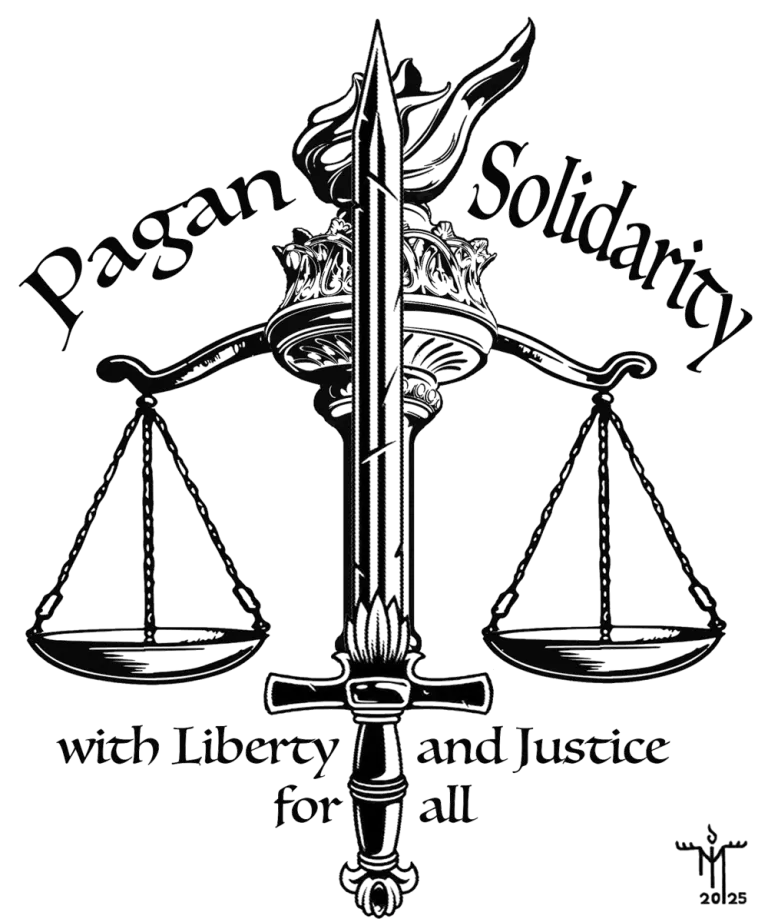
In direct reaction to these intrusions, the Spiral Council of the Pagan Solidarity Alliance (PSA) issued a formal public statement. The organization condemned what it formally categorized as religious harassment, intimidation, and the desecration of sacred spaces. The statement emphasized that while Christian evangelists have every right to voice their theological disagreements on public sidewalks, entering private spaces to perform uninvited ritual acts crosses the boundary from protected speech into intrusive misconduct.
August 2026: Black Rock City, Nevada
Less than a year after the incidents in Salem, a parallel controversy unfolded at the Burning Man festival. The Christian-themed camp Shift the Atmosphere established a presence on the playa, aiming to engage festival participants.
According to official accounts released by Burning Man organizers, camp members repeatedly violated the foundational communal rules of the event—specifically regarding privacy, participant consent, and unpermitted commercial or public-distribution filming. Organizers stated that the camp was given multiple warnings and opportunities to correct its behavior before facing disciplinary action.
When organizers ultimately dismantled and evicted the camp, its members immediately went public, alleging religious discrimination and maintaining that they had secured proper consent and were targeted purely because of their Christian identity.
Supporting Data and Context
While the organizations and exact operational details of the Salem intrusions and the Burning Man eviction differ, the structural dynamics of the conflicts share striking similarities. Both situations rely on a legal and cultural framework where religious conviction is utilized to justify actions that violate localized community standards.
The Mechanics of "Spiritual Warfare" and Land Consecration
A recurring theme in both controversies is the theological framework held by certain modern evangelical movements regarding spiritual geography. Official biographical and promotional materials for Philip Renner Ministries note a stated mandate from leadership to "brand the land" by conducting worship and spiritual reclamation in public capitals, city halls, and cultural hubs across the United States.
From a theological perspective, this practice assumes that localized worship alters the spiritual character of a physical space. However, when applied without the consent of property owners, local businesses, or community custodians, this theology manifests as a physical and territorial intrusion.
It is worth noting that many indigenous and esoteric traditions—including various Pagan, Heathen, and Druidic paths—possess their own rituals for consecrating, cleansing, or blessing spaces. However, established ethical frameworks within these traditions typically emphasize stewardship of one’s own sacred sites, respect for communal property lines, and non-interference with the ritual spaces of ideological opponents.
The Role of Neutral Rules of Conduct
In both the Salem and Burning Man incidents, the governing bodies involved—festival organizers and municipal business operators—applied neutral, generally applicable rules.
Burning Man’s Code of Conduct: The festival enforces strict guidelines regarding media production, recording participants without explicit permission, and respecting personal boundaries (often summarized under principles like "Radical Inclusion" and "Consent"). These rules apply equally to all camps, regardless of whether their theme is techno-music, hedonism, art, or religious worship.
Salem’s Business and Public Space Regulations: While public sidewalks remain open forums for speech, private vendor booths, psychic fairs, and ritual tents operate under specific commercial and community agreements regarding harassment and trespassing.
When religious actors violate these neutral parameters, the enforcement of those rules cannot logically be categorized as religious persecution. To rule otherwise would grant religious groups a legal immunity that secular entities and non-evangelical groups do not enjoy.
Official Responses and Perspectives
The friction points generated by these incidents have prompted deep introspection and public commentary from religious leaders, civil liberties advocates, and community organizers.
The Pagan Solidarity Alliance and Interfaith Advocates
Rev. Dr. Davron Michaels, Paramount Priest of the New Aeon Church International and a prominent voice within the Pagan Solidarity Alliance, has argued consistently for a principled, reciprocal approach to religious liberty.
In public commentaries addressing the Salem and Burning Man events, Michaels emphasized that religious minorities—who historically understand what it means to have their practices stigmatized and misunderstood—must be the staunchest defenders of religious freedom. However, he draws a sharp line between defending a group’s right to exist and condoning invasive behavior:
"Religious liberty cannot function as a one-way privilege. It depends upon reciprocity… What neither of us possesses is an unlimited right to impose our religious practice physically upon the other’s person, property, ritual objects, private spaces, or ceremonies."
Interfaith leaders have increasingly echoed this sentiment, noting that true interfaith dialogue requires acknowledging boundaries rather than treating ideological adversaries as territories awaiting conquest.
Christian Apologists and Defending Camps
Conversely, representatives for the evangelical groups involved have maintained their innocence, framing the interventions as acts of spiritual obedience. Defenders of the Shift the Atmosphere camp, including public spokespersons like John Hinerman, argue that the constraints imposed by festival organizers effectively silenced Christian expression under the guise of enforcing administrative rules.
From this viewpoint, sharing the Gospel inherently challenges secular and alternative lifestyles, meaning that neutral rules can sometimes be weaponized—intentionally or unintentionally—to stifle orthodox Christian witness. Mainstream evangelical commentators have similarly raised concerns that modern festival environments, which often celebrate counter-cultural and occult aesthetics, display an implicit bias against traditional monotheistic evangelism.
Implications for Pluralism and Religious Liberty
The convergence of the Salem and Black Rock City controversies serves as a profound case study for the health of pluralistic societies. As communities become increasingly diverse—bringing together secular humanists, evangelical Christians, neo-Pagans, polytheists, and practitioners of indigenous traditions—the rules governing coexistence must evolve without abandoning foundational liberties.
1. Consent as a Core Tenet of Pluralism
Consent is frequently discussed in interpersonal, social, and legal contexts regarding physical autonomy. However, the events in Salem and Burning Man demonstrate that consent must also be understood as a foundational requirement of religious pluralism. A person’s right to practice their faith ends where another person’s bodily autonomy, private property, and spiritual boundaries begin. Consecrating an altar or anointing a tent without permission is not merely an expression of faith; it is an infringement upon another’s sovereignty.
2. Reciprocity and the Rule of Law
For religious freedom to survive in a diverse society, it must be applied universally. A helpful test for any religious liberty claim is the principle of reversibility: If a minority religious group performed the exact same actions inside a dominant group’s sacred space, would those actions be defended as protected religious exercise?
If Christian groups would justifiably object to Pagan practitioners entering a Sunday morning church service to ritually cleanse the pews with alternative symbols, then those same standards must apply when evangelical ministries target Pagan markets or alternative festival camps. Religious identity must never be permitted to function as a legal shield against neutral rules of conduct.
3. Moving Past Us-Versus-Them Narratives
Finally, these controversies highlight the danger of broad, sweeping generalizations. Framing these events as an existential war between "Christianity and Paganism" is both inaccurate and counterproductive.
Millions of Christians coexist peacefully with Pagans, secularists, and practitioners of other faiths every day, engaging in respectful dialogue without resorting to intrusion or harassment. Likewise, the vast majority of Pagan organizations do not view Christianity as an inherent enemy, but rather object specifically to aggressive, boundary-violating tactics.
Ultimately, the challenge of a pluralistic society is not learning how to live alongside people who mirror our exact beliefs. The true test of a free society is learning how to navigate deep ideological disagreements while respecting the fundamental reality that one person’s sacred mission does not give them the right to erase another person’s boundaries.