









Main Facts: The Titans of the Mineral World
For mineralogists, lapidary artists, holistic practitioners, and casual rock enthusiasts alike, attending one of the world’s premier gem and mineral expositions is the ultimate bucket-list experience. Among the global circuit, two North American giants stand head and shoulders above the rest: the Tucson Gem, Mineral & Fossil Showcase in Arizona and the Denver Gem and Mineral Show in Colorado.
These massive conventions serve as the beating heart of the global crystal trade, drawing tens of thousands of international buyers, curators, wholesalers, and retail lovers of the Earth’s natural artistry. Recently, Team HM member Lisa D’Arrigo provided a comprehensive breakdown comparing these two legendary events. Through expert observation, side-by-side analysis, and a showcase of breathtaking specimens—ranging from towering fire-and-quartz formations to massive smokey quartz Earth Keepers—the crystal community has been offered an inside look at what it truly takes to navigate these monumental marketplaces.
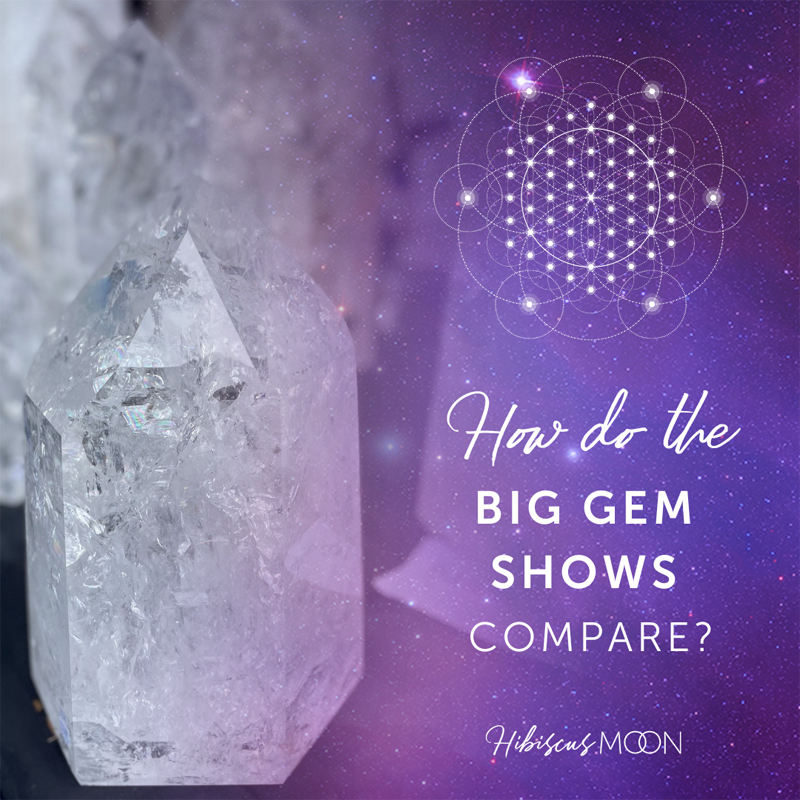
The core distinction between the two events lies in their scale, climate, timing, and structural layout. While Tucson transforms an entire desert city into a sprawling, multi-week decentralized emporium of tents, hotels, and convention centers, Denver offers a more consolidated, high-altitude marketplace set against the backdrop of the Rockies. Both, however, share one immutable common denominator: an overwhelming celebration of crystals, crystals, and more crystals.
Chronology: The Evolution of the Great Gem Expos
To understand the modern phenomenon of the Tucson and Denver shows, one must look at how these gatherings evolved from modest club meetups into multi-million-dollar global trade events.
The Rise of the Tucson Showcase
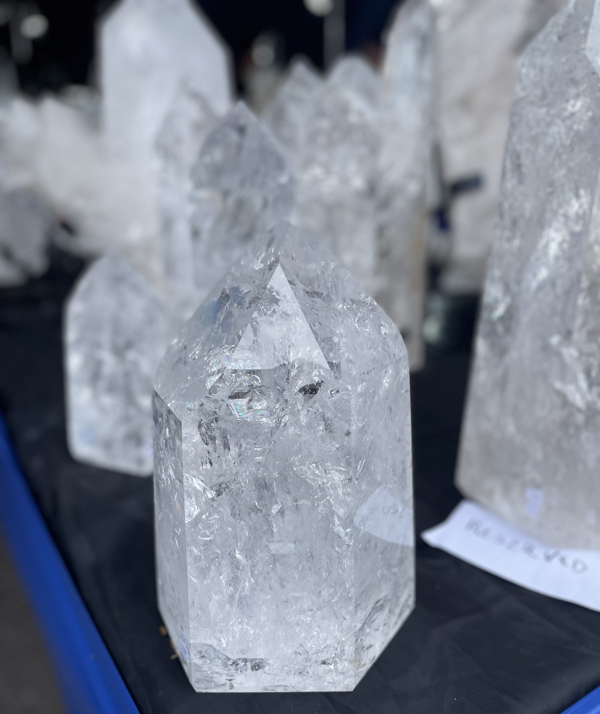
The Tucson Gem and Mineral Show traces its humble beginnings back to 1954, organized by the Tucson Gem and Mineral Society. Initially a local gathering of hobbyists and academics held in a school cafeteria, the event steadily gained international renown. By the late 20th century, it outgrew traditional convention spaces.
Today, the "Tucson Gem Show" is actually a collection of over 40 distinct shows operating simultaneously across the city for roughly two to three weeks every winter (typically spanning late January to mid-February). Wholesalers from Madagascar, Brazil, India, and China converge on the city, turning motels, parking lots, and giant convention halls into a labyrinth of geological wonders. For veterans like Team HM, attending Tucson has become an annual pilgrimage, complete with traditional milestones like the famous "Tucson Gem Show Pajama Parties" from years past.
The Maturation of the Denver Show
While Tucson dominates the winter season, the Denver Gem and Mineral Show anchors the fall calendar. Established in the late 1960s, the Denver event also began as a regional club-sponsored exhibition. Over the decades, it expanded in tandem with the booming wellness and metaphysical movements, as well as the steady growth of the commercial lapidary arts.
Today, the Denver show—primarily anchored at venues like the National Western Complex—brings together top-tier mineral dealers, fossil hunters, and bead vendors for a high-energy autumn showcase. It provides a vital mid-year market checkpoint for holiday inventory and seasonal collection curation.
Supporting Data: By the Numbers and Geological Marvels
When evaluating the scale of these events, the metrics are staggering.
- Footprint: The Tucson showcase spans over 40 different sites across the city, featuring thousands of individual vendors. The Denver show, while more centralized, still hosts hundreds of elite national and international dealers occupying vast indoor and outdoor exhibition spaces.
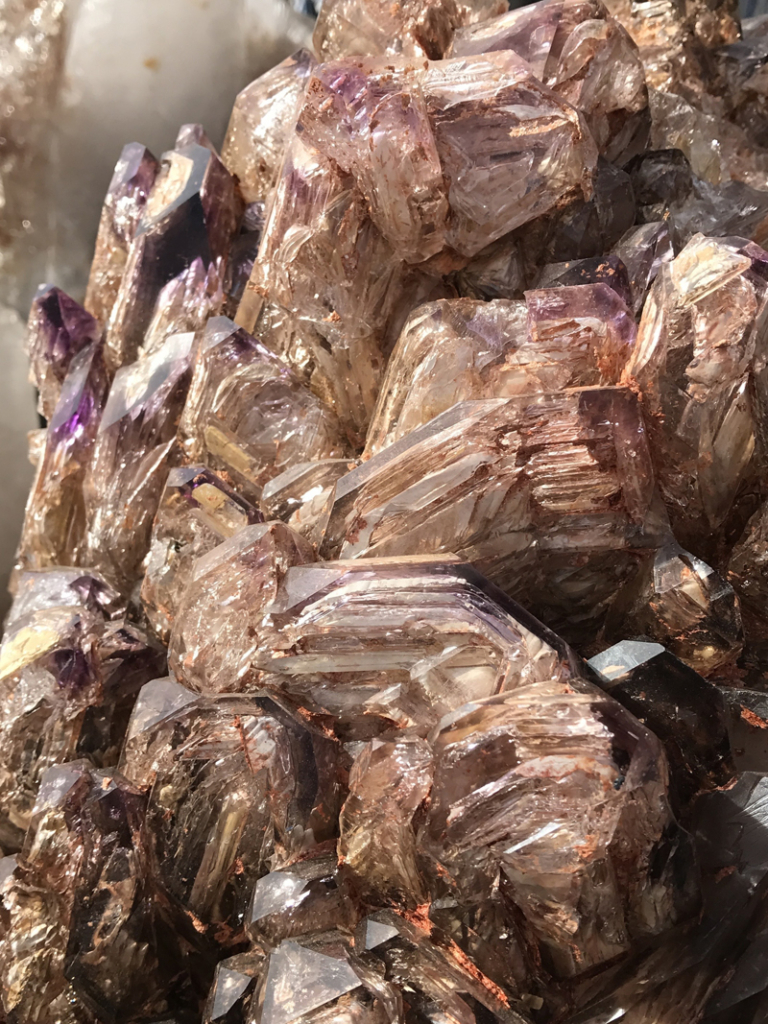
- Geological Diversity: Attendees have access to specimens representing virtually every geological epoch and mineral class. From massive, human-sized Lemurian quartz points to intricate elestial smokey amethysts and meticulously carved lepidolite Krishna statues, the sheer variety of material is unmatched anywhere else on Earth.
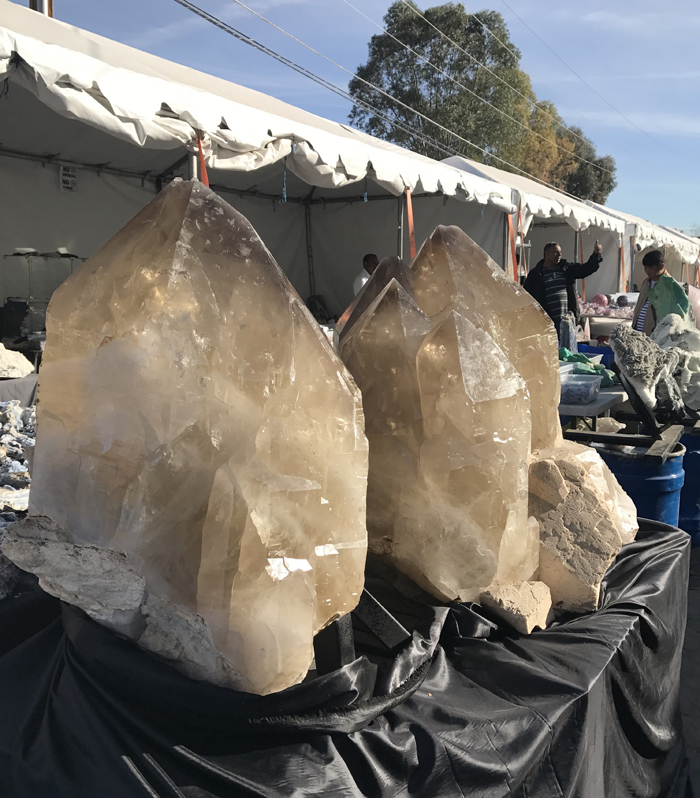
- The Quartz Dominance: Clear quartz, smoky quartz, and milky quartz consistently dominate the floor space. According to mineralogical data and holistic guides, clear quartz remains the most abundant and adaptable mineral in both the commercial market and energetic healing practices. Massive "Earth Keeper" quartz crystals—weighing hundreds of pounds—generate substantial energetic fields (often discussed in metaphysical circles in terms of their expansive energy toruses).
Official Perspectives: Expert Insights from Team HM
Navigating events of this magnitude requires seasoned strategy. In the official video breakdown produced by Team HM, Crystal Coach Lisa D’Arrigo outlines critical considerations for anyone planning to cross these monumental shows off their bucket list.

Key Considerations Before You Go
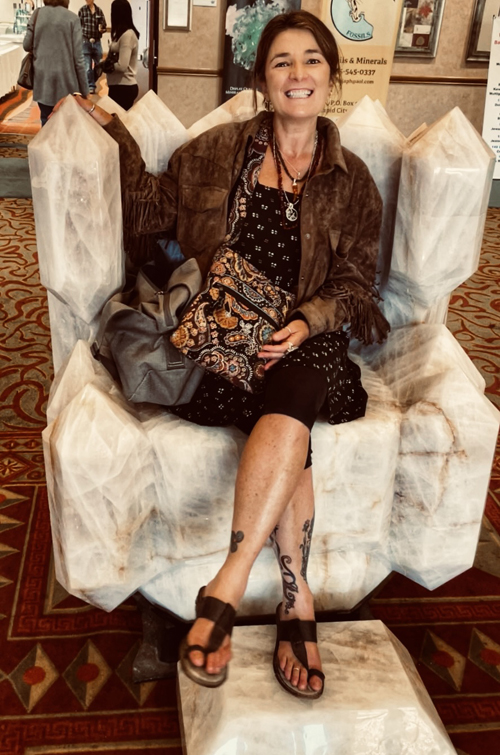
- Define Your Purpose: Are you attending as a wholesale buyer looking for tax ID verification and bulk gemstone beads, or are you a retail enthusiast seeking personal meditation tools, statement decor pieces, or a "Crystal Throne"?
- Physical Endurance: Both shows require extensive walking across concrete floors, dusty tents, and convention halls. Proper footwear, hydration, and pacing are non-negotiable.
- Logistics and Shipping: Buying a few small tumbled stones is easy, but falling in love with a multi-hundred-pound Milky Quartz throne—as Team HM members have experienced firsthand in Tucson—requires careful planning regarding freight, shipping, and customs if buying internationally.
- Budgetary Boundaries: The temptation is real. When surrounded by skeletal elestials, rare crystal carvings, and endless aisles of gemstone beads, it is entirely too easy to exceed spending limits without a strict game plan.
Implications: Economic, Cultural, and Energetic Impact
The cultural and economic ripple effects of the Tucson and Denver gem shows extend far beyond simple retail transactions.
Economic Engines for Global Artisans
For international miners, family-owned quarries, and master carvers from developing nations, these shows represent the primary annual revenue stream. The ability to showcase items like the intricate Lepidolite Krishna carvings found in Denver or giant Lemurian points in Tucson connects remote artisanal labor directly with Western markets. Furthermore, the bead and jewelry-making sectors rely heavily on these expositions to secure raw materials months in advance of consumer demand.
The Shift in Holistic and Metaphysical Tourism
In recent years, the demographic of attendees has shifted dramatically. Once dominated strictly by rough-rock hounds and museum curators, the modern aisles are increasingly filled with energy workers, crystal healers, yoga studio owners, and spiritual seekers. Even for those who purchase very little, the immersive experience of soaking up the collective frequency of millions of pounds of high-vibration minerals offers a profound psychological and spiritual reset.
Whether one chooses the sun-drenched, sprawling desert adventure of Tucson in February or the crisp, high-altitude mountain energy of Denver in the fall, the pilgrimage to the big gem shows remains an irreplaceable milestone for anyone captivated by the deep, silent magic of the Earth.