








By the Wellness & Holistic Living Desk
Published as Part 2 of the Exclusive Chakra Series
1. Main Facts: Understanding the Core of Chakra Diagnostics
In the realm of holistic health and vibrational energy healing, understanding the baseline mechanics of your body’s energy hubs is only the first step. Following a foundational exploration of the science behind crystal chakra healing, practitioners and wellness seekers inevitably face a pivotal question: How do I accurately identify which chakra requires balancing?
An imbalanced chakra—whether operating in a state of deficiency (underactive) or excess (overactive)—can manifest as a disruption in an individual’s physical vitality, emotional stability, and spiritual alignment. According to leading holistic educators and crystal experts, diagnosing these energetic blockages does not require supernatural abilities. Instead, it relies on structured methodologies combining self-assessment, physical symptom analysis, traditional divination tools, and intuitive development.
The primary objective of chakra diagnostics is to pinpoint the exact energetic friction points within the body’s subtle anatomy system, allowing individuals to apply targeted restorative practices—such as specific crystal pairings—to restore energetic equilibrium.
2. Chronology: The Evolution of Diagnostic Approaches in Modern Wellness
The practice of identifying and correcting chakra imbalances has transitioned significantly over the decades, evolving from esoteric mystery traditions into structured, accessible modern modalities:
- Ancient Roots: Historically, identification of blocked life-force energy (prana, chi, or qi) relied exclusively on the intuitive insights of traditional healers, Ayurvedic practitioners, and shamans who spent decades mastering subtle body anatomy.
- Late 20th Century Integration: As Eastern philosophies gained mainstream traction in the West during the 1970s and 80s, literature began systematically linking specific physical ailments and psychological patterns to individual energy centers (such as rooting physical fatigue to the Root Chakra or communication breakdowns to the Throat Chakra).
- The Digital and Informational Age: The turn of the 21st century democratized access to holistic knowledge. Practitioners introduced standardized self-evaluation tools, online diagnostic questionnaires, and accessible metaphysical instruments like pendulums to the general public.
- Contemporary Structured Learning: Today, structured pedagogical frameworks—such as Certified Crystal Practitioner courses—bridge the gap between ancient intuition and modern analytical self-awareness, teaching everyday individuals how to systematically read and measure subtle energetic shifts.
3. Supporting Data & Diagnostic Methodologies
Identifying an imbalanced chakra is rarely a guessing game. Leading holistic practitioners utilize a four-pillar framework to achieve clarity.
Method 1: Validated Chakra Self-Assessments
Online diagnostic questionnaires and structured self-tests serve as an accessible entry point for beginners. When sourced from reputable holistic educators, these tools ask targeted behavioral, emotional, and physical questions to map out a respondent’s energetic profile.
- The Process: Users answer a series of questions regarding their current life stressors, physical habits, and emotional responses.
- The Application: Upon identifying a deficient or overactive score in a specific category (e.g., the Solar Plexus Chakra), practitioners recommend pairing the findings with corresponding color-frequency crystals to re-establish energetic flow.
Method 2: Analyzing Physical and Emotional Syndromes
The human body often acts as a physical manifestation of subtle energy blocks. However, experts emphasize a crucial rule of thumb: A single symptom does not indicate a blocked chakra. True energetic imbalances present as a syndrome—a cluster of recurring physical and emotional challenges.
- Example Indicators: Chronic lower back pain paired with financial anxiety and a pervasive sense of instability often points toward a Root Chakra imbalance. Similarly, recurring throat tightness, fear of public speaking, and creative stagnation frequently correlate with a compromised Throat Chakra.
- Recommended Literature: For those seeking deep reference material, foundational texts such as Vibrational Healing Through the Chakras by Joy Gardner and The Crystal Healer by Philip Permutt offer comprehensive maps connecting specific physical ailments to energetic blockages.
Method 3: Energy Sensing and Pendulum Dowsing
Energy sensing is often perceived as a rare, innate gift, but holistic educators maintain that it is a trainable skill accessible to anyone willing to commit to practice.
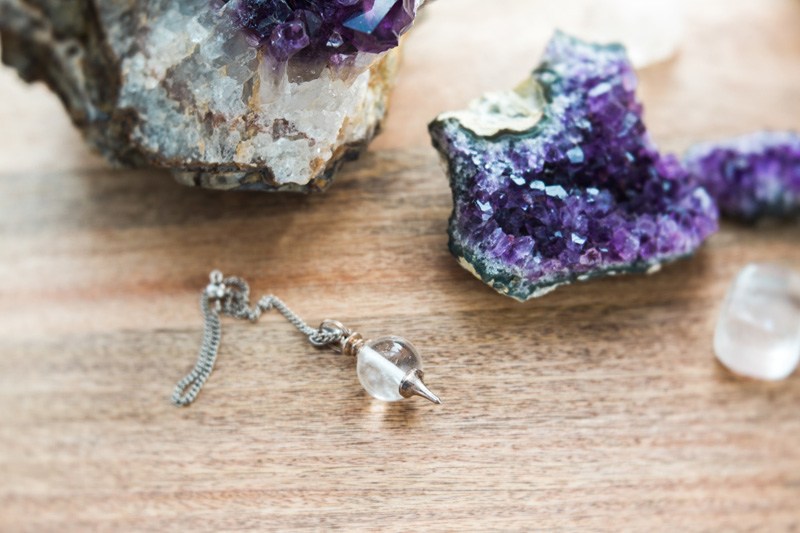
- The Pendulum Technique: One of the most reliable entry-level physical tools for energy sensing is the pendulum. By suspending a crystal or metal weight over each chakra point, practitioners observe the pendulum’s rotational path or linear swing to evaluate the state of the underlying energy field. A erratic, weak, or stagnant motion typically signals an imbalance.
- Beyond Beginners: Advanced energy sensing involves tactile feedback—such as feeling warmth, coolness, tingling, or density shifts in the palms when scanning the aura. While these advanced techniques require structured training and professional oversight, they are well within the reach of dedicated students.
Method 4: Tapping into Intuition and Clair-Senses
Intuition functions much like skeletal muscle: when ignored, it atrophies; when intentionally exercised, it grows stronger. Tapping into intuitive diagnostics involves tuning into internal messaging systems, often categorized through various "clair" senses:
- Clairvoyance (Clear Seeing): Receiving internal visual symbols, colors, or images regarding a chakra’s state.
- Clairaudience (Clear Hearing): Perceiving inner auditory messages or promptings.
- Clairsentience (Clear Feeling): Experiencing sudden physical sensations or emotional waves that reflect another person’s—or one’s own—energetic blockages.
- Claircognizance (Clear Knowing): Having an absolute, unshakeable inner certainty regarding which energy center requires immediate attention.
4. Official Expert Perspectives and Insights
Holistic health leaders and certified master practitioners stress that chakra diagnosis should be approached with patience, self-compassion, and rigorous consistency rather than clinical panic.
According to renowned crystal expert and educator Hibiscus Moon:
"These chakra balancing and sensing techniques are not limited to ‘energetically gifted people.’ They’re available to anyone willing to make a commitment to learning, spending the time to practice, and listening to the signs."
Experts advocate for a Chakra Consensus Approach—particularly for individuals who experience contradictory results during initial self-testing. By cross-referencing findings using multiple methodologies (such as combining a self-assessment quiz with a pendulum reading and a physical symptom review), practitioners can arrive at a highly accurate diagnosis.
Furthermore, professional training institutions emphasize safety protocols during energy work. Grounding exercises, psychic protection, and ethical energetic boundaries are underscored as mandatory prerequisites for anyone moving beyond casual self-care into deep subtle-body manipulation.

5. Implications: Personal Growth and Future Horizons in Energy Work
The implications of mastering chakra diagnostics extend far beyond esoteric self-improvement; they touch upon modern preventative wellness, emotional resilience, and mind-body medicine.
Holistic Integration
As mainstream medicine increasingly acknowledges the psychosomatic roots of chronic illness—where unaddressed emotional stress precipitates physical pathology—modalities like chakra balancing provide a structured vocabulary for emotional self-regulation. By identifying an overactive or underactive chakra early, individuals can proactively alter lifestyle habits, engage in somatic therapy, or utilize vibrational crystal tools before minor energetic friction escalates into debilitating physical or psychological burnout.
The Long-Term Trajectory of Intuitive Literacy
As societal interest in mindfulness and holistic health accelerates, the validation of "intuition as a trainable skill" is shifting the educational landscape. Programs that teach methodical energy sensing and crystal therapy are moving from the fringe to the mainstream wellness sector.
Ultimately, learning how to identify which chakra needs balancing empowers individuals to become active participants in their own healing journeys. With time, practice, and consistent self-reflection, the process shifts from a mechanical checklist into an intuitive second nature—allowing wellness seekers to "just know" the state of their inner ecosystem without the need for external verification.
Stay tuned for Part 3 of the Chakra Series, where we will explore advanced protocols on how to actively utilize crystals to restore and harmonize your energy centers.