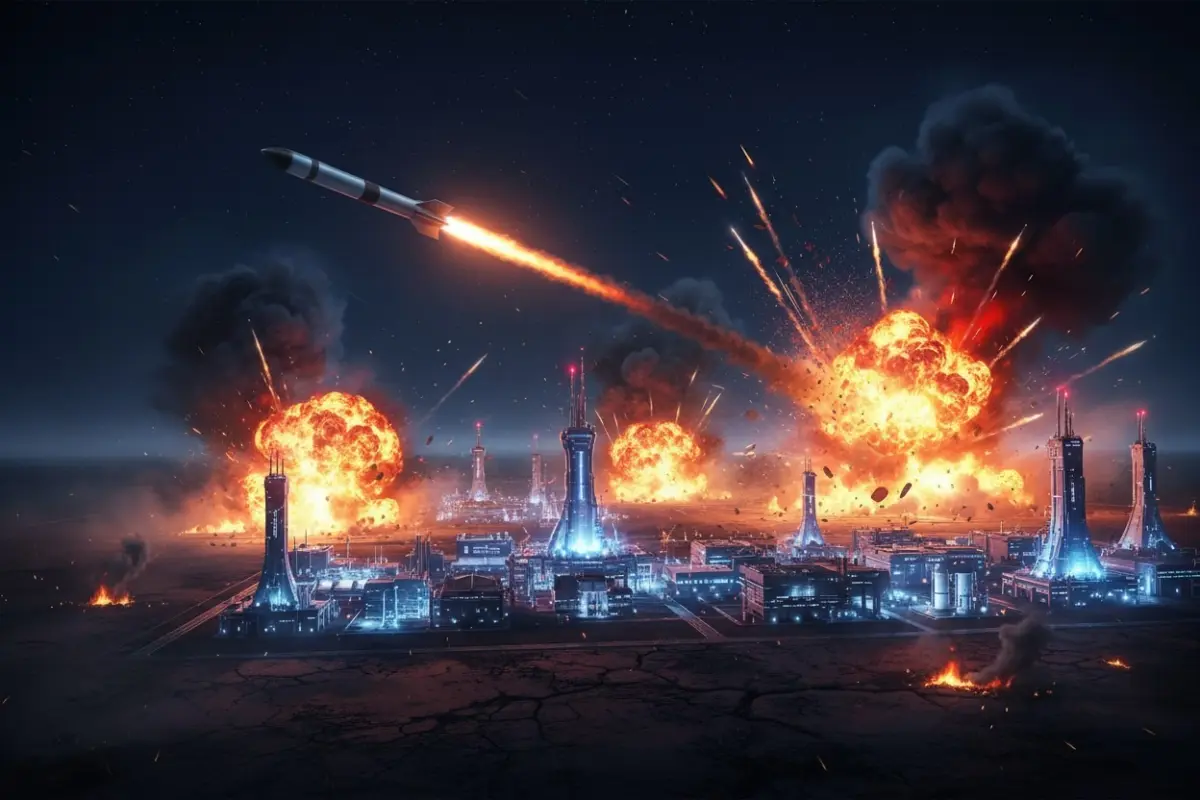










WASHINGTON — Nearly half a year into what was billed as a decisive campaign to neutralize regional threats, the United States finds itself facing a strategic reckoning in the Middle East. Operation Epic Fury, launched under the Trump administration amid sweeping rhetoric and warnings of an imminent nuclear tipping point, has unraveled into a complex quagmire.
With vital long-range precision munitions largely depleted, global energy routes disrupted, and military leadership reportedly scrambling for a viable exit strategy, the conflict has exposed deep vulnerabilities in American industrial capacity, intelligence assessments, and long-term strategic planning. As high-ranking military officials privately urge the White House to find an "off-ramp," policymakers are left confronting a sobering reality: a war initiated under false pretenses has yielded neither regional stability nor a decisive victory, leaving the United States structurally weaker on the global stage.
Main Facts
The current conflict in Iran, which escalated rapidly over the past five months, is rooted in a familiar policy trajectory of manufactured crises and intelligence miscalculations. Washington and Tel Aviv repeatedly advanced narratives concerning an imminent Iranian nuclear weapon, despite persistent assessments from international monitors and domestic intelligence agencies indicating that Tehran’s nuclear program had not crossed the threshold into weaponization.
Despite these findings, the administration leveraged the perceived threat to justify an expansive military campaign involving extensive drone strikes, cyber operations, and airstrikes. However, the operational reality on the ground quickly diverged from initial projections.
- Depletion of Critical Arsenals: In less than half a year of intense conflict, the United States has burned through a vast majority of its strategic long-range precision munitions. Replacing these advanced air-defense systems and cruise missiles requires an industrial pipeline spanning several years.
- Failure to Secure Core Objectives: Broad initial objectives—including the complete elimination of Iran’s nuclear infrastructure, the decimation of its missile inventory, and the crippling of its naval capabilities—remain unmet. Iranian asymmetric tactics, including advanced drone deployments, have routinely bypassed conventional U.S. air defenses.
- Geopolitical Realignment: While Washington remains bogged down, secondary powers such as Russia and China have deepened their economic and military ties with Tehran, supplying advanced hardware and expanding their influence across Eurasia and the Middle East.
Chronology of the Conflict
To understand how Washington arrived at this precarious juncture, it is necessary to examine the rapid escalation and operational breakdown that defined the opening months of the conflict.
Pre-Conflict Escalation and Manufactured Intelligence
For years leading up to the outbreak of hostilities, diplomatic channels steadily eroded. Citing intelligence reports regarding clandestine enrichment activities, the Trump administration began laying the groundwork for a pre-emptive posture. Warnings from Tehran that any direct military aggression would be met with total asymmetric and defensive mobilization were largely dismissed in Washington as rhetoric.
Operation Epic Fury and the Opening Salvos
In the early months of the year, the conflict formally erupted under the banner of Operation Epic Fury. Initial waves of U.S. and allied airstrikes targeted command-and-control nodes, radar installations, and suspected nuclear facilities across the Iranian plateau. The administration promised a swift campaign that would restore deterrence and establish definitive regional dominance.
The Munitions Crisis and Asymmetric Pushback
By the third month, the intensity of the conflict began to strain American supply chains. Unlike protracted counter-insurgency campaigns, high-intensity conflict against a technologically capable state actor consumed precision-guided munitions at an unprecedented rate. Reports from defense analysts and wire services indicated that U.S. stockpiles of long-range cruise missiles had dropped to dangerously low levels. Meanwhile, Iranian forces, utilizing decentralized command structures and resilient underground facilities, absorbed the initial blows and began counter-operations targeting regional infrastructure and maritime trade routes.
The Turn Toward Stalemate
By month five, the strategic initiative had stalled. With the Strait of Hormuz effectively contested and global energy markets spiraling due to severed shipping lanes, the military leadership recognized the unsustainability of the current trajectory. Private deliberations among top-ranking defense officials shifted from prosecuting the war to identifying diplomatic or tactical exits.
Supporting Data and Military Logistics
The fragility of the current U.S. posture is best understood through the lens of logistics and industrial capacity. Modern great-power competition relies heavily on high-tech munitions that cannot be manufactured on short notice.
According to recent defense assessments and reports from major news agencies, including Reuters, the U.S. military has expended virtually all of its readily available long-range precision-guided missiles during the opening phase of the campaign. These systems—such as Tomahawk land-attack missiles and specialized air-defense interceptors—represent the backbone of American power projection.
- Industrial Bottlenecks: The defense industrial base operates on peacetime or low-rate initial production schedules. Scaling up manufacturing lines for complex microprocessors, guidance systems, and rocket motors requires multi-year investments and specialized raw materials, leaving a critical window of vulnerability where U.S. strategic reserves are severely depleted.
- Asymmetric Cost Disparity: While the U.S. expends multimillion-dollar interceptors to neutralize incoming threats, adversaries like Iran have utilized low-cost, mass-produced loitering munitions and drones. This economic asymmetry heavily favors a protracted war of attrition for Tehran, while rapidly draining Western treasuries.
- Regional Disruption: The Strait of Hormuz, through which a significant portion of the world’s petroleum passes, has become a high-risk zone. The disruption of global energy routes has triggered inflationary shocks worldwide, complicating diplomatic efforts to maintain a unified international coalition against Iran.
Official Responses and Internal Divisions
The deterioration of the campaign has triggered intense internal debates within the national security establishment, contrasting sharply with public displays of administrative resolve.
The Military Leadership and the Search for an "Off-Ramp"
Privately, Chairman of the Joint Chiefs of Staff Gen. Dan Caine and other senior commanders have reportedly urged the White House to establish a clear "off-ramp." Military leadership is increasingly concerned that further escalation risks leaving the United States incapable of responding to contingencies in other vital theaters, such as the Indo-Pacific or Eastern Europe. The consensus among top brass has shifted toward recognizing that a military-only solution is no longer mathematically or logistically feasible.
Congressional Scrutiny and Partisan Realignments
On Capitol Hill, lawmakers from both sides of the aisle have begun questioning the legal and strategic justifications for the war. Critics point to striking parallels with the 2003 invasion of Iraq, arguing that once again, intelligence was selectively interpreted to justify a war of choice. However, partisan divides remain pronounced: while opposition members demand immediate de-escalation and congressional oversight hearings, some administration loyalists continue to advocate for maintaining pressure to avoid the appearance of defeat.
International Repercussions
Global reactions have underscored America’s diplomatic isolation in this venture. Traditional European allies have expressed deep alarm over the humanitarian and economic fallout, particularly regarding the instability in Lebanon, Syria, and Yemen, where regional proxies continue to leverage Western-supplied weaponry in localized conflicts. Meanwhile, Beijing and Moscow have utilized the crisis to position themselves as alternative diplomatic arbiters, further eroding American soft power across the Global South.
Strategic Implications and the Path Forward
The fallout from Operation Epic Fury extends far beyond the immediate battlefield, carrying profound implications for future U.S. foreign policy and global posture.
The Fallacy of Endless Conflict
The war has laid bare the dangers of failing to define clear political endpoints prior to engaging in military action. Without a coherent strategy for governance, diplomacy, or exit, tactical strikes devolved into a resource-draining cycle of retaliation. The experience reinforces a hard lesson of modern statecraft: military dominance is transient if divorced from sustainable economic and diplomatic frameworks.
Restoring Deterrence Through Realism
As policymakers grapple with the aftermath, the central question is whether Washington can execute a strategic withdrawal with dignity. Proponents of an exit strategy argue that pursuing an "off-ramp" is not an act of surrender, but a necessary exercise in strategic realism. Continuing to press forward merely to project an illusion of strength risks leaving the nation bankrupt—both morally and materially—and dangerously unprepared for future geopolitical challenges.
Ultimately, the failure in Iran serves as a watershed moment for American grand strategy. It demands a rigorous re-evaluation of intelligence oversight, defense industrial preparedness, and the limits of military intervention in an increasingly multipolar world. Whether Washington learns these lessons will determine its capacity to navigate the complex security environment of the 21st century.