









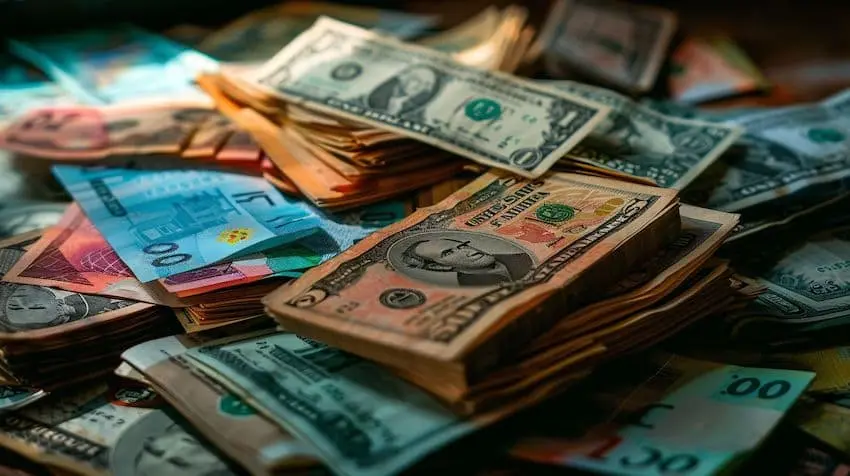
NEW YORK — It is a universally relatable nocturnal experience: you are sitting at a wooden table, on the floor of a quiet room, or behind the counter of a bustling storefront, meticulously stacking and counting neat piles of paper currency or heavy metal coins. When you wake up, the phantom rustle of bills or the metallic clink of coinage lingers, leaving you suspended between the lingering euphoria of sudden affluence and the anxious disorientation of waking reality.
For centuries, humanity has attempted to decode the esoteric messages hidden within the theater of sleep. While popular culture often reduces money dreams to simple premonitions of a forthcoming lottery win or an impending bankruptcy, contemporary psychological and archetypal frameworks suggest a far more nuanced reality. According to behavioral scientists, sleep researchers, and depth psychologists, the act of counting cash in a dream is rarely about physical currency. Instead, it serves as a profound psychological mirror, reflecting our deepest anxieties regarding self-worth, our fundamental desire for personal control, and our complex relationship with the concept of abundance.
The Main Facts: Decoding the Subconscious Ledger
At its core, dreaming about money acts as a barometer for internal resources rather than external bank statements. When individuals visualize vast sums of money in a dream state, the immediate emotional response—whether it is elation, dread, indifference, or obsessive precision—acts as the primary interpretive key.
Psychologists specializing in dream analysis note that currency is a universal symbol for energy, time, exchange, and personal power. When we count money while asleep, we are often subconsciously tallying our emotional reserves. Are we bankrupt on patience? Are we wealthy in creative ideas? Or are we clinging desperately to a rigid sense of security because we feel fundamentally unsupported in our waking lives?
The Core Themes of Financial Dreams:
- The Illusion of Wealth: Large sums generally symbolize an internal recognition of one’s talents and potential, rather than an upcoming monetary windfall.
- The Scarcity Trap: Endless counting or the realization of inadequate funds mirrors waking-life burnout, emotional depletion, or a profound lack of foundational support.
- The Power Dynamic: Handling physical cash correlates directly with the dreamer’s waking need for authority, structural order, and dominion over their immediate environment.
Chronology and Evolution of Dream Interpretation
The practice of ascribing meaning to nocturnal visions is as old as human civilization itself, though the methodology has shifted dramatically over millennia.
- Ancient Interpretations: In ancient Egypt and Mesopotamia, dreams were viewed strictly as prophetic dispatches from the divine or ancestral realms. Dreaming of accumulating wealth was traditionally interpreted as an omen of impending favor from the gods, or conversely, a warning of hubris that would invite divine retribution.
- The Psychoanalytic Revolution (Early 20th Century): The paradigm shifted permanently with the advent of psychoanalysis. Sigmund Freud categorized dreams as the "royal road to the unconscious," viewing monetary symbols through the lens of repressed infantile desires and psychosexual stages. Shortly thereafter, Carl Jung expanded this perspective, introducing the concept of the collective unconscious and archetypes. To Jungian analysts, money in dreams ceased to be merely a transactional tool and transformed into a potent psychological symbol representing psychic energy, value, and transformation.
- Modern Empirical Psychology (21st Century): Today, cognitive neuroscientists and psychologists view dreams as a byproduct of memory consolidation and emotional regulation. Modern researchers study how socioeconomic pressures, workplace stress, and identity entanglement with career success manifest symbolically during Rapid Eye Movement (REM) sleep.
Supporting Data: The Intersection of Wealth and Self-Esteem
To truly understand why money invades our dreams, one must examine how contemporary society conditions our psychological valuation of self. Modern psychological research consistently demonstrates a dangerous societal tendency to conflate net worth with personal worth.
Dr. Lora Park, an associate professor of psychology who specializes in self and motivation, has extensively researched the psychological pitfalls of tying identity to financial achievement.
"People don’t often think of the possible downsides of wrapping their identity and self-worth around financial pursuits because our society values wealth as a model of how one should be in the world," Dr. Park cautions.
This societal conditioning serves as the foundational bedrock for nocturnal financial anxieties. When individuals face ego threats, professional uncertainty, or social comparison in their waking hours, the brain processes these stressors during sleep, often translating them into dreams about counting, losing, or desperately searching for money.
Empirical backing for this phenomenon is provided by psychological researcher Liqing Zhang, whose peer-reviewed studies explore the cognitive mechanics of self-esteem. Zhang’s empirical evidence highlights that "the meaning of money, situational need for money, self-esteem boost, and ego threat influence the exchange between money and self-esteem."
When the brain attempts to process these complex emotional equations while resting, the ledger balancing act—counting money—becomes the ultimate symbolic manifestation.
Official Perspectives: Navigating the Complexities of the Psyche
Mental health professionals emphasize that recurring dreams of counting money should not be dismissed as meaningless neurological static. Instead, they function as vital diagnostic tools provided by the subconscious mind.
Clinical counselors often encourage patients experiencing stress-induced financial dreams to conduct a psychological audit of their waking lives. Are they overworking to compensate for a lack of emotional validation? Are they maintaining rigid control over personal relationships out of an underlying fear of abandonment?
Therapeutic frameworks suggest that by addressing these waking imbalances, the frequency and intensity of stress-driven money dreams naturally subside. The official consensus among sleep therapists is clear: money dreams are an invitation to look inward, decoupling personal dignity from external economic volatility.
Archetypal Energies: The Merchant, The Ruler, and The Magician
To gain a holistic appreciation of money dreams, depth psychology turns to archetypes—universal, archaic patterns of the unconscious mind that inhabit the collective human psyche.
1. The Merchant Archetype
The Merchant governs the concept of fair exchange, negotiation, and value recognition. When the Merchant archetype dominates a money dream, it forces the dreamer to evaluate the transactional nature of their waking relationships.
- The Reflection: Are you giving as much emotional, creative, or professional energy as you are receiving? Does your daily life reflect a balanced ledger of mutual respect?
2. The Ruler or King Archetype
Associated with authority, dominion, and order, the Ruler archetype surfaces when a dreamer is meticulously counting large stacks of currency.
- The Reflection: This symbolizes an inner drive to assert control, establish security, and master one’s environment. It highlights the human need to measure achievements and establish visible benchmarks of success.
3. The Magician Archetype
Moving from structural control to transformational potential, the Magician represents the alchemy of turning raw ideas into tangible abundance.
- The Reflection: Dreaming of generating or multiplying wealth connects directly to the Magician. It serves as a reminder of the dreamer’s innate creative capacity to manifest prosperity and enact meaningful change through ingenuity and vision.
Implications: Integrating Psychological and Spiritual Growth
The ultimate takeaway from analyzing dreams about counting money lies in integration—the process of bridging the gap between material desires and spiritual fulfillment.
In a culture driven by relentless productivity and consumerism, it is easy to fall into the trap of measuring one’s humanity by financial metrics. However, deep psychological exploration reveals that the subconscious is attempting to redirect our attention toward true inner richness: emotional intelligence, spiritual resilience, genuine community support, and creative freedom.
Practical Steps to Harness Dream Insights
For those looking to transform nocturnal visions into actionable self-awareness, experts recommend a structured, five-step methodology:
- Maintain a Dedicated Dream Journal: Keep a notebook immediately beside your bed. Upon waking, record every sensory detail—the texture of the bills, the sound of the coins, the ambient lighting, and your exact emotional state—before the memory fades.
- Identify Recurring Patterns: Look for trends over weeks and months. Do you consistently count money when facing a career transition? Do you dream of lost cash during periods of interpersonal conflict?
- Deconstruct the Emotional Subtext: Ask yourself probing questions. Was the counting process comforting, frantic, or monotonous? Your waking emotional resonance is far more telling than the physical objects in the dream.
- Conduct a Value Audit: Separate your societal conditioning from your personal truth. Examine whether your pursuit of stability is driven by genuine necessity or an unquenchable desire for external validation.
- Utilize Mindfulness and Meditation: Grounding practices help quiet the mental clutter, allowing you to process financial anxieties in waking consciousness rather than forcing your subconscious to scream for attention while you sleep.
Detailed Scenarios: A Closer Look at Specific Dream Contexts
Not all money dreams are created equal. The specific nature of the currency and the environment dictate the specific message your psyche is attempting to convey.
Counting Large Sums of Money
Encountering vast quantities of wealth points toward an upcoming alignment with your personal goals and a growing sense of internal confidence. While it rarely portends a sudden windfall, it signifies that you are emotionally "rich"—experiencing a surge in personal freedom, self-worth, and creative energy.
Encountering Fake Money
Discovering that the bills or coins you are counting are counterfeit is a sobering nocturnal warning. It invites you to examine areas of your waking life where deception or self-deception festers. Are you pursuing an unfulfilling career path? Are you tolerating inauthentic relationships? Fake money symbolizes misguided priorities and false values.
Handling Paper Bills
Paper currency represents significant responsibilities, long-term planning, and the evaluation of personal achievements. Counting paper bills often highlights anxieties regarding important decisions, pending obligations, debts, or the pressure to meet high expectations set by yourself or others.
Gathering Coins
Coins symbolize incremental growth, patience, and the cumulative power of small, consistent efforts. Dreaming of gathering or counting loose change reminds the dreamer that grand achievements are built upon tiny, often overlooked victories. Every effort counts, and every small step contributes meaningfully toward your ultimate destination.
Ultimately, whether you wake up feeling like a king or a pauper, the money in your dreams is nothing more than a messenger. By listening to what it has to say, you can balance your inner ledger and step into your waking life with renewed clarity, balance, and authentic self-worth.