









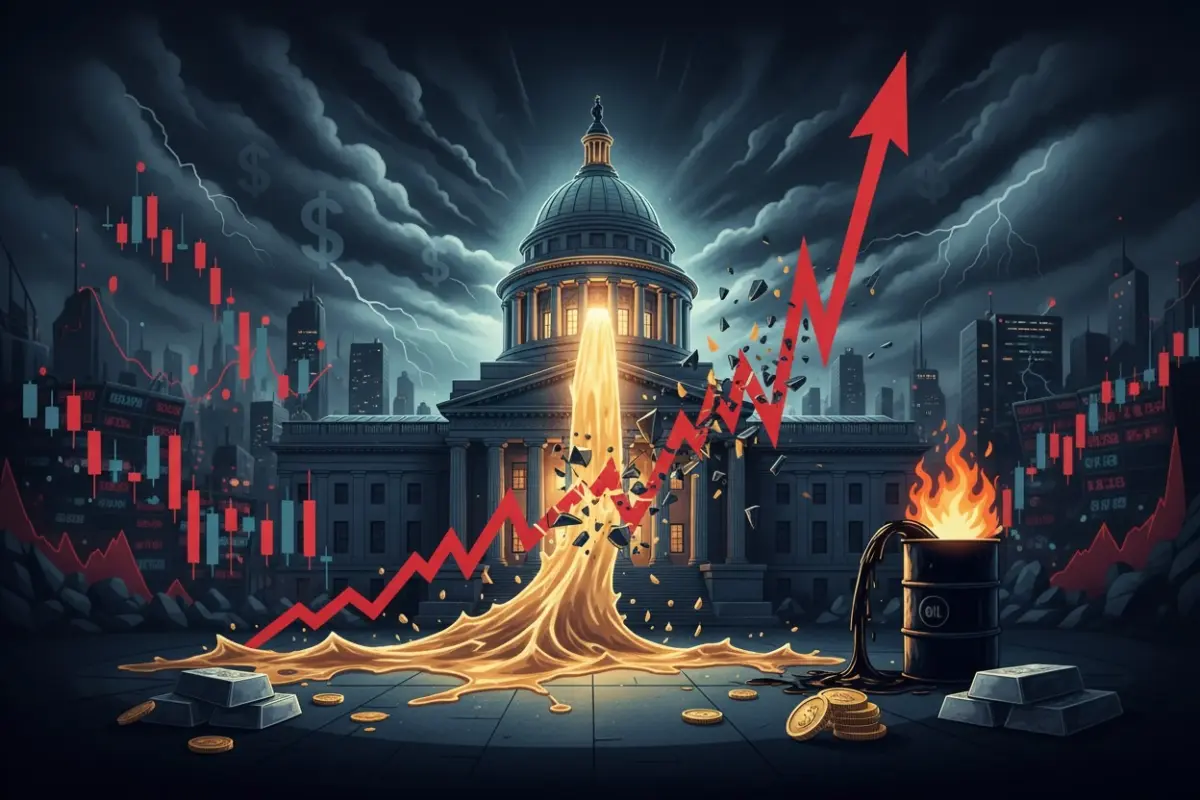
WASHINGTON — In an aggressive maneuver to stabilize the world’s most critical debt market, the U.S. Department of the Treasury announced on Wednesday, September 9, that it would buy back up to $6 billion in long-dated government debt. The operation, executed the following day, tripled the Treasury’s normal buyback volume and exceeded even the expanded targets outlined by Treasury Secretary Scott Bessent just weeks prior.
The announcement arrived amid a wave of macroeconomic turbulence. Equity markets tumbled, long-term Treasury yields climbed, and Brent crude oil futures surged past $100 a barrel for the first time since July. The confluence of geopolitical tensions in the Middle East, rising energy prices, and systemic concerns over the U.S. national debt—which recently crossed the historic $40 trillion threshold—has placed immense pressure on policymakers.
While the Treasury frames the intervention as a proactive step to manage market liquidity and tame soaring yields, financial analysts, institutional investors, and prominent economists remain deeply skeptical about whether a temporary liquidity injection can counteract structural fiscal pressures.
Main Facts
- The Intervention: The U.S. Treasury executed a $6 billion buyback operation on Thursday, September 10, targeting 10- and 20-year government bonds during a tightly managed 20-minute window ending at 2:00 p.m. Eastern Time.
- Scale of the Operation: The $6 billion purchase triples the Treasury’s historical operation size and represents a 50% increase over the $4 billion target Secretary Scott Bessent signaled on August 19. The department confirmed that future operations will floor at $4 billion.
- Market Pressures: The buyback was triggered by a severe sell-off in the bond market. The 10-year Treasury yield reached 4.833%, the 20-year yield touched 5.29%, and the 30-year yield flirted with the psychological 5.3% threshold before settling at 5.289%.
- Equity Volatility: U.S. stocks suffered broad declines on the announcement day. The Dow Jones Industrial Average dropped 325 points (0.6%), while the S&P 500 and Nasdaq slumped 0.4% and 0.6%, respectively.
- Geopolitical Catalysts: Brent crude oil futures surged above $100 per barrel, driven by escalating conflict fears in the Middle East, stoking renewed inflation fears and potential interest rate hikes from the Federal Reserve.
Chronology of Events
Late August: Signaling the Pivot
The groundwork for the September intervention was laid on August 19, when Treasury Secretary Scott Bessent publicly stated that the department would at least double its routine debt buyback sizes to smooth out liquidity mismatches in the secondary market. However, initial enthusiasm among traders proved fleeting. Within a single day of that announcement, the temporary dip in yields was entirely reversed, and the 10-year yield pushed past pre-announcement levels.
Tuesday, September 8: Rhetoric and Market Pressures
Addressing traders directly at a Southern Methodist University event in Texas on September 8, Bessent struck a defiant, confident tone. Referencing his control over debt management levers, he remarked to the audience: "I have asymmetric information. I am the house now."
Simultaneously, underlying market data deteriorated. Global bond markets accelerated their sell-off due to brewing Middle East conflicts. RBC Capital Markets analysts released a note stating that their base-case expectation for an imminent Treasury buyback was between $5 billion and $6 billion.
Wednesday, September 9: The Official Announcement
Before the opening bell on Wednesday, the USDT officially broke from its previous guidance, announcing a $6 billion buyback operation scheduled for the following afternoon. The release explicitly noted that future operations would maintain a minimum baseline of $4 billion. The announcement coincided with a broader market retreat as Brent crude crossed $100 a barrel and equities faced downward pressure.
Thursday, September 10: Execution and Market Realities
The 20-minute buyback operation commenced at 1:40 p.m. ET and concluded at 2:00 p.m. ET. As dealers offloaded 10- and 20-year securities back to the government, traders monitored the reaction of the broader yield curve. Despite the massive capital injection, long-term yields remained stubbornly elevated, underscoring the deep-seated skepticism of institutional market participants.
Supporting Data & Market Metrics
The mechanics of the U.S. Treasury market dictate that bond yields move inversely to prices—when selling pressure drives bond prices down, yields rise. The persistent downward pressure on bond prices has created acute financing challenges across the broader economy.
- Yield Curve Movement:
- 10-Year Treasury Yield: Hit 4.833% during mid-day trading.
- 20-Year Treasury Yield: Rose to 5.29%.
- 30-Year Treasury Yield: Breached the 5.3% mark before closing near 5.289%.
- Equity Market Response:
- Dow Jones Industrial Average: Down 325 points (-0.6%).
- S&P 500: Down 0.4%.
- Nasdaq Composite: Down 0.6%.
- National Debt Milestone:
- Treasury data confirmed that the U.S. national debt surpassed $40 trillion for the first time in history, expanding by over $60 billion in a single day and surging by $1 trillion over a span of just three months.
- Global Interventions:
- Reports indicated that international central banks were also juggling severe debt pressures; Japan reportedly sold nearly $90 billion in U.S. Treasuries to fund a record intervention supporting the sliding Japanese yen.
Official Responses and Expert Analysis
The Treasury’s aggressive intervention has drawn sharp commentary from wealth managers, billionaire investors, and economic analysts, many of whom argue that monetary and fiscal band-aids cannot fix structural imbalances.
Wealth Management Perspective
Mark White, a wealth advisor at Mark White Wealth Advisors, pointed out to the New York Post that Wednesday’s muted market reaction demonstrates investors’ lack of faith in buybacks as a yield-control mechanism.
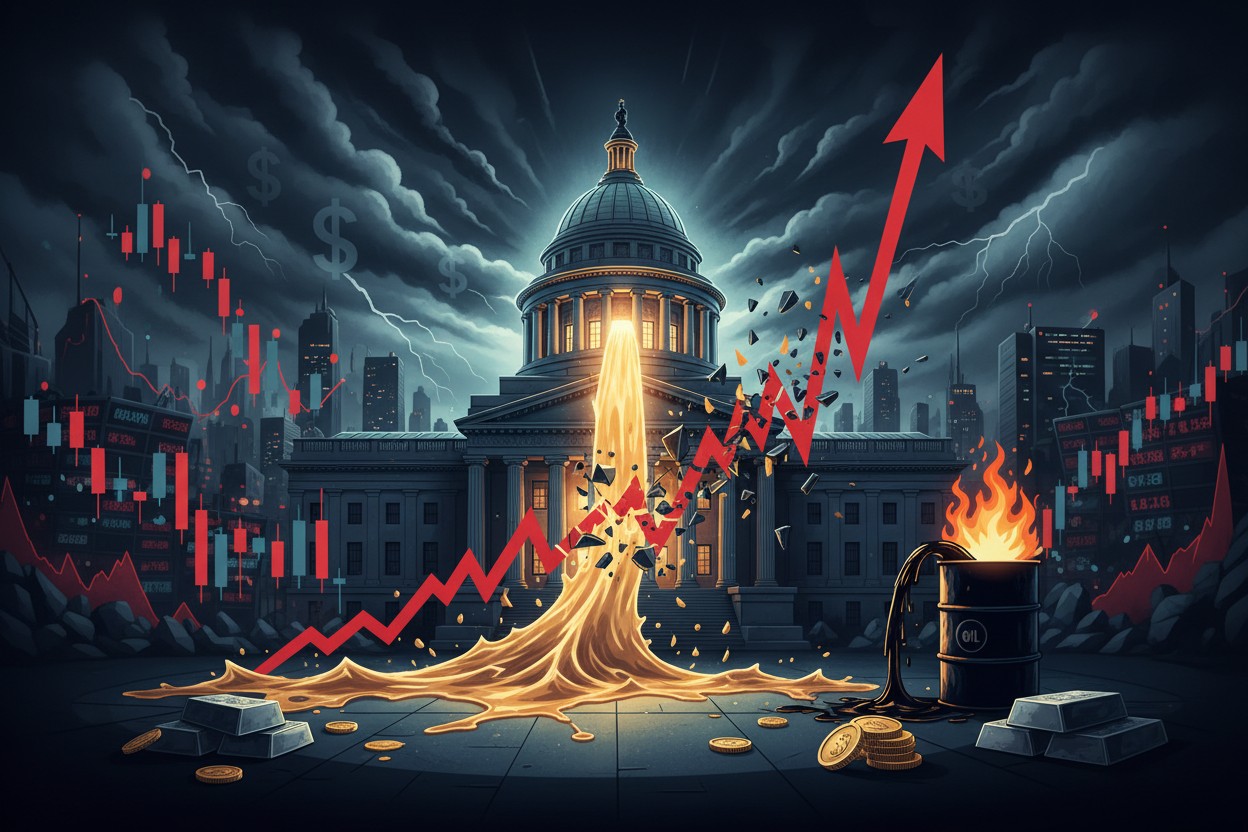
"While a $6 billion buyback can improve liquidity and provide some support at the margin, it’s simply not large enough to meaningfully change the fundamental forces driving long-term yields," White explained. "Inflation concerns, rising deficits, and the massive supply of Treasury debt are ultimately going to have a much greater influence on yields than a single buyback operation."
The "Let the Bond Speak" Critique
Prominent billionaire investor Stanley Druckenmiller emerged as one of the most vocal critics of current fiscal management. In a widely read Wall Street Journal op-ed titled "Let the Bond Speak"—which later drew public attention for his disclosure that he utilized artificial intelligence to assist in drafting the text—Druckenmiller argued that the Treasury is treating symptoms rather than the disease.
Druckenmiller asserted that the USDT should focus on "the only thing that durably lowers long-term yields: address the primary deficit." He called for sweeping, long-term structural reforms to federal entitlement programs through gradual means-testing, indexing changes, and phased eligibility adjustments implemented over decades.
Market Strategist Consensus
According to analysts, the Treasury walked a narrow policy tightrope. A smaller $4 billion operation would have deeply disappointed a market looking for aggressive intervention. Conversely, an unprecedented expansion to $8 billion or more would have shocked investors, signaling panic and abruptly abandoning the strategy Secretary Bessent laid out just two weeks prior. Consequently, the $6 billion figure represented a calculated middle ground—though one that ultimately failed to alter market momentum.
Broad Economic Implications
The cascading effects of the Treasury’s actions extend far beyond Wall Street trading desks, touching everyday consumers, corporate borrowers, and global macroeconomic stability.
Consumer Borrowing Costs
With long-term yields hovering near multi-month highs, commercial lenders continue to reprice consumer credit products. Mortgage rates, auto loans, and home-equity lines of credit (HELOCs) remain tethered to these elevated benchmark yields. Furthermore, mounting speculation that the Federal Reserve could implement an interest rate hike at its upcoming policy meeting threatens to push short-term borrowing costs even higher.
The Energy-Inflation Nexus
The resurgence of Brent crude oil above $100 per barrel—fueled by supply chain anxieties and Middle Eastern geopolitical friction—has reignited fears of sticky, persistent inflation. If energy costs remain elevated, central bankers may find their hands tied, dashing hopes for monetary easing and maintaining upward pressure on sovereign borrowing rates.
The Safe-Haven Paradox
For decades, U.S. Treasury bonds have been universally regarded as the ultimate "risk-free" asset, forming the bedrock of the global financial architecture. However, the relentless expansion of the national debt—now sitting north of $40 trillion—has prompted some institutional allocators to re-examine traditional asset allocation models.
Economist Peter Schiff warned of the long-term systemic fallout, noting that "higher interest rates, whenever they arrive, are going to do [severe damage] to the housing market and the cost of government." As a consequence, alternative safe-haven assets, including gold, silver, and other hard commodities, continue to see sustained institutional and retail inflows as investors seek hedges against sovereign debt devaluation.
Outlook
As the dust settles on Thursday’s $6 billion buyback operation, financial markets remain on edge. All eyes are now fixed on upcoming Federal Reserve communications, incoming inflation prints, and developments in global energy corridors. Whether the Treasury’s enhanced buyback program will evolve into a recurring structural tool—or remain a temporary palliative against a rising tide of debt—will likely define the economic landscape for the remainder of the year.