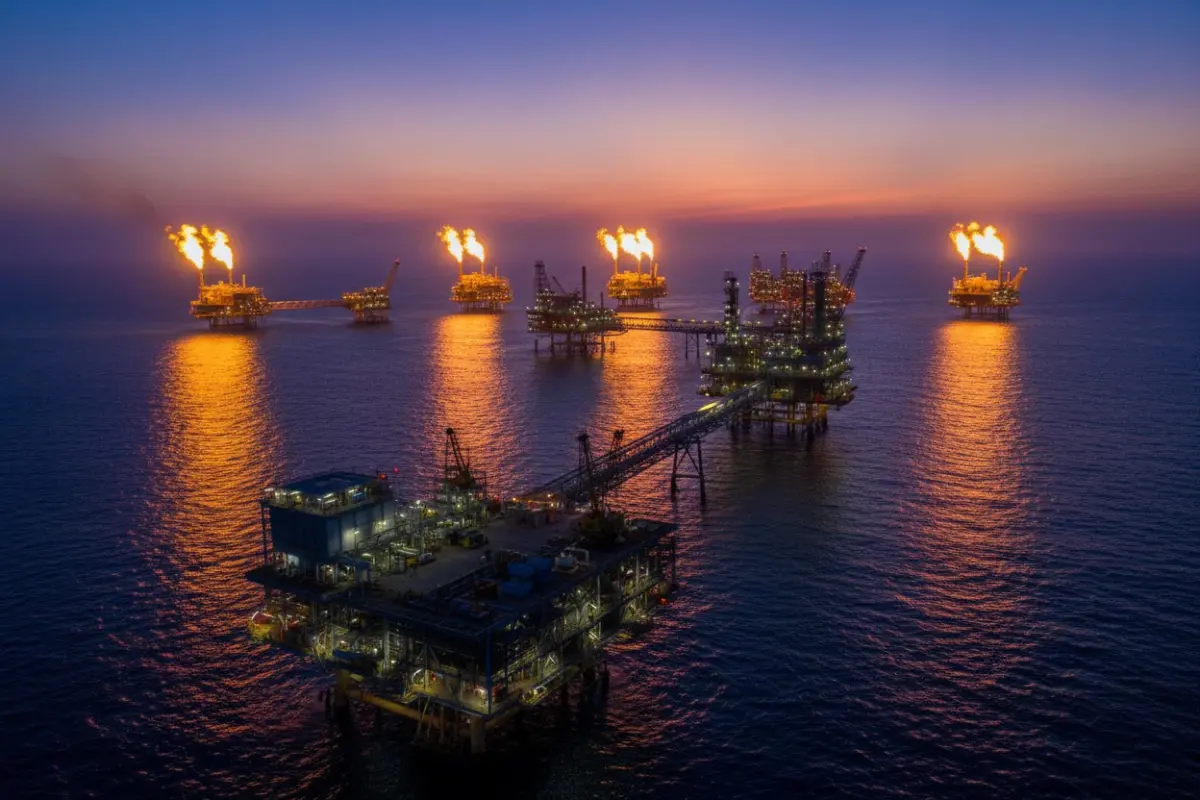
TEHRAN — Iranian authorities have announced the partial resumption of natural gas production at the massive South Pars gas field, marking a critical, albeit limited, milestone in recovering from military strikes that rocked the nation’s energy sector earlier this year.
According to official statements from the Iranian Ministry of Petroleum, relayed via the Pars Oil and Gas Company (POGC), the current restoration effort brings back approximately 40% of the field’s total operating capacity. Touraj Dehqani, chief executive of POGC, told Iranian state media that output from undamaged offshore platforms has been successfully rerouted to alternative processing facilities to bypass heavily damaged infrastructure.
The partial recovery follows precision military strikes on March 18, 2026, which targeted critical gas-treatment plants in Assaluyeh along Iran’s southern coastline. The attacks—attributed to Israeli operations—forced multiple phases offline and ignited severe fires at key processing units, crossing an unprecedented threshold by directly targeting upstream oil and gas production assets amid regional hostilities.
Main Facts
- The Asset: South Pars is the world’s largest natural gas field, situated across the maritime border between Iran and Qatar in the Persian Gulf. It is the cornerstone of Iran’s domestic energy grid, fueling power plants, industrial heavy manufacturing, and the vital petrochemical sector.
- The Incident: On March 18, 2026, coordinated drone strikes hit four gas-treatment plants in Assaluyeh processing sour gas from phases 3, 4, 5, and 6, alongside widespread blazes at Phase 14 facilities.
- Current Status: Iran has restored roughly 40% of the field’s production capacity. Unharmed offshore platforms have been salvaged by redirecting raw gas to operational secondary processing hubs.
- Geopolitical & Economic Impact: The disruption triggered an immediate drop in regional gas exports—notably to Turkey—sent shockwaves through European and global energy markets, and compounded domestic energy anxieties amid longstanding international economic sanctions.
Chronology of Events
March 18, 2026: The Strikes on Assaluyeh
In a dramatic escalation of regional conflict, airstrikes struck the heart of Iran’s energy processing infrastructure in Assaluyeh. Four distinct gas-treatment plants handling sour gas from phases 3, 4, 5, and 6 of the South Pars field were hit by drones. Subsequent fires engulfed the Phase 14 processing facilities. Iranian emergency responders and industrial crews were forced to shut down multiple production phases completely to contain and extinguish the raging blazes, marking the first time in the current conflict that core upstream assets were deliberately targeted.
Late March – April 2026: Emergency Assessments and International Fallout
In the days following the attack, international energy analysts scrambled to gauge the damage. While Israeli officials indicated the operation was executed with strategic coordination—a claim denied by then-U.S. President Donald Trump—regional energy networks felt immediate pressure. Iranian gas exports to neighboring Turkey plummeted, while international observers noted that the incident contributed to a broader global energy shock, with the International Energy Agency (IEA) later warning that cumulative Gulf infrastructure damage had outpaced the severity of previous historic energy crises.
May – August 2026: Engineering under Sanctions and Partial Recovery
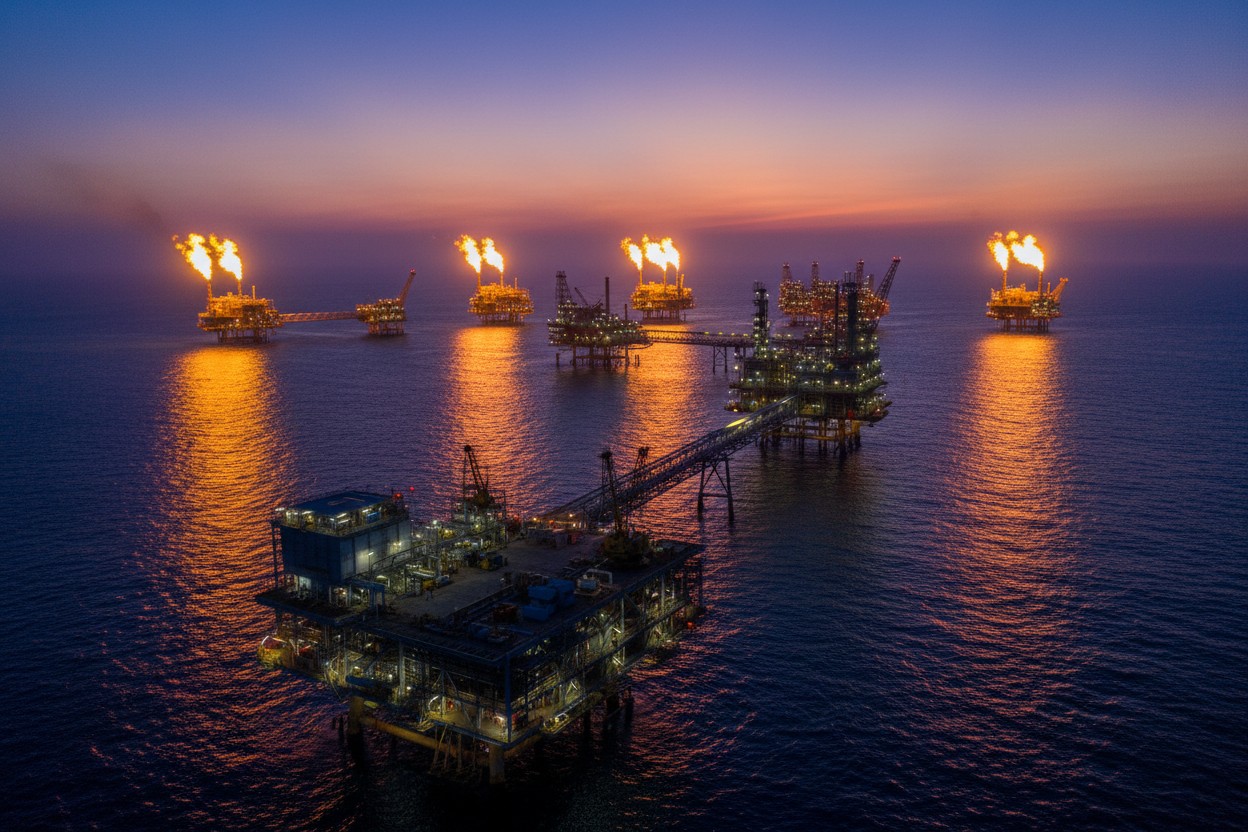
Working under the heavy constraints of multi-lateral economic sanctions that restrict access to Western spare parts and foreign technology, Iranian domestic contractors initiated intensive repair procedures. By late summer, POGC leadership confirmed that engineers had managed to stabilize three major offshore platforms that had escaped physical damage. By rerouting their output to functioning onshore processing terminals, Iran successfully brought 40% of South Pars back online, offering a much-needed buffer for the country’s strained domestic energy network.
Supporting Data & Infrastructure Metrics
To understand the magnitude of the South Pars disruption, industry analysts point to the sheer scale of the field within both the Iranian economy and the global gas architecture:
- Reserves and Output Share: South Pars accounts for an overwhelming majority of Iran’s total natural gas production, feeding domestic heating, municipal electricity generation, and industrial feedstock.
- The Sanctions Bottleneck: Decades of strict U.S. and international sanctions have crippled Iran’s ability to modernize its energy infrastructure. Although Tehran previously attempted to offset these technological deficits through heavy diplomatic and economic maneuvers—such as signing a landmark $40 billion cooperation agreement with Russia’s Gazprom in 2022—domestic projects remain heavily reliant on localized engineering ingenuity and improvised hardware.
- Regional Vulnerability: Energy intelligence reports tracking the Middle East conflict indicate that approximately 75 critical energy assets across Gulf hostilities zones have faced physical damage or destruction, underlining a systemic fragility in regional hydrocarbon supply chains.
Official Responses
The resumption of partial capacity has sparked carefully managed optimism among Iranian officials, juxtaposed against regional calls for de-escalation:
- Iranian Ministry of Petroleum / POGC: Touraj Dehqani emphasized the resilience of Iran’s domestic technical workforce, noting that bypassing damaged units to leverage operational alternatives prevented a catastrophic collapse of the national grid. Officials have framed the 40% recovery as a vital step toward easing winter fuel reserve pressures. However, the ministry has notably declined to provide a firm timeline for restoring the remaining 60% capacity.
- State Media and Semi-Official Outlets: Outlets such as the Tasnim News Agency focused heavily on local repair triumphs, portraying the rapid adjustment of pipeline routes as a testament to self-sufficiency in the face of foreign sabotage and economic blockades.
- Regional Counterparts: Qatar, which shares sovereignty over the vast maritime reservoir, has maintained a cautious diplomatic stance. Qatari leadership, through statements delivered by the prime minister, has repeatedly called for an immediate cessation of hostilities in the Persian Gulf, warning that persistent targeting of shared or proximate energy fields threatens the economic stability of the entire Arabian Peninsula.
Implications for Domestic Supply and Global Markets
Domestic Stabilization vs. Long-Term Vulnerability
The injection of 40% of South Pars’ baseline output back into the national grid provides a critical safety valve for Iran. As the country transitions toward periods of heightened seasonal energy demand, avoiding total supply failure is a major domestic victory. Nevertheless, the inability to process the remaining 60% leaves industrial manufacturing and petrochemical feedstock chains highly vulnerable. Because petrochemicals represent one of Iran’s primary sources of non-oil state revenue, prolonged underproduction poses a severe threat to national macroeconomic health.
Ripple Effects on Global Energy Trade
The South Pars strikes are part of a broader, dangerous precedent wherein energy assets have been integrated into military targeting matrices. The initial blackout at the field choked off pipeline flows to Turkey and sent shockwaves through European gas markets, which were already operating under thin margins. Energy economists warn that as long as critical infrastructure remains exposed to tit-for-tat military actions, global gas prices will remain permanently volatile, reacting sharply to any sign of escalation in the Persian Gulf.
Ultimately, while Iran has successfully mitigated the immediate existential threat to its domestic gas supply through rapid technical rerouting, the full recovery of the South Pars field remains hostage to two unpredictable variables: the fragile security environment of an ongoing regional war and the suffocating operational constraints of international sanctions.