Main Facts: The Intersection of Craft, Emotion, and Architecture
In an era defined by mass production, fast shipping, and flat-pack convenience, a quiet counter-revolution is taking place in the high alpine air of Breckenridge, Colorado. Here, inside the workshop of Studio Becker, furniture is not merely manufactured—it is translated. Founded by designer and woodworker Coulton Becker, the studio operates on a singular, deeply human premise: that physical objects can and should hold emotional weight.
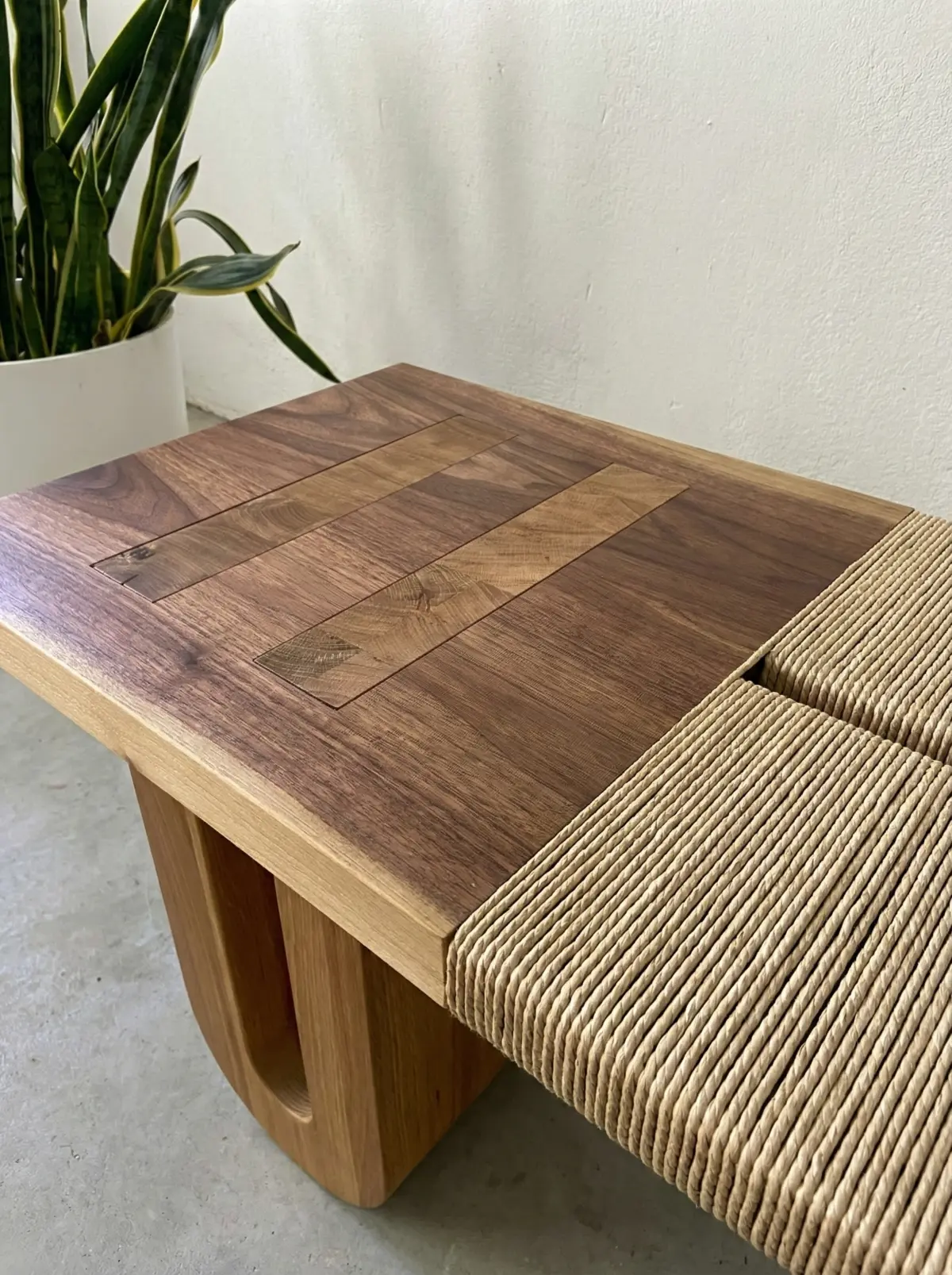
Working exclusively with premium hardwoods such as walnut, white oak, and maple, Studio Becker produces spare, deliberate, and uncompromisingly modern pieces. Nothing in the workshop is mass-produced. Every joint is considered, every grain pattern is studied for its long-term evolution, and details like hand-wrapped Danish cord speak to a reverence for traditional craftsmanship executed with a contemporary eye.
At the center of the studio’s current spotlight is the Una Bench—a $4,600 masterclass in restraint measuring 60 inches long, 16 inches wide, and 18 inches high. It is a piece designed to anchor a room without overwhelming it, functioning seamlessly at the foot of a bed, the end of a long hallway, or as the grounding element in a minimalist living space.
Yet, to understand Studio Becker is to understand that these objects are not just functional surfaces or seating arrangements. They are physical manifestations of memory, grief, and architectural precision.
Chronology: From Architectural Studies to the Mountain Workshops
1. The Genesis of a Maker: University of Missouri (2019)
Long before Coulton Becker considered himself a furniture maker, he was a twenty-year-old architecture and interior design student at the University of Missouri. During his sophomore year, his life shifted on its axis when his father passed away.
Faced with a profound loss and struggling to articulate an internal landscape of grief, Becker turned to the tools he knew best. Operating as designers often do when words fail, he decided to build something.
The result was Fluss Ewig—a German phrase translating to “constantly changing.” It was a memorial built at a scale he had never previously attempted. When the young design student finally stepped back to look at the completed piece, a sudden clarity washed over him. The project transcended a simple school assignment or a coping mechanism; it illuminated the path for the rest of his life. As Becker reflects, "The moment I took a step back from the completed memorial, I realized my passion for design and woodcraft."
2. High-Altitude Designing and the Pandemic Catalyst (2019–2020)
Upon graduating in 2019, Becker stepped into a traditional career trajectory, taking a position designing luxury mountain homes in Frisco, Colorado. It was prestigious work that looked exceptional on a resume.
Then, the COVID-19 pandemic arrived, abruptly collapsing the distance between the life he was living and the life he felt compelled to pursue. The global pause forced an introspection that many creative professionals experienced during those locked-down months. For Becker, it accelerated a transition. He began working with wood not merely as a weekend hobby, but as a rigorous daily practice.
Amidst the global uncertainty of 2020, Studio Becker was born. It was, fittingly, an enterprise founded on the idea that in a fragile world, objects can carry enduring meaning.
3. Refinement Across the American Heartland (2020–2025)
Over the next several years, Becker’s practice underwent geographical and artistic evolution. He relocated to Kansas City to immerse himself more deeply in the technical mastery of woodworking, refining his joinery and expanding his material vocabulary.
Eventually drawn back to the rugged landscapes that initially inspired him, Becker returned to Colorado. By 2025, he settled his permanent studio roots in Breckenridge. The work grew quieter, more specific, and distinctly his own—shedding extraneous details in favor of pure lines and honest materials.
Supporting Data & The Catalogue: Anatomy of Studio Becker
Studio Becker’s operational model stands in stark contrast to industrial furniture manufacturing. The studio relies on a direct-to-client and direct-to-designer commission model, allowing for deep collaboration on custom dimensions, wood selections, and finishes.
Material Integrity and Specifications
Primary Mediums: Sustainably sourced North American hardwoods (Walnut, White Oak, Maple).
Secondary Elements: Hand-woven Danish cord, chosen for its tactile warmth, durability, and aging characteristics.
Production Methodology: 100% bench-made, individual fabrication. No automated assembly lines or stock warehousing.
Geographic Base: Breckenridge, Colorado.
The Highlight Piece: The Una Bench
Price Point: $4,600
Dimensions: 60” Length x 16” Width x 18” Height
Materials: Premium Hardwood and Hand-Woven Danish Cord
Design Purpose: A low-profile anchor piece versatile enough for bedrooms, entryways, and primary living areas. The 60-inch span showcases uninterrupted wood grain paired with the precise, rhythmic tension of the cord seating surface.
Official Statements and Philosophy: Wood as a Language
The foundational ethos of Studio Becker is captured in the tension between the physical and the metaphysical. In a joint statement on his design philosophy, Becker emphasizes that furniture should serve as an emotional container.
"Physical objects often have a meaning and emotion associated with them, and that’s what I aim to instill in every piece I work on."
This philosophy guides every choice made within the Breckenridge studio. When selecting a board of white oak or walnut, Becker evaluates not just how the timber looks on the day of delivery, but how its grain will catch the light after a decade of family life, sunlight, and handling.
The studio’s branding and public presence—frequently highlighted through curated editorial features like Roomhints’ weekly Studio Visit series—reinforce this narrative of intentionality. Studio Becker rejects the disposable furniture cycle, advocating instead for heirlooms that honor both the raw material and the human experiences that unfold around them.
Implications: The Shift Toward Slow Design in the Modern Interior
The rise of independent studios like Coulton Becker’s points to a broader cultural and economic shift within the interior design landscape. As consumers experience "design fatigue" driven by mass-market homogeneity and fast furniture, the demand for "slow design" has surged.
1. The Resurgence of Craft Economy
Makers working out of regional hubs—from the mountains of Colorado to rural pockets of the Midwest—are proving that geographic decentralization is an advantage rather than a hindrance. Armed with digital portfolios and social media platforms like Instagram (@studio.becker), independent woodworkers can connect directly with interior designers and discerning homeowners globally, bypassing traditional retail gatekeepers.
2. Emotional Sustainability in Architecture
Sustainability in interior architecture is no longer restricted to discussions about carbon footprints and zero-VOC finishes. It increasingly encompasses emotional durability—the concept that an object well-made and deeply loved is an object that will never be thrown away. By embedding personal history, memorializing moments of profound human experience (as Becker did with Fluss Ewig), and utilizing materials that patina gracefully, studios like Becker are redefining what it means for a piece of furniture to be "green."
3. The Future of Custom Commissions
Architects and interior designers are increasingly moving away from off-the-rack catalogue sourcing in favor of bespoke collaborations. The ability to customize dimensions, wood species, and textural details—such as the precise tension of a hand-woven Danish cord—allows spaces to tell a cohesive, personal story.
As Studio Becker continues its work in Breckenridge, it stands as a testament to a resilient idea: that out of personal loss and architectural training, a maker can carve out a lasting language of wood, memory, and uncompromising craftsmanship.
Studio Becker is based in Breckenridge, Colorado. Explore the collection at studiobecker.design or follow the daily work on Instagram @studio.becker.