









A Sydney-based design studio is proving that bringing children into a home doesn’t mean sacrificing aesthetic integrity—challenging the long-held compromise that has forced parents to choose between style and practicality.
Main Facts
The contemporary interior design landscape has long operated on an unwritten, yet rigid, ultimatum: once children arrive, design must surrender to utility. For decades, expectant parents have navigated a fragmented market that assumes a nursery and a living room belong to two entirely different aesthetic vocabularies. You either curate a sophisticated, adult-centric sanctuary—complete with delicate textiles, sculptural forms, and minimalist palettes—or you surrender your floor plan to primary-colored plastics, indestructible rubberized edges, and disposable furniture destined for the curb within a few short years.
Enter Nuage Interiors, a Sydney-based design studio co-founded by married couple Najah Baroudi and Fares Al-Sarawi. Operating on the radical premise that a home should never have to undergo a wholesale stylistic identity crisis just because a family grows, Nuage has carved out a unique niche in the Australian design ecosystem. Named after the French word for "cloud"—a nod to softness that must simultaneously withstand the rigorous demands of domestic chaos—the brand bridges the chasm between high-end interior curation and family-friendly practicality.
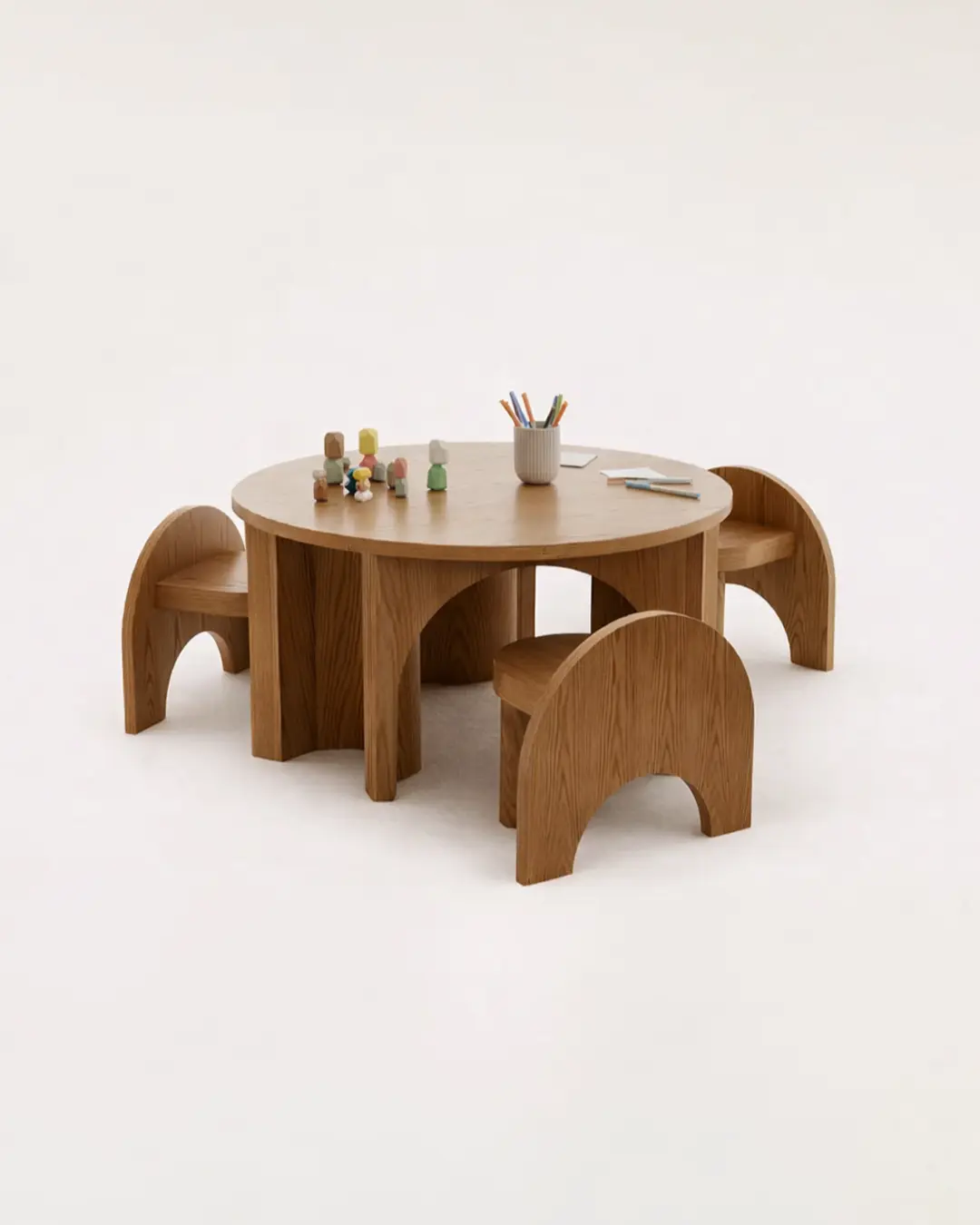
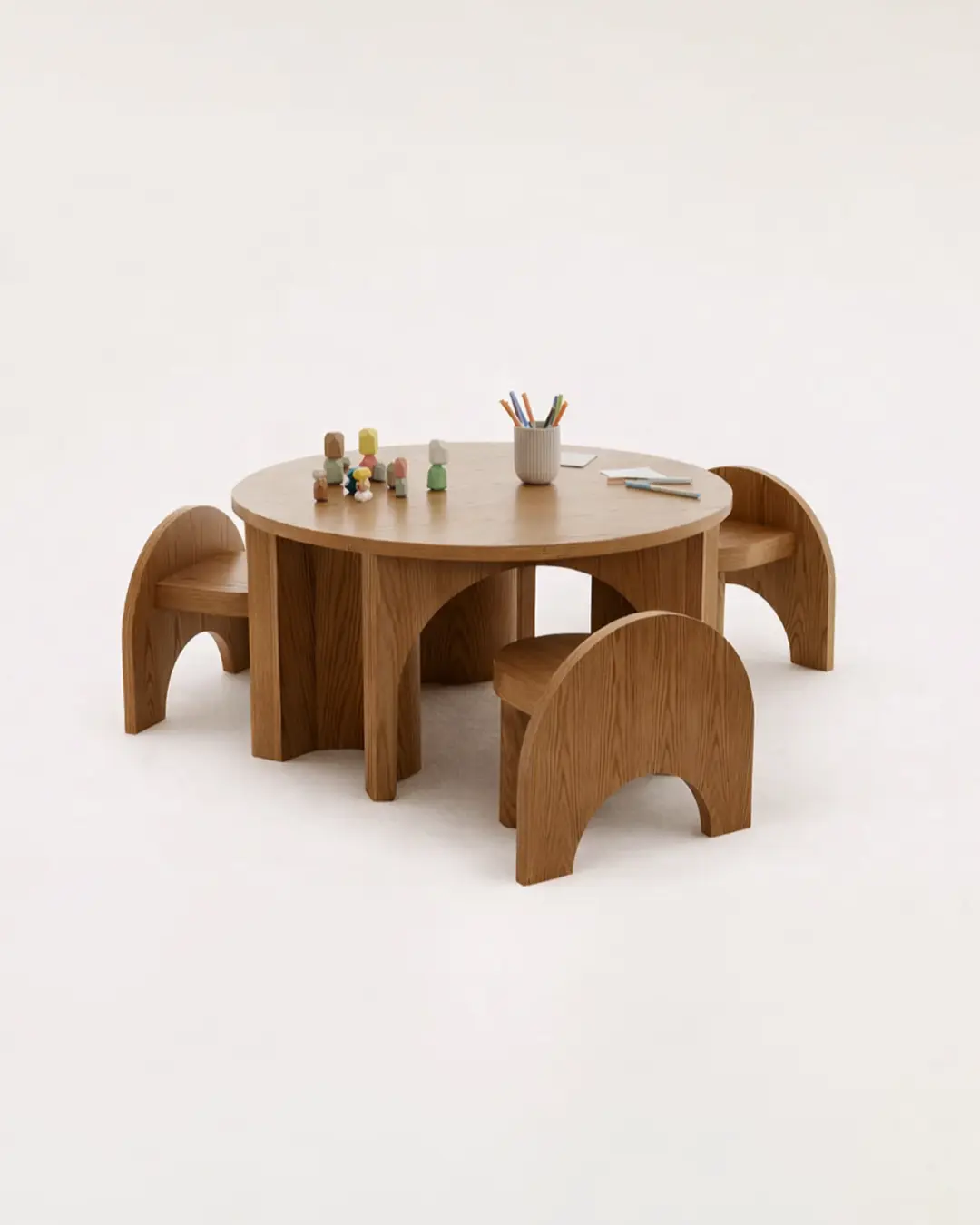
At the heart of the studio’s philosophy is the elimination of compromise. Nuage produces furniture and decor objects that are engineered to survive the unpredictable spills, climbs, and impacts of toddlerhood while maintaining the clean lines and sophisticated finishes of contemporary design objects. Their flagship offering, the Arca Table Set, serves as the physical manifestation of this ethos: a round oak-veneer table accompanied by three nesting curved chairs that slide flush into the frame, collapsing the entire assembly into a single, sculptural silhouette when playtime ends.
Chronology: From Personal Frustration to Studio Reality
The genesis of Nuage Interiors can be traced back to a very specific, universal moment of modern domestic friction: a pregnant mother searching for a rocking chair.
In the lead-up to the birth of her first son, Najah Baroudi set out to find a nursery chair that met her exacting design standards. She wasn’t looking for something purely utilitarian or explicitly juvenile; she wanted a piece featuring tactile bouclé upholstery that would seamlessly integrate into the carefully curated aesthetic she had spent years building in her home.
The market came up entirely empty.

As Baroudi quickly discovered, the retail landscape offered a stark binary. Items were either rigorously practical—optimized solely for ergonomic nursing without a thought for visual harmony—or they were aesthetically isolated, destined to look completely out of place the moment they were wheeled out of the nursery and into a shared living space. This market failure planted a seed of conviction: if the furniture didn’t exist, it needed to be built.
Founded originally in Adelaide in 2021 before relocating its operations to Sydney, Nuage Interiors was born out of this frustration. The founders established a natural, highly functional division of labor that would dictate the brand’s trajectory. Baroudi, drawing on a background in media and years of international travel that exposed her to diverse architectural and domestic spaces, took charge of the creative vision, aesthetic curation, and product conceptualization. Al-Sarawi, whose professional roots lay in pharmacy, leveraged his analytical mind to master operations, supply chain logistics, and structural execution.
As the studio grew, so did the founders’ direct line to their target demographic. Today, Baroudi and Al-Sarawi are parents to two young boys: Malik, nearly five, and Hadi, eighteen months. Far from being a hurdle to design production, the children function as the studio’s most rigorous, unsparing quality assurance testers. Every prototype is subjected to the daily battering of toddler life, ensuring that whatever makes it to production can weather real-world wear and tear.
Supporting Data & Design Methodology
The operational and design framework at Nuage Interiors is governed by a deceptively simple, highly rigorous filter: Does this belong in a home I love?
Answering that question requires balancing intuition with intense scrutiny. Baroudi relies on a cultivated design instinct, developed through years of global travel, to distinguish between objects that feel genuinely considered and those that feel like design afterthoughts. However, this aesthetic purism is constantly cross-examined by the gritty reality of living with two children under five.
Traditional children’s furniture is typically designed with a siloed mindset. It is scaled down, brightly colored, and visually loud, operating under the assumption that children require sensory overload to engage. Nuage rejects this premise entirely. The studio’s approach is anchored in a few core design pillars:
- Material Integrity: Utilizing high-end, tactile materials such as natural oak veneers and premium, durable upholstery that ages gracefully rather than degrading under heavy use.
- Aesthetic Continuity: Ensuring that children’s furnishings share the same design language as adult furniture, allowing pieces to transition fluidly from the nursery to the living room, study, or dining area.
- Multi-Functionality & Spatial Efficiency: Engineering pieces that minimize visual clutter. By creating items that fold, nest, or transform, Nuage allows modern families to reclaim their square footage without sacrificing utility.
- Child-Centric Safety: Incorporating rounded edges, non-toxic finishes, and structurally sound architecture that prioritizes safety without ever reading as clinical, institutional, or visually offensive.
The ultimate goal of this methodology is to eliminate the psychological burden that many parents feel when hosting guests—the frantic rush to hide plastic toys, fold up bulky primary-colored play tables, and shut the doors to the children’s rooms. Nuage designs spaces and objects that do not need to be hidden away.

Official Responses & Design Philosophy
The philosophy underpinning Nuage Interiors has struck a profound chord with contemporary parents who refuse to let their personal style evaporate the moment they sign a birth certificate.
Reflecting on the inception of the brand and the pervasive cultural narrative surrounding family-friendly interior design, co-founder Najah Baroudi notes:
"There’s a moment when you’re expecting your first child and the world suggests you choose between a beautiful home and a functional one. We refused that."
This refusal forms the ideological backbone of every item that leaves the studio. It is a pushback against the disposable culture of modern parenting gear—products engineered with a notoriously short lifespan, meant to be discarded as soon as a child outgrows them by a few centimeters. Nuage designs with longevity in mind, creating heirlooms of contemporary living that adapt as children grow into different developmental stages.
When clients write to the studio or post about their homes, a recurring piece of feedback surfaces: homeowners frequently remark that a Nuage piece feels as though it was always meant to occupy that exact corner of their home. For Baroudi, this is the highest form of validation.
"When someone tells us that a Nuage piece feels like it was always meant to be there, that’s everything," Baroudi explains. "That’s the whole point."
Implications for the Future of Family Interior Design
The rise of studios like Nuage Interiors signals a broader, much-needed shift in the interior architecture and furniture design sectors. For decades, the market has treated family spaces as a niche category—a utilitarian subsection of design that could safely ignore contemporary aesthetic shifts. However, as millennials and Gen Z—generations deeply attuned to interior aesthetics, spatial psychology, and sustainable consumption—enter parenthood, consumer expectations are radically changing.

1. The Death of the "Playroom Silo"
The traditional architectural layout of segregating children’s items into an isolated playroom or confining them to a dedicated nursery is giving way to open-plan, integrated living. Modern parents want to keep their children in their line of sight while maintaining an environment that feels calm, sophisticated, and restorative for adults. Furniture that dual-functions as both play equipment and high-end decor—like Nuage’s nesting sets—enables this architectural integration.
2. Sustainability Through Longevity
In an era of heightened environmental consciousness, the rapid turnover of children’s furniture—often made from low-grade MDF, plastics, and laminated boards—is increasingly viewed as unsustainable. By crafting durable, multi-generational pieces using high-quality natural materials like oak veneer, studios like Nuage are promoting a circular design economy. Furniture that transitions from a toddler’s arts-and-crafts station to a side table or coffee table drastically reduces the need for frequent replacement.
3. The Psychological Impact of Domestic Space
Design psychology has long emphasized the impact of our physical surroundings on mental health and stress levels. Cluttered, visually chaotic spaces dominated by discordant children’s gear can elevate cortisol levels in parents who are already navigating the exhaustion of raising young children. By creating environments and objects that are visually cohesive, studios like Nuage provide a sense of sanctuary. A home that doesn’t require constant aesthetic compromise allows parents to retain a vital part of their pre-parent identity, fostering a healthier psychological balance within the family home.
As Nuage Interiors continues to expand its footprint from Adelaide roots to its current Sydney operations, it stands at the vanguard of a quiet revolution. By proving that children and cutting-edge interior design can coexist harmoniously without compromise, the studio is redefining what a modern family home looks, feels, and functions like.