







Main Facts: Publication Overview and Core Content
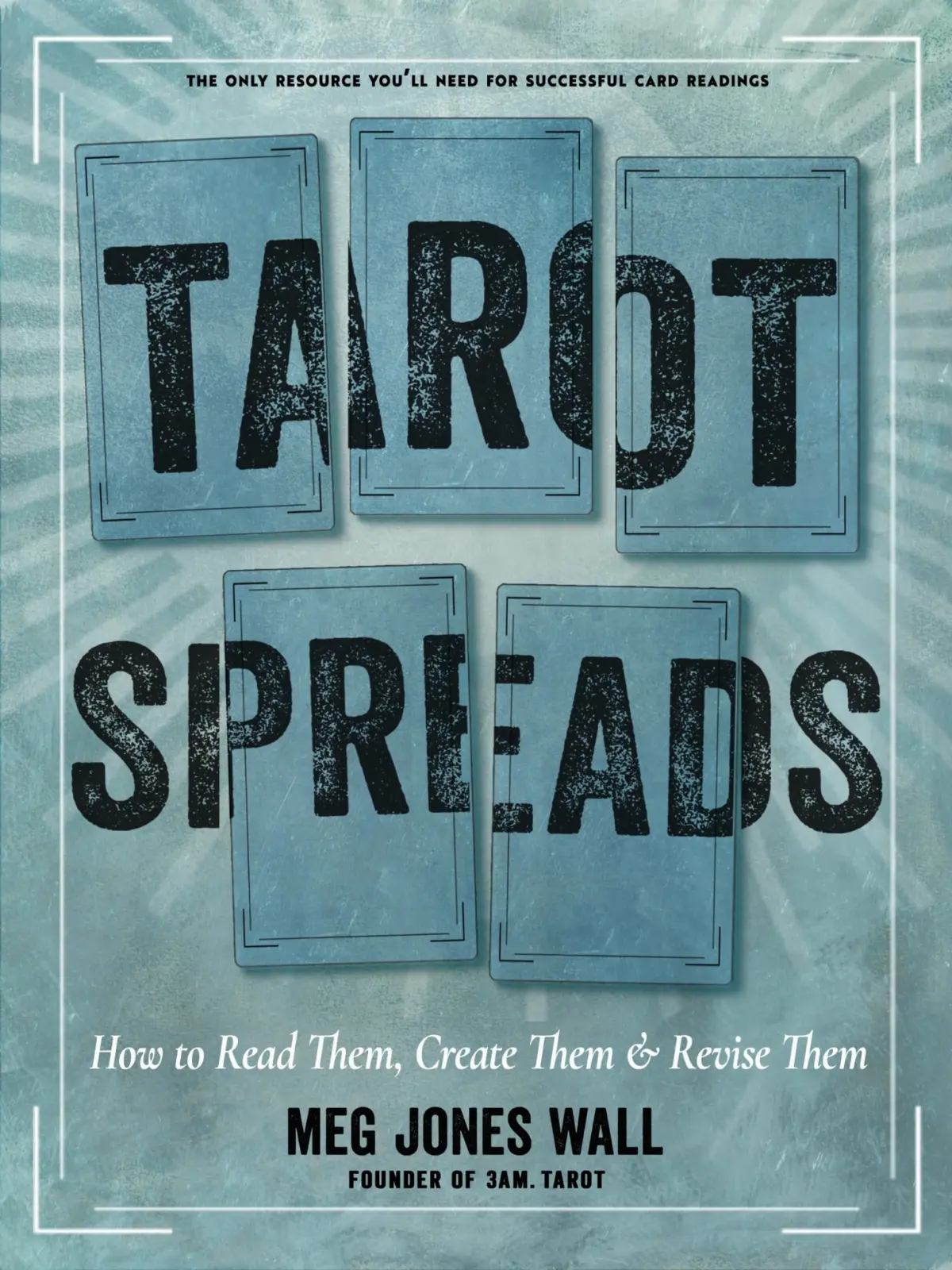
In 2025, Weiser Books, a prominent publisher of esoteric and occult literature, officially released Tarot Spreads: How to Read Them, Create Them & Revise Them by tarot educator and author Meg Jones Wall. The 228-page work serves as an instructional manual designed to demystify the structure, design, and execution of tarot card spreads for practitioners ranging from dedicated beginners to seasoned readers.
The publication is available across multiple media formats, including trade paperback, digital Kindle edition, full-length unabridged audiobook, and audio CD formats. The title addresses a central challenge in contemporary cartomancy: transitioning from isolated card interpretations to cohesive, narrative-driven spread readings.
+-------------------------------------------------------------------------------+
|                             PUBLICATION DETAILS                               |
+----------------------+--------------------------------------------------------+
| Title                | Tarot Spreads: How to Read Them, Create Them & Revise Them |
| Author               | Meg Jones Wall (they/she)                              |
| Publisher            | Weiser Books                                           |
| Publication Date     | 2025                                                   |
| Page Count           | 228 pages                                              |
| Formats Available    | Paperback, Kindle, Audiobook, Audio CD                 |
| Publisher Subject    | Body, Mind & Spirit / Divination / Tarot               |
+----------------------+--------------------------------------------------------+
Meg Jones Wall—a photographer, writer, and founder of the digital tarot platform 3a.m.tarot—positions card spreads not merely as static visual diagrams, but as dynamic interpretive frameworks. The book argues that while individual cards carry intrinsic symbolic meaning, their placement within a spread alters their contextual significance, creating a unique narrative sequence with every reading.
Initial industry and independent reviewer responses have highlighted the work’s accessible tone, pedagogical structure, and emphasis on reader autonomy. Notable reviews, including a top-tier "5 broomsticks" rating from esoteric reviewer Weyland Smith of PaganPagesOrg, emphasize the text’s empathetic approach to teaching complex divination concepts.
Chronology: Author Trajectory and Publication Timeline
The release of Tarot Spreads represents a key milestone in Meg Jones Wall’s evolving literary and educational career within the modern divination landscape.
+-------------------------------------------------------------------------------+
|                            DEVELOPMENT TIMELINE                               |
+-------------------------------------------------------------------------------+
|  • Phase 1: Establishment of 3a.m.tarot                                       |
|    Author builds online presence, offering specialized tarot courses,         |
|    educational materials, and queer-inclusive study resources.               |
|                                                                               |
|  • Phase 2: Debut Publication                                                 |
|    Release of 'Finding the Fool: A Tarot Journey to Radical Transformation',  |
|    establishing Wall's reputation in contemporary esoteric publishing.        |
|                                                                               |
|  • Phase 3: Release of 'Tarot Spreads' (2025)                                 |
|    Weiser Books publishes the 228-page guide in print, digital, and audio.    |
|                                                                               |
|  • Phase 4: Future Works Pipeline                                             |
|    Author confirms development of a third tarot volume under contract.        |
+-------------------------------------------------------------------------------+
Phase 1: Digital Education and Community Building
Prior to traditional book publishing, Wall established 3a.m.tarot, an online portal providing study materials, digital courses, and daily cartomantic commentary. Focusing on inclusive, non-dogmatic teaching methods, Wall built an audience among LGBTQ+ practitioners and readers seeking non-traditional approaches to tarot symbolism.
Phase 2: Finding the Fool and Mainstream Recognition
Wall entered the print publishing sphere with their debut title, Finding the Fool: A Tarot Journey to Radical Transformation. The book framed the traditional Major and Minor Arcana through a lens of self-discovery, personal empowerment, and inclusivity, establishing Wall’s signature voice—combining technical precision with reader empathy.
Phase 3: The 2025 Release of Tarot Spreads
Building upon the pedagogical foundation of their first book, Wall partnered with Weiser Books to address a common pain point for intermediate cartomancers: spread manipulation and custom design. Published in 2025, Tarot Spreads: How to Read Them, Create Them & Revise Them synthesizes years of teaching experience into a single structured guidebook.
Phase 4: Prospective Works
Following the launch of Tarot Spreads, the author announced that a third manuscript focusing on advanced cartomantic techniques is currently in development, establishing a prospective trilogy of educational tarot texts.
Supporting Data: Structural Methodology and Textual Analysis
Tarot Spreads is structured into five distinct instructional parts, flanked by an introductory framework, closing reflections, an extensive resource bibliography, and detailed author acknowledgments. The text balances theoretical concepts with step-by-step practical exercises.
+-------------------------------------------------------------------------------+
|                       BOOK STRUCTURE & PAGE ALLOCATION                        |
+-------------------------------------------------------------------------------+
| [Part 1] Theoretical Foundations & Layout Dynamics                            |
|        ↳ Mechanics of positional meaning, card interaction, storytelling       |
|                                                                               |
| [Part 2] Deciphering Pre-Existing Spreads                                      |
|        ↳ Navigating classic layouts, identifying structural bottlenecks       |
|                                                                               |
| [Part 3] Designing Custom Spreads from Scratch                                 |
|        ↳ Question drafting, spatial geometry, mapping thematic intent         |
|                                                                               |
| [Part 4] Modifying and Revising Traditional Layouts                           |
|        ↳ Tailoring established spreads to specific, modern contexts           |
|                                                                               |
| [Part 5] Advanced Integration & Synthesis                                     |
|        ↳ Combining spreads, intuitive adjustments, real-world application     |
|                                                                               |
| [Supplementary Sections]                                                      |
|        ↳ Closing Thoughts, Resources for Further Exploration, Acknowledgments |
+-------------------------------------------------------------------------------+
Instructional Architecture
- Part I: Structural Mechanics and Reading Fundamentals: Explores how positional placement modifies card imagery and meaning. This section reframes spreads as flexible storytelling engines rather than rigid rulesets.
- Part II: Navigating Established Spreads: Demonstrates how to analyze and execute existing spreads effectively, breaking down traditional layouts to understand their internal logic.
- Part III: Custom Spread Architecture: Guides readers through constructing custom spreads from the ground up, emphasizing precise question phrasing and visual geometry.
- Part IV: Revision and Adaptation: Teaches practitioners how to diagnose flaws in existing spreads and modify them to better suit specific client inquiries or personal reflection needs.
- Part V: Synthesis and Applied Practice: Focuses on fluid, real-world application, encouraging readers to move beyond memorized definitions into intuitive, context-aware interpretation.
Pedagogical Approach
The book’s introduction acknowledges that spread utilization is frequently categorized as an intermediate skill due to the cognitive load of synthesizing multiple cards simultaneously. However, Wall’s methodology renders these techniques accessible to beginner students who possess a willingness to engage in structured study. By breaking down the process into clear, modular lessons, the text dismantles the intimidation factor commonly associated with complex multi-card layouts.
Supplemental Appendices
The volume concludes with an annotated bibliography titled "Resources for Further Exploration," citing supplementary literature across tarot history, deck design, and psychological archetypes. This section serves as a research guide for readers seeking to expand their study beyond the immediate scope of the book.

Official Responses and Critical Reception
Industry reviewers and esoteric commentators have evaluated Tarot Spreads positively, noting its balance of technical rigor and supportive tone.
Reviewer Assessments
Writing for PaganPagesOrg, independent reviewer Weyland Smith awarded the text a maximum score of "5 broomsticks," highlighting the book’s compassionate tone as its defining characteristic:
"Some writers have impressed me with their eye for detail, others with their acumen. This one got me with their heart… Readers are led through what could have easily been an intimidating series of lessons with a confidence and even a kindness that make it all look easy."
Smith emphasized that the text successfully equips readers to transition from guided instruction to independent practice, pointing to the instructional clarity of the five main sections and the genuine warmth of the author’s voice.
+-------------------------------------------------------------------------------+
|                         CRITICAL RATING SUMMARY                               |
+------------------------+------------------------------------------------------+
| Review Outlet          | PaganPagesOrg                                        |
| Columnist              | Weyland Smith (Author of 'Weyland's Whey')            |
| Final Rating           | 5 / 5 Broomsticks                                    |
| Key Strengths Noted    | Pedagogical clarity, warmth, structural design,      |
|                        | accessible entry point for complex techniques        |
+------------------------+------------------------------------------------------+
Publisher Perspectives and Tone Analysis
Weiser Books highlighted the title as a central addition to its modern divination catalog, noting its alignment with contemporary educational demands in the occult publishing sector. The publisher emphasized Wall’s dual background as a professional photographer and writer, which informs the visually structured layout of the text.
Critiques and reviews consistently cite the author’s transparency and personal warmth—notably reflected in the book’s extended Acknowledgements section, where Wall acknowledges collaborators, digital community members, and personal supporters, setting a tone of community engagement within an often highly academic genre.
Implications for Esoteric Education and Publishing Trends
The publication of Tarot Spreads: How to Read Them, Create Them & Revise Them reflects broader shifts within the esoteric literature market and the evolving pedagogy of modern cartomancy.
+-------------------------------------------------------------------------------+
|                         INDUSTRY IMPACT & TRENDS                              |
+-------------------------------------------------------------------------------+
|  • Shift Toward User Autonomy                                                 |
|    Transitioning from fixed card definitions to user-generated custom layouts |
|                                                                               |
|  • Integration of Diverse Voices                                              |
|    Increasing visibility of queer, non-binary, and marginalized authors       |
|    within legacy publishing houses like Weiser Books                          |
|                                                                               |
|  • Multi-Format Accessibility                                                  |
|    Simultaneous release across print, digital, and audio formats to match     |
|    diverse learning styles and reader preferences                             |
+-------------------------------------------------------------------------------+
1. Shift Toward Reader Autonomy
Historically, tarot instructional literature focused heavily on static card definitions and rigid historical spreads such as the Celtic Cross. Wall’s book illustrates a broader movement toward agency and customization. By teaching practitioners how to construct and modify their own spreads, the publication shifts the dynamic from passive interpretation to active content creation.
2. Diversification of Esoteric Authorship
As a queer, nonbinary author (they/she), Meg Jones Wall represents a growing demographic of authors reshaping contemporary divination literature. The integration of inclusive language, empathetic teaching frameworks, and accessible instruction reflects an industry-wide effort to broaden the reach of body, mind, and spirit publishing.
3. Multi-Format Educational Delivery
The simultaneous distribution of Tarot Spreads across print, digital, and audio channels demonstrates how legacy publishers like Weiser Books are adapting to modern consumer habits. By offering instructional esoteric content in audio CD and audiobook formats alongside traditional print, publishers are accommodating a wider range of learning preferences and study environments.
Summary Verdict
Tarot Spreads: How to Read Them, Create Them & Revise Them stands as an instructional contribution to modern cartomantic literature. Through structured modules, supportive pedagogy, and an emphasis on creative autonomy, the text provides practitioners with a clear, practical roadmap for mastering card layouts and developing an individualized tarot practice.