





Introduction: The Birth of a New Cinematic Mythos
When visionary filmmaker Zack Snyder—renowned for his distinct visual styling in epics like 300, Watchmen, and Man of Steel—set out to construct his sprawling, original sci-fi fantasy universe Rebel Moon, he understood that world-building required more than just distant planets and laser weapons. It demanded a living, breathing ecosystem of mythological proportions.
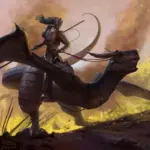
At the heart of this rich menagerie is the bennu, a striking lion-eagle hybrid that serves as Zack Snyder’s unique spin on the traditional mythological griffin. Blending ancient folklore with futuristic space-opera aesthetics, the bennu has quickly become one of the most talked-about creature designs in modern science fiction.
For fans wondering if this magnificent beast is simply a traditional griffin repackaged for the cosmos, the short answer is a definitive yes with a fascinatingly complex twist. Exclusive to the Rebel Moon universe, the bennu is deeply rooted in the lore of Samandrai, acting not merely as a monster of the week, but as a cultural cornerstone, a mode of transportation, and a mirror for the deep emotional struggles of the film’s characters.
Main Facts: Anatomy, Origin, and Role in the Rebel Moon Universe
To understand the bennu, one must examine its biological and mythological blueprint. While classic griffins belong strictly to terrestrial European and Middle Eastern mythology, Snyder’s bennu is a cosmic adaptation engineered by top-tier visual effects talent.
The Creature Design
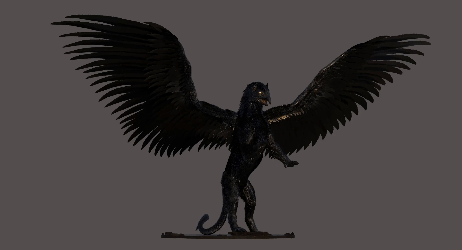
- Hybrid Anatomy: The bennu combines the powerful, muscular feline body of a lion with the razor-sharp talons, majestic wings, and piercing gaze of an eagle.
- Cultural Significance: In the lore of Rebel Moon, bennus originate from the lush plains and forests of Samandrai, serving the same functional purpose that horses do on Earth—used for riding, travel, and labor.
- The Standout Specimen: The most famous bennu in the cinematic universe is Beatrice, a stunning black-feathered female introduced in Rebel Moon – Part One: A Child of Fire.
- The Narrative Purpose: Bennus are notoriously difficult to tame. They are depicted as "unrideable" by ordinary handlers, requiring a profound, empathetic bond between beast and rider based on mutual respect and shared trauma.
Chronology: From Concept Art to Screen Reality
The journey of bringing Beatrice the Bennu from a writer’s room concept to a photorealistic cinematic creation is a masterclass in modern digital filmmaking. The timeline of the bennu’s creation highlights the rigorous collaboration between Zack Snyder and world-class VFX studios.
Phase 1: Conceptualization and Mythological Blend (2020–2021)
During the early pre-production phases of Rebel Moon, Zack Snyder and his creative team laid out the blueprints for the fauna inhabiting the various worlds of the Imperium. Recognizing the need for a majestic mount that could rival the iconic creatures of Star Wars or Avatar, Snyder conceptualized a sci-fi griffin. The design philosophy relied on grounding the creature in real-world animal behaviors—studying how big cats move, pounce, and interact, while cross-referencing avian aerodynamics to make flight look heavy, powerful, and believable.
Phase 2: The Framestore Execution (2021–2023)
The legendary visual effects studio Framestore was tasked with bringing the bennu to life. Utilizing concept art from the production team, Framestore’s artists painstakingly sculpted the digital creature. They focused heavily on texturing—ensuring that individual feathers caught the light differently than the short, dense fur of the lion-like body. Motion capture references, animatronics, and interactive physical props on set allowed actors like Staz Nair (who plays Tarak Decimus) to physically interact with a tangible stand-in before digital layers were applied in post-production.
Phase 3: The Debut in A Child of Fire (December 2023)
The bennu made its explosive global debut in Rebel Moon – Part One: A Child of Fire, specifically through the unforgettable sequence known by fans as "The Breaking of Beatrice." Set on the barren, dusty outpost world of Neu-Wodi, the scene introduced audiences not only to the creature’s ferocity and agility but also to its deep emotional intelligence.
Supporting Data: The Visual Effects Breakdown
Creating a creature that feels physically present in a live-action sci-fi environment requires an immense amount of digital artistry, physics simulation, and anatomical accuracy. Framestore released extensive behind-the-scenes breakdown data highlighting the technical hurdles overcome during the production of Beatrice:
- Feather Simulation: Unlike simple fur, feathers require complex collision detection. Framestore developed custom simulation pipelines to handle thousands of individual feathers reacting to wind resistance, high-speed flight, and physical contact with human skin.
- Muscle Dynamics: To sell the weight of a creature that easily scales upwards of a thousand pounds, the team implemented advanced muscle-flexing software. Every time Beatrice lands or leaps, the underlying musculature ripples beneath her hide and feathers.
- Lighting Integration: Because Rebel Moon relies heavily on Zack Snyder’s signature high-contrast, moody cinematography (often utilizing naturalistic lens flares and practical atmospheric dust), integrating a creature with a pitch-black color palette required sophisticated ray-tracing and global illumination techniques to prevent Beatrice from looking like a flat silhouette against complex backgrounds.
Official Responses and Creative Insights
The collaboration between Zack Snyder and the artists at Framestore has been widely praised by critics and visual effects professionals alike. In interviews discussing the creation of the film’s otherworldly fauna, Snyder has repeatedly emphasized the importance of emotional resonance over mere spectacle.
The Voice of the Creator
Zack Snyder noted that creatures in his universes must reflect the psychological states of the characters who encounter them. This philosophy is most clearly articulated in the central emotional turning point of the sequence where Tarak confronts Beatrice.

Trapped as a captive on Neu-Wodi, high-born prince Tarak (now stripped of his royal status) is given a single chance at freedom: he must step into an enclosure and tame a creature widely believed to be untamable.
Rather than using brute force, whips, or sedatives—methods favored by the oppressive Imperium forces—Tarak approaches Beatrice with vulnerability. His dialogue during the scene serves as the emotional anchor of the encounter:
“I’m not going to hurt you. You’re far from home and so am I. You and I, we are alike. We’ve been hurt. Betrayed. Our trust has been broken. We both know fear. Yet, the biggest fear we both face is the fear of ourselves.”
— Tarak to Beatrice, Rebel Moon – Part One: A Child of Fire
This moment transforms the bennu from a simple fantasy beast into a thematic symbol of shared trauma, broken trust, and eventual redemption. The animal recognizes kindred spirits not by dominance, but by empathy.
Implications: What the Bennu Means for the Future of the Rebel Moon Franchise
As Netflix and Zack Snyder continue to expand the Rebel Moon universe—through director’s cuts, expanded media, and potential sequels—the introduction of the bennu carries significant implications for the future of the franchise’s world-building.
1. Expanding the Lore of Samandrai
While Part One and Part Two (The Scargiver) heavily focused on the agricultural planet of Veldt and the military might of the Motherworld, future installments or spin-off media exploring Tarak’s home world of Samandrai are practically guaranteed to feature the bennu in its natural habitat. Fans have eagerly theorized about witnessing sweeping aerial shots featuring majestic herds of wild bennus soaring across the expansive plains and dense, archaic forests of Samandrai.
2. Redefining Sci-Fi Mounts
In cinematic history, iconic creatures like the Tauntauns of Star Wars or the Direhorses and Mountain Banshees (Ikran) of James Cameron’s Avatar have set high bars for how alien mounts are integrated into storytelling. The bennu successfully carves out its own distinct niche by wedding classical mythological iconography (the griffin) with the raw, gritty, mud-and-blood realism characteristic of Zack Snyder’s cinematic universe.
3. Merging Practicality with Digital Wonder
The success of Beatrice proves that modern VFX houses can deliver hyper-realistic mythical creatures without sacrificing the emotional core of the scene. The tactile nature of the interaction between Staz Nair and the digital/puppet stand-in sets a benchmark for how actors can deliver nuanced, grounded performances opposite fully computer-generated fantasy beasts.
Conclusion
The bennu is far more than just a visually stunning addition to Rebel Moon’s cosmic zoo. It is a brilliant synthesis of ancient mythological tradition and cutting-edge science fiction design. From Framestore’s meticulous digital craftsmanship to the deeply resonant emotional bond forged between Beatrice and Tarak Decimus, the creature encapsulates everything Zack Snyder’s epic universe strives to achieve: scale, beauty, heart, and a relentless sense of wonder.
As the mythos of Rebel Moon continues to grow, one thing is certain: whenever the powerful wings of a bennu beat across the screen, audiences are in for an unforgettable flight.