




BORRE, Norway — Nestled within the ancient burial mounds of Borre along the sparkling expanse of the Oslo Fjord, the Midgardsblot Metal Festival once again summoned the international vanguard of extreme music, Viking reenactment, and Norse paganism for its 2026 iteration. Blending historical reverence with contemporary counterculture, the multi-day gathering stands as a towering pillar in the global calendar of folk metal, black metal, and Germanic heathendom.

For journalist and cultural researcher Lyonel Perabo, the 2026 pilgrimage offered a condensed, high-intensity encounter. Opting for a truncated two-day solo excursion rather than the full family affair of previous years, Perabo navigated the festival’s shifting infrastructure, the smoke of ritual altars, and a punishing sonic gauntlet of eight distinct musical acts. Armed with an all-access photo-pit accreditation, this year’s journey to Borre delivered a masterclass in how extreme music festivals continue to evolve while tightly gripping their ancestral roots.

Chronology: A Two-Day Descent into Borre
The journey to Midgardsblot 2026 marked a departure from standard logistical patterns. Forgoing the traditional eastern route via Moss, Perabo elected for a streamlined western approach, taking the train from Oslo directly to Skoppum—a route seamlessly intersecting with local bus networks—before checking into the Rørestrand Camping grounds situated less than a mile north of the festival site.

Day One: The Blot, Rituals, and Atmospheric Drones
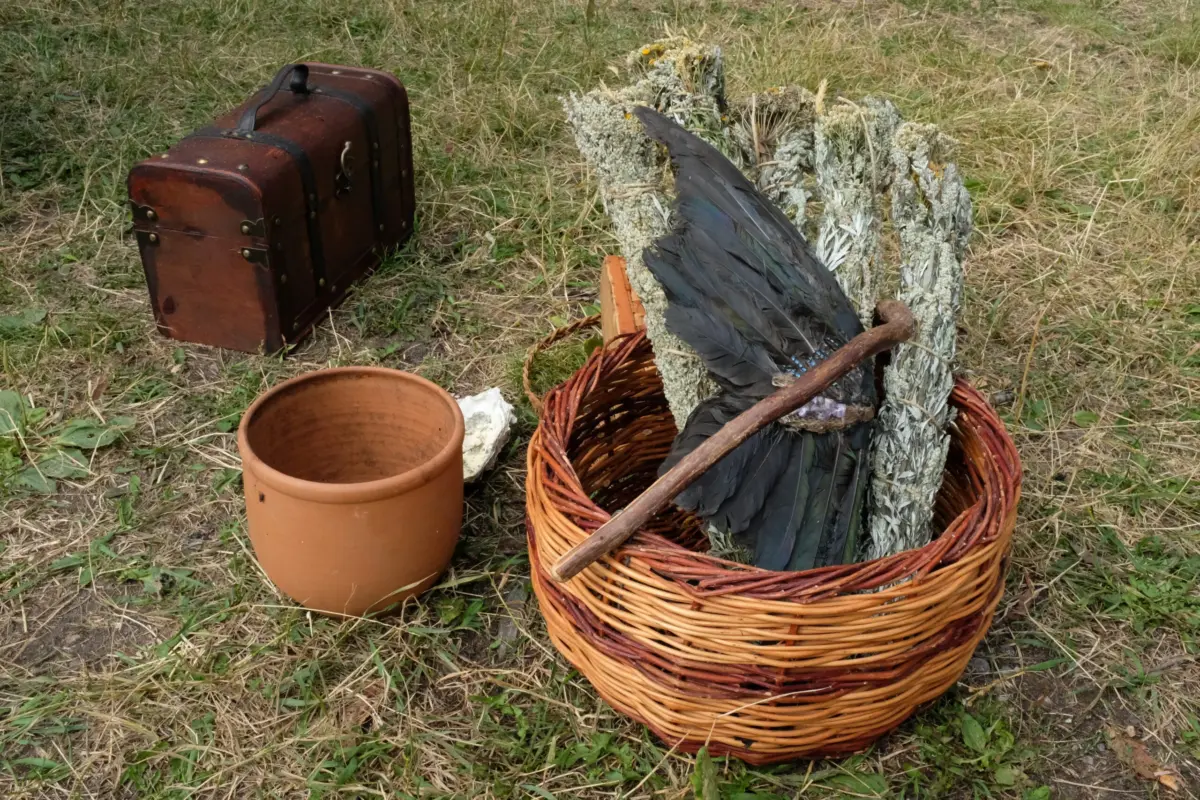
Arriving just as the festival’s opening blot ceremony was drawing to a close, Perabo stepped into a landscape alive with the reverberations of ceremonial sheep horns and deep-set drumming. Organizers Folket Bortafor Nordavinden orchestrated the traditional sacrifice and consecration of the sacred god-poles, an immersive ritual where attendees—colloquially styled "bloters"—waited in long lines to be smudged and anointed with blood.

Fulfilling a lighthearted pact made with his young daughter back home, Perabo approached the lacquered, blood-soaked god-poles after the crowd dispersed, dipping his fingers to daub a streak of red across his forehead—a modest initiation compared to the head-to-toe crimson coatings favored by seasoned festival-goers.

With logistics conquered, Day One transitioned swiftly into a sonic exploration:

- Nemuer: Hailing from Czechia, the acoustic quartet opened the main stage with a thick, hypnotic ambient soundscape. Utilizing the tegelharpa, flutes, and guttural throat-singing interspersed with tremolo-picked electric guitars, Nemuer set a meditative tone for the afternoon.
- Taake: The undisputed highlight of the festival’s first wave, Bergen black metal veteran Hølje "Høst" Taake delivered an explosive, high-octane set. Backed by a níðstång featuring a bloodied, decapitated horse head effigy, Taake combined blistering blast beats with groovier, rocking choruses that sparked the festival’s fiercest mosh pits.
- Songleikr: Fronted by Heilung’s Maria Franz, this female-fronted neofolk trio cast a spell over a massive main stage crowd with intricate vocal harmonies and witty stage banter, offering a softer, highly engaging medieval-inspired respite.
- Sólstafir: The Icelandic post-rock stalwarts closed Wednesday night under the twilight sky. While fan-favorite tracks like Fjara shone through, the performance was unfortunately hindered by muddy mixing—swallowing delicate guitar work beneath overbearing bass and drum frequencies—and a tonally questionable setlist closer.
Day Two: Thrash, Legends, and Runic Revelry
The second day brought structural re-evaluations of the festival grounds. Organizers successfully overhauled the layout by relocating food trucks, bars, and the popular cigar lounge/barber shop annex into the immediate vicinity of the main stage, leaving the Viking reenactment camp exclusively to authentic craftsmen, jewelers, and instrument makers.

The musical narrative of Day Two oscillated between atmospheric heaviness and nostalgic triumph:

- Wolves in the Throne Room: Performing in the late afternoon sun, the Cascadian black metal masters distilled their humid, forest-born aesthetic into the dry Norwegian air. Despite minor mixing hurdles that favored the rhythm section, Nathan and Aaron Weaver commanded the stage with despairing howls and primal drumming.
- Børzerk: Discovering this local lineup of dedicated teenage musicians inside the cramped, Iron-Age longhouse dance floor proved to be a thrilling surprise. Delivering unyielding, vicious black metal free of modern stylistic compromises, they offered a masterclass in primitive aggression.
- Between Two Worlds ("I"): Marking a triumphant return to live performance after more than two decades, Abbath Doom Occulta resurrected his mid-2000s supergroup project alongside original members Ice Dale and Armagedda. Despite minor in-ear monitor glitches that required song restarts, the epic heavy/black metal hybrid electrified the main stage.
- Venom: The legendary British architects of extreme metal closed out Thursday night. Featuring original members Mantas and Abaddon, the set relied on a rotating cast of guest vocalists to deliver early 80s heavy metal anthems like Witching Hour. While historically monumental, the performance ultimately leaned toward primitive heavy metal, prompting an early departure from some festival-goers.
Supporting Data & Infrastructure
Midgardsblot 2026 demonstrated significant administrative improvements in crowd control and spatial optimization:

| Metric / Category | 2025 Approach | 2026 Optimization |
|---|---|---|
| Travel Route | Oslo $rightarrow$ Moss (Ferry/Bus) | Oslo $rightarrow$ Skoppum (Direct Train/Bus) |
| Camping Logistics | Distant commercial sites or southern festival grounds | Rørestrand Camping (North, economic and efficient for solo travelers) |
| Site Layout | Commercial booths scattered near reenactor camps | Booths centralized near main stage; reenactor camp dedicated to authentic crafts |
| Acoustic Challenges | Variable wind interference from the Fjord | Mixed results; main stage acts experienced occasional low-end muddying |
Beyond the stages, the festival continued to anchor its academic and cultural identity. While scheduling constraints limited Perabo’s immersion, Midgardsblot maintained its robust slate of historical lectures at the adjoining Midgard Viking Center, alongside tattooing exhibitions in Horten, longship rowing, and yoga workshops.

Official Responses and Cultural Resonance
While Midgardsblot operates primarily as an independent cultural and musical convergence rather than a corporate enterprise, its organizers continually emphasize community dialogue regarding the modern intersection of Norse heritage and metal music.

In a festival ecosystem frequently scrutinized for ideological co-optation by fringe political groups, Midgardsblot maintains an explicitly inclusive, fiercely non-political stance focused entirely on historical scholarship, artistic expression, and radical hospitality. The opening blot—facilitated by Folket Bortafor Nordavinden—serves as the spiritual anchor of this ethos. By inviting thousands of attendees of diverse global origins to share in a communal ritual of smudging, drumming, and anointing, the festival actively constructs an inclusive modern pagan identity rooted in experiential community rather than exclusionary dogma.

Implications: The Future of Heritage Festivals
The success of Midgardsblot 2026 highlights several broader implications for the European boutique festival circuit:

- The Fusion of Heritage and Heavy Music: Midgardsblot proves that extreme metal and historical reenactment are not contradictory subcultures, but symbiotic forces. The physical relocation of commercial vendors away from the historical reenactment camp preserved the anthropological integrity of the Viking village while streamlining the consumer experience for concertgoers.
- Generational Renewal in Extreme Metal: The visceral, breakout performance by young local acts like Børzerk inside the longhouse signals that the foundational aggression of 1990s Norwegian black metal remains a living, breathing tradition passed down to teenage musicians who treat the genre with raw reverence rather than ironic distance.
- Logistical Sustainability: As destination festivals face mounting economic pressures, streamlined transit alternatives—such as the Skoppum railway connection utilized this year—demonstrate that environmental and financial accessibility are critical for maintaining diverse, international attendance figures.
As the fires at Borre burned down at the conclusion of Thursday night, the underlying sentiment among artists, academics, and "bloters" alike was clear: Midgardsblot remains an irreplaceable crucible where the ancient past and the extreme present continuously forge a unified future.