







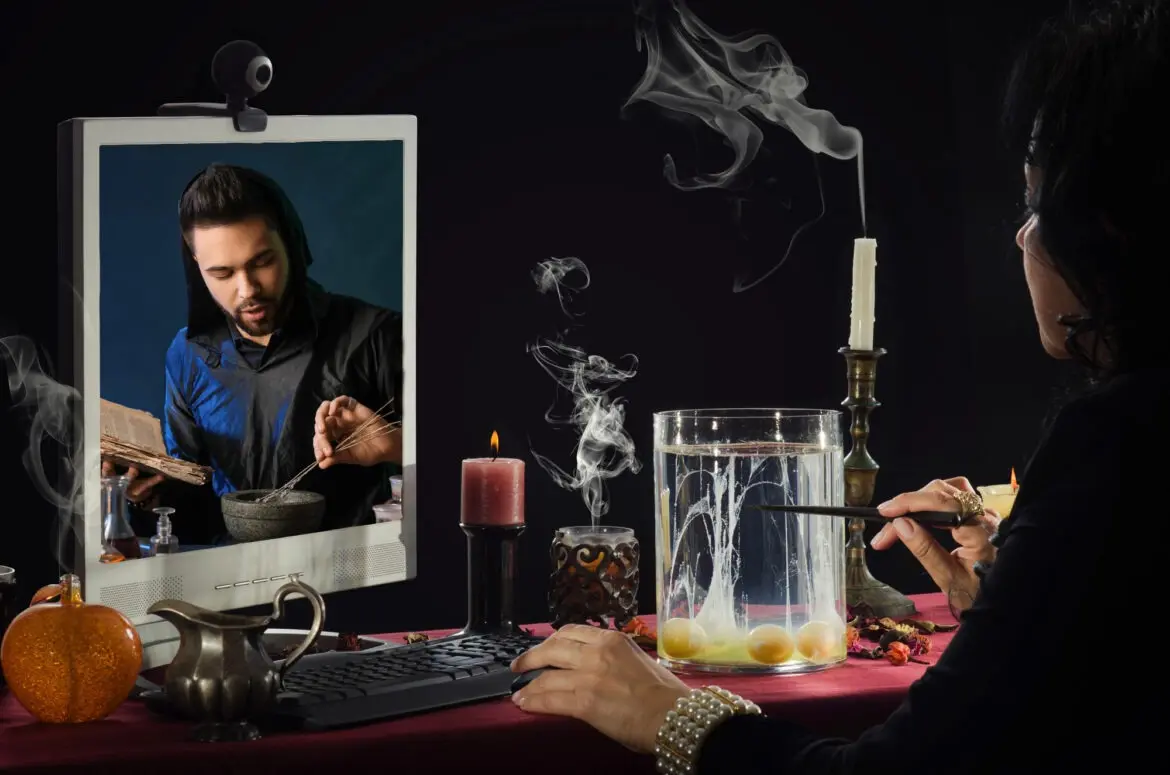
LOS ANGELES, CA — For more than three decades, professional witchcraft educator, author, and artist Storm Faerywolf has made a living navigating a path few tread: teaching the Craft as a full-time profession. Eschewing a conventional career, Faerywolf has spent 35 years refining a curriculum, building communities, and mentoring initiates. Yet, his longevity in the field has placed him at the center of enduring debates within the modern Pagan and occult communities.
Those debates—centering on the legitimacy of long-distance digital instruction and the ethics of charging money for spiritual guidance—highlight a broader cultural shift within contemporary Western esotericism. As technology reshapes how spiritual traditions are transmitted, educators like Faerywolf find themselves challenging deep-seated dogmas held by traditionalists who view online classes and paid mentorship as a dilution of authentic practice.
Chronology of a Path: From Accidental Teacher to Digital Pioneer
Faerywolf’s journey into professional education began not through careful planning, but through sudden necessity. Tracing his trajectory reveals a decades-long evolution influenced by traditional initiations, technological adaptation, and personal resilience:
- Age 14: Faerywolf formally dedicates himself to the Craft, setting the foundation for a lifelong vocation.
- Age 20: While serving as an assistant to a local coven high priest, Faerywolf is abruptly forced to take over a classroom at a local bookstore when the primary instructor departs mid-session. The baptism-by-fire experience demonstrates his natural affinity for teaching.
- The Late 1990s: Following years of localized teaching, Faerywolf pauses public instruction to undergo a rigorous, six-year training period within the Anderson Faery (Feri) tradition, deepening his expertise in spirit work and trance techniques.
- Early 2002: Following his formal initiation into the Faery tradition, Faerywolf participates in an experimental "teleconference ritual" hosted by author Francesca DeGrandis. Experiencing a genuine energetic shift during the remote audio call shatters his initial skepticism regarding long-distance magic.
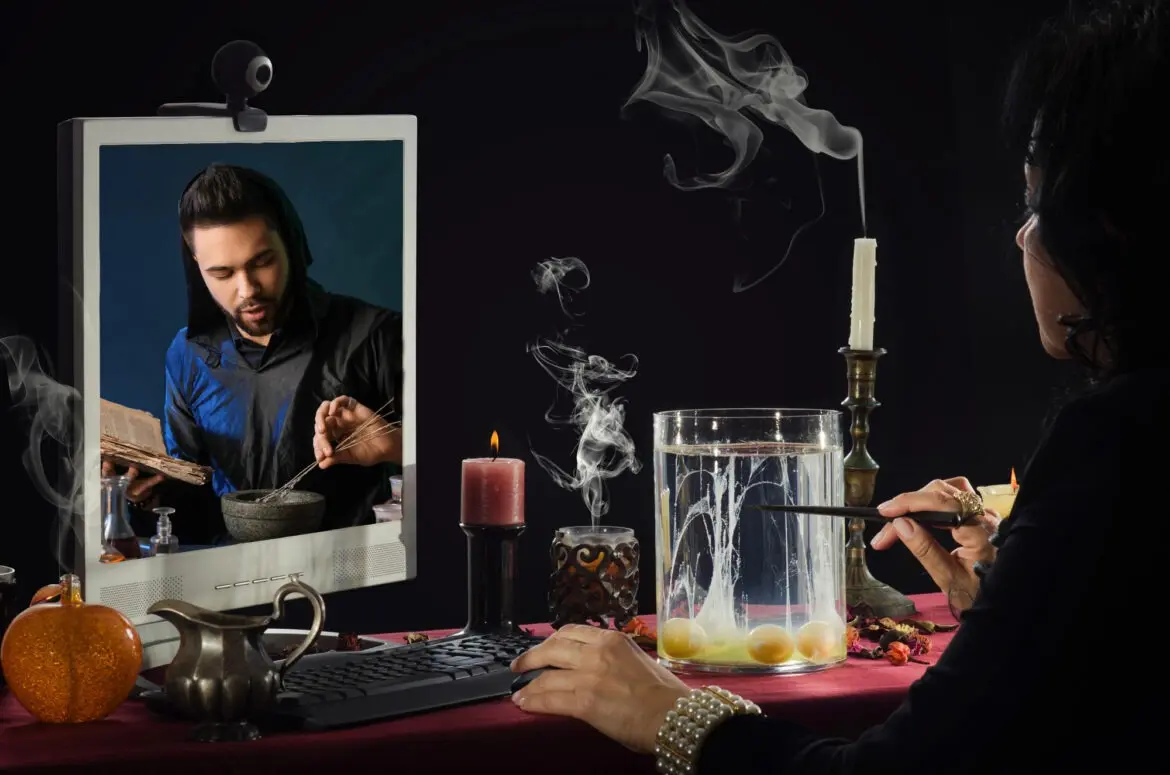
- The Mid-2000s to 2010s: Despite facing vocal opposition from traditionalist initiates, Faerywolf transitions to remote teaching using live audio, webcams, and eventually Discord. This model underpins the creation of the Black Rose Witchcraft online course, which has enrolled over a thousand students across eleven years.
- Present Day: Faerywolf continues to teach, write, and create art full-time, advocating for the integration of modern communication tools in esoteric education.
Supporting Data and Industry Dynamics: The Economics of the Craft
The financial realities of running an independent educational practice in the occult sector are complex. Unlike mainstream academic institutions or corporate training programs, independent esoteric teachers operate outside institutional safety nets, relying entirely on direct-to-consumer models.
The Cost of Full-Time Esoteric Education
- Time Investment: Developing comprehensive curricula, designing trance meditations, and maintaining one-on-one student mentorship require full-time hours comparable to any professional educator.
- Subsidized Access Models: To balance accessibility with financial survival, many modern online esoteric programs—including Faerywolf’s—utilize tiered pricing structures. Full-paying enrollees often subsidize partial or full scholarships for less-resourced students.
- The "Shadow Economy" Risk: Critics of paid spiritual instruction frequently argue that charging money commercializes the sacred. However, seasoned educators note that unpaid teaching models can inadvertently foster toxic dynamics, sometimes relying on "shadow payments" extracted through unpaid labor, mandatory psychological loyalty, or undocumented emotional exploitation.
Official Responses and Community Perspectives
The philosophical divide between traditionalist gatekeepers and modern digital educators exposes deep fissures within contemporary Paganism.

Traditionalists argue that face-to-face lineage transmission, physical circle placement, and unmediated interpersonal contact are non-negotiable components of authentic esoteric initiation. Critics of online witchcraft education have historically leveled accusations that remote learning "waters down" the Craft and invalidates time-tested initiatory structures.
"You can’t teach the Craft over the internet!" critics argued during the early days of online esoteric expansion. "You are watering down Witchcraft! Authentic teachers only teach in-person!"
Faerywolf notes that such criticisms are frequently rooted in assumptions rather than experiential evidence. When offered free access to observe online classes firsthand, traditionalist detractors routinely declined, preferring to rely on dogmatic frameworks inherited from their own training lineages.
At the same time, a growing segment of the contemporary esoteric community embraces digital connectivity. Proponents of online learning argue that geographical isolation should not bar sincere seekers from spiritual community and instruction. Platforms ranging from specialized Discord servers to global video conferencing tools have allowed students in remote areas to access high-level training that would otherwise be geographically impossible to attain.
Implications for the Future of Esoteric Education
The normalization of digital instruction in witchcraft and ritual arts carries profound implications for the future of Western mystery traditions.

1. Democratization vs. Dilution
As online academies and remote mentorship programs expand, access to esoteric knowledge is shifting away from exclusive, localized covens toward decentralized, global networks. While this democratization allows marginalized or geographically isolated individuals to find community, it also introduces challenges regarding quality control, accountability, and the preservation of lineage integrity.
2. Redefining "Sacred Space"
The realization that ritual energy and trance states can be successfully facilitated across digital mediums challenges materialist definitions of sacred space. As Faerywolf observed during his first teleconference ritual, the energetic resonance of a circle does not strictly depend on physical proximity. This challenges educators to focus on the inner psychological and spiritual experience of students rather than getting bogged down by the outer mechanics of the environment.
3. Professionalization of Occult Teaching
As society shifts further into a gig economy, the model of the professional, full-time esoteric educator is becoming more viable—and necessary. Recognizing spiritual instruction as legitimate labor requiring financial compensation helps protect educators from burnout and poverty, ensuring that teachings are delivered with the depth, preparation, and focus they require.
Ultimately, whether practitioners gather around a physical campfire under the stars or connect through a high-definition webcam across oceans, the core mechanics of the Craft remain unchanged. As modern tools evolve, the enduring elements of ritual—intention, focus, and direct communion with the unseen—continue to define the heart of the esoteric path.