







By Global Environmental Desk
Published: October 2023
Main Facts
For decades, environmental advocacy has relied on a familiar playbook: turn off the tap while brushing your teeth, water your lawn only at night, and—most famously—cut two minutes off your daily shower. The underlying assumption of these lifestyle tweaks is that personal sacrifice is the toll we must pay to ensure a sustainable future.
However, recent data compiled by environmental scientists and government agencies suggests that our approach to domestic conservation may be fundamentally misdirected. While cutting shower times yields modest, incremental savings, it pales in comparison to the hidden water costs embedded in our daily consumption habits—most notably, our diets.
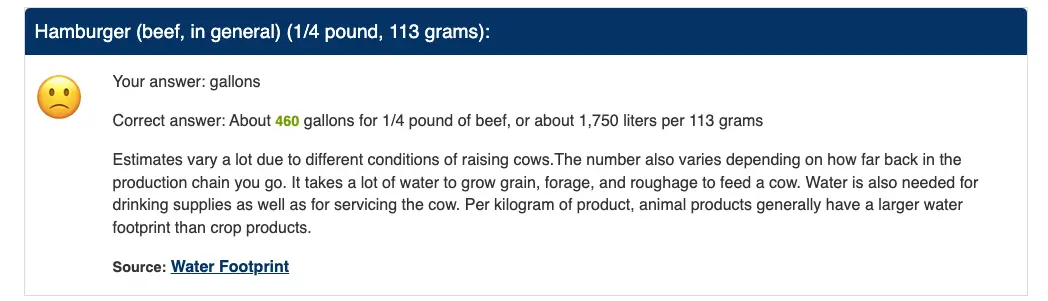
According to data from the U.S. Geological Survey (USGS), a single quarter-pound of beef requires approximately 460 gallons of water to produce. That translates to an astounding 1,840 gallons per pound. To put that into perspective, consuming just one pound of beef requires more water than the total amount saved by shaving two minutes off a standard, low-efficiency shower every single day for an entire calendar year.
This revelation shifts the paradigm of environmental activism. It suggests that achieving meaningful sustainability does not necessarily require grueling daily lifestyle sacrifices like shivering through accelerated showers. Instead, it demands a strategic shift in focus toward high-impact areas, primarily the agricultural supply chain.

Chronology
The understanding of "virtual water"—the water used to create consumer goods and food products—has evolved significantly over the last several decades, moving from academic research to mainstream public awareness.
- Late 1990s: British professor Tony Allan introduces the concept of the "virtual water" trade. His research demonstrates that nations do not merely trade physical commodities; they unknowingly trade massive quantities of water embedded in agricultural and industrial products.
- 2003: The UNESCO-IHE Institute for Water Education establishes the Water Footprint Assessment methodology, creating standardized metrics to measure direct and indirect water consumption by individuals, businesses, and nations.
- 2010s: Environmental agencies, including the U.S. Geological Survey (USGS), begin developing interactive consumer tools, such as food impact calculators, to help the public visualize the hidden resource costs behind everyday dietary staples.
- 2022–Present: Sustainability advocates and eco-entrepreneurs increasingly challenge traditional messaging. Rather than focusing solely on direct household usage—such as faucet aerators and shower timers—experts begin emphasizing systemic lifestyle choices, particularly dietary shifts, as the most frictionless path to large-scale resource conservation.
Supporting Data
To truly understand why a dietary shift outweighs domestic curtailment, one must look closely at the mathematics of resource consumption.
The Shower Math
Consider a traditional, low-efficiency showerhead operating at a flow rate of 2.5 gallons per minute (gpm).
- Reducing your shower time by 2 minutes daily saves 5 gallons of water per day.
- Over the course of 365 days, this cumulative savings reaches 1,825 gallons.
While saving nearly 2,000 gallons a year sounds impressive on paper, it requires a daily lifestyle adjustment—an ongoing compromise that many consumers find inconvenient or unpleasant.
The Beef Math
Now, examine the resource expenditure required for livestock agriculture. Data compiled by the USGS and agricultural researchers indicates that animal proteins carry an exceptionally heavy water footprint, driven by the vast amounts of irrigated grain and forage required to feed cattle throughout their lifespans.

- A single 1/4-pound hamburger patty consumes roughly 460 gallons of water.
- One full pound of beef accounts for approximately 1,840 gallons of water.
When comparing these two figures, the equivalence is striking: eating a single pound of beef matches the water expenditure of 736 minutes of showering under a standard 2.5 gpm fixture. In practical terms, an individual could take a continuous, 12-hour shower or eat a single pound of beef and consume the exact same volume of water.
Furthermore, poultry and other meats, while generally less resource-intensive than beef, still require hundreds of gallons of water per pound, vastly outstripping the direct water use associated with standard indoor plumbing activities.
Official Responses and Expert Perspectives
Environmental scientists, sustainability consultants, and resource economists have increasingly weighed in on the efficacy of consumer-facing conservation campaigns.
"For too long, the environmental movement has framed sustainability as an exercise in penance," notes Scott Cooney, a veteran eco-entrepreneur, sustainability consultant, and author. "We tell people to take shorter showers, scrape their plates, and turn off lights, making them feel as though saving the planet requires constant personal sacrifice. But when you look at the macro data, these micro-efforts often distract from the choices that actually move the needle."
Agencies like the USGS echo the sentiment that public awareness regarding hidden resource consumption remains critically low. Through initiatives like the National Water-Use Information Program, government scientists strive to educate the public on the concept of indirect water use—the water required to grow crops, manufacture goods, and generate electricity.

"Consumers routinely underestimate the water embedded in their food supply," says a representative from environmental outreach initiatives referencing the USGS food impact metrics. "When people take our water calculators, they are almost universally shocked to see that their diet accounts for the vast majority of their personal water footprint, dwarfing direct indoor use like bathing, laundering, and dishwashing."
Implications
The realization that dietary choices eclipse domestic habits in water consumption carries profound implications for policy, corporate strategy, and individual environmental advocacy.
1. Redefining "Sacrifice" in Sustainability
Traditional conservation messaging has often created psychological friction. Asking tired consumers to rush through their morning routines can breed eco-fatigue. Conversely, shifting focus toward high-impact, low-friction adjustments—such as substituting a few beef meals per week with plant-based alternatives—achieves massive resource savings without diminishing daily quality of life. As Cooney points out, effective environmentalism should feel seamless, not punitive.
2. Agricultural Policy and Water Security
With major agricultural regions facing severe droughts, aquifer depletion, and climate volatility (such as the chronic water crises in the American West), policymakers are under mounting pressure to address water rights and irrigation practices in commercial agriculture. Understanding that a substantial portion of domestic water resources is effectively exported as virtual water through beef and grain exports forces a reevaluation of agricultural subsidies and water management policies.
3. Corporate Responsibility and Transparency
Food producers, restaurants, and grocery retailers may soon face increased consumer demand for transparent labeling regarding environmental footprints. Just as carbon labeling is beginning to emerge in consumer goods, water footprint labeling could become a powerful tool, empowering shoppers to make informed, resource-conscious decisions at the supermarket checkout.

Conclusion
Saving the planet does not require abandoning modern comforts or timing your morning routine with a stopwatch. By identifying where our resources are truly being consumed—moving past the bathroom vanity and looking straight at the dinner plate—we can make smarter, more effective choices that protect global water supplies while preserving our daily peace of mind.