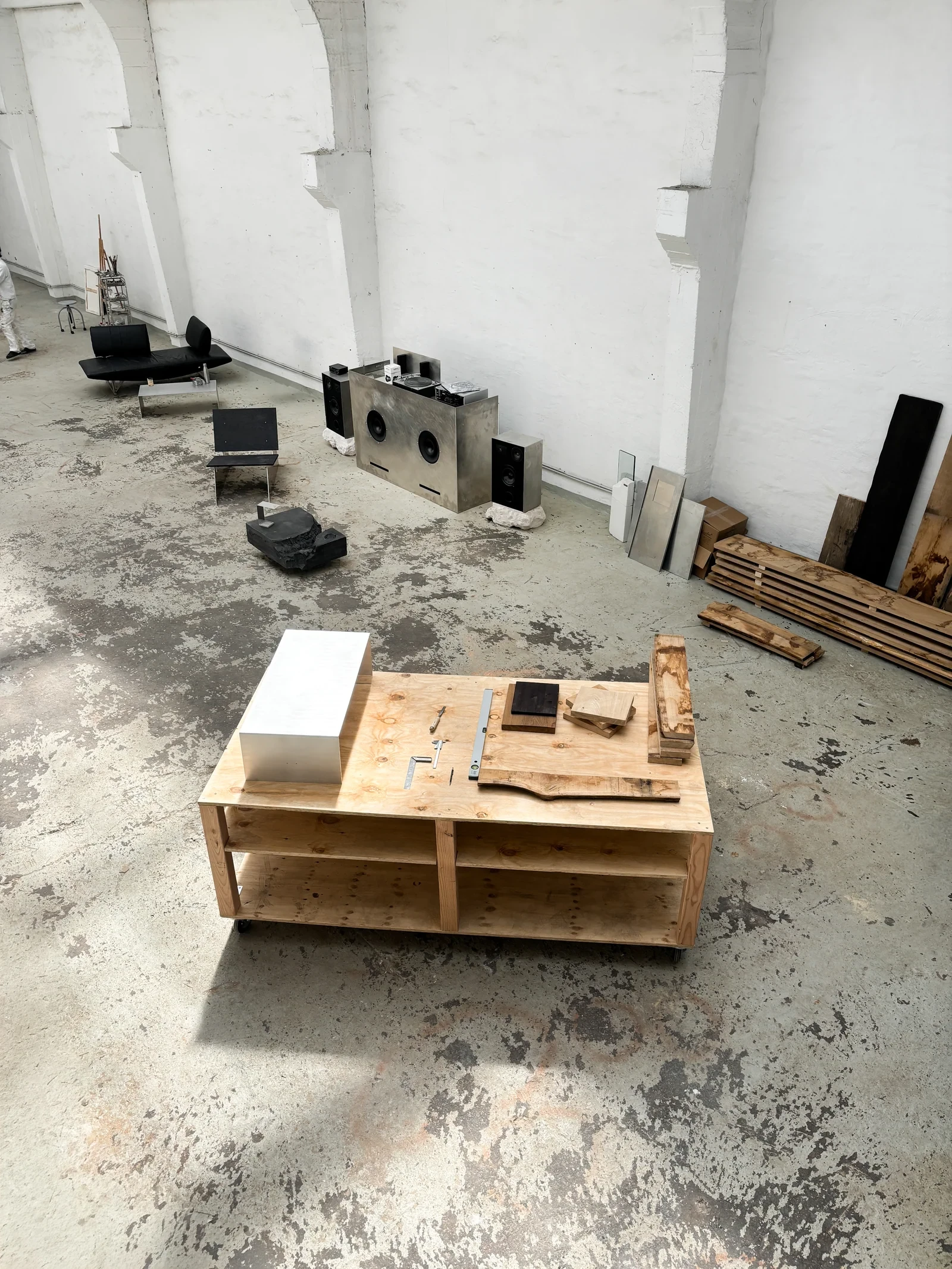
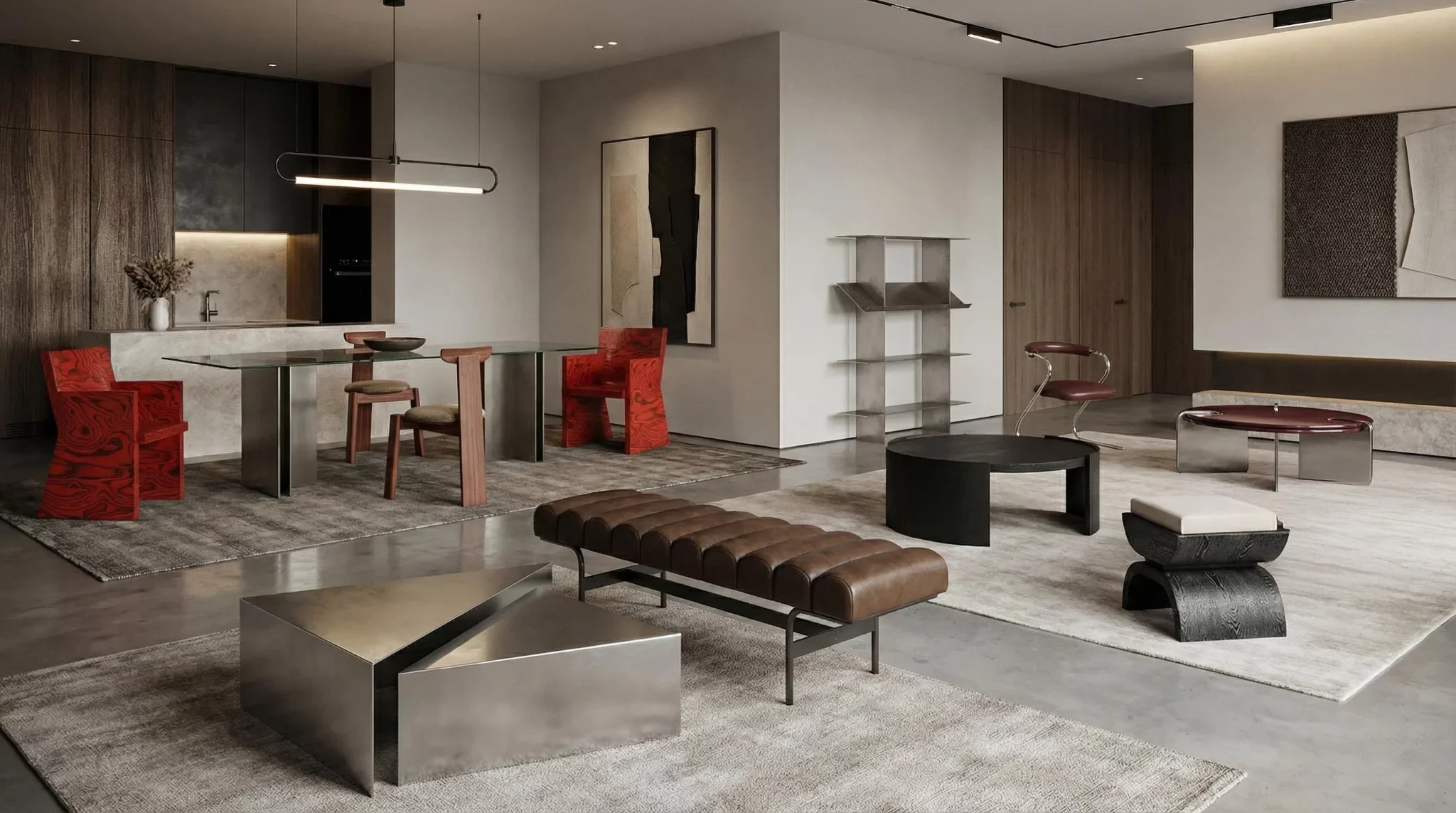
At the core of Case Studios, a Düsseldorf-based design enterprise, lies a fundamental rejection of superficial styling. Founded by an interdisciplinary collective bridging visual arts and traditional craftsmanship, the studio operates across product design, interior architecture, and large-scale artistic installations. Yet, the unifying thread binding their diverse portfolio is not a fleeting aesthetic trend, but a rigorous philosophy: design as a direct, unmediated engagement with raw materials.
Rather than imposing a predetermined form onto a medium, Case Studios approaches creation through the intrinsic logic of the substances they employ. Whether working with raw concrete, hand-polished aluminum, or charred timber, the studio’s foundational premise is that every material possesses its own structural grammar, history, limitations, and potential. The designer’s responsibility is not to invent a shape, but to decode this material language, honor its properties, and execute structural integrity without excess ornamentation.
This ethos results in objects that feel fundamentally inevitable—pieces possessing a visual gravity suggesting they could not have been fabricated in any other way, from any other substance. By stripping away non-functional decoration and ensuring that every visible surface also serves a structural purpose, Case Studios separates itself from contemporary manufacturers who treat exotic materials merely as surface finishes. For Case Studios, the material is the concept; everything else is secondary execution.
Chronology: From Interdisciplinary Roots to Modern Mastery
The trajectory of Case Studios reflects a deliberate, methodical evolution from a conceptual workshop into an internationally recognized name in contemporary collectible design.
The Foundation Years: Established in Düsseldorf, Germany, the studio was born out of informal dialogues between practitioners trained in classical craft traditions and contemporary visual arts. Frustrated by the prevailing industry standard of form-first manufacturing, the founders sought to reverse the design pipeline, prioritizing material research over digital rendering.
Early Explorations (Product & Interior Integration): The studio’s initial projects focused on architectural interventions and bespoke interior elements. By applying industrial processes to raw architectural concrete and untreated metals, the team established a reputation for uncompromising spatial minimalism.
The Cross-Disciplinary Expansion: Moving fluidly between functional furniture, spatial architecture, and art installations, Case Studios refined its material vocabulary. Projects began to explicitly juxtapose opposing elements—pairing heavy, natural elements with cold, industrial precision.
The Yakisugi Breakthrough: The studio achieved a significant milestone in material synthesis by successfully integrating the ancient Japanese wood-charring technique (yakisugi) with contemporary metalworking. This cross-cultural and cross-material methodology culminated in their signature exclusive lines, epitomized by their critically acclaimed furniture releases.
Present Day: Operating out of Germany, Case Studios continues to push the boundaries of collectible design, maintaining a strict adherence to handcrafted excellence while expanding its global footprint through platforms like Roomhints and direct international exhibitions.
Supporting Data: Anatomy of the Yakisugi Coffee Table
To understand the studio’s theoretical framework in a tangible context, one need look no further than their flagship piece from the Exclusive Line: the Yakisugi Burnt Wood Coffee Table.
+--------------------------------------------------------------------------+
| SPECIFICATION MATRIX: CASE STUDIOS EXCLUSIVE LINE                        |
+--------------------------------------------------------------------------+
| Product Name         | Yakisugi Burnt Wood Coffee Table                  |
| Primary Materials    | Burnt/Sealed Hardwood & Hand-Sanded Aluminum      |
| Dimensions           | 115 cm (Length) x 60 cm (Width) x 30 cm (Height)  |
| Craftsmanship Origin | Handcrafted in Germany                            |
| Design Influences    | Traditional Japanese Yakisugi & Industrial Modern |
| Uniqueness Factor    | 100% Variable (determined by charring process)    |
+--------------------------------------------------------------------------+
The table’s physical specifications are calculated to influence spatial dynamics. Standing at a low, expansive 30-centimeter height with a generous 115-by-60-centimeter footprint, the piece is deliberately proportioned to anchor a room rather than merely fill floor space.
At its core, the table highlights a dialogue between two extreme material states:
The Organic Char (Yakisugi): Utilizing the centuries-old Japanese method of charring wood, the timber is subjected to controlled fire. This process burns away cellular moisture and soft fibers, leaving behind an exceptionally dense, sealed, and weather-resistant core. The resulting surface develops a deep, carbonized black texture that defies artificial staining or painting, offering tactile depth that evolves with light.
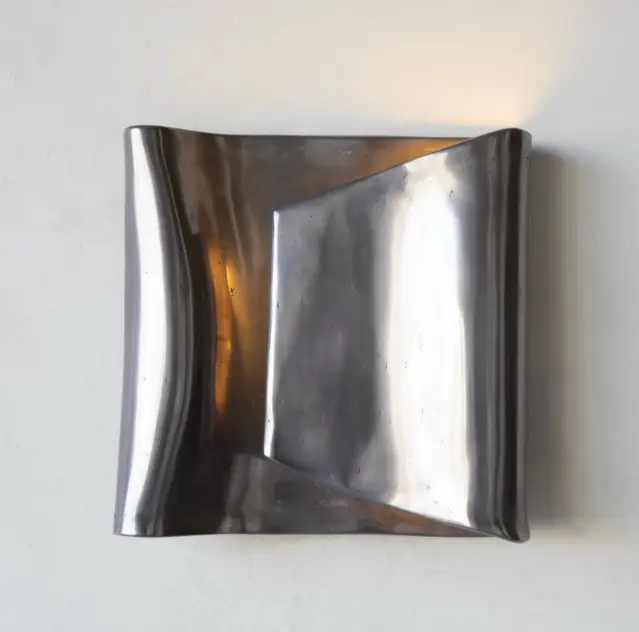
The Industrial Edge (Hand-Sanded Aluminum): Counterbalancing the ancient, organic warmth of the burnt wood is meticulously hand-sanded aluminum. This introduction of cold, industrial precision creates a structural tension. The two materials do not merely sit alongside each other; they structurally justify and stabilize one another.
Because the charring process reacts organically to the unique grain structure, density, and moisture content of each individual piece of hardwood, mass-produced uniformity is rendered impossible. No two tables are identical, ensuring that every collector acquires a singular artifact shaped by both human hands and natural elements.
Official Perspectives and Statements
The foundational philosophy of Case Studios has been articulated through various statements regarding their design methodology and material selection process. Emphasizing the agency of the medium over human ego, representatives of the studio have frequently highlighted the core tenets of their practice:
"There is a discipline at the center of everything Case Studios makes. Not a style — a discipline. A commitment to the idea that a material has its own logic, and the designer’s job is to understand it, honor it, and get out of the way."
This approach shifts the designer from an author of arbitrary shapes to a mediator between raw substance and functional utility. Elaborating on how this translates into finished objects, the studio notes:
"The deliberate use, selection, and refinement of unique and durable materials create objects that both reshape and highlight the original properties of each material."
By focusing on durability, historical resonance, and structural honesty, Case Studios positions its catalog as an antidote to fast-paced consumer design cycles. Their public commentary consistently underscores that true luxury in design is found not in decorative excess, but in the uncompromising respect paid to the origins of the matter itself.
Broader Implications for Contemporary Design
The growing prominence of studios like Case Studios points toward a broader paradigm shift within high-end interior architecture and collectible design. As digital rendering tools make it increasingly easy to generate complex, ornamental forms that lack physical rationale, a counter-movement is emerging—one that champions material truth, tactile authenticity, and sustainable longevity.
1. The Revival of Deep-Time Craft
By reinterpreting ancient techniques like yakisugi within a modern Western industrial framework, Case Studios demonstrates that traditional craftsmanship is not obsolete; rather, it holds unexploited solutions for contemporary durability. Charring wood naturally protects it against rot, insects, and moisture without the need for toxic chemical sealants. This synthesis of historical intelligence with modern minimalist aesthetics proves that sustainable design is often rooted in ancestral practices.
2. The Shift Toward Anti-Trends
In an era dominated by rapid design cycles and algorithmic trend-forecasting, material-led studios offer an alternative: objects designed to outlast stylistic whims. When a piece derives its visual identity from the natural variations of burnt grain and the honest weight of hand-sanded aluminum, it transcends seasonal obsolescence. These objects acquire a patina over time, embedding them deeper into the history of the spaces they inhabit.
3. The Redefinition of Luxury
The market response to Case Studios signals a maturing consumer base—one that values provenance, transparency, and narrative depth over brand-name superficiality. When buyers invest in furniture where "the material is the idea," they are acquiring an artifact of rigorous intellectual and physical labor.
Through their uncompromising dedication to material logic, Case Studios continues to challenge the design industry to look past the surface, reminding creators and collectors alike that the most profound design choices are those dictated by nature itself.