









Main Facts
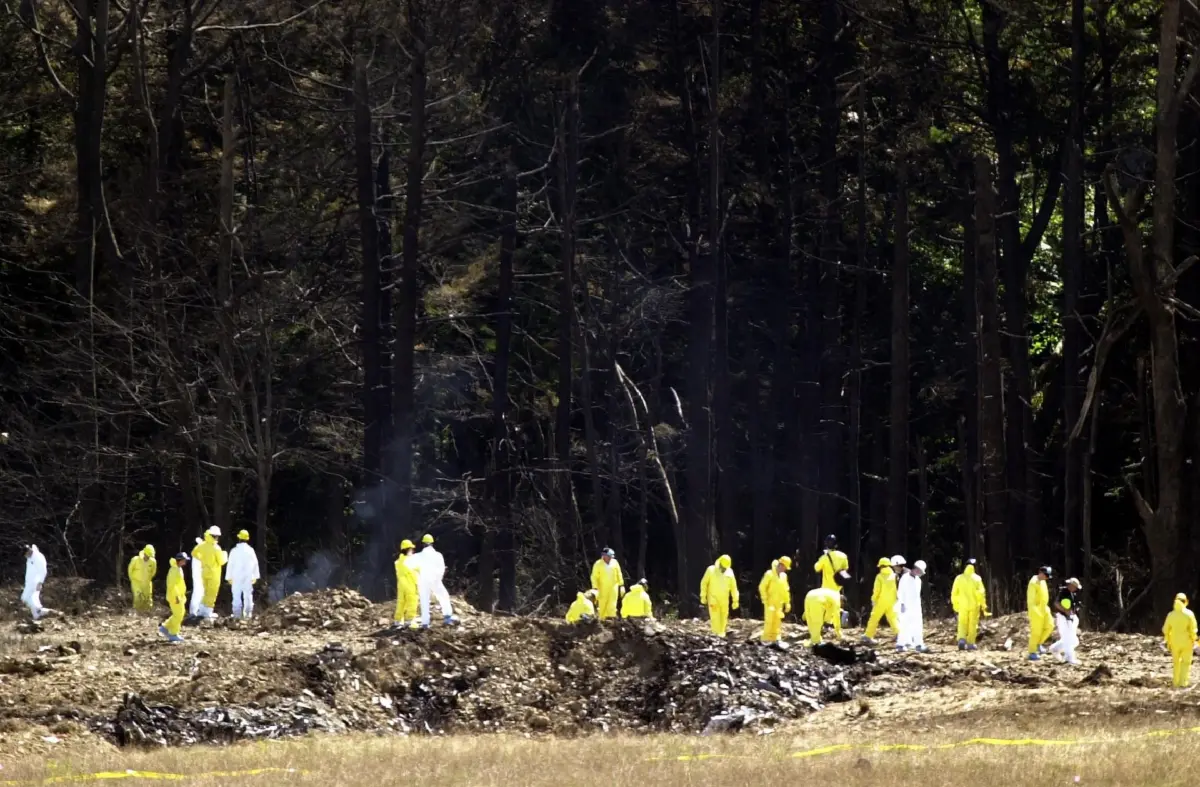
Twenty-five years after the terrorist attacks of September 11, 2001, the psychological and physical footprints of that tragic morning continue to resonate across the United States. While public memory often focuses on Ground Zero in Lower Manhattan, the damaged ring of the Pentagon in Arlington, Virginia, and the quiet field in Shanksville, Pennsylvania, the events of that day created immediate localized trauma in unexpected corridors across the American Midwest.
In Summit County, Ohio—specifically within the suburban community of Cuyahoga Falls—residents experienced an unforgettable, low-altitude flyover by a commercial airliner during the height of the national crisis. That aircraft was later confirmed through radar data, federal flight logs, and courtroom evidence to be United Airlines Flight 93, a hijacked Boeing 757-222 carrying 44 people, including four al-Qaeda terrorists.
For local children attending suburban schools like Lincoln Elementary on Bailey Road, the sudden rumble of an ultra-low-flying jetliner, followed by an immediate surge in police presence and total information blackouts by anxious school staff, marked the precise moment their childhood innocence was shattered.
The account of one former second-grader—a seven-year-old student in Mrs. Strubie’s class at Lincoln Elementary—illustrates the lifelong impact of secondary trauma:

- Immediate Visual Exposure: Minutes before being dropped off at school, the student witnessed the deep blue belly and silver-gray upper fuselage of a low-flying jetliner roaring over Cuyahoga Falls, shaking the ground and disturbing surrounding residential neighborhoods.
- Immediate Operational Disruptions: Within hours, regional telecommunications infrastructure companies, including Lucent Technologies, evacuated and sent field technicians home. Local school districts initiated silent lockdowns, locking exterior doors and placing armed police officers at playground gates.
- Personal Loss: Local community networks suffered direct casualties; suburban youth sports coaches and area residents were later identified among the passengers killed aboard the hijacked flights.
- Decades-Long Psychological Fallout: The experience triggered severe aviophobia (fear of flying) and acute trauma that prevented the individual from boarding an aircraft for over two decades, until 2023.
Chronology
The timeline of September 11, 2001, in Northeast Ohio represents a stark intersection between mundane suburban routines and unprecedented national terror.
       08:42 AM: UA Flight 93 departs Newark Liberty International Airport for San Francisco.
          │
       08:46 AM: American Airlines Flight 11 crashes into the WTC North Tower.
          │
       09:03 AM: United Airlines Flight 175 crashes into the WTC South Tower.
          │
       09:28 AM: Hijackers attack the cockpit of UA Flight 93 over eastern Ohio.
          │
       09:35 AM: UA Flight 93 executes an abrupt U-turn over Oberlin, OH, dropping altitude.
          │
       09:38–09:45 AM: UA Flight 93 passes low over Cuyahoga Falls / Summit County.
          │
       10:00 AM: Telecom entities (e.g., Lucent Tech) order nationwide personnel to evacuate.
          │
       10:03 AM: UA Flight 93 crashes into a field in Shanksville, PA, after passenger revolt.
          │
       03:30–04:00 PM: Early parental dismissals; children informed of national attacks.
          │
       07:30 PM: Families gather around broadcast coverage as full casualty reports emerge.
Morning Routines and Unscheduled Anomalies (8:00 AM – 9:25 AM)
The morning began as a clear, crisp early-autumn Tuesday across Northeast Ohio. At 8:42 AM, United Airlines Flight 93 took off from Newark Liberty International Airport bound for San Francisco, delayed by heavy tarmac traffic. In Cuyahoga Falls, families prepared for work and school.
At approximately 9:35 AM, shortly after hijackers violently seized control of the cockpit over eastern Ohio, the aircraft made an abrupt 180-degree turn near Oberlin, Ohio, descending rapidly from its cruising altitude of 35,000 feet down to sub-10,000-foot levels as the hijackers re-routed the plane toward Washington, D.C.
The Low-Altitude Flyover over Cuyahoga Falls (9:38 AM – 9:45 AM)
As Flight 93 descended and turned southeast toward Pennsylvania, its erratic flight vector took it directly over Summit County. Outside a home in Cuyahoga Falls, a seven-year-old second-grader preparing to enter a Gold Dodge Intrepid heard a deafening, mechanical whining sound. The ground beneath the quiet neighborhood began to vibrate. Looking skyward, the child and surrounding neighbors observed the distinct blue-and-gray livery of a massive Boeing 757 flying extraordinarily low—an abnormal event given that Cuyahoga Falls lies outside standard low-altitude commercial flight paths, which are typically restricted to regional medical evacuation helicopters or occasional summer aircraft attending the Akron-Fulton Airport air shows.

Unaware that the plane overhead contained terrorized passengers and armed hijackers, parents dropped their children off at Lincoln Elementary School on Bailey Road before heading to work. The child’s mother proceeded to manage a medical office in neighboring Stow, Ohio.
Lockdown, Blackouts, and Workplace Evacuations (10:00 AM – 3:30 PM)
By 10:00 AM, federal agencies began clearing U.S. airspace under Operation Yellowtail and emergency air traffic ground stops. Major technology and infrastructure firms responded swiftly:
- Corporate Closures: Telecommunications provider Lucent Technologies halted field operations at 10:00 AM, sending employees—including field technicians installing local cell tower equipment—home immediately.
- School Operations: At Lincoln Elementary, school authorities locked all exterior entrance doors and positioned local police cruisers along Bailey Road. Officers stood guard at playground fences during recess. School staff, attempting to prevent panic among second-grade students, maintained a strict silence regarding the attacks taking place in Manhattan, Arlington, and Shanksville.
- Medical Facilities: At the medical office in Stow, physicians and staff received early reports from arriving patients confirming that two hijacked airliners had struck the World Trade Center towers.
+-----------------------------------------------------------------------------------+
|                        LOCAL IMPACT AT LINCOLN ELEMENTARY                         |
+-----------------------------------------------------------------------------------+
| • Police units deployed along Bailey Road corridor.                                |
| • Perimeter doors secured; armed officers posted at playground entrances.         |
| • Teachers strictly instructed not to inform young students of active national threat. |
| • Early afternoon pickup initiated by displaced workers and anxious parents.      |
+-----------------------------------------------------------------------------------+
Breaking the Silence and Evening Realities (3:30 PM – 8:00 PM)
At 3:30 PM, hours ahead of typical work schedules, parents began picking up children from local daycare centers and schools. During the drive home in a red Jeep Cherokee, a father broke the news to his seven-year-old child, attempting to explain foreign terrorism, aircraft hijackings, and the destruction of national landmarks in terms a primary school student could process.
Upon arriving home, the child briefly watched televised breaking news broadcasts on ABC before being instructed to switch to children’s programming. The evening concluded in silence as families gathered around television sets, consuming live replays of the collapses, the wreckage at the Pentagon, and the smoking crater in Shanksville, Pennsylvania.

Supporting Data
The physical presence of United Airlines Flight 93 over Northeast Ohio, as well as the long-term psychological impacts on witnesses, is supported by extensive flight telemetry, judicial evidence, municipal records, and medical literature.
Aviation Trajectory and Altitude Data
Federal Aviation Administration (FAA) radar tracking and National Park Service (NPS) historical logs document the trajectory of United Flight 93 during its final 45 minutes:
| Time (EDT) | Flight Stage / Location | Estimated Altitude | Operational Status |
|---|---|---|---|
| 09:28 AM | Transiting Eastern Ohio | 35,000 ft | Hijacking initiated; cockpit voice recorder captures struggle. |
| 09:35 AM | U-turn near Oberlin, OH | ~10,000–14,000 ft | Aircraft changes heading to 135 degrees; radar squawk code altered. |
| 09:40 AM | Overhead Summit County / Cuyahoga Falls | Below 6,000 ft | Erratic, low-level flight observed visually from the ground. |
| 10:03 AM | Crash site, Shanksville, PA | 0 ft (Impact) | Aircraft crashes at 563 mph following passenger counter-attack. |
    [Oberlin, OH] ──(Abrupt U-Turn / Rapid Descent)──> [Cuyahoga Falls / Summit County]
                                                                  │
                                                        (Low-Altitude Pass)
                                                                  │
                                                                  ▼
    [Shanksville, PA Crash Site] <──(Passenger Counter-Attack)───┘
Judicial and Official Corroboration
The specific flight corridor over Summit County was validated through public and federal disclosures:
- 2006 Zacarias Moussaoui Trial: Exhibits released by the U.S. Department of Justice included unclassified radar reconstruction graphics confirming Flight 93’s loop back over Lorain, Summit, and Stark counties.
- Cockpit Voice Recorder (CVR) Transcripts: Released by the National Transportation Safety Board (NTSB) and the FBI, the CVR transcripts confirmed pilot communications inadvertently broadcast over air traffic control frequencies while the plane flew over Northern Ohio.
- 2021 Municipal Retrospectives: On the 20th anniversary of the attacks, local public safety officials—including former leadership from the nearby Tallmadge Fire Department—publicly documented their observations of Flight 93 flying dangerously low over the Summit County line before its final descent toward Pennsylvania.
Pediatric Trauma and Long-Term Psychological Metrics
Psychological studies conducted in the wake of September 11 emphasize that secondary exposure—combining sensory triggers (hearing/seeing the low-flying plane) with environmental chaos (police presences, distressed adults)—can induce acute post-traumatic stress disorder (PTSD) in early childhood.

       [Low-Altitude Aircraft Overhead] + [Visual Insecurity (Police/Locks)]
                                       │
                                       ▼
                     [Unprocessed Childhood Terror]
                                       │
                                       ▼
        [Chronic Flight Phobia / Severe Anxiety During Separation]
                                       │
                                       ▼
              [Multi-Decade Avoidance of Aviation Travel]
For the Cuyahoga Falls student, the event produced severe travel-related PTSD and aviophobia:
- Immediate Trauma Manifestation: Acute anxiety during subsequent family travel; extreme emotional distress during parental airport departures at nearby facilities like Akron-Canton Airport (CAK).
- Extended Duration: Complete avoidance of commercial air travel lasting 22 years (from September 2001 until a trip to Los Angeles in 2023).
Official Responses and Community Validation
The institutional and municipal responses across Northeast Ohio reflect how deeply local authorities felt the immediate threat on September 11, 2001.
+-----------------------------------------------------------------------------------+
|                        SUMMARY OF OFFICIAL RESPONSES                              |
+-----------------------------------------------------------------------------------+
| Federal Level    | FAA grounds national airspace; FBI secures Flight 93 telemetry and |
|                  | CVR data for terror prosecutions.                              |
+------------------+----------------------------------------------------------------+
| Regional Level   | Emergency Management Agencies (EMA) deploy police to public   |
|                  | schools; commercial tech firms order personnel evacuations.    |
+------------------+----------------------------------------------------------------+
| Local Level      | Municipalities like Tallmadge and Cuyahoga Falls establish     |
|                  | annual memorials honoring victims and flight crews.            |
+------------------+----------------------------------------------------------------+
Municipal Emergency Measures
In the hours following the hijackings, regional Emergency Management Agencies (EMAs) across Ohio enacted precautionary security measures. Local police departments dispatched officers to secure public facilities, water treatment infrastructure, and elementary schools. The visible deployment of armed officers at Lincoln Elementary served as an early indicator to students that the nation was under direct threat.
Federal Investigations and Historical Documentation
In the years following the tragedy, federal institutions took steps to preserve flight records and educate the public:

- National Park Service (NPS): Established the Flight 93 National Memorial in Shanksville, Pennsylvania, documenting the exact flight path across Ohio and honoring the 40 passengers and crew members who fought back against the hijackers.
- Federal Bureau of Investigation (FBI): Archives of flight recordings, radar logs, and wreckage analysis were compiled, eventually becoming public records that allowed eye-witnesses in Ohio to reconstruct and confirm their personal experiences.
Community Memorials
Communities across Summit County have maintained dedicated tributes to the victims of Flight 93. Annual displays—such as the Tallmadge memorial candle installations—serve to honor both the lives lost aboard the flight and the local emergency responders who managed the crisis from the ground.
Implications
The local experiences of September 11, 2001, carry broader implications for how society understands trauma, national security, and aviation safety across generations.
+-----------------------------------------------------------------------------------+
|                              BROADER IMPLICATIONS                                 |
+-----------------------------------------------------------------------------------+
| 1. Transformation of Aviation Security                                            |
|    • Elimination of open gate access at regional airports (e.g., Akron-Canton).   |
|    • Creation of the TSA and reinforced cockpit barriers nationwide.             |
+-----------------------------------------------------------------------------------+
| 2. Recognition of Secondary Childhood Trauma                                       |
|    • Understanding how non-direct witnesses absorb environmental PTSD triggers.   |
|    • Re-evaluating school emergency communications during national crises.         |
+-----------------------------------------------------------------------------------+
| 3. The Power of Historical Validation                                             |
|    • Utilizing official records to help survivors contextualize childhood fear.   |
|    • Preserving regional accounts for the 25th anniversary and beyond.             |
+-----------------------------------------------------------------------------------+
The Transformation of Civil Aviation and Public Spaces
The events of 9/11 fundamentally altered civil transportation and public accessibility. Prior to the attacks, family members could walk loved ones directly to departure gates at regional hubs like Akron-Canton Airport. The immediate creation of the Transportation Security Administration (TSA), strict gate access limits, and reinforced cockpit doors transformed air travel from a casual luxury into a heavily regulated security process.
For those who developed acute aviation phobia on 9/11, these heightened security environments often reinforced early memories of fear and crisis.

Understanding Indirect Pediatric Trauma
The experience of children in Cuyahoga Falls highlights an important lesson in psychological healthcare: individuals do not need to be at the physical epicenter of a disaster to suffer lingering psychological harm. The combination of sensory events (a roaring aircraft overhead), abrupt structural disruptions (locked school doors, sudden early pickups), and unaddressed adult terror can leave deep scars on young minds.
Modern crisis response protocols in school districts now emphasize age-appropriate transparency, immediate mental health support, and structured trauma counseling to prevent lifelong psychological injuries.
Healing Through Historical Context
For many who lived under the flight path of United Flight 93, coming to terms with the past required years of processing and official historical verification. The release of radar mappings, CVR records, and local emergency personnel accounts provided witnesses with the clarity needed to confront their memories.
As the nation marks the 25th anniversary of September 11, the personal stories emerging from towns like Cuyahoga Falls demonstrate that the history of 9/11 is not only defined by national monuments and political shifts, but also by the quiet, enduring resilience of everyday citizens who carried the weight of that sunny September morning into adulthood.