









By Global Science Correspondent
Published: May 2026
Main Facts
The boundary between internal human experience and external technological observation is dissolving. What was once considered the exclusive realm of science fiction—decoding the contents of a human mind—is rapidly becoming empirical reality. Driven by a convergence of high-resolution neuroimaging, advanced machine learning, and artificial intelligence, scientists can now peer directly into cognitive activity, translating brain signals into visual reconstructions of what a person is imagining or seeing.
This technological leap is built upon nearly two decades of pioneering neuroscience. In 2006, researchers famously demonstrated that unresponsive, hospitalized patients could communicate via distinct patterns of brain activity triggered by visualization tasks. Today, modern AI models can decode these patterns in real-time, translating neural data into letters, complex scenes, and high-fidelity images.
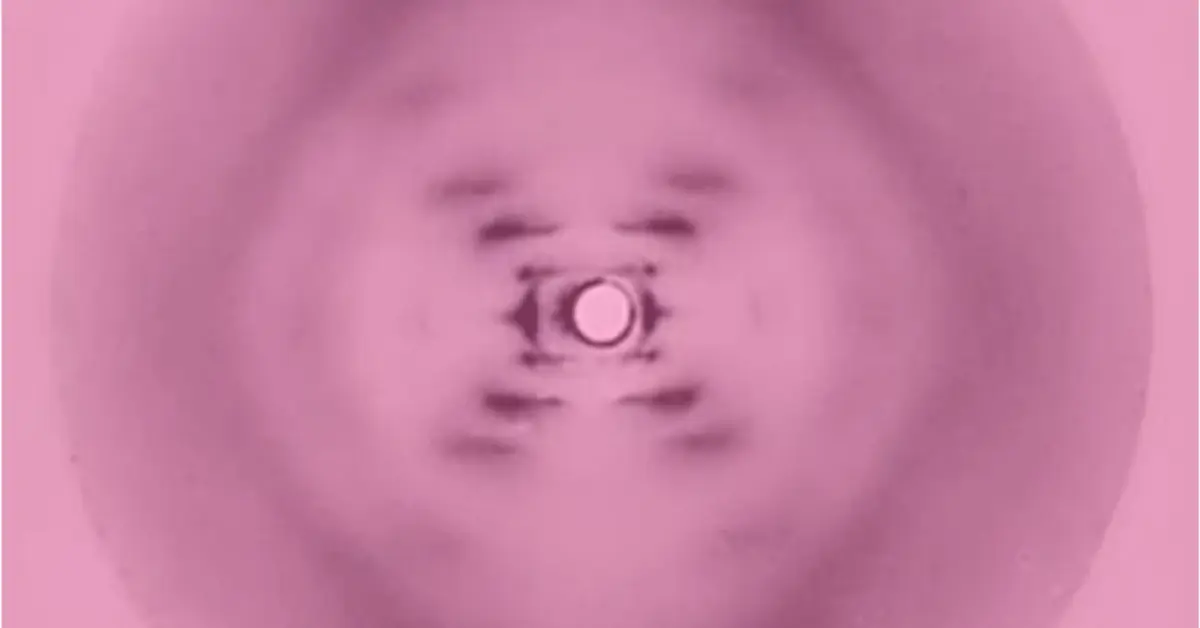
As these neuro-decoding technologies mature, researchers are setting their sights on an even more profound frontier: the empirical exploration of altered states of consciousness. By combining AI-driven neural reconstruction with psychedelic science—viewing substances not merely as clinical therapeutics, but as precision observational instruments akin to microscopes—science is moving closer to capturing the long-sought "blueprint of the mind." Just as Rosalind Franklin’s "Photograph 51" revealed the structural double helix of DNA and revolutionized molecular biology, modern neural decoding promises to map the architecture of human subjective experience.
Chronology
The trajectory from theoretical philosophy of mind to empirical neural reconstruction spans decades of incremental breakthroughs in physics, computing, and neurobiology:
- 1968: Philosopher and writer Alan Watts publishes his seminal article, Psychedelics and Religious Experience, in the California Law Review. Watts characterizes psychedelics as "instruments for studying and describing that experience as one uses a microscope for bacteriology," laying an early philosophical framework for treating altered states as empirical observation tools.
- May 1952 – May 1953 (Historical Context): Rosalind Franklin and her graduate student Raymond Gosling capture "Photograph 51," using X-ray diffraction to uncover the structural properties of DNA fibers, ultimately enabling James Watson and Francis Crick to model the genetic code.
- September 2006: A landmark study published in the journal Science by Adrian Owen and colleagues unequivocally demonstrates that hospitalized, unresponsive patients diagnosed with disorders of consciousness can willfully modulate their brain activity to answer "yes" or "no" questions. Imagining playing tennis represented "yes," while imagining navigating a home represented "no."
- January 2021: Researchers publish validation data on the Psychological Insight Questionnaire, quantifying how psilocybin and LSD generate personal psychological insights that predict long-term mental health improvements.
- September 2019 – April 2021: Clinical frameworks solidify around the concept of "emotional breakthroughs" induced by psychedelics, cementing their therapeutic utility in mainstream psychiatry.
- February 2025: A study published in Scientific Reports showcases significant advancements in image reconstruction from human brain activity using automated image captioning and deep-learning architectures.
- April 2026: A comprehensive review paper in The Neuroscientist addresses the prospects and emerging challenges of neural reconstruction in patients with disorders of consciousness, signaling that the techniques pioneered in 2006 are finally merging with modern AI decoding.
Supporting Data
The intersection of artificial intelligence and cognitive neuroscience has yielded robust quantitative metrics, moving the study of consciousness from subjective reportage to objective data analysis:
- 2006 Communication Accuracy: In Owen et al.’s pioneering study, unresponsive patients produced distinct, reproducible fMRI BOLD (Blood Oxygen Level-Dependent) responses in the supplementary motor area (tennis) and the parahippocampal gyrus (spatial navigation) with high statistical reliability, allowing for binary communication.
- 2025 Image Reconstruction Fidelity: Recent AI-driven frameworks (such as those published in Scientific Reports, February 2025) leverage automatic image captioning paired with functional neuroimaging to reconstruct complex visual stimuli presented to healthy participants, achieving unprecedented semantic and structural similarity scores compared to baseline inputs.
- Therapeutic Predictors: Clinical trials evaluating psychedelic compounds (e.g., psilocybin-assisted therapy for treatment-resistant depression) indicate that scores on the Emotional Breakthrough Inventory and Psychological Insight Questionnaire directly correlate with sustained reductions in depressive symptoms at 3-month and 6-month follow-up intervals.
- Neural Decoding Scalability: Modern machine learning classifiers now require significantly fewer training epochs to decode categorical visual stimuli from EEG and fMRI data, dropping from hours of calibration time down to minutes as transformer-based AI models adapt to individual brain topographies.
Official Responses and Expert Perspectives
The rapid acceleration of mind-reading technologies and their potential intersection with altered states of consciousness has prompted substantial dialogue among leading neuroscientists, bioethicists, and clinical researchers.
Dr. Adrian Owen, whose 2006 Science paper fundamentally altered our understanding of vegetative and minimally conscious states, has emphasized the ethical imperative of translating these technologies. Alongside contemporary colleagues, Owen has argued that modern neural reconstruction tools must be systematically applied to locked-in and unresponsive populations to restore fundamental human agency. "Unlocking a clearer window into their mind," researchers note, "is not merely an academic exercise; it is a profound clinical necessity for individuals trapped behind broken communication channels."
Concurrently, neuropharmacologists and psychedelic researchers have begun grappling with Alan Watts’ 1968 proposition. While clinical psychiatry has overwhelmingly embraced psychedelics for their neuroplastic and therapeutic properties—treating depression, anxiety, and post-traumatic stress disorder—experts point out that the broader epistemological potential of these compounds remains under-utilized.
"For decades, the medical establishment viewed psychedelics exclusively through the narrow lens of pharmacology—as chemical agents that fix a broken brain chemistry," notes one prominent cognitive researcher. "What Watts understood, and what modern neuroscience is finally equipped to test, is that they are lenses. Just as a telescope maps the cosmos or an electron microscope maps cellular machinery, a psychedelic state alters the parameters of the observational instrument itself. The missing link has never been the experience; the missing link has been our technological inability to record and decode it."
Ethicists, however, urge caution. The transition from detecting binary answers (tennis vs. walking home) to reconstructing complex visual imagery and inner dialogue raises unprecedented questions regarding cognitive liberty, mental privacy, and corporate or governmental overreach into private mental spaces.
Implications
The convergence of artificial intelligence, neuro-imaging, and the philosophy of consciousness carries vast implications for medicine, philosophy, and the future of human society.
1. Medical Breakthroughs for Non-Communicative Patients
The immediate clinical horizon belongs to individuals suffering from severe brain injuries, amyotrophic lateral sclerosis (ALS), and locked-in syndrome. By bridging the gap between raw neural activity and AI-generated image/text reconstruction, future medical devices could allow paralyzed or unresponsive patients to express nuanced thoughts, desires, and emotional states, fundamentally transforming palliative care and neurology.
2. Redefining Psychedelic Science and Epistemology
If AI-powered neural decoding can map the visual and conceptual outputs of ordinary waking consciousness, the logical next step involves applying these same decoding algorithms to altered states. Doing so could validate Alan Watts’ vision, transforming subjective mysticism and transcendental experiences into quantifiable, shareable data sets. This would bridge the historic divide between objective physical science and subjective first-person experience (the "hard problem of consciousness").
3. The Blueprint of the Mind
Just as Rosalind Franklin’s Photo 51 provided the structural roadmap that enabled genetic engineering, synthetic biology, and personalized medicine, cracking the structural code of human consciousness could give rise to an entirely new paradigm of cognitive science. Understanding the exact neural correlates of imagination, memory, and altered perception could lead to precision interventions for mental health disorders, enhanced cognitive architectures, and a deeper philosophical understanding of what it means to be sentient.
4. Ethical and Legal Challenges to Cognitive Liberty
As "mind reading" transitions from science fiction to everyday technology, society must confront the sanctity of mental privacy. If AI models become capable of harvesting thoughts, dreams, and subconscious visualizations without explicit, real-time consent, legal frameworks must evolve to protect cognitive liberty as a fundamental human right. The ability to read the mind necessitates absolute clarity regarding who owns, interprets, and controls the neural data streaming from human consciousness.