









By Higher Education & Mental Health Correspondent
Main Facts: The Post-Break Crash and the Anatomy of Campus Overwhelm
Every semester, college and university counseling centers across the globe experience a predictable, staggering surge in foot traffic. Students return to campus following a restorative, largely unstructured summer or winter break—a period defined by minimal friction points and low cognitive demands. Yet, within the first 30 days of the new term, the atmosphere shifts dramatically. Counselors are met with a flood of clients reporting acute manifestations of clinical depression, generalized anxiety, sensory overload, and profound unmotivation.
While higher education institutions have increasingly invested in wellness resources, peer counseling, and campus mental health clinics, a significant disconnect remains between the clinical interventions offered and the everyday structural causes of student distress. The culprit is rarely a lack of intelligence or academic capability; rather, it is a catastrophic failure of executive functioning brought on by the sudden, radical expansion of a student’s cognitive load.
Campus mental health professionals note that while evidence-based physiological levers—such as high-intensity resistance training and cardio, optimized sleep hygiene, Mediterranean-style nutrition, and the reduction of dopamine-spiking vices like excessive alcohol consumption, recreational drug use, pornography, and sports betting—remain crucial foundations for psychological resilience, they often fail to address the immediate logistical chaos facing incoming students.
The most powerful, cost-effective, and surprisingly overlooked remedy for early-semester burnout is not pharmacological or therapeutic in the traditional sense; it is tactical organization. Specifically, the widespread adoption and master-level utilization of digital calendar platforms, such as Google Calendar, serves as an indispensable cognitive prosthetic for young adults navigating the transition into higher education.
Chronology: From the Predictable Structure of K-12 to the High-Choice Abyss of Higher Education
To understand why modern college students drown within their first month on campus, one must examine the developmental timeline preceding higher education.
The K-12 Safety Net
From kindergarten through the twelfth grade, an individual’s life is governed by external architecture. School is anchored to a single physical building with rigid, non-negotiable start and end times. Extracurricular activities, socialization, and athletic commitments are largely baked into the daily schedule by parents, teachers, and administrators.
During these formative developmental years, the adolescent brain is not required to make autonomous logistical decisions on a macro scale. There are fewer moving parts to track, fewer variables to balance, and a robust safety net of parental and institutional oversight ensuring that deadlines are met and schedules are maintained.
The Higher Education Shockwave
Upon entering college or university, this external architecture evaporates overnight. Students are suddenly thrust into a high-choice, low-structure environment. They are expected to manage variable class schedules, independent study hours, domestic chores, social calendars, administrative university deadlines, and part-time employment—all while their prefrontal cortex, the brain region responsible for impulse control, long-term planning, and executive function, is still actively developing (a process that continues into a person’s mid-twenties).
Without a transition strategy, students frequently default to two disastrous organizational mechanisms:
- Relying entirely on raw memory: Expecting the brain to act as an unassisted storage hard drive for dozens of shifting deadlines, meeting locations, and social obligations.
- Relying on emotional states: Prioritizing tasks based entirely on how the student feels in the moment or their immediate level of interest, rather than objective urgency or importance.
When a student attempts to navigate a complex academic landscape dictated by transient emotional states and unassisted memory, the cognitive system inevitably overloads. The result is the dreaded first-semester slump, where students feel entirely overwhelmed before October even arrives.
Supporting Data: The Intersection of Cognitive Behavioral Strategies and Digital Architecture
Mental health practitioners who specialize in student populations have drawn profound parallels between tactical calendar management and Cognitive Behavioral Therapy (CBT). At its core, CBT teaches individuals to examine the relationship between their thoughts, feelings, and behaviors, allowing them to interject rational choice where emotional reactivity typically dominates.
When a college student meticulously maps their week onto a digital calendar, they are essentially engaging in externalized CBT. By separating subjective emotional distress ("I have too much to do, I’m going to fail") from objective reality ("I have three specific tasks scheduled between 1:00 PM and 4:00 PM"), the prefrontal cortex is relieved of its frantic multitasking burden.
[External Stress / Emotional Overload]
                  │
                  ▼
   [Digital Calendar Architecture] ──► (Externalized CBT)
                  │
                  ▼
[Prefrontal Cortex Relief & Reduced Anxiety]
This structural intervention creates a compounding positive effect. Studies in cognitive psychology demonstrate that reducing the cognitive load required for mundane scheduling frees up mental bandwidth for complex problem-solving, emotional regulation, and deep academic engagement.
However, merely telling a student to "get organized" is insufficient. Organization must be taught as a technical skill with precise, repeatable parameters.
Actionable Steps: The Definitive Calendar Blueprint for College Students
For parents looking to support their university-aged children, or for students seeking to reclaim control over their academic and personal lives, mental health experts recommend a comprehensive, step-by-step framework for mastering digital organization.
1. Centralize All Obligations
A calendar cannot function if it only holds half of a person’s life. Google Calendar (or an equivalent digital platform) must become the single "source of truth" for academic lectures, club meetings, social gatherings, administrative university duties, medical appointments, travel time, and even physical fitness routines. Fragmentation breeds anxiety; centralization breeds clarity.
2. Automate Learning Management System Integration
Most modern universities utilize platforms like Canvas or Blackboard. Students should extract the .ics calendar feed URL from their learning management system and import it directly into their digital calendar via the "Add from URL" function. This ensures that syllabus changes and assignment drop dates automatically populate the schedule without manual data entry.
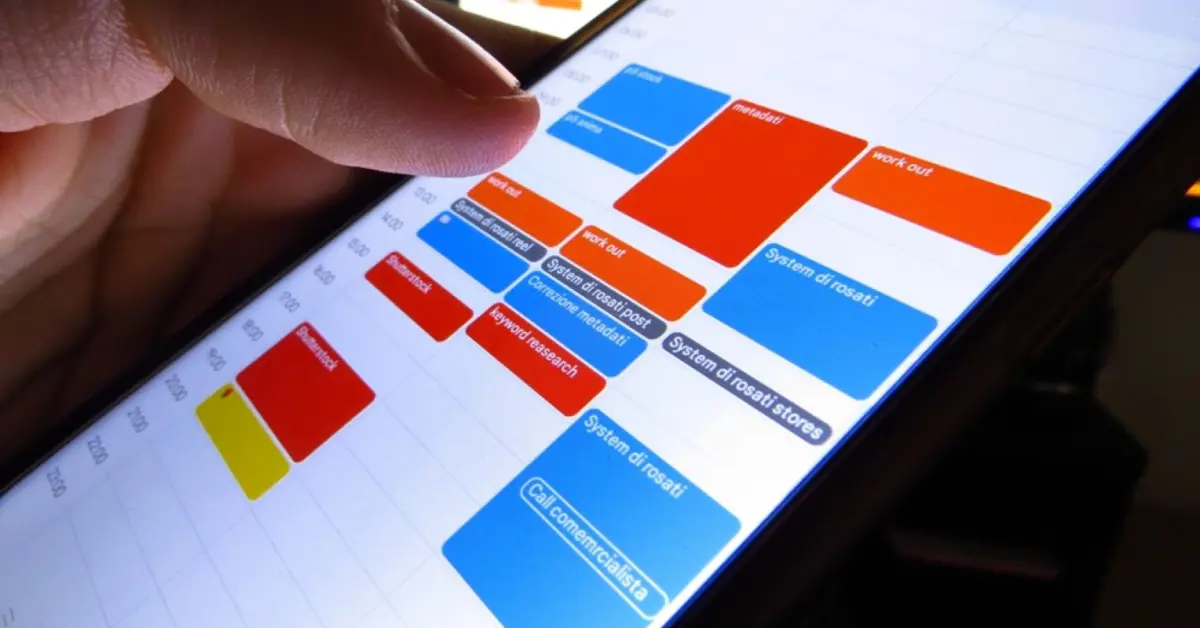
3. Implement Strategic Color-Coding
Visual processing speeds far outstrip textual processing speeds. Students should assign distinct, consistent color palettes to different categories of their lives. For example:
- Red: Academic deadlines and Canvas assignments (high priority).
- Blue: Dedicated deep work and study periods.
- Gray: University administrative deadlines (add/drop dates, financial aid).
- Green: Social events, clubs, and recreation.
4. Optimize Titles with Brief Descriptions
There is no need to write a thesis within a calendar block. Titles should be concise yet descriptive enough to provide immediate orientation. Knowing precisely what task is coming next reduces the friction of transition, preventing the procrastination that occurs when a student has to stop and figure out what they are supposed to be doing.
5. Sync the Official Academic Calendar
Beyond individual classes, students must subscribe to their university’s official academic .ics calendar feed. This automates campus-wide milestones, including university holidays, reading days, tuition deadlines, and finals week schedules, preventing nasty surprises mid-semester.
6. Protect Daytime Hours for Heavy Loads
One of the most destructive habits of college students is pushing academic work into the late-night hours. Human cognitive function drops precipitously after dark. Experts strongly advise students to manually block out 60-90 minute windows for deep work before 6:00 PM. Completing heavy workloads during daylight hours reduces direct competition with the evening social scene and aligns with peak human neurological functioning.
7. Give Every Hour a "Home"
While minute-by-minute micromanagement can be suffocating, establishing broad temporal boundaries is essential. A healthy student schedule protects daytime hours (e.g., 9:00 AM to 6:00 PM) for classes, employment, and focused studying. Post-6:00 PM can then be legitimately reserved for intramural sports, socializing, and genuine relaxation, completely free from the nagging guilt of unfinished daytime responsibilities.
8. Conduct a Weekly Review
Organization is a living process, not a one-time event. Every Sunday night, students should spend 15 uninterrupted minutes reviewing the upcoming week’s synced deadlines and commitments. This ritual eliminates blind spots and frames the upcoming week as a manageable series of events rather than an amorphous mountain of stress.
Official Responses and Implications: Fostering Independence Through Transparent Oversight
As universities grapple with record numbers of students seeking mental health support, administrators and campus clinicians are increasingly looking toward preventative, structural solutions rather than reactive crisis care. The shift from low-choice K-12 environments to high-choice higher education settings is now recognized as a critical vulnerability period that demands formal institutional attention.
The Parent-Student Balance: Fostering Adult Independence
A nuanced debate persists regarding the level of parental visibility into a college student’s daily life. While higher education is designed to foster complete autonomy, forcing a freshman or sophomore to navigate total operational obscurity can backfire catastrophically.
Mental health professionals strongly advocate for college students—particularly during their freshman and sophomore years—to share their digital calendars with their parents.
This practice is frequently misunderstood as a form of helicopter parenting or micromanagement. In reality, it serves an entirely different developmental purpose:
- Transparency without Interference: Parents do not need to police every study session or social outing; rather, they gain a realistic view of how busy and overwhelmed their child actually is.
- The Scaffolded Transition: Transferring complete responsibility to an 18-year-old without providing oversight scaffolding often leads to academic probation or severe mental health crises. Shared digital visibility allows parents to offer timely, targeted support ("I see you have three major exams this week; let’s order dinner delivered to your dorm") without hovering over their daily routines.
- Building Adult Competency: By inviting transparency, the student learns accountability. They must maintain their calendar not just for themselves, but as part of a functioning adult ecosystem.
Broader Implications for Higher Education
Ultimately, reframing digital organization as a core pillar of student mental health has profound implications for the future of campus wellness programs. By treating executive dysfunction and organizational illiteracy as root causes of anxiety—rather than treating anxiety purely as an isolated emotional pathology—universities can empower students with tangible, lifelong skills.
When a student learns to master their calendar, they do more than just hand in their assignments on time; they reclaim agency over their time, protect their psychological well-being, and successfully bridge the gap between structured youth and self-directed adulthood.